FW
USDA strategy targets long-term viability for US cotton producers
The United States Department of Agriculture (USDA) has introduced a comprehensive framework aimed at reinforcing the domestic cotton farm economy against intensifying global market volatility and climatic pressures. This policy initiative focuses on enhancing yield consistency through the adoption of precision agriculture technologies, which allow for granular moisture management and optimized input utilization. By aligning federal support mechanisms with sustainability metrics, the department aims to ensure that US-grown cotton remains a competitive, high-quality fiber choice for international spinning mills. Industry analysts indicate that this intervention is critical to mitigating the impact of recent price fluctuations, which have challenged the profitability of large-scale cotton operations across the Sun Belt region.
Navigating global supply chain shifts
As global textile manufacturers increasingly prioritize supply chain transparency and carbon footprint reduction, the US cotton sector is recalibrating its export strategy to emphasize environmental stewardship. The initiative includes provisions for improved storage infrastructure and modernized logistics to reduce the frequency of contamination incidents, which have historically hampered trade efficiency. Dr Marcus Thorne, an agricultural policy specialist, notes, this commitment to standardized quality assurance is essential for maintaining market share against lower-cost synthetic alternatives. By bridging the gap between farm-level innovation and the textile industry’s requirement for traceable, high-tenacity fibers, the US government seeks to establish a resilient foundation for cotton cultivation that withstands both geopolitical trade disruptions and shifting consumer demand for sustainable apparel materials.
US cotton farm economy
The US cotton sector serves as a global leader in high-quality fiber production, prioritizing technologically advanced cultivation methods. Targeting export markets in Asia and the Americas, the industry emphasizes sustainable, traceable supply chains. Growth plans center on yield optimization and infrastructure investment to ensure long-term competitiveness against synthetic fiber demand.
Muga Silk gains global traction via strategic branding
The Government of Assam has intensified its efforts to position Muga silk, the ‘Golden Silk of Assam,’ as a marquee luxury product in the international textile market through the ongoing Mission Senehjori. This initiative aims to bridge the gap between traditional weaving clusters and high-end global fashion houses by emphasizing the unique, natural golden hue and superior tensile strength of the fiber. As the textile industry shifts toward sustainable and bio-based luxury materials, Muga’s Geographical Indication (GI) status serves as a cornerstone for its premium branding. The state government is currently facilitating direct partnerships with European luxury distributors, focusing on traceability and ethical sourcing to meet the stringent compliance requirements of the EU’s sustainable product regulations.
Scalability challenges and market integration
Despite the high global demand for sustainable silks, the sector faces significant hurdles regarding raw material supply and the preservation of traditional sericulture techniques. Muga cultivation is labor-intensive and climate-sensitive, requiring a robust support structure for the weaver community. Recent data suggests, the state is investing in advanced storage infrastructure and quality certification laboratories to maintain consistency for international buyers. Industry experts suggest, the integration of digital product passports will prove decisive in securing long-term contracts with global brands. By formalizing the value chain and protecting the artisan’s intellectual property, Assam aims to transition from sporadic craft sales to a sustained, high-value export presence, ensuring that the intrinsic value of Muga remains recognized across the global apparel and home textile sectors.
Renowned for luster and durability
Muga silk is a premium, natural golden silk indigenous to Assam, renowned for its luster and durability. Primarily used for high-end traditional attire and luxury lifestyle products, the sector focuses on empowering rural artisan clusters. Current initiatives aim for global market expansion through standardized quality certification and GI-protected branding.
Lambodhara Textiles reports robust financial performance in FY26
Lambodhara Textiles has reported a robust financial performance for FY26, headlined by a significant 61per cent Y-o-Y increase in Profit After Tax (PAT). This rise in profitability underscores the company’s strategic shift toward specialty yarn production and improved manufacturing throughput. By optimizing its operational overheads and reducing waste in the spinning process, the firm has effectively insulated its margins from the volatility typical of raw cotton price cycles. Management attributed this growth to a renewed focus on high-margin synthetic and blended yarns, which have seen sustained demand from domestic apparel manufacturers looking to reduce their reliance on imported fiber alternatives.
Strengthening competitive positioning
The company’s ability to scale output while maintaining cost discipline has positioned it as a reliable supplier in the competitive spinning landscape. Beyond the headline profit figures, Lambodhara has actively reinvested in machinery upgrades, specifically targeting advanced ring-spinning technology that supports finer yarn counts favored by premium apparel brands. This technological integration is central to its objective of increasing its share in the export market, where consistency and quality certification remain the primary barriers to entry. As the firm navigates a dynamic trade environment, its focus remains on leveraging domestic supply chain advantages to maintain its trajectory in the current fiscal cycle, ensuring it remains well-positioned to capitalize on the ongoing recovery in consumer discretionary spending.
Specialist in synthetic and blended yarns
Lambodhara Textiles is an Indian manufacturer specializing in high-quality synthetic and blended yarns, including slub and specialty varieties. Serving domestic and international apparel markets, the company focuses on continuous technological upgrades to enhance quality. It maintains a stable financial performance, historically navigating market cycles through proactive yarn innovation.
How India’s textile recycling network is becoming a global ESG blueprint
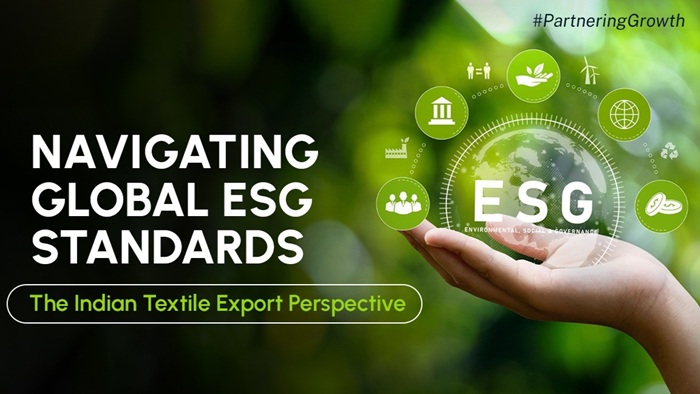
India’s textile industry is mounting an aggressive defence against growing international criticism that developing economies are becoming dumping grounds for discarded Western fashion. Backed by fresh data from the Ministry of Textiles, India is now positioning itself not as a passive recipient of global waste, but as one of the world’s most advanced circular textile economies.
What has led to this narrative is a striking statistic: nearly 97 per cent of India’s pre-consumer textile waste, factory scraps, yarn remnants, and garment offcuts is now recycled back into the manufacturing chain. The achievement underscores the scale and sophistication of India’s recycling ecosystem at a time when global apparel brands are under mounting pressure to meet ESG and circularity commitments. The Ministry estimates that India currently processes approximately 7.8 million tonnes of textile waste annually, making the country one of the largest textile recovery markets globally. Officials argue that the recycling network is rooted in India’s long-standing culture of reuse and repair, now increasingly supported by formal industrial systems and advanced recycling technologies.
Domestic waste drives the circular economy
An important element of the government’s response to global criticism is the composition of the waste stream itself. Contrary to popular perception, imported textile waste represents only a small fraction of the material processed in India.
Table: India’s annual textile waste composition
|
Source of waste |
Volume (approx.) |
Percentage share |
|
Domestic Generation |
7.02 mn tonnes |
90% |
|
Imported Material |
0.54 mn tonnes |
7% |
|
Total Managed Waste |
7.80 mn tonnes |
100% |
The figures indicate that India’s recycling industry is overwhelmingly dependent on domestic textile discard rather than foreign fast-fashion waste. This distinction has implications for the industry. By relying largely on locally generated textile waste, Indian recyclers are reducing exposure to global regulatory volatility, including tightening EU sustainability standards and cross-border waste movement restrictions. At the same time, domestic waste streams provide a reliable source of secondary raw materials for manufacturers increasingly catering to environmentally conscious global buyers.
Experts say this localized sourcing model also strengthens India’s competitiveness in sustainable apparel manufacturing, particularly as international brands seek traceable and low-carbon supply chains.
A Rs 22,000 cr circular business opportunity
India’s textile recycling is no longer viewed merely as a waste management operation. It has evolved into a significant industrial economy in its own right. According to the Federation of Indian Chambers of Commerce and Industry (FICCI), the textile waste value chain currently generates around Rs 22,000 crore, or roughly $2.6 billion, in annual economic activity. The sector spans collection, sorting, shredding, fiber recovery, yarn production, and the manufacturing of recycled textile products. The environmental gains are becoming equally important in driving export competitiveness.
Research conducted by IIT Delhi shows that mechanical textile recycling substantially reduces environmental impact compared to virgin fiber production. The findings estimate greenhouse gas emissions can be reduced by as much as 40 per cent, while fossil fuel consumption falls by a similar margin. Water usage is also significantly lower than that required for both conventional and organic cotton cultivation. These stats are relevant for global retailers and sourcing companies facing investor scrutiny over carbon emissions, water consumption, and textile waste footprints.
For India’s exporters, the emergence of measurable sustainability benchmarks could create stronger positioning in premium international markets, particularly in the US and Europe, where procurement policies are becoming increasingly ESG-linked.
Panipat emerges as a circular manufacturing model
The industrial cluster of Panipat in Haryana remains the most visible symbol of India’s textile recycling transformation. Best known for low-cost shoddy yarn production, the city has evolved into a sophisticated circular manufacturing ecosystem. The region operates on an industrial symbiosis model in which discarded woolens and acrylic textiles are shredded into reusable fibers and respun into yarn for blankets, carpets, and home furnishing products.
The cluster demonstrates how recycling can move beyond environmental compliance to become a commercially viable manufacturing strategy. Imported post-consumer woolens entering the region are processed under regulated actual user licenses, ensuring materials are directly consumed by authorized industrial units rather than diverted into unregulated channels.
Government oversight has also intensified in recent years. Authorities say units operating within the cluster increasingly fall under the supervision of the National Green Tribunal (NGT), helping enforce stricter environmental norms and labor standards. This transition from informal operations toward organized industrial structures is critical for India’s ambitions to become a trusted sustainable sourcing destination for global fashion brands.
Automation shape the next growth phase
While India’s recycling market has scaled rapidly, challenges remain around post-consumer waste segregation, labor formalization, and worker safety. However, the industry is entering a new phase driven by technology adoption and institutional formalization. Automated sorting systems, sensor-based fiber identification tools, and improved traceability mechanisms are beginning to replace labor-intensive manual segregation processes.
These technologies improve fiber purity and consistency, two factors increasingly essential for producing high-value recycled textiles suitable for global apparel brands. The next growth phase is expected to focus less on low-value recycling and more on upcycling, the conversion of textile waste into premium fashion, technical textiles, and performance materials with stronger margins.
This transition aligns closely with India’s broader textile ambitions. The country, already one of the world’s largest producers of cotton and synthetic textiles, is targeting a textile and apparel market size of $250 billion by 2030. As global supply chains recalibrate around sustainability, India’s ability to combine manufacturing scale with circular production capabilities may become a defining competitive advantage. Rather than functioning as a dumping ground for fast fashion, India is increasingly presenting itself as a critical node in the global circular economy, one capable of turning textile waste into industrial value, export competitiveness, and long-term ESG credibility.
SIMA advocates for policy continuity following cotton import duty relief
The Southern India Mills’ Association (SIMA) has officially acknowledged the temporary exemption of import duty on cotton, characterizing it as a vital stabilization mechanism for the domestic textile value chain. This fiscal intervention is designed to counteract the recent surge in domestic cotton prices, which had significantly compressed manufacturing margins for spinning mills. By facilitating duty-free access to global cotton varieties, the policy serves as a buffer against regional supply disruptions and ensures that downstream manufacturers—particularly those focused on high-quality yarn exports—maintain their competitive edge. Industry stakeholders emphasize that this relief is essential for maintaining liquidity within the spinning sector, as manufacturers navigate a period of fluctuating fiber availability and global demand instability.
Strategic imperatives for long-term fiber security
While the temporary duty waiver provides immediate operational relief, SIMA leadership continues to underscore the necessity for structural reforms to address chronic supply imbalances. Fiscal interventions are effective stop-gap measures, but sustainable industry health requires a long-term commitment to enhancing domestic yield and fiber quality, noted a senior official from the association. The current environment presents a critical opportunity for mills to diversify their procurement strategies and strengthen resilience against seasonal yield variability. As the textile industry integrates further into global sustainable supply chains, stabilizing raw material costs remains a cornerstone for ensuring that India remains a primary hub for value-added apparel production. The exemption underscores a proactive government approach to supporting textile exports in a complex macroeconomic landscape.
The Southern India Mills’ Association (SIMA) is a leading industry body representing the spinning and textile manufacturing sector in South India. It provides policy advocacy, market intelligence, and technical support to member mills. Founded in 1933, the organization works to improve the global competitiveness of the Indian textile value chain.
Debmac boosts apparel productivity with launch of next-generation sewing automation
The Indian apparel manufacturing sector is witnessing a surge in technological adoption as Debmac introduces its latest line of automated sewing solutions to the domestic market. Designed to address the persistent challenges of labor volatility and production bottlenecks, these systems offer high-precision stitching and automated fabric handling capabilities. By integrating programmable logic controllers and real-time tension monitoring, the machinery significantly reduces cycle times while minimizing material wastage. Industry experts highlight that as manufacturing hubs like Tiruppur and Dhaka face intensifying pressure to meet shorter lead times for global brands, such automation is no longer an optional upgrade but a requirement for maintaining price competitiveness in the global garment supply chain.
Bridging the efficiency gap in apparel assembly
The adoption of Debmac’s automation suite represents a broader industry trend toward digitizing the factory floor. Manufacturers currently grappling with narrow margins are finding that robotic integration decreases reliance on manual labor for repetitive tasks, allowing workforce resources to be redirected toward higher-value complex assembly. Transitioning to automated sewing architectures is the primary mechanism for domestic players to offset rising operational overheads, notes a senior textile consultant. While initial capital expenditure remains a hurdle for small-to-medium enterprises, the increased throughput and standardized quality control provided by these systems offer a compelling return on investment. This technological infusion is essential for domestic manufacturers aiming to secure larger export orders as global brands continue to prioritize high-speed, high-accuracy production partners.
A global industrial textile machinery developer
Debmac is a global developer of industrial textile machinery and sewing automation systems. The company specializes in robotic garment assembly, high-speed stitching technology, and factory floor optimization software. Serving major manufacturing clusters in Asia and Europe, Debmac focuses on enhancing operational precision and scalability for large-scale apparel production facilities.
TEXPROCIL strengthens global export competitiveness via strategic skill development
The Cotton Textiles Export Promotion Council (TEXPROCIL) recently recognized top-tier textile exporters for their outstanding contributions to India’s foreign exchange earnings. Beyond the celebratory nature of the Export Excellence Awards, the event marked the introduction of an advanced certificate program in international trade, inaugurated by the Union Finance Minister. This initiative addresses the critical imperative for human capital development within the textile supply chain. As Indian exporters increasingly compete in sophisticated markets like the EU and the US, the need for deep expertise in Free Trade Agreement (FTA) compliance, Digital Product Passports, and complex logistics has become a strategic priority. This structured training is designed to institutionalize trade knowledge, enabling domestic manufacturers to navigate global regulatory frameworks with greater precision.
Scaling global value chain integration
The apparel and textile sector is currently managing intense pressure from shifting geopolitical dynamics and rising input costs. Data indicates that while traditional yarn and fabric exports face thin margins, value-added textile products are gaining traction in premium global segments. "The transition toward high-value, compliant exports requires more than just production capacity; it demands a sophisticated understanding of international trade architecture," a council representative observed. By upskilling the workforce in international trade protocols, the sector aims to boost its export resilience and move up the value chain. This educational intervention is projected to improve operational efficiency for participating firms, ensuring that Indian manufacturers remain competitive as they integrate further into the evolving global textile landscape through 2030.
Promoting cotton textile exports from India
The Cotton Textiles Export Promotion Council (TEXPROCIL) is the premier agency for the promotion of cotton textile exports from India. It provides industry-specific guidance, trade intelligence, and policy advocacy. Founded in 1954, the council supports manufacturers across the cotton value chain to enhance global market access and competitiveness.
Zara expands premium childrenswear footprint through Caramel London partnership
Zara is intensifying its efforts to capture the affluent childrenswear market through a new multi-season collaboration with the London-based luxury boutique brand, Caramel. This partnership signifies a notable departure from Zara’s traditional mass-market strategy, signaling an aggressive push toward high-end aesthetics and premium fabrications. By integrating Caramel’s signature vintage-inspired silhouettes and muted, sophisticated palettes into its global supply chain, Zara aims to secure a larger share of the "mini-me" luxury trend. Industry observers suggest this move is designed to satisfy the growing consumer demand for affordable luxury in children’s apparel, effectively bridging the gap between high-street pricing and boutique-quality design.
Scaling boutique design for global audiences
The collaboration presents significant operational challenges, specifically regarding the scale of production while maintaining the artisanal charm synonymous with Caramel. However, for Zara, the opportunity lies in leveraging its robust omnichannel infrastructure to bring niche, design-led collections to a broader demographic. "By embedding premium design DNA into a scaled retail model, the brand is effectively insulating itself from lower-tier competition," remarks a retail analyst. Recent performance indicators suggest that consumers are increasingly prioritizing enduring, classic styles over fleeting trends in children’s wear, making this long-term investment a calculated effort to foster brand loyalty among discerning parents, while driving sustained growth in the children's apparel category.
Timeless design and premium materials
Caramel is a London-based luxury brand specializing in high-end childrenswear, womenswear, and homeware. Known for its distinct, timeless design and premium materials, it operates globally through flagship boutiques and premium e-commerce channels. Founded in 1999, the brand focuses on sustainable, lasting quality, consistently driving growth through targeted collaborations with major retailers.
Luxury houses transition to America as global retail landscapes shift
As the global luxury sector grapples with cooling demand in Europe and persistent macroeconomic headwinds, the United States has emerged as a critical sanctuary for high-end fashion. Leading European fashion houses are increasingly favoring major US metropolitan hubs for high-profile runway shows, aiming to capitalize on a resilient American luxury consumer base. This strategic shift underscores a broader industry realization: while luxury growth remains inconsistent in traditional markets, the US luxury segment - part of a ‘two-speed’ world—continues to deliver robust performance. Brands such as Moncler and Hermès are deepening their footprint, targeting not only primary coastal cities but also expanding into affluent Tier-II U.S. markets where high-net-worth individuals are relocating.
Retail resilience and transformation
The broader retail environment remains highly polarized, with mid-market players and fast-fashion giants facing distinct structural challenges. In the department store sector, Macy’s, Inc. is navigating a complex recovery, emphasizing its ‘Bold New Chapter’ strategy to improve comparable sales through curated brand storytelling and store optimization. Simultaneously, the fast-fashion landscape is encountering significant friction. Inditex-owned Zara, for instance, has reported its weakest performance in India since the pandemic, signaling a sharp decline in profit and revenue growth as competition intensifies. This contrast illustrates a clear divergence: legacy luxury players are finding success through exclusive, high-touch brand experiences in the U.S., while mass-market retailers face margin compression from digital-first entrants and a more cautious consumer sentiment.
Premier omnichannel retailer
Macy’s, Inc. is a premier omnichannel retailer operating iconic nameplates including Macy’s, Bloomingdale’s, and Bluemercury. With a foundation dating back to 1858, the New York-based firm provides quality apparel and home goods. Currently, the company is focused on its "Bold New Chapter" turnaround, targeting long-term growth and operational efficiency.
Cotton trade under pressure as war risks and tariff chaos raise apparel costs
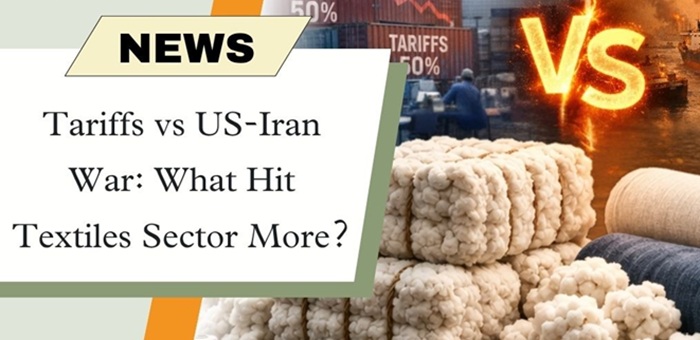
The global textile and apparel industry is entering a high-stakes period of volatility as the ongoing Iran war creates a divide between energy-producing and energy-consuming markets. While Asian manufacturing hubs grapple with physical constraints on energy supplies, the US market, a critical player for global retail demand, is facing a sharp escalation in operational costs. With US oil prices rising to $4.45 per gallon, the highest level in four years, the resulting pressure on discretionary income is beginning to reshape the commercial scenario for cotton-dominant goods.
Geopolitical disruptions affect global fiber value chain
The conflict in the Middle East has moved beyond a localized crisis to become a primary headwind for international trade flows. For global cotton players, the immediate concern is the impact on consumer sentiment, which has hit record lows according to the University of Michigan Index. As energy and food costs claim a larger share of the household budget, the textile sector is preparing for a shift in purchasing patterns. The current environment forces a difficult choice for retailers who must balance rising logistics and raw material costs against a consumer base that is wary of the conflict premium being added to every garment.
Retail prices touch two-decade high
The commercial reality for apparel brands is currently defined by the highest retail price levels seen since the early 2000s. US garment prices rose 1.8 per cent in February and 1 per cent in March 2026, culminating in a 3.2 per cent year-over-year increase. This upward price pressure is worsened by a chaotic legal environment surrounding import duties. Following a Supreme Court ruling that invalidated 2025 tariff hikes, the trade community is currently facing 10 percentage point increases implemented under Section 122 of the 1974 Trade Act. Although a trade court challenged these increases on May 7, they remain in effect during the appeals process, keeping import costs high for global sourcing teams.
Inventory discipline meets falling global demand
Despite macroeconomic headwinds, apparel spending remains a resilient category, though growth is clearly cooling from its 2025 peaks. Real consumer spending on clothing fell to a 3.1 per cent year-on-year growth rate in March, down from the much stronger 6.9 per cent increase seen during the same period last year. This decline is forcing a more disciplined approach to inventory management. Current data shows the clothing wholesaler inventory-to-sales ratio holding steady at 2.1, suggesting that the industry has so far avoided the massive overstock positions seen in previous cycles.
Table: Macroeconomic & industry indicators
|
Indicators |
Q1: 2026 |
March 2026 |
April 2026 |
|
Growth in US Real GDP (Quarterly) |
2.0% |
- |
- |
|
Consumer Confidence Index |
- |
92.2 |
92.8 |
|
NY Nearby Cotton Price (cents/lb) |
- |
66.8 |
74.9 |
|
A Index Cotton Price (cents/lb) |
- |
77.2 |
86.4 |
|
U.S. Apparel Spending (YoY % Change) |
- |
3.1% |
- |
|
Garment CPI (MoM % Change) |
- |
1.0% |
- |
The table highlights mounting pressure across the global cotton and apparel value chain. US GDP growth at 2 per cent indicates a slowing economy, while weak consumer confidence reflects concerns over inflation, fuel prices and geopolitical tensions. Cotton prices rose sharply between March and April 2026, largely due to supply-chain disruptions and rising energy costs linked to the Iran conflict. At the same time, US apparel spending growth slowed to 3.1 per cent year-on-year, signalling cautious consumer behaviour. Rising garment inflation and ongoing Section 122 tariff uncertainty are further squeezing apparel margins, forcing retailers and manufacturers to adopt tighter inventory and sourcing strategies.
Section 122 tariff challenge
The recent shift by the US administration to use Section 122 of the 1974 Trade Act serves as a critical case study in modern trade volatility. After the Supreme Court ruled that the International Emergency Economic Powers Act (IEEPA) did not justify 2025 tariff hikes, authorities immediately applied a 10 percentage point increase via Section 122. While the May 7 trade court challenge offers a potential reprieve for importers, the ongoing appeals process means global supply chains must continue to price in these rare increases for the foreseeable future.