"

" The latest MediaVision Q1 2026 Fashion Report highlights, the age of broad-spectrum marketing and passive brand awareness is rapidly fading. In its place emerges a sharper, faster, and far more measurable market where success is determined by search intent, predictive analytics, and the ability to react to consumer demand in real time.
The report describes this as the rise of ‘Precision Retail’, a model where brands no longer compete merely for visibility but for relevance at the exact moment of purchase intent. In this new environment, a retailer’s market strength is no longer defined by legacy scale alone. Instead, dominance is being recalibrated through two new indicators: Share of Category Search (SoCS) and Share of Wallet (SoW).
The findings suggest that fashion consumers are abandoning exploratory browsing in favor of direct, problem-solving searches. Organic search traffic across the sector has remained relatively stable, but the composition of those searches has fundamentally shifted. Consumers are increasingly entering highly specific phrases tied to utility, lifestyle, and functionality rather than generic fashion discovery.
MediaVision notes a 15 per cent increase in ‘need-state’ searches during Q1 2026. Instead of browsing broad apparel categories, shoppers are searching for precise solutions such as commuter-proof tailoring, travel-friendly outerwear, and trans-seasonal investment knits. The implication for retailers is significant: brands now need to align inventory, merchandising, and digital visibility with micro-intent rather than macro-trends.
Search becomes the storefront
The report argues that search engines have effectively become the new front door of fashion retail. Consumers are making decisions earlier in the digital journey, often before reaching a brand’s homepage. As a result, discoverability within high-intent search environments has become more commercially valuable than broad social media exposure alone.
This shift is reshaping competitive dynamics across market segments. Brands that successfully linked search intelligence with merchandising agility emerged as clear outperformers during the quarter.
Table: Strategic positioning of brands
|
Brand category |
Top performer |
Growth (%) |
Driver |
|
High-Street Heritage |
Next |
+8% |
Multichannel integration & "Next Total Platform" |
|
Active/Utility |
New Balance |
+22% |
Sustained "Dad Shoe" trend and lifestyle versatility |
|
Premium/Bridge |
Ganni |
+14% |
Responsible luxury and high social media "Share of Voice" |
|
Fast Fashion |
Shein |
+11% |
Hyper-reactive SKU launches and price dominance |
|
Sustainability |
Patagonia |
+19% |
Circular economy initiatives and repair services |
the table highlights how distinct positioning is now outperforming generic mass-market branding. In the heritage retail category, Next strengthened its position through multichannel integration and the continued expansion of its ‘Next Total Platform’, which has enabled tighter synchronization between digital demand and fulfilment capabilities.
Within the activewear and utility segment, New Balance delivered the strongest overall growth at 22 per cent. The brand benefited from the enduring popularity of ‘Dad Shoe’ aesthetics while successfully balancing comfort, lifestyle versatility, and premium positioning.
Meanwhile, Ganni demonstrated the growing commercial power of “responsible luxury.” Its growth was fuelled not only by sustainability messaging but also by a strong social media presence that translated directly into search visibility and conversion momentum.
Fast-fashion giant Shein continued to leverage its ultra-fast product cycle and aggressive pricing architecture to maintain double-digit growth. However, the report suggests that speed alone is no longer sufficient without precise demand alignment.
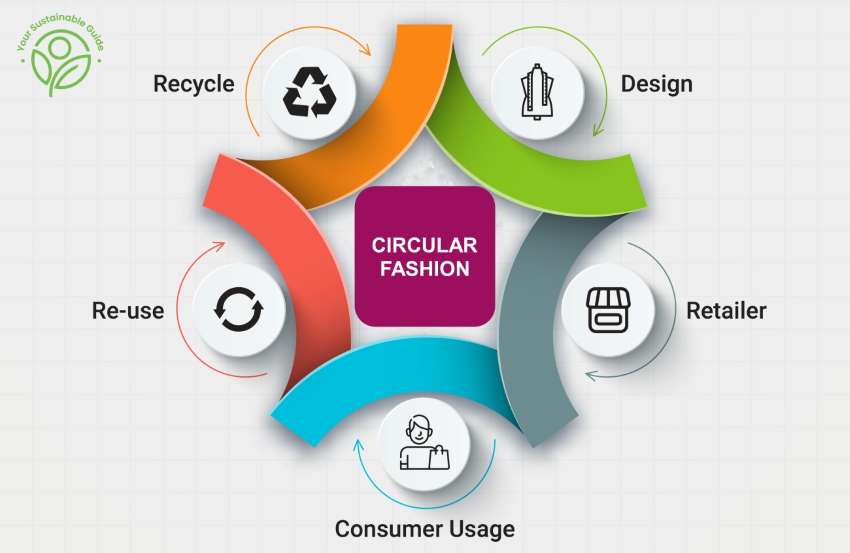
At the sustainability end of the spectrum, Patagonia emerged as one of the strongest performers. Its emphasis on circular economy initiatives, repair services, and product longevity resonated strongly with consumers increasingly seeking value-driven purchasing decisions.
Rise of real-time retail
One of the report’s most consequential findings centers on the growing influence of the Metis Market and Brand Demand Tracker, MediaVision’s real-time analytics platform designed to monitor search behavior and category acceleration. Traditionally, fashion retail has operated on relatively slow forecasting cycles, with trend validation often dependent on quarterly reporting and seasonal planning calendars. MediaVision argues that this lag is now commercially dangerous.
The report cites a striking example from February 2026, when Metis detected a 400 per cent spike in searches related to metallic footwear several weeks before conventional fashion forecasting systems identified the trend. Retailers using real-time demand intelligence rapidly adjusted homepage merchandising, paid search spending, and category prioritization toward silver and metallic footwear assortments. Those agile brands subsequently captured a 35 per cent higher Share of Category Search than slower-moving competitors still relying on monthly reporting structures.
This underscores a broader industry shift: fashion retail is increasingly operating on weekly or even daily reaction cycles rather than traditional seasonal timelines.
New factors define market power
MediaVision’s introduction of Share of Category Search and Share of Wallet may prove to be among the report’s most influential contributions. Share of Category Search measures how much search ownership a brand commands within a specific product category. Rather than focusing solely on branded search traffic, it assesses dominance within solution-oriented consumer demand. A denim brand owning 20 per cent of all denim-related search activity, for example, effectively becomes the category authority regardless of overall brand awareness levels.
Share of Wallet, meanwhile, moves beyond visibility into commercial effectiveness. The metric combines search intent, average order value, and conversion probability to estimate which brands are most likely to secure actual consumer spending rather than simple traffic volume. Together, these metrics indicate a decisive move away from vanity measurements toward commercially predictive performance indicators.
Decline of generic branding
While several brands gained momentum, the report also highlights mounting pressure on large legacy retailers struggling with what MediaVision terms “brand fatigue and genericism.” A number of established household names recorded declines of between 4 and 7 per cent in branded search demand during Q1. According to the report, consumers are increasingly gravitating toward retailers with clearer identities, specialized value propositions, and stronger lifestyle alignment.
In practical terms, brands attempting to cater to every demographic simultaneously are losing visibility in increasingly fragmented search ecosystems. Search algorithms and consumer behavior alike now reward specificity over scale. The report’s conclusion is blunt: in 2026, relevance beats recognition.
Agility becomes the core strategy
Looking ahead to Q2 and the summer trading period, MediaVision argues that agility will become the defining capability separating winners from laggards. Retailers now face what the report describes as ‘52 opportunities a year’ to respond to shifting demand patterns rather than relying on the industry’s traditional four-quarter planning structure. This requires tighter coordination between analytics, merchandising, inventory management, and digital marketing functions.
The broader implication is that fashion retail is no longer operating purely as a creative industry. It is becoming an intelligence-driven sector where data responsiveness increasingly determines commercial survival. MediaVision’s final warning captures the urgency of this transformation succinctly: if a brand is not visible within the first three seconds of a high-intent search, it effectively does not exist in the consumer’s wallet.