FW
India: ATUFS makes progress in settling claims
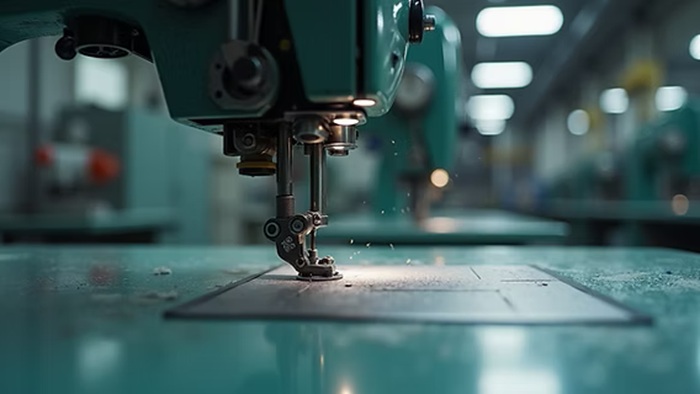
Out of the total settlements under the Amended Technology Upgradation Fund Scheme (ATUFS) since inception, about 61 per cent of claims were settled during the peak of the pandemic period i.e. in fiscal 2020-21. The Amended Technology Upgradation Fund Scheme (ATUFS) was intended to boost Indian textile industry by enabling ease of doing business, bolstering exports and fuelling employment.
Among the significant decisions to resolve pending issues and the way forward includes reduction of compliance burden by accepting only a single certificate from the concerned bank instead of multiple documents regarding evidence of payment for claimed machineries. Garment exporters have appreciated the simplification of cumbersome steps. Now they also expect refunds on time. Sometimes refunds are not cleared up to two or three years. The modalities for enlistment of machinery manufacturers and accessories/spare parts manufacturers will be simplified. Despite hindrances during the pandemic, serious efforts were put into resolving policy constraints and settlement of claims. A special measure has been introduced to ease the liquidity flow in industry by introducing an option for getting part subsidy released against bank guarantees.
The Technology Upgradation Fund Scheme (TUFS) was introduced in 1999 as a credit linked subsidy scheme intended for modernization and technology upgradation of the Indian textile industry, promoting ease of doing business, generating employment and promoting exports. Since then, the scheme has been implemented in different versions.
More brands join cotton initiative
Brax, Jolo Fashion Group and Shinsegae have joined Cotton made in Africa (CmiA). Cotton made in Africa promotes sustainable cotton cultivation, protecting the environment and improving the working and living conditions of small-scale farmers and their families. The three companies Brax, Jolo Fashion Group and Shinsegae are from Germany, the Netherlands and South Korea respectively.
As one of the world’s leading initiatives for sustainably produced cotton in Africa, CmiA gives voice to small-scale farmers who form the bedrock of the fashion industry. Working in accordance with the CmiA standard, around one million small-scale farmers from 10 countries in sub-Saharan Africa currently account for 30 per cent of African cotton production. CmiA cotton has a significantly smaller ecological footprint than global average and greenhouse gas emissions 13 per cent below the global average for cotton cultivation. Small-scale farmers benefit from agricultural and business training that enables them to improve their yields and cultivation methods. Consumers can identify these products through the Cotton made in Africa label. Each purchase represents a direct investment in improving living conditions and protecting the environment.
Beyond sustainable cotton production, CmiA actively advocates on issues like healthcare, respect for children’s rights and equal rights for men and women.
Cotton prices become unviable in Bangladesh
Bangladesh’s cotton traders have expressed concern over the uncertainty of availability of cotton and its rising prices fuelled by the gap between supply and demand. They called on readymade garment exporters to be cautious about rising price of the industrial raw material and to negotiate accordingly in time for receiving work orders. The global cotton index hit its decade highest index on September 28 last and maintained a rising trend. As cotton harvesting is taking place in most cotton producing countries, prices was expected to go down. But the reality is different.
About 25.7 million tons of cotton were forecasted to be produced against an estimated use of 25.99 million tons in fiscal year 2020-21, while 25.66 million tons of cotton were used globally. Millers are following a wait and watch strategy. Bangladesh exporters expect yarn prices to go up further in December in line with cotton prices.
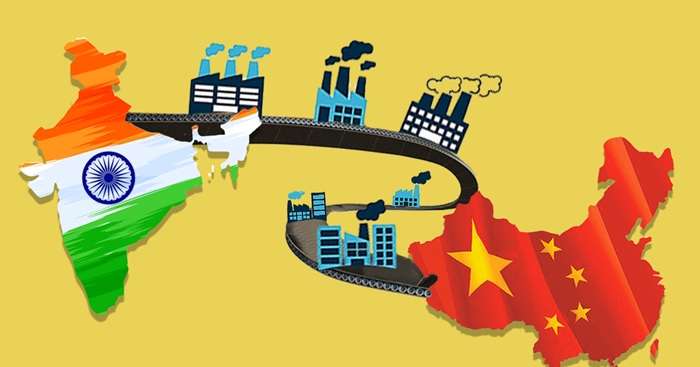
Many exporters during the pandemic period took work orders even below their production cost mainly to sustain their business and pay bank loans and worker’s wages. But now there are plenty of work orders and ample opportunities for placing more orders due to the electricity problem in China and closure of factories in Vietnam due to Covid 19.
Growing demand for Indian and Turkish organic cotton push up prices
While prices of conventional cotton have more than doubled compared to the beginning of Q2 2020, prices of organic cotton have also grown simultaneously. Of these, particularly the Indian and Turkish varieties are now selling at a premium. This is largely due to the growing demand for organic cotton post the pandemic. Compared to conventional cotton, price of Indian organic cotton has increased 20-fold over the last year. On the other hand, the premium for Turkish organic cotton has increased three-fold during the past 12 months.
Prices of organic cotton are increasing due to accelerated sustainability efforts in the global textile and clothing industry. Initiatives like the Partnership for Sustainable Textiles in Germany and the 2025 Sustainable Cotton Challenge initiated by the Textile Exchange are also pushing up demand for organic cotton.
Currently, organic cotton constitutes only one per cent of global cotton production. Hence, if the present premium prices sustain, it will encourage more farmers to switch to organic cotton. World organic cotton production grew 56 per cent last year. Organic cotton makes up 0.7 per cent of total cotton production worldwide and involves more than 1,82,000 farmers. While 19 countries now boast of organic cotton production, 98 per cent is concentrated in seven countries: India, China, Kyrgyzstan, Turkey, Tajikistan, the United States and Tanzania.
Blackstone invests in shapewear brand Spanx
Blackstone is the new owner of shapewear giant Spanx. Spanx founder Sarah Blakely retains a significant equity stake and will become the company’s executive chairwoman in the deal. Prior to the private equity firm’s majority stake, Spanx had been weighing options, and even mulled putting itself up for sale, with Goldman Sachs’ investment banking arm on the case since June.
While Spanx has made a name for itself in silhouette-smoothing shape wear worn by Katy Perry, Rebel Wilson, Khloe Kardashian, and Karlie Kloss, it has since branched into products like shaping denim and a full array of lifestyle apparel from loungewear, leggings, bras and underwear to skirts, arm tights and maternity wear. A selection of ultra-compression sculpting tees and tanks, shape-enhancing boxer briefs and socks is also available for men.
The opportunities to expand deeper into these categories caught the attention of Blackstone, which has been investing in female-led businesses including online dating app Bumble, Reese Witherspoon’s mission-driven media company Hello Sunshine, telecommunications firm Hotwire Communications and geolocation compliance technology firm GeoComply.
Blackstone is the world’s largest private equity firm. Blackstone also runs one of the largest real-estate focused funds in the world and is the largest owner of office space in India.
Orissa attracting apparel investors with incentives
Orissa is offering a special incentive package for mega investments in textile and apparel including the technical textile sector. The aim is to make the state a textile hub of eastern India. Mega-investments are being sought from major textile and apparel players. With over 1.5 lakh acres of land at their disposal, multiple dedicated locations identified for setting up apparel parks, competitive land rates and ready to occupy industrial sheds, Orissa offers a compelling value proposition for units in the apparel sector.
Over and above offering fiscal and non-fiscal sops, the state provides additional support for development of the sector. The sector specific policy offers various incentives including employment and investment based incentives, various fiscal incentives, capital grants of 20 per cent of the project cost of the park, interest free loan up to ten per cent of the project cost, among others. Orissa offers an abundant and skilled workforce for the apparel sector.
Orissa has had a long history in textile and global trading. The strong driving factors for Orissa making it a manufacturing hub in the east are its strategic location in the Asean region, industrial infrastructure and proactive governance.
US imposes duties on Indonesian polyester yarn
US duties on polyester yarn from Indonesia has become an obstacle to export of Indonesian textile and textile products and comes at a time when the industry is trying to boost its export market across the globe including the US. The imposition of fairly large import duties makes filament yarn more expensive and is a burden for importers in the US. To continue export market growth, the textile and textile products industry is now focusing on expansion to develop products in accordance with the wishes of buyers, which are currently more focused on green and functional products.
Indonesia is also reeling under coal prices. When global coal prices soar, domestic industries that primarily use coal such as cement, petrochemical and textiles experience difficulties. These are all energy-intensive industries. If prices of products rises it reduces competitiveness. If competitiveness decreases, income also decreases. If product prices go up, and competitiveness is weak, companies have to reduce their working capital and that means reducing the workforce. The textile industry wants the government to take emergency policies to maintain the sustainability of the user industry.
Future blockchain adoption in fashion depends on returns on investments

Blockchain technology was introduced to provide immediate, shared and completely transparent information stored on an immutable ledger that can be accessed only by permissioned network members. The technology is yet to be widely adopted in the fashion industry though stakeholders have been eyeing it for years to trace fashion’s notoriously opaque supply chain.
Transparency, regulations drive blockchain adoption
As per a Business of Fashion report, to implement this technology in the fashion industry, suppliers along the chain, from cut-and-sew factories to fabric weavers, yarn spinners, ginning mills, and even farmers, need to be transparent in their operations. Post pandemic, transparency has become top priority for brands and retailers. This has given a boost to blockchain projects across the world. For example, UK Fashion & Textile Association (UKFT) and H&M have launched new blockchain projects sometime ago. The dual impact of Brexit and COVID is encouraging suppliers to adopt blockchain in their operations, says Adam Mansell, CEO, UKFT, which launched a tracing project in IBM and others including Next and H&M’s COS brand in August.
The technology is also getting a boost from new regulations by governments across the world. Earlier this year, the US banned imports made from cotton grown in China’s Xinjiang region on accusations of being made by forced laborers belonging to Uighur and other minority Muslim communities. Germany introduced a law making it compulsory for large companies to ensure their supply chains comply with social and environmental standards. The law is scheduled to take effect in 2023.
These developments have caught the attention of global textile traceability champions. Blockchain-based tracing platform for fashion, TextileGenesis has launched pilot projects in collaboration with the US Cotton Trust Protocol, and a viscose tracing project with Kering and Bestseller. The company has teamed up with H&M for these projects.
A verified record of garment history
Blockchain provides brands and retailers a verified record of the garment’s history at each step of its production. However, it mandates companies to ensure that the data they receive is accurate, says Nate Herman, Senior Vice President-Policy, American Apparel & Footwear Association. Funded by a research grant from the UK government, the UKFT’s traceability project is endorsed by Future Fashion Factory, which supports innovation in the UK garment sector, and Tech Data, a technology firm. Contrary to the fashion industry’s traditional tracing methods, the IBM project aims to capture information around each step of the chain, adds Keric Morris, Head-Standards, IBM.
Focusing solely on cotton products, the project is onboarding suppliers in countries like Bangladesh, India, Turkey, and Portugal. It focuses specifically on tracing sustainable and differentiated materials such as organic cotton by using a digital token called Fibercoin, adds Amit Gautam, Founder and CEO, TextileGenesis. The project has enabled H&M to improve supply chain transparency and traceability.
New tools to ensure accuracy
To ensure the information logged on the blockchain is accurate, companies are using tools such as forensic verifications that test genetic or chemical markers in material fibers. Companies like TextileGenesis are focusing on organic cotton as it requires a certain amount of effort, and investment to deliver traceability.
Tarun Kumar Agarwal, Production Logistics Researcher, KTH Royal Institute of Technology predicts, many big brands will adopt blockchain in future. However, future development will depend on the returns it generates for brands. In coming years, the top 100 brands will trace most of their products, predicts Gautam. Meanwhile, the rest of the apparel retail market, including domestic retailers in Asia or Europe will continue to remain largely untraceable, he adds.
Chinese brand Bosideng dominates global down jackets market
The Chinese down jacket brand Bosideng is the leading brand in the global down jacket market. So says Euromonitor, an authoritative global market research institution. Since it began to focus on down jackets in 2018, Bosideng has been racing ahead with excellent performance. In terms of design, Bosideng excels at integrating global designer resources for international IP collaboration. The great fusion of eastern and western cultures thus becomes a starting point to meet the needs of the international audience. Bosideng has launched collaborations with international designers.
As consumption is upgrading, and young people are becoming the main consumers, down jackets need to be both warm and fashionable to meet their increasingly demanding needs. With growing concentration of the down jacket industry, Bosideng, the world-leading down jacket brand, has benefited from its strong core competitiveness. As a 45-year-old devoted and professional down jacket brand, Bosideng has forged ahead through product changes and technological innovations, developing strong competitive barriers in product quality and performance. Moreover, in terms of operations, Bosideng actively works on digital innovation in the supply chain for an active web presence. It has set up a data middle platform to connect all the links on the supply chain for a streamlined and efficient online service.
Indonesia’s textile sector reels under rising coal prices
The Indonesian textile industry is unable to handle the soaring coal prices. When global coal prices soar, many domestic industries that using coal such as cement, petrochemical, and textile experience difficulties. The fertilizer industry, the cement industry, the petrochemical industry, textiles are all energy-intensive industries.
If the price of products rises, it reduces competitiveness. The textile industry wants the government to take emergency steps to maintain the sustainability of the user industry. Government intervention is needed, especially to prevent price fluctuations of strategic goods such as cement products, textiles, fertilizers, steel, paper, and others. Meanwhile, the textile and textile product sector has had to dig deeper into its pockets for production costs. Currently there are two factories that have turned off their power plants. Meanwhile, six more factories have reduced their generating capacity.
Moreover, so far the majority of Indonesian coal is used for export. In 2021, of the production target of 625 million tons, the domestic market only absorbs a maximum of around 150 million tons. This means that there are still more than 450 million tons exported.