FW
Adidas and Reebok top transparency index
Adidas, Reebok and Patagonia are three of the most transparent fashion brands on the market, says the 2019 Fashion Transparency Index.
The index rates 200 of the world’s top brands with annual revenues of more than 500 million dollars. Almost half the brands are publishing a strategy on sustainable materials or processes, but only 29 per cent are disclosing the percentage of their products that are made from sustainable materials. Further, 54 per cent of fashion companies are publishing goals on improving their environmental impact. However, only 19.5 per cent disclose carbon emissions in the supply chain, which is responsible for more than 50 per cent of the industry’s emissions.
Several brands showed large improvement over last year’s survey. These include: Dior (22 per cent), Nike (21 per cent), New Balance (18 per cent) and Marc Jacobs (17 per cent). Brands are highlighted in the report for their willingness to publicly disclose a wide range of human rights and environmental policies, commitments and impacts, as well as key information about governance, supply chain traceability, supplier assessment and remediation. The 2019 index marks the first time since its inaugural publication in 2016 that brands have scored higher than 60 per cent on the transparency scale.
Archroma partners with Pakistan’s textile institute to further research
Archroma has entered a partnership with the National Textile University in Pakistan. The partnership will explore innovations in textile research with futuristic visualization to help the textile industry align with the fast pace of global requirements and evolutions. Another important aspect of this collaboration will be research in the field of unsaturated polyester resins in establishing quality and accessible product lines in non-conventional technical textiles. Both partners will jointly hold sessions to prepare students for the challenges of the textile industry through in-house training sessions, developmental projects, research in textile applications and process innovative methodologies by pioneering value additions. The partnership is expected to add value in the textile segment, from education to R&D development, and have an impact on textile research. NTU students will also be able to join internship placement programs at Archroma’s Center of Excellence in Karachi. The training, internships and working sessions are expected to benefit them in their career development. The National Textile University has already collaborated with Archroma on projects that involve the textile industry.
Archroma is a global leader in color and specialty chemicals toward sustainable solutions and believes in continuous improvement and challenging the status quo, leading to enhanced sustainable growth especially in its product lines that create value for stakeholders.
Intertextile Shanghai Apparel Fabrics in September
Intertextile Shanghai Apparel Fabrics will be held in China, September 25 to 27, 2019. Despite global trade concerns, the fair has proved itself time and time again as the ideal place to make valuable connections and capture new potential in the market. The fair’s international aspect welcomes opportunities from all around the world, while its location offers the chance to take advantage of China’s strong economy and apparel industry. There is a place for every apparel textile product at the fair. The spring edition in March saw a 15 per cent increase in visitor numbers.
The fair will host a comprehensive fringe program for visitors and exhibitors to enhance their trip with latest market information and opinions. Visitors can discover a new season of inspiration, for both international and domestic autumn/winter 2020-21 trends. Intertextile Apparel also aims to foster innovation and creativity at the China International Fabrics Design and Fabrics Creation Competition. The fringe program will also include seminars and panel discussions covering key industry topics, as well as product presentations from leading exhibitors. To meet flexible sourcing needs, the fair will offer a database of exhibitors offering small-order and product-in-stock services. The business matching program will arrange onsite meetings between exhibitors and VIP buyers, with interpreters available.
World economic slowdown on the horizon
Risks to global economic growth are aplenty. A potential slowdown in China, trade wars, destabilization in the euro area, central bank liquidity traps and an unexpected rise in inflation are pointed out as the top five risks by asset managers. Most asset managers find the current global macroeconomic and investment environment to be slightly less supportive now than a year ago.
A global slowdown is imminent, feel experts. This bearishness isn’t surprising considering the deteriorating economic indicators across the world. The latest Purchasing Managers’ Index (PMI) readings for developed economies present a disappointing picture. The American economy is fast losing momentum. What’s more, the new export orders components of manufacturing PMIs remain very weak. Clearly, this does not bode well for global trade. Global central banks are expected to come to the rescue in the event of a major downturn. Global policymakers are expected to respond to the next economic downturn with more monetary stimulus.
Despite the odds, global equities are drawing comfort from renewed optimism around the US-China trade deal. But sentiment may turn sour if the deal fails again. Also, an economic slowdown will become difficult to ignore for equity markets as it starts reflecting in global corporate earnings, hurting overall returns.
Pakistan organises TExpo in Lahore
Pakistan organised the second edition of Textile Expo (TExpo) in Lahore from April 11 to 14. Hundreds businesspeople and foreign delegates from nearly 50 countries were invited to support market expansion plan. Through the exhibition, Pakistan expected to expand its exports to new markets, including Asian countries, mainly Japan and Indonesia.
Known as one of the biggest textile exporters, Pakistan plans to further expand its markets to the European countries, the United States and other Asian countries, including Indonesia. At present, the country exports most of its textile and garments to European countries and the US.
The world's fourth-largest cotton producer, Pakistan has the potential to become a leading nation in the textile business, although such potential has yet to be optimally explored, The country is the eighth-largest exporter of textile commodities in Asia, with exports growing to $13.85 billion in 2017-2018. The country aims to raise the figure to $26 billion by the end of 2019 by expanding into non-traditional markets such as Indonesia.
Pakistani textile products are considered to be of better quality compared to products from other countries. Many of the country's diaspora are also known for their involvement in running textile businesses in their respective countries.
Nike remains favored brand, Lululemon gaining ground among women
Nike’s athletic apparel offering is gaining mindshare among American consumers in four categories—innovation, fashion, style, and value, says Canaccord Genuity Capital Markets. On the question of the most innovative brand, Nike is gaining ground in the mid- to upper-income male demographic. Nike is perceived as the most fashionable on-trend brand while Lululemon is gaining ground among women. Nike was named tops in fashion among men (42 per cent) and women (31 per cent). The positive response to Nike on both the innovation and fashion fronts is translating into high future purchase intent. Specifically, 41 per cent of men and 38 per cent of women are likely to make Nike their next athletic apparel purchase.
Athletic apparel and footwear categories overall continue to grow in appeal with teens. Lululemon has made gains with women on the question of which brand is most fashionable, with 26 per cent of women selecting Lululemon. Specifically, Lululemon shows significant gains among older millennial women (25 to 34 years old). By age, Under Armour has gained the most ground among 50-to-64-year-old men as 23 per cent view the brand as most fashionable versus 16 per cent in the last survey. Under Armour’s once premium, full-price positioning is showing signs of waning.
CanopyStyle initiative adds three more brands
Canopy recently added three new fashion and apparel brands to its CanopyStyle initiative. With the addition of outdoor brand Eddie Bauer, US clothing brand and retailer Guess, Puerto Rico-based, boho-chic brand Valija Gitana and global specialty retailer AEO Inc.’s brands American Eagle and Aerie, the CanopyStyle initiative now has more than 175 participating fashion and apparel brands.
These companies have more than $250 billion in market share. All these brands are committed to ending the use of ancient and endangered forest fibre in their viscose fabrics by 2020, to developing alternative, next generation sourcing solutions, and helping advance large-scale conservation of Landscapes of Hope. With the 2020 timeline to eliminate sourcing from ancient and endangered forests approaching, brands are urging producers to advance their CanopyStyle commitments and take the actions necessary to improve their shirt color and ranking as identified in the 2018 Hot Button report.
Canopy and its brands partners expect that at least 80 per cent of the global viscose supply will have undergone the CanopyStyle Audits by 2020 with more than half attaining ‘green shirts’ to meet their customers’ requirements around low risk, forest conservation and next generation solution fabric development. The CanopyStyle Summit, to be held in China in June 2019, will convene multinational etailers looking to join the initiative, dozens of CanopyStyle brands, fibre innovators and viscose producers.
ITMF publishes IPCC 2018 report
The International Textile Manufacturers Federation (ITMF) has published International Production Cost Comparison report (IPCC) for 2018. Designed to trace the implications of growing capital intensity in the primary textile industry, the 2018 report adds finishing’ to the historical cost analysis in spinning, draw texturing, weaving, and knitting.
The goal of the report is to allow for a better appreciation of the relative importance of the cost elements and their respective influence on the total costs. In the category Spinning Ring/NE30, for example, the report shows countries with high manufacturing cost also have higher share of labor cost (respectively 33 per cent, 27 per cent, and 31 per cent). The share of power in two of these countries, however, equals the sample average. It reaches 21 per cent in Italy and Korea and 10 per cent in the US, a level comparable to that measured in Egypt.
The report also presents the cost of transforming the former woven fabric into a finished woven fabric (continuous open width). On average, the share of labor and power to total manufacturing costs in this category are similar (13 per cent and 14 per cent, respectively). Strong geographical discrepancies nevertheless exist, especially with respect to labour costs with a spread of 14 cent/m. This reflects the difference in labor costs between Bangladesh (1 cent/m) and Italy (15 cents/m).
The IPCC 2018 further covers the categories of spinning rotor/ne20, texturing, weaving rotor yarn fabric, weaving textured yarn fabric, knitting rotor yarn fabric, knitting textured yarn fabric, finishing - knit - continuous open width (COW), and finishing - knit - discontinuous (JET).
Ludhiana dyeing units raise rates
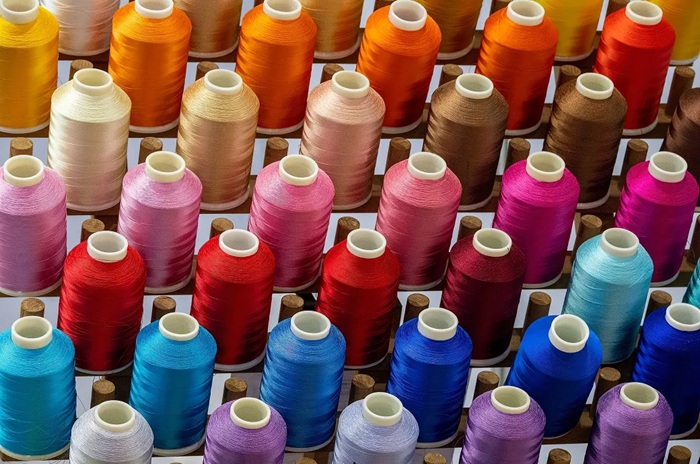
Dyeing units in Ludhiana have decided to increase their rates. One reason is increasing raw material prices, in particular, color prices. Earlier, the dyeing industry was able to get colors from overseas but now is totally dependent on the Indian market. Golden yellow color which was Rs 500 per kg is now Rs 1400 per kg. Blue color, which was available for Rs 1200, is now being sold at Rs 2700 per kg. Wage rates too have risen.
Prices have seen an upward spiral after many units in China were shut down due to pollution norms. The pollution caused by the manufacturing process was the main reason that led to the shutdown of units. Ludhiana was importing dyes and chemicals from China. The shutdown of units has caused a shortage in the market.
This means dyeing of yarn, cloth etc. will be expensive. This has worried the garment industry as well. Garment manufacturers, faced by the rising dyeing rates, will pass on the costs to the consumer. Local manufacturers of dyes and chemicals seeing the shortage in the market have also increased their prices. Now, the industry is dependent largely on the Indian market alone. Owing to a monopoly, dyers here have increased the rates of dyes and chemicals.
US apparel imports increases 5.12 per cent in Jan-Feb ’19
The US registered 5.12 per cent growth in its value-wise imports during January to February 2019 period as it imported apparel worth $ 14.22 billion as against $ 13.52 billion in the corresponding period of prior year. Interestingly, all major apparel exporting destinations China, Bangladesh, India and Vietnam registered an increase their exports to country except whose growth was the lowest among all.
Despite the fact that China exported apparels worth $ 4,532.57 million to the US and topped the list, growth was the least among other Asian countries. Buyers did not place huge quantities of orders to China’s apparel manufacturing units due to the fear of possible tariffs on Chinese exports to USA.
On the other hand Vietnam shipped $2,299.62 million worth of apparels to the US growing at 11.27 per cent yearly. Bangladesh and India exported apparels worth $1,038.56 million and $800.30 million respectively, with 10.96 per cent and 8.51 per cent growth on Y-o-Y basis.