FW

Revenues from India’s coir exports are encouraging. Coir exports during the April-January period of the current fiscal are up 5.5 per cent. Exports in the current fiscal are expected to exceed last year’s levels.
Currently, China, Korea, Japan, Germany, Canada, US are the major markets for Indian coir products. Exporters are looking at exploring the Australian market in a big way with value-added products. Coir fiber exports to China are not showing substantial increase. This has resulted in sufficient availability in the domestic market. The domestic need is approximately one lakh tons.
Steps are being taken to modernize the industry, enhance productivity and ensure uniformity of coir rolls in the export market. Leading spinning machinery manufacturers in India may be given the incentive to develop new spindles to improve productivity. Value-added coir producing units will be ensured a steady supply of raw materials.
Coir geo-textiles are used in road construction. A 18 km rural road network in Kerala has used this material. In future it may be used in the construction of national highways. This can lead to a 25 per cent saving in construction cost besides increasing the durability of road by five years.
Australian shorn wool production for the 2015-’16 season is expected dip by seven per cent over the 2014-15 season. The seven per cent decline compares with a 5.6 per cent decline in the weight of wool tested in the first eight months of 2015-’16.
Dry seasonal conditions in spring in many major sheep-producing areas have resulted in lower average wool cuts per head this season. The hot, dry conditions over summer in a number of regions is likely to further exacerbate this during the autumn shearings and has also reportedly resulted in increased turn-off of sheep.
For the 2015-16 season upto February, there has been a significant increase in the weight of wool between 16.5 micron and finer, only a small decline in the volumes of 17 micron wool, but a significant decline in volumes of wool between 21.6 and 23.5 microns. Volumes of other micron categories mostly fell by around six to nine per cent. The mean fiber diameter for Australia to February, was 21.1 microns, the same as in 2014-’15.
Some regions, such as areas in Western Australia, have seen better rainfall mainly from intense summer storms which have relieved stock water shortages but pasture conditions remain a concern.
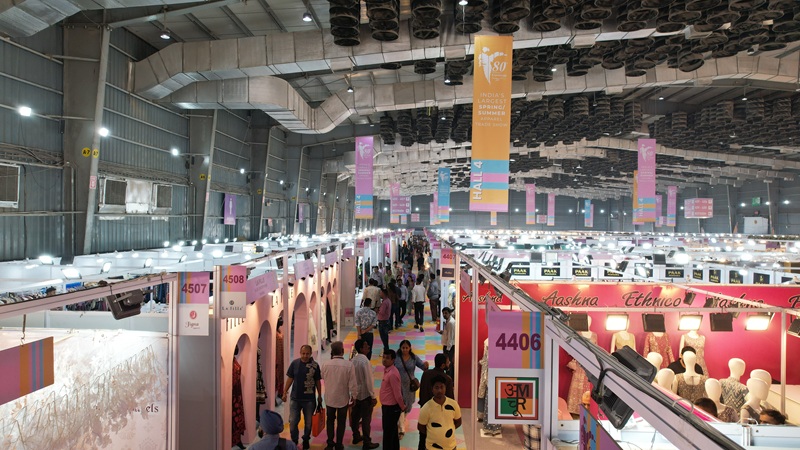
Asia Fashion Fair will be held in Japan, July 5 to 7, 2016. This is a clothing and textile fair started in 2003, and is held three times a year. Every year, there are more than 10,000 buyers visiting AFF. Many Asian enterprises will exihibit their products. The fair attracts many high quality suppliers and increasingly plays a big role in the industry.
Japanese exporters have been paying more attention to the textiles and garments supplied by various production bases in Asia in recent years. This event showcases garments, accessories, fabrics, trims and home textile products and many more related products and services in the cosmetics and beauty products and fashion accessories industries.
Textiles have long played an important role in Japanese life. Japanese weavers and dyers used silk, hemp, ramie, cotton and other fibers, and a range of weaves and decorative treatments, to produce textiles of distinctive design and exceptional aesthetic merit.
As with many other Japanese arts, Japanese textiles historically have developed through an interaction of external influences and indigenous techniques and design choices, and a tendency to develop both technology and aesthetics to a high degree of refinement.
www.asiafashionfair.jp/en/exhibitor/
There was a slump in local production of cotton during 2015 in Pakistan. So, this time the ministry of textile industry wants cabinet support for an action plan to ensure the country’s textile manufacturers receive enough cotton supplies.
According to government data, Pakistan’s cotton production dropped 33.85 per cent to 9.71 million bales during this past 2015 growing season. The fall was particularly pronounced in Punjab province. Pest attacks, inferior inputs and sliding prices are key reasons for the low output, ministry officials say.
The ministry has recommended waiving sales tax and duties on cotton imports to help support mills in the short term. Along with this a minimum support price for Pakistan-produced cotton to stem the trend of growers switching to other crops in wake of falling global prices. The ministry wants to ensure a ready supply of local raw materials for small- and medium-sized textile units that lack the capacity to import directly.
As per figures, the annual cotton requirement of the textile industry is 16 million bales against the local production of 9.7 million bales this year. The gap is wide and may grow if the government does not address the issue.
The country produced 14.71 million bales in the same period of last year against domestic demand of 15 million bales from the textile industry. According to the Pakistan Cotton Ginners’ Association (PCGA), cotton output dipped to 5.95 million bales in Punjab during the last growing season from 10.74 million bales harvested a year earlier (2014). Sindh province’s production fell marginally to 3.77 million bales, compared with 3.96 million bales in the previous year.
Many experts opine that the government has never been sensitive to the rural economy. And the current policies might drag the country into losing its inherent strength in agriculture. But Khawaja Anis, president of the Pakistan Cotton Ginners’ Association, has gone on record saying that the industry was happy to import cotton, as long as it was cheap:
At a workshop conducted in Hanoi, Nguyen Cam, Deputy Minister of Industry and Trade, discussed Vietnam’s textile and apparel sector. The workshop discussed ways to promote the participation of APEC small-and medium-sized enterprises (SMEs) of textile and apparel global value chains. The aim of the event was to support the effective integration of SMEs into the APEC region. There is a need for SMEs to participate in the global value chains (GVCs) in general and the apparel sector in particular.
The value chain follows the creation of products or services through different production phases, including physical transformation, the input of various manufacturing services, the distribution of products to consumers and their disposal after consumption. These activities can be conducted within the enterprises of a particular geographical area.
What emerged from the workshop is that the GVCs are a new and more comprehensive approach to international divisions of labour. However, access to international divisions of labour based on GVCs would help enterprises have a better understanding of their position in the global market, and therefore they can actively select appropriate phases to maximise their benefits.
Pham Quynh Mai, Deputy Director of the Multilateral Trade Policy Department under the Ministry of Industry and Trade, discussed the difficulties faced by the textile and apparel sector despite its fast growth. The sector is still depending on raw materials and materials imported from foreign countries, especially China. To access markets, enterprises need knowledge, while SMEs should sign design and outsourced manufacturing contracts with large enterprises to learn from their experiences, according to Nguyen Huong Tra, a SME development expert at the workshop.
"Recently, at the Tranoi New York, the big American fashion event, one saw a certain paradigm shift. A number of European exhibitors landed there seeking to test waters. The aim was to find new customers to replace shrinking sales in the stagnant European economy and to make up for the lost export opportunities brought about by EU's boycott of Russia."

Many Italian and French designers are now increasingly looking to North American buyers to make up for the continuing shortfall in demand because of the shrinking sales in Europe. EU sanctions on trade with Russia, has also added to their woes.
Wooing the US consumer…
Recently, at the Tranoi New York, the big American fashion event, one saw a certain paradigm shift. A number of European exhibitors landed there seeking to test waters. The aim was to find new customers to replace shrinking sales in the stagnant European economy and to make up for the lost export opportunities brought about by EU's boycott of Russia.

Among the many European exhibitors making their debut in the North American market was Bagutta, the Italian shirt manufacturer. According to Ivan Demartis, the company's Retail/Export Co-ordinator due to the current economic trends, they are now more focused on international fairs and events. While, in Italy at least, the economic situation is getting better, however, it is not expected to be back like before. Therefore, brands are looking at better opportunities in international markets beyond Europe. However, Demartis opine this is something of a challenge because of the variations in taste, one has to present a strong identity, and communicate that identity and the quality of the product.
According to Enrico Colombo, Owner of Printed Artworks, an Italian fabric printer based in Milan, trading conditions are tough now as compared to earlier. Now the market is worldwide, but the quantity of buying has fallen. Besides the slow home market, a number of European exhibitors were also feeling the adverse effects of sales lost due to trade sanctions against Russia. Experts feel the fight with Russia limited their business as Russia had supported and sustained the market for 10 years. And now all that market is lost. Even for established brands the going has been tough to break into newer markets. Mahna Mahna a bag maker from Japan, despite its historic connection with the US, has been finding it t difficult to break back into North America.
Predictably at an event dominated by European brands, the consensus was that consumers value products made in the continent. According to Sarah Zafrani, a Fashion Designer with Paris-based Venera Arapu being made in Europe is definitely seen as a guarantee of higher standard. One has also seen a polarisation in US tastes in both the formal and informal sectors. While the Americans like sportswear there is also demand for high-end, dressy clothes. Even though sportswear is still a strong force in the US, there is some suggestion that Americans are starting to feel the need to smarten up. There has been a transition towards 'Athleisure' with sneakers and sport pants.
Maredi Moda Cannes will be held November from 8 to 10, 2016. This is a trade show for beachwear and lingerie fabrics and accessories, outsourcing and new trends. There will be workshops, presentations and discussions on innovations in beach wear, new trends, business models and also an arena for professionals to meet.
The show promotes creativity and Made in Europe styles. Maredi Moda is currently the most qualified international meeting point of printed and plain fabric producers, accessory makers and specialized manufacturers from the Euro Med area for beachwear and underwear. It today represents the only reference point worldwide for swimwear.
Maredi Moda stands out as a reliable partner for all those companies that avoid mass production and large-scale downgrading in favor of a quality-oriented perspective. The beachwear and underwear sector is experiencing a lively recovery. The earlier edition of Maredi Moda Cannes closed with a four per cent rise in visitors compared to previous editions. The event hosted 2870 buyers coming from countries like Italy, France, Spain, England and Germany.
Maredi Moda is organized by Maredi Moda Scarl, a non-profit consortium, to promote European high quality production of textiles and accessories for beachwear and underwear produced by European companies.
www.maredimoda.com/
Vietnam’s textile industry is rapidly expanding. It has every chance of becoming the world’s leading textile producer within the foreseeable future. The Vietnamese textile industry currently ranks fourth globally in terms of size, behind textile giants China, India, and Bangladesh.
In 2015, Vietnam’s textile industry exported $27.3 billion worth garments and employed 2.5 million workers, constituting a fifth of all new jobs created in the country.
The domestic supply chain accounts for 35 per cent of the materials for the textile industry and can reach 50 per cent in the next five years, allowing Vietnam to position itself as a global leader in textile production. The large and growing population of over 90 million and the country’s location at the intersection of the world’s busiest shipping lanes are favorable for the transport of goods by sea.
Vietnam possesses all of the requisite characteristics to become the center of international textile production. It can supply 10 per cent or more of the global demand, secure sustainable development for 20 to 30 years. It possesses an established supply chain with 50 to 60 per cent of the materials domestically sourced, has a relatively large domestic market and has access to seaport networks convenient for the shipment of products in the shortest possible time.
The North American retailers’ group has cut out 17 more readymade garment factories of Bangladesh from its supplier list. The reasons being cited are either charge of failure to make adequate remediation progress or closure or relocation of some units.
So, now the number of readymade garment factories with which the Alliance for Bangladesh Worker Safety, the platform of the North American brands, cut business relations due to noncompliance reached to 59. The total number of RMG factories in which global buyers cut business relations reached to 72 with 13 factories terminated by the European retailers’ group — Accord on Fire and Building Safety in Bangladesh.
BGMEA leaders are likely to sit with the Alliance on April 4 to discuss inspection-relates issues including escalation process. According to an Alliance announcement, 17 factories have been suspended from its supplier list due to their failure to comply with review panel’s recommendations, closure or relocation and unethical behaviour by factory management.
BGMEA vice-president Mahmud Hassan Babu has gone on record saying that the announcement by the retailers’ groups might affect business of these factories with others. Reports, however, suggest that the factories suspended by the retailers’ groups are doing business with a number of buyers who are not signatory of the Accord or the Alliance.
Fashion houses of repute have long been experimenting with 3-D-printed show pieces for the runway. But the University of Hertfordshire in England has now created a collection of wearable garments using the technique.
“We wanted to do something with 3-D printing with clothing or garments that are wearable rather than these flashy showpieces that one couldn’t really wear,” said Shaun Borstrock, Associate Dean and Head of the Digital Hack Lab at the university. “It’s a kind of collaboration between traditional dressmaking technique and technology, hence 3-D printing.”
Borstrock headed the project, working alongside the university’s Modeclix team and the 3-D specialist Mark Bloomfield. They used an EOS Formiga printer to create eight dresses and two headpieces, which can all be customized to any shape or size and made in a range of colors. The silhouette and size can also be adjusted after printing.
“We’re right at the edge with what we can do with the technology,” said Bloomfield. Printing also allows us to experiment with color and patterns. We’ve done some based on checks and we’re also looking at how we can take images and translate photographs into actual printed materials that we can work with.”
The duo used selective laser sintering, a process that uses a white nylon powder that’s bonded layer by layer. The production time for a garment varies depending on the complexity of the design. Dresses can take approximately 62 hours to create. Printed items are then cleaned and hand-dyed with each garment designed with dressmaking methods, linking panels together. The line will be available to view online on the university’s website.
Bloomfield added: “If you have a hole, you can catch the link and we can replace it. You don’t have to throw the whole garment away. We can also use those links again. We can change the shape of the garment you bought. If weight is an issue and your weight fluctuates, it could be something where we can add in a panel to make it larger, or take it away to make it fit you when you lose weight. So you don’t have to throw the whole thing away and start anew.”
In terms of production, Borstrock noted that 3-D printing is efficient. “If you’re in New York and you wanted a top or a skirt, we could send the file to New York and it could be assembled by somebody there,” said Borstrock. You don’t have to be a user of the software or understand the printing process to put the garment together, that’s what is amazing about it. Anybody can do it.”