FW
Vilebrequin unveils innovative customization boutique in Paris
Vilebrequin, nestled within the G-III group's array of brands, including DKNY and Karl Lagerfeld, is blazing new trails with the inauguration of an innovatice distribution concept store, spotlighting customization as its focal point.
Recently debuting a boutique on Paris's Rue de la Paix, Vilebrequin is revolutionizing swimwear with bespoke designs adorned with precious stones on silver accents. Embracing an artistic narrative, the boutique showcases limited edition embroidered swimsuits from the esteemed "Mistral" series, akin to museum exhibits.
Roland Herlory, Vilebrequin's CEO with a rich background including a stint at Hermes, expressed pride in pioneering this 'couture' venture. He elaborated on plans to tour these unique pieces across prominent European boutiques throughout the summer.
Concurrently, Vilebrequin is broadening its horizons, venturing into lifestyle diversification with the launch of "Vilebrequin Beach" destinations. Herlory envisions these locales as idyllic settings where patrons can embody the brand's ethos of vacation elegance.
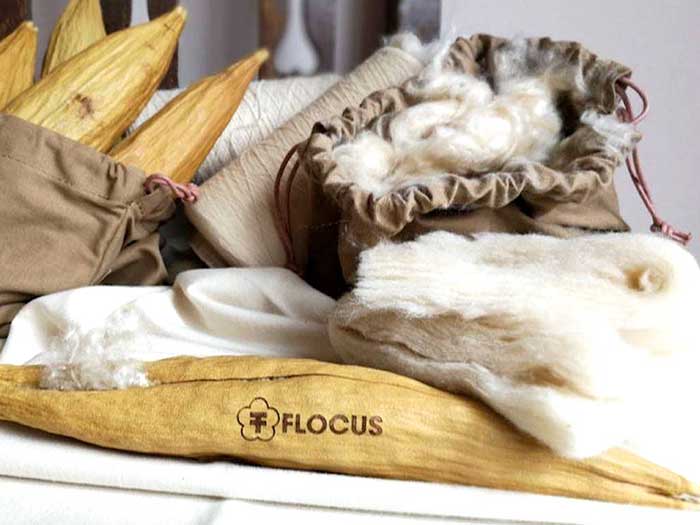
The brand's sustainable ethos remains unwavering, collaborating with partners such as Woolmark and Reda Active to reintroduce natural fibers like wool and silk into their repertoire. Herlory envisions a future where synthetic fibers are entirely supplanted by their natural counterparts, aligning with principles of sustainability and durability.
Additionally, Vilebrequin is meticulous in adapting its aesthetic to resonate with each locale, as exemplified by collaborations with renowned designer Vincent Darré for the Cannes and Abu Dhabi beach locales, with plans underway for a Miami rooftop pool concept infused with the city's iconic Art Deco palette.
Vilebrequin's avant-garde approach, blending customization, sustainability, and locale-specific design, propels it to the vanguard of haute swimwear innovation, promising a future where luxury meets conscience in sun-soaked elegance.
Born Living Yoga targets revenues worth €25 million in 2024
A Spanish activewear and athleisure brand, Born Living Yoga plans to generate revenues worth €25 million in 2024. The company’s achieved revenues worth €18 million in 2023 as distribution strategies enhanced. The brand launched its first flagship store and initial in-store corners during the year. This year, the brand plans to drive growth through expansion in the international markets.
According to Alvaro Roca, Ariaane Puig, Co-founders, 2023 was a transformative year for the company as it adjusted its goals mid-year by reducing discounts and increasing wholesale activities, which raised our average e-commerce ticket by 11 per cent.
Venturing into retail, last year, the brand opened its first store in Barcelona’s L’Illa Diagonal, establishing corners in El Corte Inglés centers in Pozuelo de Alarcón (Madrid) and Málaga, and joining the WOW center on Madrid’s Serrano Street.
This year, Born Living Yoga aims to not only establish 10 to 12 physical points of sale but also open more standalone stores. Internationally, the brand plans launch its first proprietary retail space in Mexico this summer, in collaboration with El Palacio de Hierro.
The United Kingdom is another key market where Born Living Yoga will be featured in six John Lewis stores and on their e-commerce platform starting from the 2024 fall/winter season.
Founded in 2017, Born Living Yoga employs 40 people and has its headquarters and operations in Spain. Upcoming initiatives include launching a global version of its online store, currently available in Europe and Mexico.
Women’s ready-to-wear label Plan C to launch first menswear collection at Pitti Uomo
Italian women's ready-to-wear label Plan C is gearing up to launch its first menswear collection at the Pitti Uomo show, scheduled to take place in Florence from June 11-14.
The new menswear collection for Spring/Summer 2025 offers easily matched items, including bags, backpacks, and sandals.
The collection combines tailored looks with sportswear and workwear-inspired pieces, all distinguished by a vibrant palette and textural fabrics. It features garments with special finishings and sophisticated materials such as cotton poplin, light textured cotton, high-tech textiles, and various wools. Additionally, Plan C will preview several looks from its upcoming womenswear collection at Pitti Uomo.
In just a few years, the Italian women's ready-to-wear label Plan C has carved out a significant niche in the designer fashion market. Since its inception in 2018 by Carolina Castiglioni and her family—who were also behind Marni—the brand has captivated nearly 200 top multibrand retailers worldwide and has opened four monobrand stores.
In recent seasons, Plan C has seen steady revenue growth and has expanded its focus on accessories. Japan remains the brand's primary market, contributing to 30 per cent of its total revenue, with three stores in Tokyo at Isetan Shinjuku, Ginza Six, and Hankyu. The label also has a store in Seoul, South Korea, at the Galleria department store, and operates its own e-shop.
Tory Burch announces three key leadership appointments
US fashion brand Tory Burch has announced three key leadership appointments. The brand has appointed Christophe de Pous as the new President-North America. He will oversee the brand’s retail, e-commerce, and wholesale operations in the region from the Tory Burch headquarters in New York City.A seasoned global executive with extensive experience in luxury fashion and beauty, De Pous joins from Clarins, where he was President of Global/International Markets. His prior roles include President and CEO of Gucci Americas Inc. and President and CEO of Gucci Japan.
Additionally, Beverly Morgan has been appointed as Chief People Officer. Morgan will lead the company's global hiring, retention, and employee engagement strategies. She comes to Tory Burch from LVMH, where she was Chief People Officer of Benefit Cosmetics. Morgan's previous experience includes talent management roles at Alexander Wang and Hugo Boss. She will also be based in New York and succeeds Keisha Smith.
Emilia Fabricant has been promoted to President, Chief Merchandising and Global Supply Chain Officer, effective immediately. Fabricant joined Tory Burch in 2019 as EVP and Chief Merchandising Officer and took on additional responsibilities as Chief Supply Chain Officer in 2023.
Candiani Denim, Grassi to redefine workwear with TRC launch at Pitti Uomo
Renowned Italian premium denim manufacturer, Candiani Denim and a veteran in workwear and technical fabric manufacturing, Grassi are set to launch TRC, a contemporary men's no-season workwear brand, at the upcoming June edition of Pitti Uomo. This collaboration aims to redefine workwear with a modern twist, emphasising both durability and sustainability, core values embraced by both companies.
Named after Candiani's historical designation, Tessitura di Robecchetto Candiani, the TRC collection features innovative designs that blend vintage and futuristic elements. Comprising approximately 50 pieces, the collection includes pants, jackets, shirts, and outerwear, all inspired by traditional workwear in their construction, details, and treatments.
The collection offers a variety of trousers, including a loose-fit 5-pocket style available in four fabrics, two of which are selvedge denims offered in a diverse range of washes. The tops range from a classic work shirt to a mandarin-neck shirt and a short-sleeved bowling shirt.
A standout in the outerwear category is the classic trucker jacket, which honors denim heritage while functioning as a utilitarian uniform. The collection also includes 5-pocket jeans and a selection of garment-dyed t-shirts and sweatshirts.
Materials used in the TRC collection include denims made from post-consumer recycled cotton and regenerative cotton. Additionally, the collection features Batavia fabrics enhanced with innovative materials such as Blue Seed—a unique hybrid regenerative cotton—and Graphite, a cotton fabric integrated with graphene.
At Pitti Uomo, TRC will unveil Mineral, a capsule collection crafted from Candiani's new Mineral Denim. Made from Blue Seed cotton and developed in collaboration with Gowan Seed Company, this fabric is enriched with minerals and reinterpreted with Grassi’s technical expertise. The TRC Mineral capsule collection will be available for purchase starting October 2024 at the Candiani Denim concept store in Milan and online.
Debuting at the Florentine event, the TRC collection will showcase pants, outerwear, and shirts designed with advanced technical features and environmentally conscious technologies. These garments will boast high durability, water resistance, antimicrobial properties, and temperature regulation. The TRC collection will be available from January 2025, both online and in selected stores.
Siyaram Silk Mills records Rs 654.18 crore in total income during Q4, FY24
For the fourth quarter ended March 31, 2024, Siyaram Silk Mills reported a significant increase in total income to Rs 654.18 crore from Rs 514.46 crore in the previous quarter ended December 31, 2023. The net profit for Q4 FY2024 surged to Rs 69.03 crore from Rs 44.44 crore in Q3 FY2024.
On a year-on-year basis, the company's total income for Q4 FY2024 decreased by 7.31 per cent to Rs 654.18 crore from Rs 705.77 crore in Q4 FY2023. The company’s net profit declined by 21.68 per cent to 69.03 crore from Rs 88.14 crore in the same period the previous year.
For the financial year ended March 31, 2024, Siyaram Silk Mills reported a 6.3 per cent increase in to total income to Rs 2,129.65 crore from Rs 2,272.77 crore for the year ended March 31, 2023. The net profit for FY2024 declined by 26.39 per cent to Rs 184.75 crore from ₹250.99 crore in FY2023.
Revenues of Anarock rise 36% in FY24
Property consulting business and retail real estate specialist Anarock reported a 36 per cent Y-o-Y rise in revenues to Rs 566 crore in FY24 to total Rs 566 crore. The business plans to continue to invest to maintain its growth trajectory.
The company aims to penetrate more key markets this year with a vastly amplified services bouquet, says Santhosh Kumar, Vice Chairman, Anarock. The expansion will be supported by the growth in Indian economy.
In FY2023, Anarock’s revenues increased to Rs 416 crore with all its business verticals contributing to the growth. The business is keen to continue its growth momentum in the 2025 financial year and plans to increase its employee base to achieve this. At present, Anarock counts over 2,200 employees across both India and the Middle East.
Anarock was launched by Anuj Puri in April 2017. The business works in residential, commercial, and retail real estate, including shopping malls.
Apparel Group inks franchise agreement with Sandbox VR
In a groundbreaking move, leading fashion and lifestyle player, Apparel Group has inked a franchise agreement with premium located based virtual reality experiences provider, Sandbox VR.
The partnership will kick off with 25 locations across the Middle East. The foundation for this collaboration is laid by Apparel Group’s extensive reach spanning over 85 brands and more than 2,200 stores in 14 countries.
This alliance follows Sandbox VR’s recent accolade, being named to Fast Company’s prestigious list of the World’s Most Innovative Companies of 2024. Ranked second in the Augmented and Virtual Reality category, Sandbox VR is celebrated for delivering fully immersive virtual reality experiences to a global audience.
Neeraj Teckchandani, CEO, Apparel Group, says, more than just capacity expansion, this collaboration focuses on crafting groundbreaking experiences that blend technology and entertainment. Together, the two companies aim to set new benchmarks in the retail and entertainment industries.
KPR Mills registers mixed performance in Q4, FY24
KPR Mill registered a mixed performance in Q4, FY24 as its topline revenue decreased notably but profitability increased marginally year-over-year
The company's total revenue declined by 12.9 per cent Y-o-Y to Rs 1696.72 crore during Q4 from Rs 1,949.66 crore in the corresponding quarter previous fiscal. However, on a Q-o-Q basis, the company’s revenue grew by 36.69 per cent to Rs 1,241.31 crore from the previous quarter.
KPR Mill’s net income increased by 1.94 per cent Y-o-Y to Rs 213.61 crore from Rs 209.55 crore in the previous fiscal. On a Q-o-Q basis, the company profit rose substantially by 14.19 cent from Rs 187.06 crore.
Selling, general, and administrative expenses decreased by 0.88 per cent Q-o-Q to Rs 152.24 crore but increased by 6.56 per cent Y-o-Y from Rs 142.87 crore.
The company’s operating income rose by 28.16 per cent Q-o-Q to Rs 285.71 crore from Rs 222.94 crore and by 4.2 per cent Y-o-Y from Rs 274.2 crore.
Patagonia's Anti-Consumerist Message: Can a clothing company be sustainable and profitable?
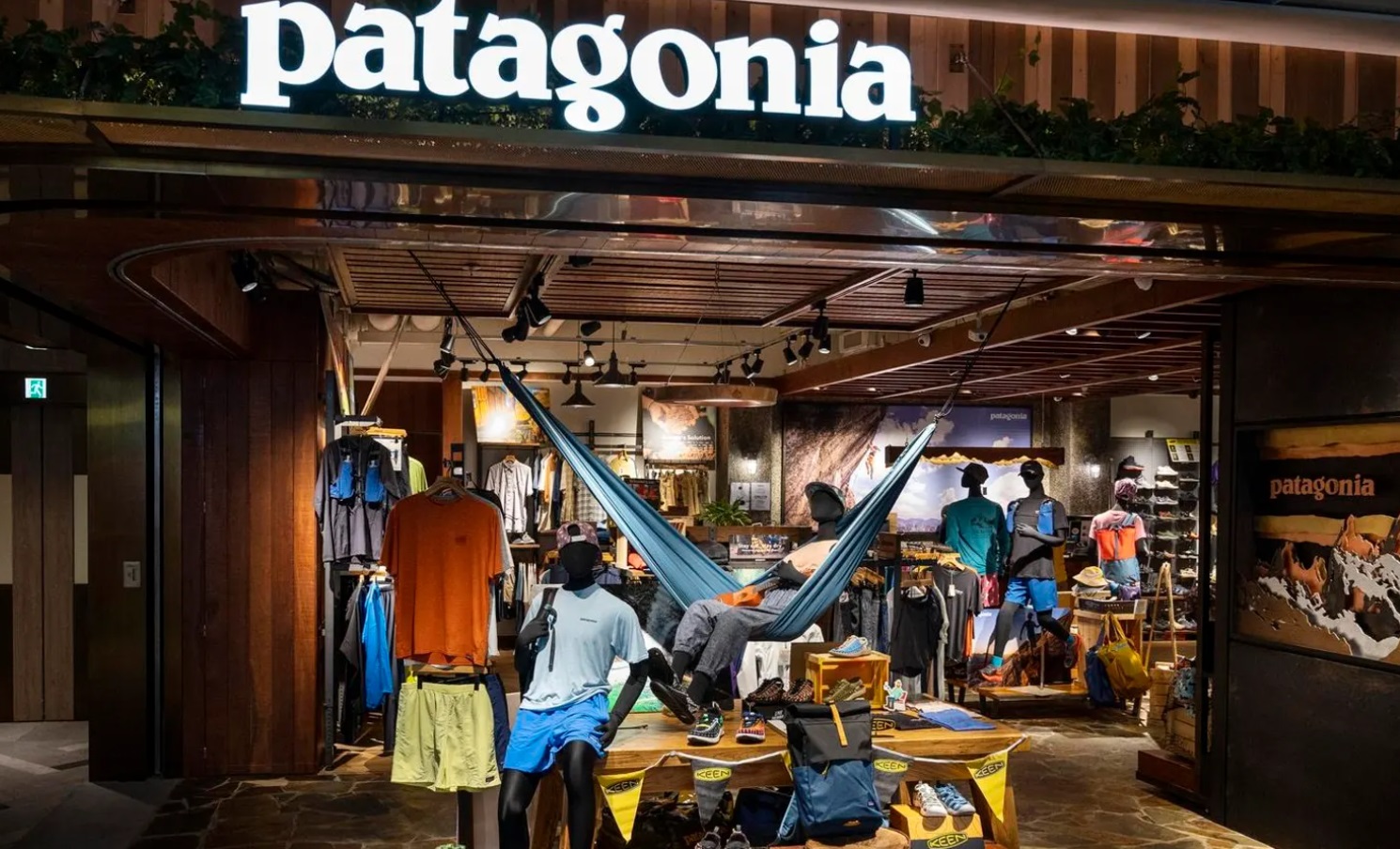
Patagonia, a well-known outdoor clothing company, is challenging the current throwaway culture in a new film titled ‘Shittropocene’. The film argues that most products today are poorly made and designed to break quickly, leading to overconsumption and environmental damage. It highlights, the current era is defined by mass-produced, disposable crap and calls for a reduction in consumption. However, the film is produced by Patagonia, a clothing company that sells expensive, high-quality clothing. This creates a tension between the film's message and Patagonia's business model.
In fact, the film's message is somewhat contradicted by Patagonia's own business model. The company is still a for-profit business that needs to sell products to survive. And while Patagonia's clothes are built to last, the film itself is a marketing tool designed to drive sales.
Is Patagonia's message genuine?
Patagonia's commitment to sustainability is undeniable. The company offers repair services, upcycling programs, and a resale site to extend the lifespan of its products. These initiatives are commendable and should be emulated by other brands. But Patagonia is also a growing company, which means it's producing more and more clothing. This raises the question of whether any clothing company can truly be sustainable in a system that relies on constant consumption.
The film's message about curbing consumption is undeniably important. However, it's difficult to separate this message from Patagonia's goal of selling more clothes. The film might backfire by encouraging viewers to buy less overall, including from Patagonia.
Patagonia's struggle with its message
Patagonia isn't the first company to grapple with this contradiction. In 2011, the company ran a famous Black Friday ad that said, "Don't Buy This Jacket." The ad was intended to spark a conversation about overconsumption, but it also resulted in a rise in sales for Patagonia. Patagonia acknowledges this internal conflict. The company believes it can be a force for good by encouraging people to consume less and buy higher-quality products. However, it remains to be seen whether this approach can be truly sustainable in the long run.
Patagonia is in a difficult position. The company wants to sell clothes, but it also knows that the fashion industry is a major contributor to climate change. The company's message is to encourage people to consume less, but it is not clear if this message is compatible with its goal of growing as a business.