FW
Karl Mayer Group showcases sustainable tech at JEC World
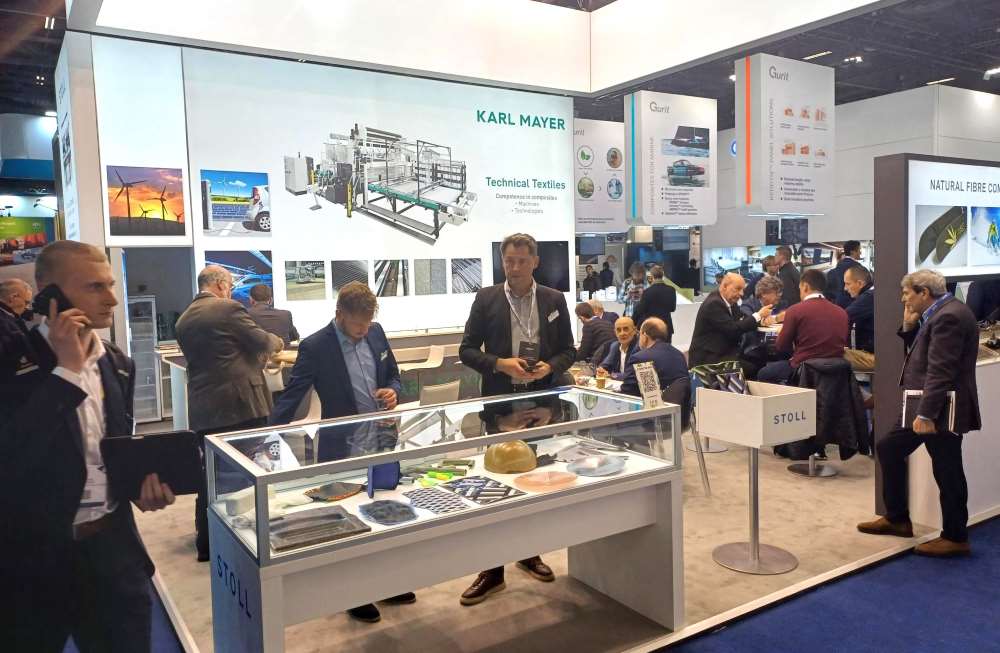
At JEC World 2024 in Paris, the Karl Mayer Group showcased its innovative technologies in multiaxial reinforcement fabrics and technical flat knitting solutions. While satisfied with the response, the company acknowledges a challenging economic landscape. Hagen Lotzmann, Vice President Sales, notes a pause in investments within the composites industry, attributing it to low demand and pressure on margins.
Market pressures and industry dynamics
Lotzmann identifies two significant pressures affecting the market: low demand and plummeting raw material prices. The dominance of glass fibers in the composite industry faces challenges due to stagnated growth in wind energy, disrupting demand and leading to oversupply issues. Additionally, disrupted supply chains from past crises and high energy costs further compound the industry's challenges.
Conversely, carbon non-crimp fabrics represent a stable market for the Karl Mayer Group, with a consistent project pipeline. Lotzmann emphasizes their competitive edge with the Cop Max 5 machine, enabling precise and efficient production tailored to specific applications.
Innovation in flat knitting and sustainability
Martin Legner, head of Stoll application technology, highlights the increasing importance of carbon fiber processing on flat knitting machines. The integration of thermoplastics in knitting technology presents promising innovations, such as durable housing cases, showcasing the potential for sustainable solutions in lightweight construction.
Lotzmann discusses the industry's openness to sustainability innovations, citing positive responses to exhibits like hemp-based skis. Despite growing interest, challenges remain, particularly in pricing and raw material extraction. However, Lotzmann asserts that technology, like multiaxial warp knitting machines, can significantly contribute to advancing sustainable practices.
Industry diversification and market prospects
While the sports industry shows openness to environmentally friendly innovations, automotive engineering remains cost-conscious. Nevertheless, the Karl Mayer Group continues to drive innovation across sectors, particularly in automotive composites, where their technology has been instrumental in projects such as the BMW i sub-brand.
As a longstanding development partner in the composites industry, the Karl Mayer Group remains committed to providing first-class expertise and innovative solutions. With a focus on sustainability and technological advancement, the company looks forward to addressing new challenges and driving progress in the industry.
Kontoor Brands appoints Tom Waldron as Chief Operating Officer
Kontoor Brands, Inc., renowned for its iconic brands Wrangler and Lee, has named Tom Waldron as its new Chief Operating Officer, effective March 19, 2024. This strategic move aligns with Kontoor's initiative, Project Jeanius, aimed at streamlining operations and enhancing efficiency.
Scott Baxter, President and CEO of Kontoor Brands, expressed confidence in Waldron's leadership, citing his instrumental role in driving growth and profitability for Wrangler amid challenging global conditions. Waldron brings over three decades of experience to his new role, where he will oversee global operations for both Wrangler and Lee, as well as the company's supply chain.
Joining Waldron in key executive positions are Jenni Broyles, appointed as EVP, Global Brands President for Wrangler & Lee, and Ezio Garciamendez, named EVP, Chief Supply Chain Officer. Broyles, with a robust background in brand management and marketing, is poised to drive expansion and innovation. Meanwhile, Garciamendez, recognized for his expertise in enhancing supply chain efficiencies, will continue to optimize Kontoor's global operations.
In tandem with these appointments, Christopher Waldeck, the former EVP, Co-Chief Operating Officer, Global Brand President for Lee, will transition out of his role by June, facilitating a seamless shift in the company's operational structure.
Baxter expressed gratitude for Waldeck's contributions over the past five years, signaling a forward-looking approach as Kontoor Brands gears up for transformative growth under Waldron's leadership.
ITM 2024: Pioneering sustainable textile tech & digitalization
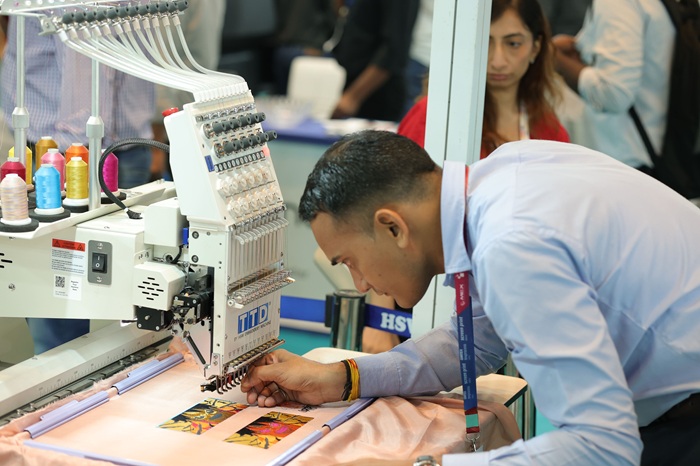
The upcoming ITM 2024 Exhibition is set to showcase the forefront of textile innovation, emphasizing sustainable solutions and digitalization trends. Hosted by Tüyap Tüm Fuarcılık Yapım A.Ş. and Teknik Fuarcılık A.Ş., in collaboration with the Textile Machinery and Accessories Industrialists Association (TEMSAD), the event will unveil innovative advancements in textile machinery, technologies, and design concepts.
Scheduled from June 4-8 at the Tüyap Fair and Congress Center, the exhibition promises a comprehensive display of state-of-the-art machinery, emphasizing sustainability and digital design trends. Amid growing concerns about environmental impact, ITM 2024 aims to spotlight innovations tailored for a greener, more efficient textile industry.
In a pivotal shift towards sustainability, ITM 2024 will feature machinery and equipment designed to minimize environmental footprint, utilizing recyclable materials and energy-saving technologies. The event will also highlight advancements in digitalization, artificial intelligence (AI), and automation, revolutionizing production efficiency and cost-effectiveness.
With a spotlight on new manufacturing techniques such as AI and automation, ITM 2024 anticipates a convergence of industry leaders, exhibitors, and innovators, fostering discussions on the future of sustainable textile production. Themes including smart weaving machinery, energy efficiency, and waste reduction solutions will take center stage, reflecting the industry's commitment to eco-conscious practices.
As the textile industry continues its trajectory towards sustainability and digital transformation, ITM 2024 emerges as a pivotal platform for collaboration and innovation, shaping the future of textile manufacturing.
GL Events appoints Florence Rousson as new President for Premiere Vision
A company specialising in trade show organisation, and the new owner of Premiere Vision since February 2023, GL Events has appointed Florence Rousson as the new president of the trade show’s management board. This decision is a part of GL Events' broader strategy to expand its services and events into new geographic markets.
With 13 years of experience within GL Events exhibitions and over a decade at Eurovet and the Fédération de la Maille, Rousson brings extensive expertise in the textile and fashion sectors to her new role.
Rousson's appointment builds upon the groundwork laid by Gilles Lasbordes, the past president, who has been instrumental in shaping the show since 2007 under the leadership of Philippe Pasquet.
Rousson's strategic focus will encompass key pillars such as curating a selective international offering, providing cutting-edge fashion insights, fostering creativity and innovation, supporting emerging designers, and addressing both current and future industry challenges.
In the midst of a globally uncertain economic landscape post-COVID crisis, compounded by a delicate mid-market and pressing sustainability concerns, GL Events Group reaffirms its dedication to foster the growth of its Fashion Division centered around Première Vision.
Boasting an impressive track record, Premiere Vision attracts over 86,000 visitors from 120 countries and hosts more than 3,500 exhibitors from across 48 countries at 11 annual events spread across Europe, North America, and Asia.
The upcoming edition of Première Vision Paris is scheduled to take place from July 2 to July 4, 2024, at Paris Nord Villepinte. The show aims to enhance its international footprint through an unprecedented Hosted Buyers program and the active participation of key global industry players, particularly from Europe, Asia, and the Americas.
Need to upskill workers to achieve $40 billion export target by 2030: Chairman, AEPC
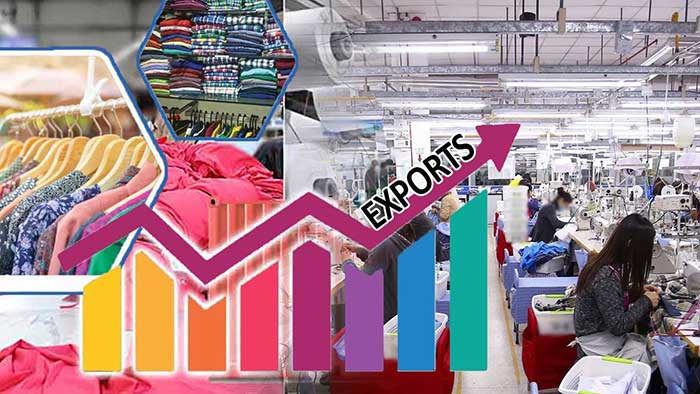
Highlighting the persistent challenge of a shortage of skilled workers, particularly during the peak seasons, Sudhir Sekhri, Chairman, Apparel Export Promotion Council of India (AEPC), says, the industry needs to not only boost its production capacity significantly but also upskill workers to help achieve the set target of $40 billion in garment exports by 2030.
Skilled workers like tailors and quality checkers are still not sufficient as during the peak season they go to their native villages thereby creating shortage, Sekhri adds.
He further notes the existing limitations in Indian export houses' ability to handle core/basic products required in large quantities and stressed the necessity of ramping up capacities to meet demand.
Additionally, the AEPC aims to train approximately 150,000 skilled workers annually to address the shortage and meet the growing demands of the industry, he adds.
Tale of Two Titans: Why retail brands diverge in financial fortunes

The retail landscape is a story of two halves, with established brands facing contrasting financial realities. For example, sportswear giant Adidas is facing financial struggles while fashion leader Inditex, owner of Zara, reports record profits. This contrast raises the question: what factors are driving these contrasting fortunes?
A shift in consumer trends
While sportswear giant Adidas reported its first annual loss in over 30 years in 2023, Zara owner Inditex, the world's biggest fashion retailer, enjoyed record profits for the same period. This disparity highlights the complex interplay of factors influencing brand performance. A look at Adidas stats show, in 2023, it reported a net Loss of €58 million, first since 1992. What’s more it expects 5 per cent North American sales decline in 2024. By contrast, Inditex net profit in 2023 was €5.4 billion, its highest ever. Sales growth was 10.4 per cent.
Adidas is grappling with a decline in North American demand for sportswear, impacted by overstocked retailers and potentially a waning appetite for athletic apparel. Brand management and inventory control is another issue. The severing of ties with Kanye West and the Yeezy line, once a major revenue driver, further complicates matters. Conversely, Adidas might be struggling to adapt its offerings to meet changing consumer shifts.
Inditex, on the other hand, seems to be benefiting from a shift towards value fashion. Their strategy of price increases appears to be well-received, with consumers prioritizing affordability without sacrificing style. Focus on dynamic sales strategies and price adjustments to maintain profitability despite inflation has worked well. Inditex, also demonstrates success in managing inventory levels, a crucial factor in today's economic climate. It also capitalizes on current fashion trends like "low-rise suede sneakers" to drive sales growth. Moreover, Inditex highlights a strong recovery in China, a significant market. In contrast, Adidas acknowledges a weaker North American market but anticipates growth in the second half of 2024. Geographic diversification seems to be a crucial factor for success.
Strategic manoeuvres
For course correction, Adidas is taking corrective measures. CEO Bjorn Gulden is focusing on core brands like Samba and Gazelle, aiming to recapture market share and improve retailer relationships. Inventory reduction efforts are underway, with plans for at least 10 per cent underlying business growth in the latter half of 2024. Inditex's success on the other hand can be attributed to its focus on dynamic sales strategies and a willingness to adjust pricing. Their diverse brand portfolio, catering to various consumer segments, seems to be another winning factor. Their global reach and focus on a wider range of apparel appear to be advantages.
Analysts weigh in. As Thomas Joekel of Union Investment highlights Adidas' positive trajectory under new leadership, while Cristina Fernandez of Telsey Advisory Group acknowledges lingering uncertainty surrounding Yeezy sales. The future remains to be seen. Adidas projects recovery, while Inditex enjoys a strong position.
Indeed, the contrasting fortunes of Adidas and Inditex highlight the dynamic nature of the retail industry. Adaptability, strategic inventory management, and responsiveness to consumer trends are key differentiators. While the future remains uncertain, both companies offer reasons for cautious optimism, with Adidas seeking to regain lost ground and Inditex building on its record-breaking year.
Bangladesh’s apparel exports to EU declines by 34% in January 2024: Eurostat
In January 2024, apparel exports by Bangladesh to the European Union declined by nearly 34 per cent in value as consumer spending on clothing declined amidst an economic slowdown within the EU.
Data released by Eurostat shows, in January this year, Bangladesh exported 33.92 per cent less apparels to the EU totaling a value of €1.19 billion compared to the previous year's €1.80 billion.
This downturn in demand wasn’t exclusive to Bangladesh alone, highlighted the exporters. It impacted all major RMG exporting countries including the United States and the EU, due to the economic repercussions of the Russia-Ukraine conflict, they added.
Despite the challenging circumstances of 2023, exporters expressed optimism as demand for apparel began to pick up in Western markets, including the EU and the US. Consequently, export orders showed signs of increase in Bangladesh.
Overall apparel imports by the EU also declined by 22.91 per cent to €6.25 billion in January 2024 compared to € 7.9 billion in the same period last year. China remained the top apparel exporter to the EU, while Bangladesh and Turkey retained their positions as the second and third highest exporters respectively.
Specifically, EU’s apparel imports from Turkey decreased by 9.2 per cent to €827.70 million in January 2024 from €911.62 million in the same month of 2023. Imports from India and Vietnam also declined by 34.47 per cent to €270.72 million euro and 16.02 per cent to €296.49 million in January 2024 compared to the previous year.
CHT, Fulgar collaborate to offer sustainable textile solutions at Performance Days
A specialty chemicals company, CHT and a global manufacturer of man-made fibers, Fulgar have collaborated to introduce innovative and sustainable solutions for the textile industry at the ongoing Performance Days trade show in Munich on March 20-21, 2024. One of their premier innovations includes the CHT's BeSo Responsible project that focuses on optimising resource utilisation during textile dyeing processes.
Representing ‘Best Solution, the BeSo Responsible project offers a diverse range of cutting-edge solutions that can be customised and combined to meet the unique performance and sustainability requirements of different companies. One of these solutions is the BeSo Responsible Shortcut process, a groundbreaking approach to dyeing Fulgar's Q-Cycle yarn. This process efficiently integrates dyeing and fixing (post-treatment) into a single cycle, resulting in significant savings in time, water, and energy consumption.
CHT's Bemacid acid dyes, such as Bemacid N-TF or Bemacid F-T, play a crucial role in enhancing the development of this process. These dyes provide high color fastness properties, thereby improving the overall quality and durability of the dyed yarn.
A notable innovation, Fulgar's Q-Cycle yarn is a 100 per cent recycled polyamide fiber produced through a third-party controlled mass balance approach. This revolutionary fiber is manufactured without using virgin raw materials from crude oil. Instead, it relies on an innovative chemical recycling technology that replaces traditional raw materials with pyrolysis oil derived from end-of-life tires. This approach not only reduces CO2 emissions by up to 50 per cent during yarn production but also addresses environmental concerns by repurposing waste materials.
The application of CHT's Shortcut process to Fulgar's Q-Cycle yarn offers numerous benefits. It maintains the functional and aesthetic advantages of products made from virgin polyamide while incorporating environmental considerations.
Kraig Labs recruits top Indian sericulture expert for spring trials
Kraig Biocraft Laboratories, a key player in recombinant spider silk commercialization, unveils its latest strategic move as it welcomes Nirmal Kumar to its senior management team in Vietnam. Kumar, renowned for his 37-year tenure at India's Central Sericulture Research & Training Institute (CSRTI), joins Kraig Labs to lead the spring production trials and launch the BAM-1 hybrid.
With expertise spanning silkworm breeding and mulberry cultivation, Kumar's appointment signals Kraig Labs' commitment to elevating its production capabilities. His role extends beyond overseeing operations; he's tasked with refining production protocols, training staff, and charting expansion strategies in Vietnam.
Founder and CEO Kim Thompson expresses enthusiasm about Kumar's inclusion, citing his invaluable expertise in advancing recombinant spider silk commercialization. Kumar's integration into Kraig Labs marks a significant stride towards achieving the company's production goals and underscores its dedication to innovation in the silk industry.
Roica and Tencel unite for circular economy
In a significant stride towards a circular economy in the textile industry, leading innovators Roica by Asahi Kasei and Tencel by Lenzing AG have forged a pioneering partnership. This collaboration heralds a new era of sustainable and circular-driven textiles, marking a pivotal moment in textile technology and sustainability.
Roica and Tencel have leveraged years of research and development to introduce contemporary, responsible, and high-performing fibers. The partnership aims to cater to the evolving needs of consumers and designers, offering fabrics that seamlessly blend quality with environmental consciousness.
At the core of this collaboration is a shared vision to accelerate progress towards a circular economy, ensuring improved end-of-life solutions for fabrics and garments. Roica introduces its innovative V550 stretch yarn, renowned for maintaining shape and color while boasting high eco-responsibility. Meanwhile, Tencel offers fibers sourced from controlled or certified wood, maximizing resource efficiency and minimizing environmental impact.
The highlight of this partnership lies in the technologies embedded within the fabrics. Roica V550 stands out as the world's first sustainable degradable yarn, certified under ISO 14855-1, while Tencel fibers boast biodegradability in various environments.
Shinohe Hiroaki, Chief Marketing Officer of Roica Europe, emphasized the collaborative effort's significance in shaping the future of sustainable fashion. He stressed the creation of textiles that not only excel in performance and aesthetics but also contribute significantly to a more sustainable planet.
Similarly, Carlo Covini, Business Development Italy & Switzerland at Lenzing Italy, echoed the sentiment, highlighting the partnership's role in setting a new standard for responsible textiles. The combination of Tencel 's recycling potential and Roica 's innovative stretch degradable technology promises a close-to-circular approach solution for brands and consumers.
As part of the partnership, Brugnoli unveils the Yogatime collection, featuring three new articles crafted with these revolutionary yarns. These fabrics cater to various garment needs, ranging from soft T-shirts to elastic leggings, all while prioritizing sustainability and comfort. All items are Oeko-Tex Standard 100 certified, reinforcing the commitment to responsible production practices.
The collaboration between Roica and Tencel not only demonstrates a shared commitment to reducing environmental impact but also signifies a leap forward in textile innovation. As the textile industry embraces sustainability as a cornerstone principle, partnerships like these pave the way for a more eco-conscious future. Discover the Yogatime collection at Stand Brugnoli - N12 - Performance Days - Munich.