FW
India to announce new foreign trade policy to boost exports amid global slowdown
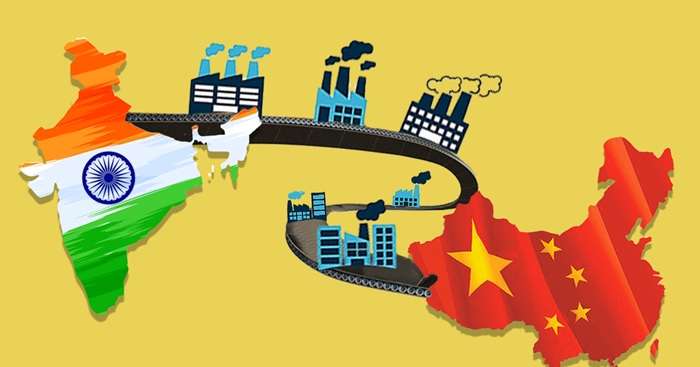
Commerce and Industry Minister Piyush Goyal announced India's much-awaited new Foreign Trade Policy 2023-28, aimed at boosting the country's exports amid a global economic slowdown.
The policy comes after several extensions of the previous foreign trade policy (2015-20), which ended in March 2020. The current policy was extended repeatedly due to the Covid outbreak and resulting lockdowns, with the latest extension given in September 2022 until March 31, 2023.
The new policy is expected to outline the vision statement for taking India's goods and services exports to $2 trillion by 2030, a significant increase from the current export level of around $500 billion. The policy is expected to focus on various areas such as simplifying export procedures, boosting the competitiveness of domestic industries, and diversifying India's export markets.
In addition to the focus on boosting exports, the policy is also expected to address some of the challenges faced by Indian exporters, such as the high logistics cost, lack of access to credit, and the need for skill development. The policy is also expected to promote sustainable trade practices and encourage the adoption of digital technologies to enhance efficiency and transparency in the export process.
India's foreign trade has been adversely affected by the global economic slowdown and the disruptions caused by the Covid pandemic. The new policy is expected to provide a much-needed boost to India's exports and help the country achieve its ambitious target of becoming a $5 trillion economy by 2025.
Women's segment to drive growth in online clothing rental market due to occasional wear pricing, environmental concerns
The online clothing rental market is set to experience a significant increase in size by USD 3.00 billion between 2021 and 2026, according to a new report by Technavio.
The market's growth momentum will slow down at a CAGR of 17.91%. The report also identifies the rising popularity of experiential marketing as a key trend in the market, with vendors incorporating consumer participation in various marketing activities to attract more consumers to their platforms. Experiential marketing campaigns, including live marketing, participation marketing, loyalty, and event marketing, are particularly effective in targeting millennials, who represent the most important target group for these efforts. This trend is expected to drive growth in the online clothing rental market during the forecast period.
A significant growth in the women's segment is forecasted due to the increasing popularity of renting clothing for different occasions, as occasional clothing wear is priced higher than rental options. The environmental impact of dumping unwanted clothing into landfills is also driving the adoption of online clothing rental services. Additionally, the increasing number of working women who prefer online shopping due to a hectic lifestyle is contributing to the demand for online luxury apparel.
Geographically, the APAC region is expected to contribute to 44% of the market's growth during the forecast period, driven by the demand for affordable fashion and a wide assortment of fashion goods.
While the growing e-commerce fashion industry is a major driver for the online clothing rental market growth, inventory management is one of the primary challenges facing the market. Vendors must maintain a strong inventory management system to avoid stock-outs and ensure timely replacement of older clothing items with new items.
Additionally, a high-speed reverse logistics system is needed to complete product returns. Weak inventory management could affect the overall business of vendors operating in the global online clothing rental market.
Bangladesh: DNCRP to take action against fashion brands found using price gun machines
The Directorate of National Consumers Right Protection (DNCRP) has warned fashion brands that their outlets may be temporarily closed if price gun machines are found during its market drives.
DNCRP officials issued the warning during a meeting with fashion outlet representatives at the directorate's office in Karwan Bazar, Dhaka. The director of the DNCRP emphasized that price tags should be attached to products at the factory level, not at showrooms or retail outlets. The change inprice tags has been noticed during market drives in the past year and, in most cases, the prices have increased after the change was made. The DNCRP director warned that actions would be taken if the rule was violated.
It has observed that some sellers from neighboring countries come to Bangladesh and rent a house to sell foreign clothes to customers. He noted that such activities harm local fashion houses. Actions will be taken against the market committee if irregularities are found in shopping malls.
The use of a pricing gun, a handheld device used to attach a price label to a product, is a violation of the DNCRP's rules.
China: Despite recovery in domestic sales, textile industry cautious about downstream demand
Recent trade events like Cotton Conference in Zhangjiagang, the Hangzhou Chemical Fiber Forum, and the Shanghai Yarn Expo have all attracted large crowds indicating a strong enthusiasm for face-to-face interactions. However, while the surge in attendance may suggest a booming market, there are concerns about the sustainability of this recovery.
The home textiles market, driven by the hotel industry, is expected to remain strong for some time. Increased business travel and tourism are also likely to drive some clothing consumption. Nevertheless, industry players are becoming increasingly cautious as new orders continue to decrease, and a worrying sentiment is beginning to rise.
Export sales have also been a cause for concern as data from China customs shows a sixth consecutive month of year-on-year decline in textile and apparel exports. Clothing accounts for over half of the total textile and clothing exports, with exports to Europe, the United States, and Bangladesh decreasing by over 30%. Only a few markets, such as South Korea, Kyrgyzstan, Russia, Brazil, Kazakhstan, Saudi Arabia, and Singapore, have shown some growth.
Although the recovery of domestic sales seems to be in stark contrast to the decline in export sales, the strength of the recovery still needs to be determined by the real downstream demand.
Overall, while the recent offline gatherings have been encouraging, caution remains as the sustainability of the recovery and the uncertainty of the export market continue to weigh on the industry.
Bangladesh's growth rate outpaces China's in EU apparel imports, despite increase unit price a concern
The EU's apparel imports from Bangladesh increased significantly by 35.69% in 2022, reaching $22.89 billion from $16.87 billion in 2021. Bangladesh is now the largest supplier of readymade garments to the EU. The overall EU apparel import figure in 2022 stood at $102.09 billion, a YoY growth of 20.97% from $85.23 billion in 2021.
China, the top apparel supplier to the EU, achieved a YoY growth of 17.01% to $30.14 billion in 2022, up from $25.76 billion in 2021. Turkey and India also witnessed growth rates of 10.09% and 21.02%, respectively. Meanwhile, Vietnam saw a 35.28% growth in its apparel imports to the EU, with Pakistan, Cambodia, and Morocco also witnessing significant YoY growth rates.
The unit price of apparel items also increased by 11.95% to $17.27 per kg, with Bangladesh's unit price remaining the second-lowest among the top ten suppliers, ahead of only Pakistan. In comparison, China, Turkey, India, and Vietnam all saw their unit prices grow, with China's unit price at $23.09 per kg, the highest among the top ten suppliers.
Manufacturers have noted that Bangladesh's cost of manufacturing has not gone up, but the apparel sector is facing inflationary pressures and high production costs due to the ongoing Russia-Ukraine war. Despite this, manufacturers remain optimistic about Bangladesh's future prospects in the apparel sector, with the country's growth rate outpacing China's. Bangladesh holds a 23% market share, and its position as the largest supplier of readymade garments to the EU is expected to continue to grow.
India: Textile industry expresses concerns over pending BIS Certification for overseas VSF manufacturers
The textile industry in India has expressed concerns over the Bureau of Indian Standards' (BIS) pending certification for overseas manufacturers of viscose staple fibre (VSF).
The BIS will issue a certificate to VSF manufacturers who comply with its standards (IS17266: 2019), and the hallmark will become mandatory from April 1st. However, industry sources have pointed out that several variants of VSF are imported, which may cause a shortage in availability of the fibres.
Many overseas manufacturers who have applied for the certification are yet to receive it. Moreover, those who have placed orders for the fibre and are awaiting shipment will not be able to take delivery when the goods reach India without the hallmark, which will significantly impact textile manufacturers in India.
The industry has requested that the BIS expedite the certification process and implement the Quality Control Order only after all issues are sorted out. Furthermore, the BIS certificate will become mandatory for a few polyester items from April 3rd, but many manufacturers have not yet obtained the certificate.
The delay in certification may result in a shortage of fibres and increased costs for manufacturers. The textile industry is already struggling with the impact of the pandemic, and this delay may further hamper its recovery. The BIS needs to take prompt action to address these concerns and ensure that the certification process is completed as soon as possible.
Nike quarterly profit down 11 per cent
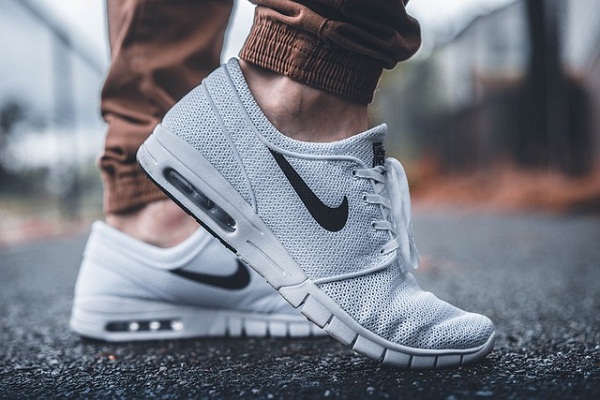
Nike has to walk its talk of “Just Do It” as it witnesses an 11 per cent slide in profits from December 2022 to February 2023, compared to the same period 12 months ago. As it reported a profit of $1.2 billion the stated three-month period, robust popularity contributed towards it but profits dropped as increasing logistic costs and larger inventory brought it down.
The good news is its home base, the North Americas, remained loyal to the brand, where it did well but the not-so-good news is that sales in post-restriction China not only did not pick up but actually dropped by eight per cent. Globally, the brand increased its footwear sales by 20 per cent and the apparel portfolio’s sales upped five per cent compared to last year. Its global revenues increased by 14 percent at $12.4 billion
Challenges Nike faces
Greater China remains a worry for the brand as this is its third largest market in terms of revenues. Analysts are of the opinion Nike and other international sportswear brands have to contend with post Covid Chinese consumer being offered local brands that are cheaper and having come out of a crippling lockdown, the Chinese consumer is counting their yuans as many personal financial factors have made consumers just as weary of spending on non-necessary items like their European counterparts.
Nike’s operating costs rose 12 per cent to hit $3 billion due to strategic technology investments and wage-based expenses. During that period, gross margin dropped to 44.3 per cent due to logistics and freight costs. The drop was also attributed to low margins in Nike’s direct business following high markdowns.
International foreign exchange rate against the dollar have affected Nike’s pricing policy as higher product input costs and increased freight and logistics are responsible for dragging down profit margins.
However, Nike Chief Financial Officer Matthew Friend is upbeat as he says Nike has worked hard to manage its inventory successfully and is positioning the brand as a sustainable one with more opportunities to grow profit. He emphasizes compared to fellow-competitors Nike had done well in reducing a larger inventory level with effective promotions worldwide, ensuring movement of footwear and apparel. The flipside was supply chain problems in 2021 prompted retailers to ramp up deliveries in 2022. However, retailers struggled to align product supply with demand. Excessive quantities of merchandise had forced retailers to liquidate goods at low prices.
Analysis firm Third Bridge says, the challenges are really not that serious the sports footwear industry continues to remain robust as it heads into the first half of 2023, despite consumers tightening purse strings.
One quarter doesn’t make Nike a flop
In terms of overall profit growth, Nike remains not only profitable but also posts healthy profits year on year. The brand’s gross profit for 12 months ending February 28, 2023 was $22.200 billion, a 2.63 per cent increase year-over-year. Annual gross profit for 2022 was $21.479 billion, a 7.6 per cent increase from 2021 and the annual gross profit for 2021 was $19.962 billion, a 22.91 per cent increase from 2020.
While Greater China, its third largest market remains a region of concern, its two largest markets, the North Americas and EMEA remains buoyant as do the Asia Pacific and Latin American markets. In year ending 2022, Nike made a much more significant profit than its nearest rival Adidas which is burdened with cash outflow issues more than Nike is.
Levi's faces accusations of 'digital blackface' over AI-generated models
Levi's faces criticism after teaming up with Amsterdam-based digital studio Lalaland to use artificial intelligence (AI) to generate images of computer-generated models wearing its clothing, as reported in The Telegraph London.
The aim of AI usage was to offer customers the chance to see how the clothes look on models that most resemble them, with the intention of boosting diversity and sustainability.
However, the company's move was widely criticised for neglecting real people of colour and offering false diversity. It was argued that the AI-generated models "feel like a way to cut out diverse models that deserve representation, jobs and exposure".
Designers and bloggers blamed as digital blackface that suggested usage of AI for white models and putting more money into the pockets of a diverse workforce.
Levi’s responded that AI would never fully replace human models but could help create a more diverse and inclusive customer experience.
Making Indonesia 4.0: Govt implements machine restructuring program to boost textile industry
Indonesia's Ministry of Industry is rolling out a machine restructuring program worth approximately $318,000 this year to help boost the competitiveness of the textile and textile products (TPT) industry amid global uncertainty.
The program, which focuses on the fabric industry, is expected to involve 13 companies and encourage the use of modern, efficient, and eco-friendly machines and equipment in line with the "Making Indonesia 4.0" roadmap. The budget will be used to provide reimbursement of price discounts of 10% for imported machinery and equipment or 25% for domestic ones.
The program has proven to improve the productivity, efficiency, and quality of TPT products, with 23 companies benefiting from it in 2021 and 2022. The TPT industry has performed well despite global pressures, with its export value reaching $13.83 million in 2022 and contributing 1.03% to the national GDP.
The machine restructuring program is expected to help improve the quality of the companies and the textile industry in general.
H&M posts surprise Q1 operating profit despite weak demand amid soaring inflation
H&M, the world's second-largest fashion retailer, has reported a surprise operating profit of 725 million Swedish crowns ($69.73 million) for the December-February quarter, despite weak demand due to soaring inflation.
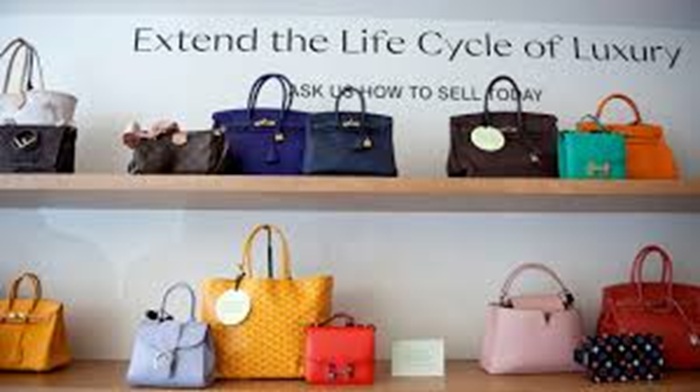
This figure comes as a surprise to many, considering that analysts in a Refinitiv poll had predicted a loss of 1.10 billion crowns. H&M has credited the earnings boost to the consolidation of its second-hand platform, Sellpy, which contributed approximately 1 billion crowns to the company's earnings.
Although the company has shown signs of controlling its costs, it is still struggling to compete with major rival Inditex, which owns brands such as Zara. While Inditex has been successful in luring customers back to in-person shopping after the pandemic, H&M's cost-conscious base has been reluctant due to inflation eating into purchasing power.
Despite the unexpected operating profit, H&M's first-quarter revenue, published on March 14, was worse than expected, with sales increasing only slightly and missing most estimates. However, the company still faces challenges in competing with its rivals and keeping up with changing consumer behavior.