FW
Fashion retail’s physical comeback, stores become experience hubs
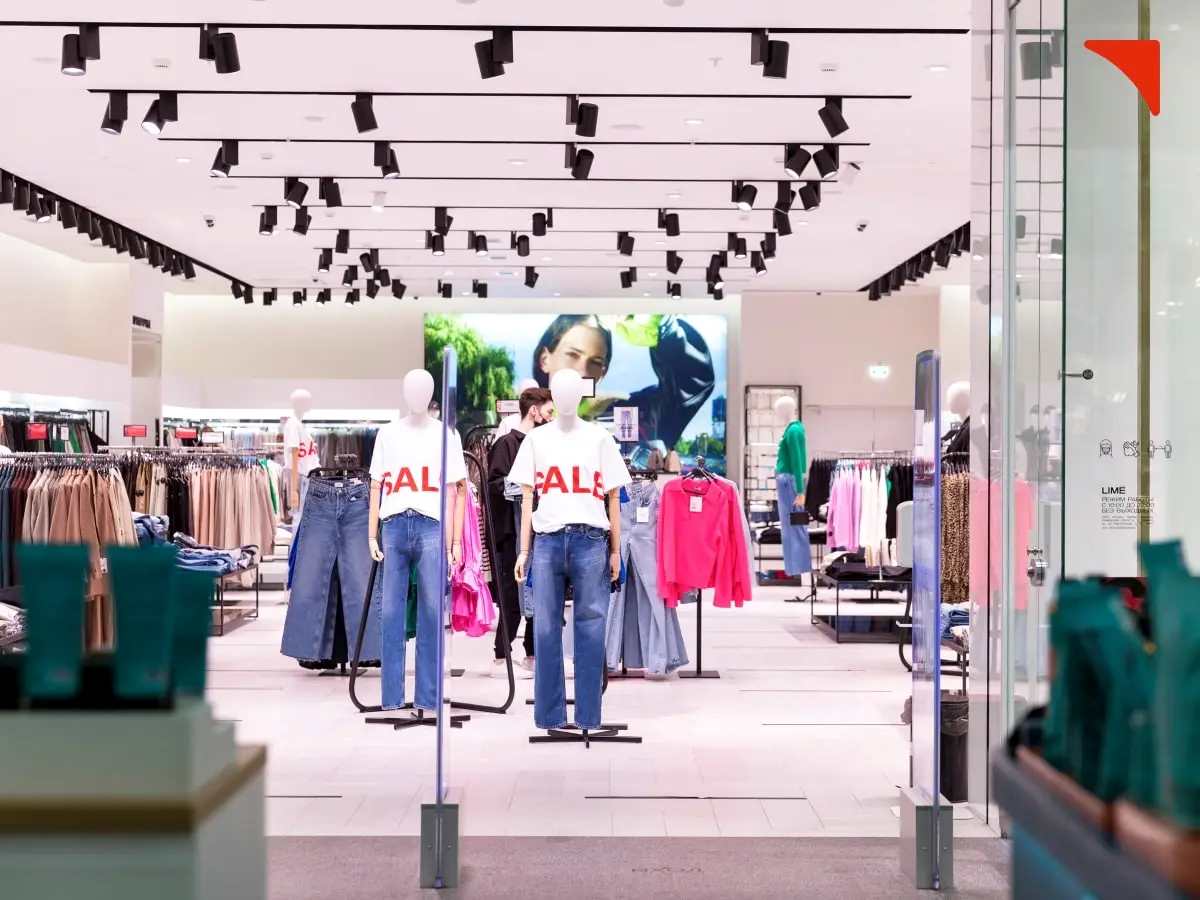
Online shopping has permanently altered fashion consumption, making convenience, algorithmic recommendations, endless assortment and doorstep delivery standard expectations. Yet the economics of digital retail are forcing fashion companies to reassess the role of the physical store.
Increasing customer acquisition costs, tighter privacy regulations and high e-commerce return rates are putting pressure on digital margins. At the same time, stores are evolving from transactional outlets into experiential, fulfilment and customer-engagement hubs.
The shift does not signal a retreat from e-commerce. Instead, fashion retailers are building integrated models in which digital channels generate discovery while physical stores drive product validation, conversion, fulfilment and loyalty.
Stores make a comeback
Physical retail continues to account for nearly 80 per cent of global retail sales, underlining the commercial importance of stores despite the rapid expansion of online commerce. For fashion, the physical advantage is particularly pronounced. Consumers can assess fabric texture, colour, drape and fit before purchase attributes that remain difficult to reproduce on a smartphone screen.
The economics are also significant. Online apparel return rates can reach 20-40 per cent, compared with around 8-10 per cent in physical stores. Bracketing, where consumers order multiple sizes or colours with the intention of returning most of them, adds considerable reverse-logistics costs to digital fashion businesses.
Table: Category Return Rates & Omnichannel Economics
|
Product category |
Online return rate |
In-store return rate |
Return drivers |
|
Apparel & Fast Fashion |
20.0% – 40.0% |
8.0% – 10.0% |
Sizing inconsistencies, fit mismatch, "bracketing" |
|
Footwear & Shoes |
17.0% – 30.0% |
6.0% – 9.0% |
Comfort issues, tactile arch support validation |
|
Accessories & Bags |
12.0% – 22.0% |
4.0% – 7.0% |
Material expectation mismatch, size proportion |
|
Beauty & Personal Care |
1.0% – 5.0% |
Less than 2.0% |
Hygiene restrictions, product sampling in-store |
Physical stores also function as return-processing centres. More than half of shoppers prefer returning online purchases at physical outlets, giving retailers an opportunity to recover part of the lost transaction through additional purchases.
Technology enters the fitting room
Fashion companies are consequently redirecting investment towards technology-enabled stores. Smart fitting-room mirrors can recommend complementary products, RFID systems provide real-time inventory visibility, and mobile checkout tools reduce queues. Digital screens and interactive displays can connect physical merchandise with broader online inventories, allowing shoppers to order unavailable sizes or colours without leaving the store.
The emergence of digital product passports could further strengthen this model. As regulatory requirements around product traceability and sustainability expand, scannable garment-level information can allow consumers to access details about materials, provenance and supply chains directly from the shop floor.
The objective is not to make stores resemble websites. It is to combine the convenience of digital commerce with the sensory advantages of physical retail.
Omnichannel economics take centre stage
The strongest argument for stores lies beyond the sales counter. A physical outlet can simultaneously function as a showroom, fulfilment point, returns centre, customer-service location and local inventory hub. This gives retailers greater flexibility in managing stock while reducing the distance between merchandise and consumers.
Industry research indicates that omnichannel retailers using stores for online order returns can reduce blended return-processing costs substantially. Buy Online, Return In Store (BORIS) also creates an additional opportunity for impulse purchases, turning what would otherwise be a costly reverse-logistics transaction into a customer-engagement moment.
The economics therefore favour retailers that can make inventory work across channels rather than treating e-commerce and stores as separate businesses.
Zara shows the new rules
Inditex, the Spanish parent of Zara, illustrates how the physical store is being redefined. Rather than simply expanding sales-floor density, leading Zara locations have increasingly incorporated curated displays, automated collection infrastructure and digitally connected inventory systems. Click-and-collect facilities allow stores to handle large volumes of online orders, while redesigned interiors place greater emphasis on brand presentation and customer experience.
The strategy reflects a broader change in retail architecture: stores are becoming less like warehouses and more like physical media platforms.
Inditex operates more than 5,600 stores globally across brands including Zara, Massimo Dutti and Pull&Bear. The group has also invested heavily in technology, logistics and larger-format stores, demonstrating how physical expansion can coexist with sophisticated digital infrastructure.
Experience comes with a price
The physical-store revival, however, is not without risks. Transforming conventional outlets into technology-enabled destinations requires substantial capital expenditure. Smart mirrors, RFID infrastructure, spatial computing, automated fulfilment systems and redesigned interiors can increase investment requirements without guaranteeing an immediate improvement in sales.
Retailers also face the challenge of separating genuinely useful technology from expensive gimmicks. A customer who wants to try on a garment and leave quickly may value inventory accuracy and faster checkout more than an elaborate digital installation.
Store economics are particularly sensitive to rent, staffing, inventory productivity and footfall. As discretionary spending remains vulnerable to inflation and broader economic uncertainty, retailers need to ensure that experiential investments translate into measurable improvements in conversion, basket size, retention or operating efficiency.
The store becomes an ecosystem
The next phase of fashion retail is therefore unlikely to be defined by online versus offline competition. The more important battle will be over how effectively brands integrate the two.
Experiential retail is gaining momentum globally, with the market estimated at around $133 billion and projected to expand at a double-digit pace through the decade. Asia-Pacific is expected to remain among the fastest-growing regions, supported by urbanisation, rising consumption and the integration of social commerce with physical retail.
For fashion companies, the winning model will be neither a return to traditional stores nor an abandonment of digital commerce. It will be a unified retail ecosystem in which smartphones drive discovery, stores provide tactile validation, technology removes friction and inventory moves seamlessly between channels.
The fundamental lesson is simple: digital platforms may capture consumer attention, but physical stores still have the power to capture confidence and, ultimately, the wallet.
India reworks apparel export strategy as US tariffs squeeze margins
As tariff volatility, shorter retail buying cycles and aggressive price negotiations in the US expose weaknesses in the country’s traditional export model India’s textile and apparel export strategy is being reworked. With textile and apparel exports at around $36.6 billion, the pressure is no longer limited to only tariff. It is now being transmitted through buyer demands for lower prices, tighter inventories and faster replenishment.
The Department-Related Parliamentary Standing Committee on Commerce, in its 200th report, has therefore pushed for a broader policy response spanning fibre availability, manufacturing incentives, logistics, trade-risk monitoring and export finance. The underlying message is clear: protecting India’s export competitiveness will require changes across the value chain rather than simply compensating exporters for higher duties.
Tariffs expose structural gaps
India remains heavily dependent on cotton-based exports even as global apparel sourcing is moving towards man-made fibres, performance wear and technical textiles. Nearly 65 per cent of India’s export volume is still linked to traditional cotton products, limiting the country's ability to participate fully in faster-growing synthetic categories.
The US market magnifies this vulnerability. When tariffs rise, buyers rarely absorb the entire increase. Instead, sourcing companies seek price concessions from suppliers, putting pressure on factory margins and working capital. For Indian manufacturers already operating with longer production and shipping cycles than some competing sourcing hubs, this creates a double disadvantage. The policy response is consequently shifting from export promotion towards exports, building a supply chain that can absorb tariff shocks while remaining commercially competitive.
MMF becomes strategic
One of the most significant recommendations is the creation of dedicated man-made fibre manufacturing zones within the seven approved PM Mega Integrated Textile Regions and Apparel (PM MITRA) parks. The move addresses a long-standing weakness in India's synthetic textile ecosystem. Spinning, texturising, knitting, processing and garmenting are often geographically fragmented, increasing logistics costs and slowing production. Concentrating these activities within integrated clusters could reduce material movement and improve coordination between MSMEs and larger manufacturers.
The move is particularly important because synthetic fibres are central to activewear, athleisure, performance apparel and blended fabrics. Competitors such as China and Vietnam have built deeper synthetic value chains, allowing them to respond more quickly to international buyers. At the same time, the committee has called for structural bottlenecks in the Production Linked Incentive scheme to be addressed so that investments in technical textiles and higher-value functional products translate into actual production capacity.
Speed a cost advantage
India’s competitiveness problem is not only about factory costs. It is also about time. Shipments to US eastern ports can take roughly 25 to 30 days, while nearshore suppliers in Central America can replenish retailers in a fraction of that time. With US retailers avoiding excessive inventory commitments, speed becomes part of the product's commercial value.
The committee's recommendation for government-supported bonded warehousing near major US ports is therefore strategically significant. Forward inventories could allow Indian suppliers to respond to replenishment orders without waiting for another ocean shipment.
Faster customs at Indian ports would complement this approach. Along with, bonded inventory and streamlined export clearance could help Indian suppliers compete on responsiveness rather than attempting to win every order through lower FOB prices.
Financial buffers need redesign
Tariff shocks are ultimately transmitted into exporters' balance sheets. When buyers demand 6-8 per cent price reductions, the impact is felt through margins, receivables and working capital. The committee has proposed closer monitoring of overseas customs audits and rules-of-origin disputes through a dedicated Directorate General of Foreign Trade mechanism. Such a system could give exporters earlier warning of regulatory risks rather than forcing companies to react after shipments are held up or duties are reassessed.
The panel has also highlighted the need to strengthen support under RoSCTL and RoDTEP, alongside concessional working capital, broader credit guarantees and continuation of interest-equalisation support. The objective should not be permanent subsidy dependence. Instead, these mechanisms can provide a temporary financial buffer while companies move towards greater automation, product diversification and supply-chain integration.
Artisan exports need differentiation
The same restructuring challenge extends beyond industrial apparel. India’s handmade carpet exports, valued at around $1.54 billion annually, are facing competition from machine-tufted products, particularly from Turkey. Traditional clusters in Uttar Pradesh, Rajasthan and Kashmir cannot compete purely on manufacturing cost. Their advantage lies in proven craftsmanship and design. GI-led marketing, international buyer-seller meets and technical-upgradation grants can help translate those attributes into stronger pricing power. For artisan clusters, upgrading does not necessarily mean abandoning traditional production. It means adapting weave density, colours, designs and product formats to changing demand in Western interiors and sustainable lifestyle retail.
Tiruppur offers a template
Tiruppur shows how industry-level integration can become a defence mechanism against external trade shocks. As US buyers push for price concessions, manufacturers are looking towards integrated facilities combining synthetic knitting, processing and automated cutting. Access to larger integrated industrial parks can reduce internal logistics and allow suppliers to shift between cotton, synthetic and blended products according to demand.
The reported experience of manufacturers investing in the Virudhunagar PM MITRA park points towards a broader lesson: scale and integration can protect margins more effectively than cost cutting alone. For a sector traditionally dominated by fragmented units, shared infrastructure, common processing facilities and closer fibre-to-garment integration could create productivity gains that individual MSMEs may struggle to achieve independently.
Corporate shift mirrors policy
Large manufacturers are already moving in the same direction. Arvind Ltd, for examples, has been expanding its presence across denim, advanced woven fabrics and technical textiles while increasing its exposure to synthetic blends and industrial fabrics. This reflects the wider transition underway across India's textile industry. The next phase of export growth will depend less on expanding basic cotton capacity and more on developing differentiated products, integrated manufacturing and faster fulfilment.
The bigger reset
India’s response to US trade uncertainty is therefore evolving from a narrow tariff-management exercise into a structural competitiveness programme. The immediate priority is to cushion exporters from tariff-driven margin compression. The larger challenge is to reduce the reasons buyers can demand those concessions in the first place.
That means deeper MMF integration, faster logistics, stronger technical-textile capacity, automated production and more resilient trade-finance systems. If PM MITRA parks and policy reforms successfully connect these pieces, India could emerge from the current tariff cycle with a more diversified export architecture. The real test will be whether policy support produces globally competitive supply chains or simply offsets the cost of remaining structurally slower and more cotton-dependent than its rivals.
Asos strengthens leadership team with new Product Director-Menswear
British online fashion retailer Asos has appointed retail industry veteran Jon Bennett as the new Product Director-Menswear for its signature in-house label, Asos Design. Bennett transitions to Asos from his previous role as Managing Director, Next- Wholly Owned Brands Division, bringing extensive executive experience spanning major high street brands including Primark and Topshop. In his new capacity, Bennett will oversee the strategic direction, design execution, and commercial performance of Asos Design Menswear, ensuring tighter alignment between product development, brand identity, and creative marketing divisions.
Driving competitive differentiation in digital retail
The strategic appointment underscores the retailer's broader corporate objective to elevate its proprietary merchandise margins and reinforce fashion authority within a fiercely contested e-commerce landscape. Company executives note, strengthening internal product leadership is vital for maintaining consumer engagement and delivering trend-led assortments efficiently. Bennett brings deep menswear expertise and a proven ability to build high-performing product teams at scale, states Elena Martinez Ortiz, Executive Vice President – Product, Asos. By refining its own-brand merchandising framework, ASOS aims to secure sustainable long-term growth and enhance commercial resilience across international markets.
Focusing on rapid trend adoption and sustainable fashion initiatives
ASOS is a global online fashion and cosmetic destination serving tech-savvy consumers worldwide. The company offers thousands of branded and proprietary product lines,focusing on rapid trend adoption, digital-first retail experiences, and sustainable fashion initiatives across key international markets.
Domestic demand to drive Indian apparel market to US$ 117 billion by 2034
The Indian apparel sector is experiencing a robust structural expansion, underpinned by shifting consumer demographics and rapid retail formalization across urban and tier-II centers. Market intelligence reports indicate, valued at US$ 88 billion, the domestic apparel market is projected to expand up to US$ 117.05 billion by 2034, growing at a CAGR of 3.16 per cent through the forecast period. Industry executives note, rising disposable incomes and an expanding young workforce are fundamentally altering wardrobe choices, pushing lifestyle and fashion brands to accelerate their physical and digital footprint across the subcontinent.
Overcoming supply chain friction and capturing growth
Despite strong macroeconomic fundamentals, apparel manufacturers and organized retail networks continue to navigate operational hurdles, including raw material price volatility and high inventory carrying costs. However, major domestic fashion houses are mitigating these pressures by upgrading manufacturing technologies and integrating omnichannel distribution strategies to capture higher consumer wallet shares. The rapid shift toward organized retail and branded wear provides a massive runway for sustainable growth, remarks Rajesh Mehta, Chief Strategy Officer at a leading domestic textile enterprise. Stakeholders emphasize that localized sourcing and agile supply chain management will remain critical differentiators for brands aiming to secure long-term profitability in this competitive landscape.
A primary economic engine
The Indian apparel market encompasses a diverse manufacturing and retail ecosystem spanning traditional ethnic wear, western casuals, and performance segments. Driven by robust domestic consumption and favorable government policies, the sector acts as a primary economic engine, generating extensive employment and attracting substantial domestic and foreign investment.
Runway 7 reaches milestone with new showcase at NYFW
As the global fashion calendar prepares for its upcoming season, Runway 7 is gearing up for its milestone 11th consecutive season at the New York Fashion Week(NYFW). Featuring a robust roster of 138 designers hailing from 20 countries, the six-day multi-format showcase will cover diverse segments including ready-to-wear, couture, eveningwear, and sustainable apparel. Industry executives note that multi-brand independent production platforms play an increasingly vital role in democratizing access for emerging global designers, bridging the gap between independent creators and international retail buyers seeking fresh market differentiation.
Driving commercial integration and retail reach
Beyond traditional runway presentations, the platform integrates purpose-led showcases and immersive trade exhibits designed to maximize commercial connectivity between creators and commercial buyers. With high-profile openings and exclusive closing galas anchored by established industry veterans, the event serves as a critical springboard for retail scaling. The platform aims to engineer a comprehensive commercial ecosystem where independent visionaries can secure tangible market distribution alongside media visibility, remarks a senior production coordinator. Retail analysts project, such hybrid physical-digital fashion weeks will capture higher wholesale commitments this season.
Championing experiential retail integration across markets
Runway 7 is an award-winning fashion production organization uniting international designers, media, and commerce through large-scale lifestyle and runway showcases. Operating primarily in major fashion capitals, the platform focuses on championing global diversity, independent creative talent, and experiential retail integration across international markets.
Egypt revamps textile infrastructure to restore global Cotton standing
The Egyptian Government is accelerating a comprehensive modernization blueprint for the state-owned Cotton, Spinning, Weaving, and Clothing Holding Company, focusing heavily on private sector participation for facility management and operations. Following multi-billion-pound capital infusions into foundational hubs such as El Mahalla El Kubra and Kafr El-Dawwar, executive leadership aims to safeguard public investments and optimize commercial efficiency. Industry analysts note that integrating private managerial expertise addresses legacy productivity bottlenecks, positioning regional production units to meet rigorous export compliance and quality standards demanded by international apparel buyers.
Overcoming structural challenges and boosting exports
While major spinning and dyeing complexes approach completion phases ranging between 71 per cent and 95 per cent across various governorates, maximizing capacity utilization remains a critical operational hurdle. State planners intend to leverage these upgraded, technology-driven facilities to scale up high-value yarn and finished fabric output, directly targeting enhanced competitiveness within Mediterranean and European sourcing markets. Expanding private sector involvement in our operational workflows is vital to maximize asset performance and restore the historical prestige of Egyptian cotton globally, notes Prime Minister Mostafa Madbouly. The strategic alignment is projected to double export volumes, reinforce industrial supply chains, and secure sustainable employment.
Large-scale infrastructure modernization for long-term profitability
The Holding Company for Cotton, Spinning, Weaving, and Clothing is Egypt's state-backed industrial entity managing nationalized textile assets. Operating across domestic and export markets, it oversees vertically integrated production from raw fiber processing to finished apparel. Current corporate strategy centers on large-scale infrastructure modernization and private partnership integration to ensure long-term profitability.
Koozee deploys generative visual platform to streamline apparel digital content
Digital fashion platform Koozee has introduced an automated visual production architecture designed to eliminate traditional photography bottlenecks for apparel retailers. By deploying proprietary visual models, the platform generates studio-grade product imagery and model lookbooks directly from flat garment specifications. Industry analysts note, e-commerce merchants face escalating operational overheads in digital asset creation, where conventional studio shoots frequently delay inventory go-to-market timelines by weeks. The new software solution addresses this friction by producing high-resolution catalog assets within minutes, allowing brands to scale digital storefront updates efficiently.
Mitigating production costs and scaling operations
The technology allows online fashion merchants to reduce visual content generation expenditures by up to 65 per cent while accelerating campaign deployment schedules across global digital marketplaces. Retail executives indicate, maintaining consistent imagery standards across multi-channel platforms remains a primary logistics challenge. Visual asset velocity dictates e-commerce conversion performance today, remarks Marcus Vance, Chief Technology Officer, Koozee. By automating rendering processes, the platform enables emerging apparel brands to compete effectively with enterprise-grade visual output without incurring massive studio infrastructure expenses.
Driving sustained profitability with virtual try-on modules
Koozee develops automated visual content software tailored for the apparel and retail sectors. Operating across North American and European markets, the company focuses on scaling digital catalog solutions. Backed by venture funding, Koozee targets aggressive expansion into virtual try-on modules and multi-channel asset integration to drive sustained profitability.
AI fashion tech platform Naiz Fit crosses 500 million size milestones
MySize, Inc has announced that its flagship AI fashion technology subsidiary, Naiz Fit, has surpassed 500 million generated size recommendations globally. Operating across more than one hundred apparel brands - including major retailers like Levi’s and Paul & Shark - the platform has successfully connected over 100 million garments while servicing a user base exceeding 10 million shoppers. This milestone underpins a broader strategic expansion into virtual try-on systems and advanced personalization modules designed to combat the persistent operational challenge of sizing-related merchandise returns within the global apparel sector.
Mitigating retail friction and return rates
The platform's predictive architecture addresses significant profitability hurdles for digital and omnichannel fashion retailers, where improper fit frequently drives high return volumes and compresses operating margins. Data from recent deployments indicate that optimized sizing integration can elevate conversion rates significantly while reducing returns by up to 14 per cent. Size and fit has evolved far beyond a simple recommendation button, states Ronen Luzon, CEO, MySize. By scaling artificial intelligence infrastructure, the company aims to furnish apparel brands with actionable analytics that streamline inventory management, influence merchandising strategies, and enhance consumer retention across international markets.
Optimizing retail efficiency with enhanced digital experiences
MySize Inc. is a global technology provider specializing in AI-driven measurement and e-commerce solutions for the retail and apparel sectors. Its proprietary portfolio includes Naiz Fit and the FirstLook Smart Mirror, targeting enhanced digital and in-store customer experiences to optimize retail efficiency.
New CMAI initiative to address 70 lakh tons of textile waste
India’s apparel ecosystem is aggressively scaling up post-consumer waste recovery pathways following the nationwide rollout of the ‘Freedom from Unused Garments’ initiative. Spearheaded by the Clothing Manufacturers Association of India alongside ReFiber and UNIDO, the campaign addresses the country's generation of approximately 70 lakh tons of annual textile waste. Industry leaders emphasize, over half of this volume emerges post-consumer use, necessitating structured collection mechanisms rather than traditional landfill disposal. By leveraging digital applications for door-to-door micro-logistics, the initiative provides a seamless framework to divert discarded apparel back into yarn and fiber spinning mills for mechanical or chemical recycling.
Collaborative ecosystems and economic impact
Moving beyond basic recycling, the movement integrates social empowerment with material recovery. Collected garments are systematically sorted through partnerships with artisan trusts and social organizations to be repurposed or upcycled into commercial secondary textiles. Stakeholders note, establishing a robust circular infrastructure protects operating margins against raw material scarcities while satisfying stringent international traceability norms demanded by Western import markets. Collection is only the initial phase; true commercial integration occurs when recovered fibers re-enter the spinning pipeline as high-value yarn feedstock, remarks a senior industry coordinator tracking national ESG mandates.
Championing progressive reforms and international trade alignment
The Clothing Manufacturers Association of India is the apex national body representing the domestic apparel sector, encompassing manufacturers, exporters, brands, and retail networks across the country. Focused on driving policy advocacy, ESG compliance, and sustainable manufacturing transitions like the landmark SU.RE initiative, CMAI has historically championed progressive structural reforms and international trade alignment since its inception over six decades ago.
MIT’s recyclable yarn could disrupt spandex’s grip on fashion
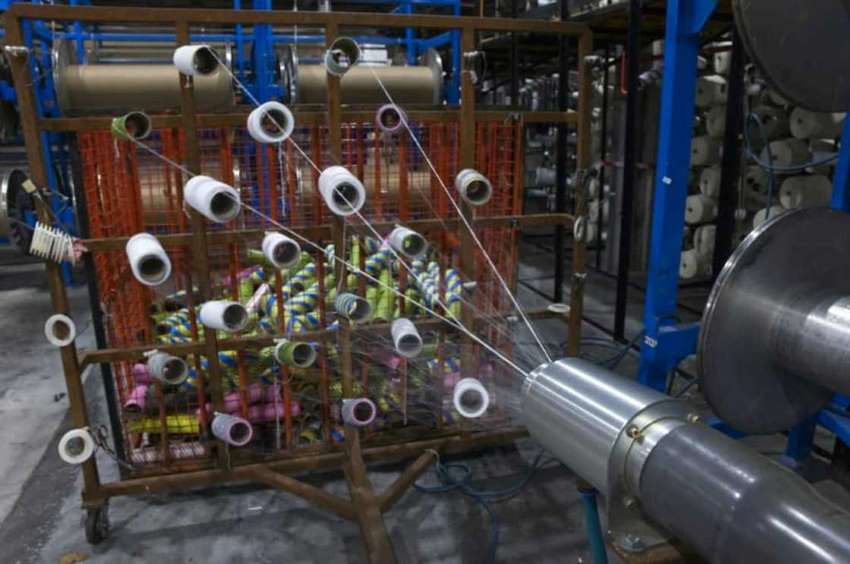
Stretch has become essential to modern fashion. Activewear, denim, underwear and athleisure all depend heavily on elastic fibres such as spandex, also known as elastane. But the same fibre that gives garments flexibility creates a major recycling problem. When spandex is combined with polyester or nylon, the resulting fabric becomes a multi-material product that is difficult to recycle through conventional mechanical processes.
The problem is significant. Around 80 per cent of textiles in the US apparel market are estimated to contain some spandex. Once these garments reach the end of their useful life, separating the elastic component from the main fibre can require costly and complex processing. As a result, many blended garments ultimately end up in landfills or incinerators. This is where research from the Massachusetts Institute of Technology (MIT) could have commercial significance.
One fibre family, one recycling stream
MIT researchers have developed an elastic yarn made entirely from polyolefins, using polyethylene for both the outer sheath and the flexible core. Unlike conventional stretch yarns, which combine chemically different materials, the MIT yarn keeps its components within the same material family. That means the finished yarn can potentially be melted, extruded and spun again without first separating different fibres.
The research, published in ACS Materials Letters, reveals the yarn could be remelted and respun through 10 cycles while retaining its performance.
Table: Conventional stretch yarn vs. recyclable MIT polyethylene yarn
|
Feature |
Conventional stretch yarn |
MIT polyethylene yarn |
|
Core |
Polyurethane/spandex |
Polyethylene copolymer |
|
Sheath |
Polyester or nylon |
Engineered polyethylene |
|
Recycling |
Difficult multi-material separation |
Direct remelting |
|
Processing |
Often requires specialised separation |
Compatible with melt processing |
|
Tested Recycling |
Performance can deteriorate |
Performance retained through 10 cycles |
The significance goes beyond simply replacing one fibre with another. The innovation tackles the problem of blended textiles by designing stretch into a material system that can remain recyclable.
Designed for existing manufacturing
The MIT approach also has a potential advantage for textile manufacturers: it does not depend on an entirely new fibre ecosystem. Researchers developed different polyethylene formulations for the yarn’s core and sheath. The flexible core provides elasticity, while the stronger outer material provides protection and strength.
The materials are heated to around 350°F (177°C), extruded through fine nozzles and converted into filaments before being processed into yarn. This creates a yarn that can potentially move through existing spinning and textile production infrastructure with relatively limited changes. The lower processing temperature could also offer an energy advantage compared with polyester, which generally requires significantly higher temperatures during processing.
Why activewear could be the first test
The biggest commercial opportunity may lie in performance apparel. Consider a pair of leggings made with 82 per cent recycled polyester and 18 per cent spandex. The recycled polyester content may allow a brand to market the product as partly sustainable, but the elastane blend still makes end-of-life recycling difficult.
A mono-material stretch yarn could change that equation. Instead of sending a blended garment to a specialised chemical recycling process, manufacturers could potentially shred the product, melt the material and convert it into new pellets or fibres. For fashion companies facing tighter circularity requirements and producer-responsibility obligations, this could eventually reduce the cost of managing textile waste.
The commercial hurdles
The technology is promising, but laboratory performance does not automatically translate into mass-market adoption. Textile mills would need to validate the yarn across knitting, weaving, dyeing and finishing processes. Brands would also need to assess durability, comfort, colour performance and consumer care requirements.
Polyethylene presents another challenge: it does not behave like polyester when dyed. Solution or dope dyeing may therefore, become more important, requiring colour pigments to be incorporated during fibre production rather than relying on conventional dye baths. That could reduce water use and wastewater generation, but it would also require brands and mills to make colour decisions earlier in the supply chain. Garment-care standards may need adjustment as well, particularly around high-temperature washing and drying.
Challenge to spandex’s dominance
The global spandex market, valued at billions of dollars, is deeply embedded across activewear, denim, intimates and athleisure. Replacing it will not happen simply because an alternative yarn becomes technically viable. The larger opportunity is to rethink how stretch fabrics are designed.
For years, fashion has treated recyclability as something to address after a garment is made. MIT’s approach reverses that logic by designing the material itself around future recovery. If the technology can move from laboratory-scale production to commercially competitive textile manufacturing, it could give brands a new way to combine stretch performance with circularity. The bigger lesson is that the next phase of sustainable fashion may not be about finding better ways to separate blended garments. It could be about eliminating the blend altogether.