FW
KD New York launches Vegetable Cashmere collection
KD New York, a designer, manufacturer and marketer of an exclusive line of dance inspired apparel, accessories and furnishings, is introducing its new Vegetable Cashmere athleisure collection. The collection features yarn spun from soy protein by-products, repurposed from the manufacture of to fu.
These styles were knitted off Stoll’s CMS 530 HP E7.2 flat knitting machines and are composed of a new soy-based alternative to traditional animal fiber cashmere fabric. The company has launched 13 items, offered as Rewards, at special "first adopter" prices, only available on Kickstarter.
KD New York has been creating dance and yoga-inspired athleisure wear for over 40 years, with the design, knitting and manufacturing operations based in the US. The brand’s clothing is worn worldwide by women in over 30 countries and has been selected by celebrities including Jennifer Lopez, Baryshnikov, and Beyoncé.
Birla Cellulose develops viscose fiber with pre-consumer cotton waste
Birla Cellulose, one of the global leaders in Man Made Cellulose Fiber (MMCF), has achieved a breakthrough in manufacturing viscose fiber using pre-consumer cotton fabric waste. This new line of viscose, is already being adopted and is available for sale to interested brands and retailers. This innovation has the distinction of Recycled Claim Standard (RCS) and portrays Birla Cellulose’s commitment to a more circular economy.
This innovation has been done through in-house R&D and uses a minimum of 20 per cent pre-consumer industrial fabric waste. Fabrics from the fiber offer excellent attributes similar to virgin fiber. The business will work on further developing products made with more than 50% industrial fabric waste as well as post-consumer clothing as inputs in 2020.
The fashion industry which is at the cusp of transformation towards a circular economy has much appreciated this innovation. It adds to Birla Cellulose’s stature as a leader in achieving “low risk” in its 2017 Canopystyle audits and a green shirt ranking in the Hot Button Report, both of which indicate that Birla is not sourcing from key priority areas of Ancient and Endangered forests.
Birla Cellulose has been in active collaboration with Brands, technology providers and textile chain actors to integrate and enhance value. Going forward, Birla Cellulose will intensify and strengthen its specialty portfolio towards value-added green textile solutions for the future.
Home textiles takes to sustainability with recycling, product certification
"For decades the home textiles business focused on launching a wide range of products. These included everything from bed sheets and comforters to towels. But recently, the industry has started to curtail its product excess as it is finally discovering that less is often more. This was particularly evident at this year’s New York Home Fashions Market held in September 2019. The twice-yearly trade show, held in closed showrooms along Manhattan’s lower Fifth Avenue, recorded a bulk business worth $25 billion in home textiles market."
 For decades the home textiles business focused on launching a wide range of products. These included everything from bed sheets and comforters to towels. But recently, the industry has started to curtail its product excess as it is finally discovering that less is often more. This was particularly evident at this year’s New York Home Fashions Market held in September 2019. The twice-yearly trade show, held in closed showrooms along Manhattan’s lower Fifth Avenue, recorded a bulk business worth $25 billion in home textiles market.
Over the past few seasons, this sector has been working to launch new products with attributes like sustainability, transparency and naturally sourced materials. The New York Fashion market show reflected these new sensibilities in core bed and bath products.
Shifting to a more sustainable model
Bed and bath products have always earned a bad reputation for their abundant use of natural resources.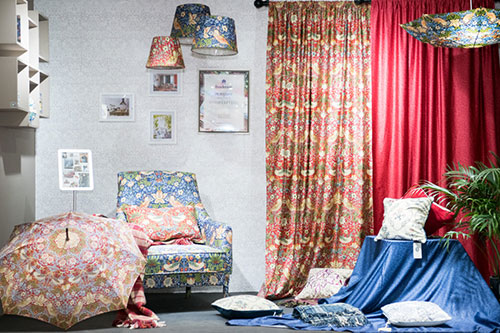 However, now the fashion industry plans to move to a more sustainable model by emphasising on recycled products and individual components. Since around 90 per cent of home textile products come from the Asian production powerhouses of China, India and Pakistan, understanding their manufacturing chain is often a challenge for vendors. These vendors are now able to trace the raw materials in their products back to their growing fields by using DNA marking, RFID tagging and other new technologies.
Certification gains importance
Home textiles have always been viewed as free-for-all products as there are no real regulatory or safety standards governing these products. Now, international third-party organisations like Oeko-Tex and Global Organic Textiles Standard (GOTS) are rising in prominence at the urging of retailers who want to offer a point of differentiation for their products.
The spectrum of raw materials has increased dramatically over the years, with the introduction of tree-derived cellulose, linen, bamboo and other natural fibers. Though Cotton still maintains its majority market share, several new differentiators like Supima, Egyptian and Better Cotton Initiative (BCI) also exist n the market.
Products with CBD extracts
Several companies also introduced bedding products containing CBD extracts either applied topically to the fabric or infused into the fibers. These companies implied that these CBD products are good for the well-being of their consumers.
All attention paid by companies to technology, innovation and product performance was in stark contrast to earlier editions which purely focused on fashion. The only real exception to the less-is-more dictum was in the form of the weighted blanket showcased by countless companies at the event.
Miraggio launches women’s handbag collection
Milan-inspired brand, Miraggio recently launched an exclusive women’s handbag collection, to freshen up the current fashion trends.
The collection offers four distinctive ranges under the labels of Rebel Chic, Bold & Beast, Rose Coco, and Minimalisque. Each of these ranges characterise a different personality to give every category its own USP.
Rebel Chic portrays designs which can be elaborated as edgy, embellished, and glitzy, while Bold and Beast delegates the strong, wild and dauntless spirit of a woman. Rose Coco on the other hand celebrates femininity and its expression in the chicest embodiment, while Minimalisque is the representation of a basic, simple yet sophisticated attitude, featuring solid shades, geometric contours, detailed and playful designs.
These premium yet affordable handbags showcase high standards of craftsmanship. They boast of enthralling designs, aesthetic motifs, and radical cuts.
Wrangler launches new denim with foam-dye technology
Wrangler, a part of Kontoor Brands, Inc, has introduced new denim dyed with foam, an innovative technique that uses 100 per cent less water than conventionally-dyed denim.
The Indigood foam-dyed denim represents Wrangler’s continued commitment to using its global scale to advance the denim industry while maintaining the authenticity, quality and style that consumers expect from it.
Indigood foam-dye entirely replaces the traditional water drums and chemical baths of traditional indigo dyeing, reducing by 100 per cent the amount of water required to turn denim into shade of indigo blue. The new dyeing process also reduces energy use and waste by more than 60 per cent compared to the traditional denim dyeing process.
The Indigood products will be featured in the Icons Collection, giving consumers access to Wrangler’s most iconic products with the highest level of sustainability available on the denim market today. In addition, with absolutely no compromise to quality, the Indigood products include recycled cotton, laser and ozone finishing. The collection includes both male and female jeans, shirts and jackets in dark and light shades.
The launch of Indigood demonstrates Wrangler’s continued commitment to sustainability, reflected in the brand’s global sustainability goals, which include: conserving 5.5 billion litres of water at owned and operated facilities by 2020; using 100 per cent preferred chemistry throughout its supply chain by 2020; powering all owned and operated facilities with 100 per cent renewable electricity by 2025; and sourcing 100 per cent sustainable cotton by 2025.
Nykaa Fashion launches new fashion label
Multi-brand e-commerce fashion retailer Nykaa Fashion has launched a private label “Rsvp” online as an affordable collection of women’s party wear.
The line features floor-length evening dresses as well as more smart-casual sets and cocktail dresses. The label caters to a millennial demographic and prices range from Rs 3,995 ($56) for a set to around Rs 5,995 for a sequinned gown. Nykaa Fashion’s new private label joins its online brand selection which includes House of Masaba, Ritu Kumar, and Global Desi.
Nykaa Fashion is the apparel arm of Nykaa, which launched as a multi-brand beauty e-commerce site in 2012. Nykaa the beauty store was founded by entrepreneur Falguni Nayar and her daughter Adwaita Nayar runs the clothing segment of the business. Nykaa has expanded offline across India with its Nykaa Luxe and On Trend beauty stores but for now Nykaa Fashion is online only.
Lenzing aims at being carbon neutral
Lenzing plans to drastically reduce its CO2 footprint and become entirely carbon neutral by 2050.
By 2030 the chemical group’s aim is to reduce its CO2 emissions per tonne of product by almost 50 per cent both inside its operational boundaries and in its supply chain. The group will cut its emissions, for instance, by adapting new technologies in current production processes and in new production plants. It will improve energy efficiency and increase the share of renewable energy sources. One current project to achieve this is the transformation from coal to bioenergy at its production site in China.
Lenzing’s decarbonisation targets make it a frontrunner, not only in the world of fiber producers but also among major industrial companies. Lenzing will use blockchain technology to support its Tencel branded fiber business. This will ensure complete transparency and traceability for brands and consumers of its fibers in the finished garment. The supply chain transparency from wood to garment and home textiles will enable all customers and partners to identify Tencel fibers and the respective wood source in each production and distribution step. Thanks to a QR code on the final garment, consumers will be able to detect the origin of the clothes they intend to buy.
Bangladesh to finalise list of products for duty free access to Indonesia
Under the proposed Preferential Trade Agreement (PTA), the Bangladesh government will finalise a list of 300 products for seeking duty-free market access to Indonesia.
The Ministry of Commerce (MoC) has completed consultations with the stakeholders and received recommendations from the Export Promotion Bureau (EPB) of Bangladesh.
After finalising the list, the MoC will send it to Indonesia through the Ministry of Foreign Affairs, seeking approval by the Indonesian government.
Jute and jute goods, leather and leather goods, pharmaceuticals and garment items are some of the products named in the list.
The two countries are working on signing this PTA to boost bilateral trade and promote trade and economic partnership between the two countries. The bilateral trade between Bangladesh and Indonesia is expected to increase by fivefolds to around $10 billion in next 10 years, according to the sector insiders.
Global apparel markets decline
Increasing consumer awareness about the negative impact of the clothing and textile industry on the environment is one of the reasons volumes have started to decline.
Consumers have been buying clothes in ever-increasing quantities over the past 20 years as fast-fashion retailers such as H&M and Zara and budget retailers including Primark and Walmart cut prices after shifting production to Asia. So apparel markets in many developed countries may now be entering a lengthy period of structural decline.
Earnings forecasts for the world’s largest clothing retailers – led by Asos, Zalando, Macys and Marks & Spencer – have been downgraded by almost 40 per cent since the beginning of 2016. If clothing volumes are plateauing in developed countries, the only way the apparel markets there can grow is if clothing prices go up. But these are likely to fall as production continues to shift from China to lower-cost countries in the region such as Vietnam and Bangladesh. US clothing prices have fallen by 0.8 per cent a year since 2001, while UK prices fell for 13 consecutive years until 2010.
FADW combines fashion with business
Flickstree Asian Designer Week (FADW) was held in Delhi NCR, October 4 to 6, 2019.
The event combined fashion with business. It provided a comprehensive platform for creativity and business in the world of fashion as it hosted more than 40 designers who presented their collections on the ramp. Five buyers as panelists discussed the opportunities in the retail/export business. The discussion opened up avenues of exports for Indian designers who have been hitherto limited to their clientele. The panel had social media influencers who debated about the pressure of communication through the social media and the role it plays in today's fashion business. Influencers were also part of the ramp show that followed the panel discussion.
Fashion start-ups that had come up with pitches for angel investors included 6 Degree (a fashion tech start-up), The Knotty Tales (a tech enabled wedding platform), DROR (a women’s safety app), and Eunimart (a cross border trading enabling platform for medium and small enterprises). They made impressive presentations for their business and sought a second round of funding from the 100-odd investors present in the audience.
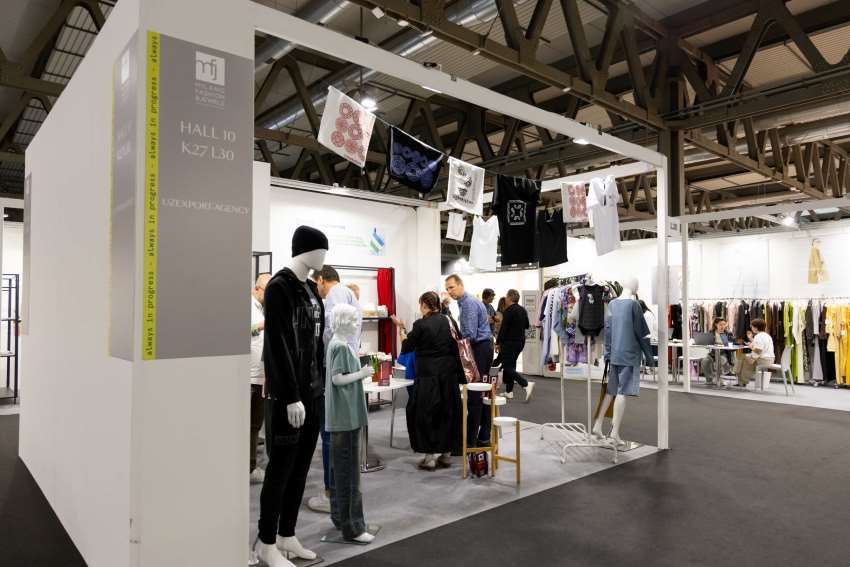
Apart from the runway shows, FADW provided a B2B exhibition space for designers to showcase their work and engage with potential buyers.