FW
Bangladesh crust leather exports fall by 25%
The exports of crust leather from Bangladesh experienced a negative growth rate of 25.46 per cent during the July–September period of fiscal year 2019-20 as compared to the fiscal year of 2018–19.
According to the Export Promotion Bureau (EPB), the sector registered a negative growth rate of 5.06 per cent, resulting in earnings of US$ 254.39 million during the July-September period of FY 2019–20. This figure was US$ 267.94 million during the same period of the FY 2018–19. Most of the tanneries that have been shifted to the Savar Tannery Complex from Hazaribagh have not fully functional yet which is one of the prime reasons behind the negative growth.
The renowned leather producers of Bangladesh are moving towards artificial and non-leather products to address the global demand as leather prices went up in the world market since 2013. Bangladesh generally exports leather products to countries such as South Korea, China, and the European Union, among others. But they have started using artificial leather products, which are more affordable and lead them to import fewer products from Bangladesh.
Around 155 factories have been shifted to Savar. Of these, 125 factories are running and 25 tanneries have fully started their operations but are processing only crust leather. This sector is not getting the advantage of the Central Effluent Treatment Plant (CETP) and is struggling hard to achieve global standards in terms of compliance. Only leather footwear registered a negative growth rate of 9.28 per cent, resulting in earnings of US$ 159.23 million.
Stoll to exhibit two machines at Futuremoda exhibition
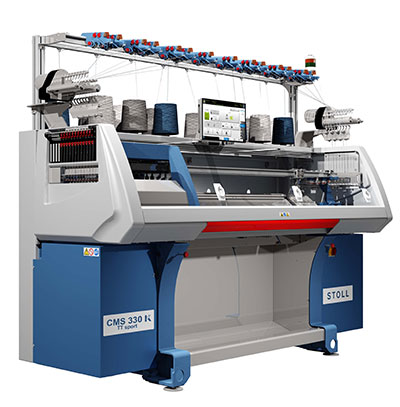 H. Stoll AG & Co. KG will participate in Futuremoda exhibition for leather and footwear industries that will be held in Spain from October 16-19, 2019. The company will exhibit two CMS 330 TT sport BW machines in gauge E7.2 in Hall A
In 2018, the Futuremoda exhibition served 288 trade fair exhibitors as a forum to introduce their company, their products and services. Its key exhibit areas included footwear and leather goods, shoe machinery and technology, skins and leather, design and pattern, synthetics, supplies, chemicals and premade products.
Stoll AG & Co. KG, with headquarters in Reutlingen is one of the world’s leading manufacturers of flat knitting machines. The long‐established company was founded in 1873 and has 1,000 employees around the world. The brand’s portfolio includes flat knitting machines and pattern software that are used to produce fashion and technical textiles. It exports its products to more than 50 countries worldwide.
With a network of subsidiaries, sales and service centers and numerous agencies, Stoll offers a fully integrated service package. With innovative developments and state‐of‐the‐art production, it makes a multitude of knitting trends possible.
Global yarn production increases by 17% in Q1/19
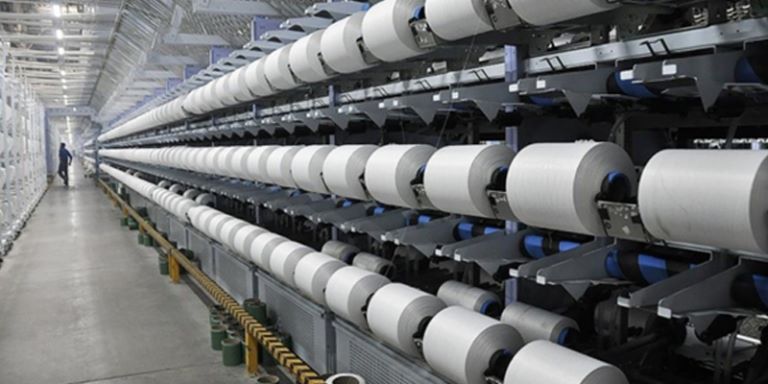
Global yarn production increased by 17 per cent between Q4/18 and Q1/19. Most of this output was recorded in Asia and Brazil both of which registered a 18 per cent growth. The USA on the other hand recorded a 3.2 per cent growth and Europe recorded a growth of 1.6 per cent.
This overall growth in Asia was due to a 27 per cent increase in Chinese yarn production which outperformed the contraction registered in Japan, India and Korea. A decreasing trend was further observed in South Africa and Egypt.
The growth in Asia is driven by the increase of yarn stock in Japan and India, stability in Pakistan and decrease in Korea, Rep. and Chinese Taipei. Yarn orders in Brazil increased by 18 per cent, in Egypt by 11 per cent, and Asia by 9 per cent. Forecasts for the second quarter of FY 19 in Japan, Chinese Taipei, and Turkey are optimistic as global yarn stocks have increased by 6.3 per cent worldwide. This is a results of a 27 per cent improvement of stocks in Egypt, 7.7 per cent increase in Brazil, and 3.8 per cent increase in Asia.
However, production in Europe shrunk by -0.85 per cent with the biggest drop registered in Spain. A strong decrease of -42% was also witnessed in Egyptian fabric production. The world output level has now reached 88 per cent of its Q1/18 level. These levels are expected to further decrease in Q2/19 in Asia, Africa, and Brazil, stay constant in the U.S.A. and increase in Europe. Production should stagnate in Q3/19 in all regions but Asia, which should register an improvement.
The global fabric stock level has stagnated between Q4/18 and Q1/19. This resulted from raises registered in Egypt and Brazil and decreases of -1 per cent to -2 per cent observed in Asia, Europe and the U.S.A. In Q1/19, global fabrics stocks were 1 per cent above their Q1/18 level. Global fabric orders have dropped by 19 per cent in Q1/19, led by a decrease of 32 per cent in Egypt and 25 per cent in Brazil. However, global fabric orders increased by 8 per cent above their Q1/18 level.
Freudenberg acquires new technology from FRICTins GmbH
The Freudenberg Global Technology Group has acquired the activities of the startup FRICTins GmbH from Wolnzach, Germany – including FRICTins’ innovative technology to increase the friction coefficient. This allows lightweight and more compact component designs as well as the transmission of up to 5-times higher torque and shear forces. These features are of critical relevance in applications within E-mobility and its increasing performance requirements regarding the connection of parts.
This technology combines a unique hard-particle coating process with a special nonwoven from Freudenberg. It is utilized by automotive manufacturers and suppliers in engine, chassis and powertrain applications.
It generates an increase of the friction coefficient up to a factor of 8. This allows for a significant improvement in the performance of screw joints and press fits. By increasing the friction coefficient in such a way, many new and innovative material combinations become possible.
Currently, the products are manufactured in pilot production scale in a facility near Munich (Wolnzach), Germany. Freudenberg has acquired all assets and will set up an industrial scale production within the next few months.
The patent pending solution is using a multi-step-process to coat hard particles in various dimensions onto the surface of a special nonwoven. When applied in the friction joint, the hard particles penetrate into both parts of the joining components and create a micro interlock. Compared to existing technologies on the market, FRICTins’ technology offers a greater flexibility in the design process, e.g. due to lower material thickness, while also providing a much higher friction coefficient. By using 100% inert materials, this new technology cannot cause any corrosion between the joining parts.
Freudenberg Performance Materials is a leading global manufacturer of innovative technical textiles offering differentiated value propositions to a broad range of markets and applications such asapparel, automotive, building materials, energy, filter media, healthcare, hygiene, building interiors, shoe and leather goods as well as specialties. In 2018, the company generated sales of more than €920 million, has 23 manufacturing sites in 13 countries and more than 3.600 associates. Freudenberg Performance Materials attaches great importance to social and ecological responsibility.
Time running out for the launch of Blockchain project in Italy
"Launched by the Italian Ministry for Economic Development (MiSE) in collaboration with Sistema Moda Italia (SMI) and International Business Machines Corporation (IBM), an American IT company, the Textile Blockchain Project is currently facing a crisis as the time for its implementation is fast running out. The project is currently on a standby following a government crisis that led to the change of executive in the country."
 Launched by the Italian Ministry for Economic Development (MiSE) in collaboration with Sistema Moda Italia (SMI) and International Business Machines Corporation (IBM), an American IT company, the Textile Blockchain Project is currently facing a crisis as the time for its implementation is fast running out. The project is currently on a standby following a government crisis that led to the change of executive in the country. However, prominent industrialists like the confindustria associations believe that the project is on the right tract although it is taking a lot of time.
In future, Blockchain technology is likely to play a vital role in mapping the entire fashion supply chain. It will help companies to map all their textile-fashion productions, starting from yarn through to the final product. Representing a starting point of a wide project, the Italian government plans to extend this technology to all other sectors of Italian manufacturing.
Other technologies to takeover Blockchain’s shine
The feasibility study for textile blockchain project, which focused on the entire supply chain, began in mid-April, and involved, in a first phase, some 30 giant Italian manufacturing firms. The study was concluded before the end of July, when a press conference was also scheduled to present the results. However, this was canceled later due to force majeure. This delay could prove to expensive as other blockchain and DLTs could enter the market soon.
Italian industrialists fear if European companies fail to launch the Blockchain project before other similar technologies are launched in the market, they will have no other option than to adapt to these new parameters.
US may suspend tariff increases
The US may suspend the October 15 tariff increases on imports from China. This comes as welcome news for retailers, consumers and the global economy. The trade war and the harmful tariffs are weakening the US economy, hurting manufacturers and causing consumers to pay more for everyday items like shoes, sweaters and sporting equipment. Especially the decision to delay planned tariff hikes is welcome news to US retailers and consumers heading into the busy holiday shopping season. The US and China have forged a partial trade deal that would have China agree to agricultural concessions. The agreement is believed to lay the groundwork for follow-up discussions to resolve the greater issues between the two countries, which concern accusations that China has been guilty of stealing intellectual property assets from US companies.
However everything currently being hit with punitive tariffs is still being charged. This means Americans are still being burdened with an additional 25 per cent on backpacks, handbags, luggage, hats, and gloves. It also means that 92 per cent of clothing, 53 percent of shoes, and 68 per cent of home textiles imported from China continue to be charged an additional 15 per cent tariff. These rates are on top of the hefty tariffs already being charged on these products.
WPT Nonwovens obtains GOTS certification
WPT Nonwovens has received the Global Organic Textile Standard (GOTS) Version 5 certification.
This makes WPT Nonwovens one of the first nonwoven manufacturers to be awarded with this accreditation. This certification allows WPT Nonwovens to export organic cotton nonwoven materials with one certification accepted in all major markets.
GOTS is the worldwide leading textile processing standard for organic fibers, including ecological and social criteria, backed up by independent certification of the entire textile supply chain. Version 5.0 was published March 1, 2017, three years after the Version 4.0 was introduced and 12 years after the launch of the first version.
WPT Nonwovens is a one stop source for nonwoven fabric. It manufactures and sources spunbond, needlepunch, wetlaid and carded nonwovens from world class global and domestic suppliers. Serving global markets in the medical, hygiene, industrial and filtration sectors since 2008, WPT provides high quality, affordable products that fit the needs of small order customers and large multinational corporations alike. The company meets telecom industry needs with nonwovens specially bonded and treated for reliability and performance in cable wrapping applications. Its precise ability to spool narrow width high-loft nonwoven makes WPT an ideal supplier for feminine hygiene transfer layer nonwovens.
Survey reveals public disinterest in US-China trade war
A new survey of 1,057 U.S. consumers by supply chain software provider JDA reflects relative public disinterest in the tariff-centric China trade conflict—that is, until people realise how their bank accounts could stand to lose in the Sino-American saga.
While most (85 percent) expressed some familiarity with the protracted war, nearly two-thirds (65 percent) claimed they haven’t amended their spending behaviors in any way as a result, but the vast majority (83 percent) are at least a little bit worried the dispute will send retail prices soaring.
Despite that evident concern, when asked how the trade war could affect their holiday shopping budgets versus last year, most (46 percent) said the specter of tariffs would not change their planned spending, though an equal percentage claimed they’ll be tightening the purse strings somewhat—or significantly.
The next round of tariffs is poised to take effect on Oct. 15, when the 25 percent duty on $250 billion worth of China imports is set to rise to 30 percent unless President Trump and the Chinese delegation hammer out a new deal at their meeting Friday. But it’s the planned Dec. 15 tariffs on $300 billion worth of goods that lands at a most inopportune time in the holiday shopping season.
However, the JDA’s survey reveals that nearly one-third (31 percent) of consumers didn’t intend to shop earlier to avoid the potential tariffs while another 20 percent had no idea of what they planned to do.
IAF sponsors the Keqiao World Textile Merchandising Conference
The IAF sponsored the second edition of the Keqiao World Textile Merchandising Conference held on September 27, 2019 in Keqiao, China.
The conference was inaugurated by Han Bekke, President, IAF and Kihak Sung, President, ITMF. Sun Ruizhe, Chairman, CNTAC, presented a strong overview of the Chinese apparel industry at the conference which was also attended by General Matthijis Crietee, Secretary General, IAF.
China’s apparel market is transitioning fast, with the domestic market for customised garments already valued at more than € 20 billion. Sun highlighted the industry’s focus areas including innovations, green developments and collaborations. These were backed up by a strong policy agenda and plenty of funds.
Though the conference was held in a context of slowing global trade the general mood at the event was nevertheless positive. The industry realised that the total demand for clothing, especially in the Asian region, continues to grow.
H&M acquires majority stake in re-commerce firm Sellpy
H&M Group has acquired a majority stake in Sellpy, a re-commerce platform that sells second-hand clothes, to strengthen its efforts to become fully circular and support its global expansion plans.
The fast fashion retailer first invested in the re-commerce business in 2015 and since then has been participating in all investment rounds. With this investment, the retail group has acquired approximately 70 per cent stake in Sellpy, which makes it a majority shareholder.
H&M has invested around SEK50 million (£4.08 million) in Sellpy since 2015, and SEK92 million in pre-existing investor commitments to private equity – also known as secondaries.
Moreover, the retail giant plans to invest SEK60 million more via two separate installments within the next few years.’ With this, H&M will have approximately 74 per cent stake in Sellpy.
Sellpy, established in 2014, could grow its current offering ‘into a complete platform for second-hand fashion’ per the outlet. It is now all geared up for a worldwide expansion starting with Germany.