FW
Trinidad3 Jeans to launch American Selvedge denim
Men’s denim brand Trinidad3 Jeans launch its first jean made with American selvedge denim on July 4.
The brand exclusively partnered with Louisiana-based Vidalia Mills for the new selvedge fabric made on the antique Draper X3 looms that once weaved Cone Denim’s renowned White Oak denim. The selvedge denim fabric itself is made with cotton grown from BASF’s sustainable e3 cotton seeds farmed in Texas and Louisiana.
The American Selvedge jeans features hallmarks of the Los Angeles-based brand, including its signature no-rivet design, a red bar tack on the left seam, smooth flat felled seams, and clean and unembellished back pockets. The American Selvedge jean will be available in sizes 28 through 40 and will retail for $185.
Trindad3 intended to launch the jean earlier this year but COVID-19 forced delays in the project. The brand was one of the first to pivot production from jeans to face masks at the start of the coronavirus pandemic in the U.S. In just seven days, the team produced 20,000 masks for hospitals in need.
The new style joins the brand’s newly released stretch denim collection and denim neck gaiters. Trinidad3 is sold almost exclusively on the brand’s website, though the company is expanding its wholesale business this fall. The brand will be exhibiting at the upcoming August show at the Dallas Market Center.
American Eagle Outfitters launches new brand
American Eagle Outfitters recently launched a new brand Unsubscribed with a store in New York. American Eagle Outfitters also owns Aerie and Todd Snyder, in addition to the nameplate brand.
Playing off the sustainability theme, the brand incorporates the concept of slow retail, or products that last longer. The brand launches two collections a year, emphasizing quality over quantity. And while not all products are fully sustainable,
Unsubscribed is aiming to be more socially conscious. Some in-store examples include domestically produced knitwear and fleece, recycled nylon swimwear, upcycled denim and handbags made from 100 percent postconsumer waste. Brands such as Ubuntu, Nannacay, A.Shirt.Story, Boyish and Indego Africa can also be found in the store, in addition to the in-house label. Accessories start at $5; swimwear ranges from $70 to $250; dresses from $90 to $550, and tops from $40 to $300.
Munich Fabric Start, Bluzone defer September events
Two weeks after announcing a new, more spacious location to ensure social distancing, Munich Fabric Start and Bluezone organizers are pulling the plug on the Sept. 1-3 trade event.
Instead, Munich Fabric Start will focus on its local German market with an abbreviated event called Fabric Days on Sept. 1-3 that will feature a limited number of exhibitors in four halls at the Munich Order Center.
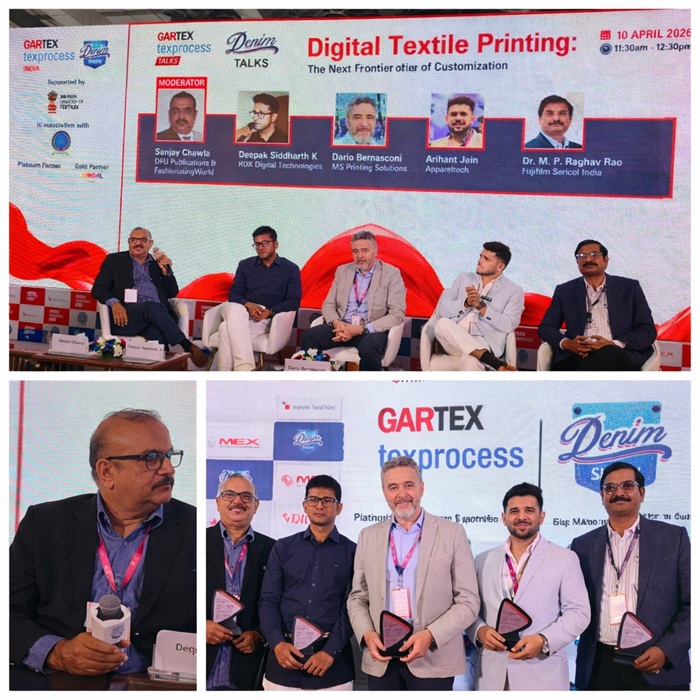
The next Munich Fabric Start and Bluezone is scheduled for Jan. 26-28. Around the world, Frankfurt Trade Fairs India and MEX Exhibitions have decided to go ahead with new dates for the New Delhi and Mumbai editions of Denim Show, which will now take place from Dec. 17-19 2020, and March 19-21 2021, respectively.
The shows were postponed in view of the rapid escalation in the number of COVID-19 cases and restricted travel. This leaves Première Vision as the next denim event on the calendar. The show is scheduled to take place in Paris, Sept. 15-17.
AEO teams up with NRF, denim retailers
American Eagle Outfitters (AEO) has teamed with the National Retail Federation (NRF), along with Gap Inc., Levi Strauss & Co. (LS&Co), URBN, Meijer and Designer Brands to provide a virtual learning program for retail interns who were left without internships as a result of the coronavirus.
AEO launched Retail Industry Summer Experience (RISE), an eight-week program that brings together 268 college sophomores, juniors and seniors as well as recent graduates and graduate students in the U.S. for a series of educational virtual sessions. Launched in June, the program gives younger generations the opportunity to learn directly from retail giants on new and existing challenges surrounding the industry.
The program will provide professional development opportunities and cover areas such as sustainability, women in technology, and diversity and inclusion—topics that have especially gained significance in recent months. Speakers include Chad Kessler, American Eagle’s global brand president; Jennifer Foyle, Aerie’s global brand president; Chip Bergh, LS&Co. president and CEO, and more. Sessions will be recorded and made available to students to learn at their own convenience.
The program mirrors an industry-wide shift to virtual education, as in-person events have had to pivot to digital methods. Trade shows like Kingpins and accelerator programs such as those organized by Fashion For Good and H&M Foundation have gone virtual to accommodate government restrictions in 2020.
Lovable Lingerie posts Rs 3.24 crore loss in Q4
Lovable Lingerie posted net loss of Rs.3.24 crore for the period ended March 31, 2020 as against net profit / (loss) of Rs.1.37 crores for the period ended December 31, 2019.
It reported total income of Rs.11.43 crores during the period ended March 31, 2020 as compared to Rs.39.98 crores during the period ended December 31, 2019.
The company has reported EPS of Rs.2.20 for the period ended March 31, 2020 as compared to Rs.0.93 for the period ended December 31, 2019.
The company has reported total income of Rs.143.59 crore during the 12 months period ended March 31, 2020 as compared to Rs.177.56 crore during the 12 months period ended March 31, 2019.
The company has posted loss of Rs.3.14 crores for the 12 months period ended March 31, 2020 as against net profit Rs.0.81 crores for the 12 months period ended March 31, 2019.
The company has reported EPS of Rs.2.12 for the 12 months period ended March 31, 2020 as compared to Rs.0.55 for the 12 months period ended March 31, 2019
Wrangler launches first foam-dyed denim
Wrangler® a part of Kontoor Brands has introduced the first denim apparel dyed with foam, an innovative technique that uses 100 per cent less water than conventionally-dyed denim*. The introduction of Indigood™ foam-dyed denim represents the brand’s continued commitment to using its global scale to advance the denim industry while maintaining the authenticity, quality and style that consumers expect from Wrangler.
Indigood™ Foam-Dye entirely replaces the traditional water drums and chemical baths of traditional indigo dyeing, reducing by 100 the amount of water* required to turn denim that beloved shade of indigo blue. The new dyeing process also reduces energy use and waste by more than 60 percent compared to the traditional denim dyeing process.
The Indigood™ products will be featured in the ICONS Collection, giving consumers access to Wrangler’s most iconic products with the highest level of sustainability available on the denim market today. In addition, with absolutely no compromise to quality, the Indigood™ products include recycled cotton, laser and ozone finishing. The collection includes both male and female jeans, shirts and jackets in dark and light shades.
Vietnam organizations collaborate to rescue apparel industry from COVID-19 effects
Organizations and industry bodies like VITAS and LEFASO, the Vietnam Chamber of Commerce and Industry (VCCI) and VGCL have collaborated to help the country's apparel industry survive the impact of the Coronavirus pandemic. The joint statement issued by these organizations calls the European Union and the Vietnamese government to invest in strategic partnerships to promote social dialogue in line with international labor standards.
It points out that Vietnam is an important source country for the European garment industry, calls for timely and substantive support for affected workers and businesses, and also for investment in education for workers to make them more employable. Like most supply chain countries, COVID-19 has had a huge impact on the apparel industry in Vietnam where 20 per cent of orders in April 2020 and 50 per cent in May were cancelled, leading to the loss of about one million jobs.
Most of the affected businesses and workers reported that they had not been able to access support from the Vietnamese government. Under the new agreement, the stakeholders worked – through social dialogue - to find common ground and solutions to overcome the crisis.
Credit crisis threatens recovery of US clothing, footwear retailers: GlobalData
A report by GlobalData suggests, commercial credit crisis is threatening the recovery of clothing and footwear suppliers in the US. Although customers are returning to stores, these retailers have to depend on the revenue and cash flow from previous seasons to launch new products. COVID-19 has caused massive declines in their revenues and forced them to secure loans for designing new products, placing orders and shipping goods.
Compounding matters, credit terms have changed significantly due to the crisis, which has led insurers to reduce their coverage and services so as to avoid more risk. This may force many brands and retailers to cancel orders or attempt to negotiate reductions, actions which will put more pressure on suppliers, who have already been struggling with the impact of Covid-19 and may be pushed to the edge by further losses.
GlobalData also believes the disruption experienced by apparel and footwear retailers during the pandemic may push many of them to shift significant portions of their production closer to home.
USTR to modify list of EU imports subject to additional tariffs
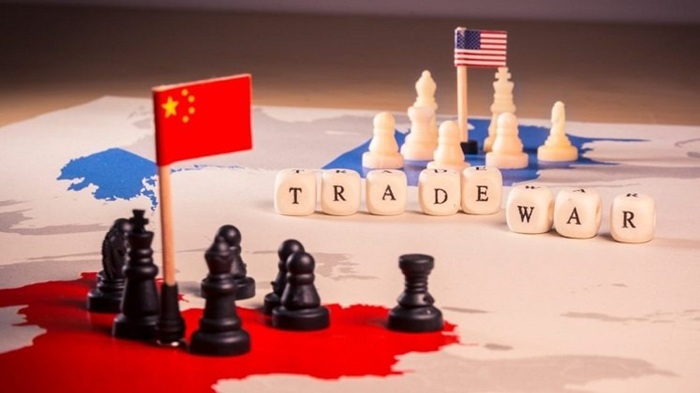
The office of the US Trade Representative (USTR) is planning to modify the list of European Union products subject to additional tariffs upon importation into the United States and increasing the tariff rate up to 100 percent. The USTR is accepting comments whether specific products should be either added to or deleted from the lists and whether the rate on specific products should be increased. Comments are due by July 26, 2020.
The current rate of additional tariffs is 25 per cent on EU products and 15 per cent on aircraft and aircraft parts. Products from the United Kingdom are also included. In addition to aircraft, the current lists of products include olives, wine, Irish and Scotch whiskies, cheese, oranges, lemons, sweaters, pullovers, sweatshirts, suits, swimwear, blankets, bed linen, axes, tweezers, hand tools, knives, printed books, lithographs and self-propelled machinery. The lists are grouped by product category and country. Accordingly, not all covered products from each EU country are included, so importers are advised to review the current and proposed lists.
Products proposed by the USTR to be added to the tariff lists include certain helicopters and aircraft, fish, cheese, fruit, coffee chocolate, olive oil, beer, vodka, certain chemicals, polyester staple fiber, high tenacity polyester yarn, cotton twill fabric, carpets, glassware, and lifting machinery.
Textile industry in a critical state: BIR
According to Martin Boschen, President-Textiles, Bureau of International Recycling’s (BIR), the textile industry is currently in a critical state and it may take these stocks 18-24 months to hit normal levels. As prices of unsorted, post-consumer textiles are lower than the costs of collection in some markets, collection, sorting and recycling are at risk and if this continues, could end many current collection systems. The pandemic-related closure of many retail outlets around the world has led to a huge increase in inventories of both raw materials and sorted goods, and thus to a substantial decrease in prices.
Current retail revenues are 40-60 per cent (of the norm) in Eastern Europe and Southern Europe, as well as in the open South American countries, and up to around 80 per cent in North-West Europe and in the US. Hence, the industry needs to put reuse always above recycling.