FW
Germany hosts textile coating event
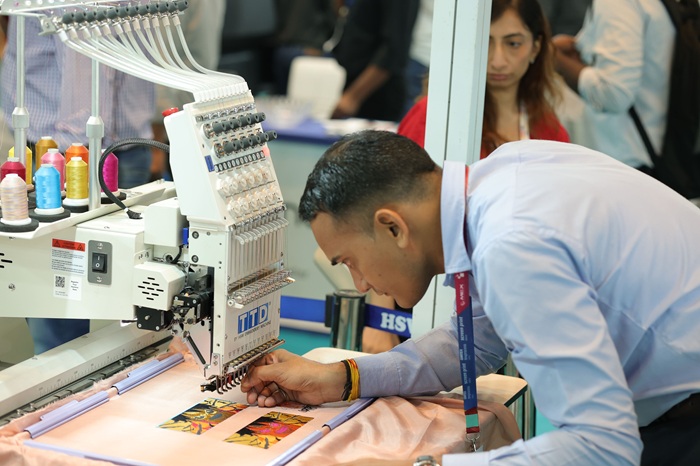
Textile Coating and Laminating (TCL) was held in Germany, March 14 to 15, 2019. This is an event concerned with innovations and trends in textile coating and laminating. The presentations given over the two-day conference highlighted the drive for individual, cost-effective and sustainable products while reducing consumption of water, chemicals and energy. New concepts and techniques were described to achieve these aims, which sparked informative discussions during the forum sessions. There were ample networking opportunities for all participants. For the first time at a TCL conference, developments in smart and functional textiles had its own session with discussions on graphene and 2D materials enabling wearable and textile electronics; printing and coating technologies to develop smart textiles; advanced applications of phase-change materials and new mechanism for delivering thermo regulation.
The global textile coatings market is expected to grow at a CAGR of 3.9 per cent from 2017 to 2025. Of all the segments, the polyurethane and polyvinylchloride sub-segments held the leading position in the global textile coatings market in 2016. Another segment involving the manufacture and use of full surface coasting technology showcases a high demand than other technologies. From the end users’ perspective, the upholstery fabric and industrial clothing segments held the top position on the leaderboard with respect to utilization and demand.
Egypt builds on its textile strength
Egypt has attracted the attention of many world textile and garment enterprises. The country’s textile and garment industry has a good foundation. The total number of employees in Egypt’s textile and clothing industry is 1.5 million. Textiles and tailoring account for 15 per cent of Egypt’s non-oil and natural gas exports and contribute three per cent to GDP. Egypt has comparatively rich advantages in cotton raw materials, extremely preferential trade policies and low production factor costs, which provide a good basis for further development of the textile and garment industry.
The Mingya Textile City Project is the first textile and apparel free zone in Egypt. The region has a large population of young people, suitable for the development of labor-intensive industries. The plan is to focus on the development of advanced textile cities in the upper Egyptian region, and to build the necessary infrastructure for textile cities. With this vision, Mingya Textile City will become one of the important platforms for overseas textile and apparel enterprises to settle in Egypt. The country offers a favorable investment policy and environment for overseas textile and apparel enterprises. In addition Egypt’s exports to Europe and the United States enjoy preferential benefits.
Chinese textile industry steers along on a steady growth track
The Chinese textile industry adheres to the general tone of work, striving for stability and progress, actively deepening structural reform in the supply side, vigorously promoting high-quality development, and striving to resolve various external risks. The sector’s total profit increased eight per cent over the previous year, 1.1 percentage points faster year on year. Completion of fixed asset investment in the whole industry increased by five per cent year on year, a slight slowdown of 0.2 percentage points from the previous year.
In 2018, retail sales of clothing, shoes, hats and needles above a designated size increased eight per cent, and the growth rate was 0.2 percentage points higher than that of 2017. Throughout the year, economic operation of the textile industry was normal, generally consistent with external environment and its own development stage. The growth level of main operational indicators was in line with expectations; the business climate was relatively stable; and the characteristics of high-quality development gradually appeared.
China’s export volumes of textiles and garments increased 3.5 percent in 2018. Growth rate increased two per cent over previous year. Revenue of textile enterprises grew 2.9 per cent; growth rate slowed by 1.3 percentage points from the previous year.
Chinese textiles exports down 11 per cent
China’s textile and apparel exports fell 11.61 per cent from January to February 2019. Textile exports were down 7.82 per cent from the same period last year, while apparel and accessories exports fell 14.55 per cent from the same period last year. In January this year, textile and apparel exports reached a new high since September last year, while in February, textile and apparel exports suffered a sharp decline, which reached a new low since February 2017. The main reason is the effect of the spring festival. China’s textile and apparel exports have fallen below the level created in the financial crisis of 2009.
The belief is that enterprises were anxious to export in order to avoid the risk of tariff imposition by China and the United States, so the data of the previous two months cannot reflect the real export situation. Though in the background of the global slowdown in trade, China’s textile and garment exports will continue to face pressure, with the expectations of the Sino-US trade negotiations improving, exports are reversing the downward trend and stabilizing.
In the meantime, China’s footwear exports increased 9.4 per cent in January 2019, an increase of 15.5 per cent year on year.
Asos Q2 sales up 13 per cent
For the second quarter Asos sales were up 13 per cent. Retail sales in the US rose four per cent. Retail sales in the UK, the company’s biggest market, rose 14 per cent in the quarter. In the first half, EU retail sales were up 15 per cent. However, France and Germany, the company’s two largest European markets, continue to be challenging. In the rest of the world, retail sales rose 20 per cent in the three months, while in the first half it was up only 12 per cent. The international retail sales picture as a whole was positive with a 13 per cent increase. In the first half, the reported rise was 12 per cent.
Total orders placed were up 15 per cent year on year. Active customer numbers rose 16 per cent. But the average selling price fell one per cent. The average basket size also dropped one per cent and the average basket value fell two per cent. While order frequency was up four per cent, conversion was flat. For the full year the fashion e-commerce giant expects sales growth of 15 per cent, the retail gross margin to dip by 150 basis points, and the ebit margin to stay at around two per cent.
Bangladesh: Accord seen as an effective mechanism
Garment factory workers in Bangladesh filed a record number of complaints about safety last year. This shows that Accord, a mechanism set up by European fashion brands to improve working conditions, was effective. The Bangladesh Accord was signed by some 200 global brands and unions in 2013 after the Rana Plaza disaster, when about 1,100 people were killed after a garment factory complex collapsed - sparking outrage over poor working conditions. The legally-binding accord, which covers almost 1,700 factories, has signatory clothing brands and retailers from about 20 countries, such as Britain’s supermarket group Tesco, Swedish fashion group H&M and German sportswear giant Adidas. Accord bans non-compliant factories supplying its signatory buyers.
Accord has received 1,152 complaints since starting work in 2014, many relating to fire and structural hazards. It made more than 100 factories ineligible to supply its signatory firms. Compared to other complaint mechanisms, owners take complaints filed in Accord a bit more seriously. They know that buyers are also a stakeholder in Accord and if they don’t address the problem properly their business may be affected.
Bangladesh, which ranks behind only China as a supplier of clothes to western countries, relies on the garment industry for more than 80 per cent of its exports, and about four million jobs.
Tamil Nadu looks to receive 50 applications for mini textile park
The Tamil Nadu government hopes to receive over 50 applications for the mini textile park scheme in a week. It has already received 44 applications so far and another 10 are expected within a week.
MVallalar, Textile Commissioner, Tamil Nadu, the government has received applications from the small and medium-scale units. It is planning to develop units for technical textiles including medical, industrial and Defence textiles. A large number of applications have been received from Karur district, he adds.
The mini textile park scheme was modified by the government to provide subsidy for industrial sheds too and thus support more small and medium-scale industries, said official sources.
The District Collectors are also urging textile industries to benefit from the scheme. In Coimbatore district, the Collector said those interested can contact 0421-2220095 for details.
Welcoming the scheme, Ravi Sam, Chairman, Southern India Mills’ Association, says, the scheme would benefit the weaving and processing units in the State.
Pakistan textile exports up one per cent
Pakistan’s textile exports grew over one per cent in eight months of the ongoing fiscal year. The country’s overall exports grew 1.9 per cent.
Exports of knitwear grew by 11.36 per cent. Exports of bed wear recorded an increase of 3.53 per cent and exports of made-up articles went up by 2.12 per cent. Exports of readymade garments surged 2.72 per cent. Cotton yarn exports witnessed an increase of 13.53 per cent. Exports of food commodities recorded an increase of 1.08 per cent. Exports of fruits recorded a growth of 15.29 per cent, vegetables 1.21 per cent, and oil seeds, nuts and kernels exports were up by 121.7 per cent.
But exports of raw cotton fell by 72.49 per cent. Towel exports too declined 1.29 per cent. Pakistan’s textile exports have not increased despite the fact that the country had depreciated the currency and reduced the prices of electricity and gas. On the other hand, imports went down by 6.13 per cent in the first eight months of the year. Expenditure on imports of petroleum was up 6.7 per cent than a year ago. Other major import groups were of liquefied natural gas, liquefied petroleum gas and food commodities.
Kering launches new website
Kering has launched a new website. Conceived as the group’s digital showcase, this new website aims to highlight all of Kering’s projects and values, those of Luxury that is constantly on the move, creative and bold. True to its primary vocation, the new Kering site brings together all of the Group’s resources and news, and presents them in an editorial form: strategy and governance, the Group’s history, financial information, an attractive space dedicated to talent gathering together all of Kering’s and its job offers, along with its sustainable development strategy, commitments to gender equality and cultural projects.
The emphasis on visuals and videos, as well as the fluidity of its flow-through, totally engross the user. Its news, publications and campaigns are published in real time, taking the form of an online magazine. In a dedicated press section exploring the Group’s strategic areas, all press releases and press kits, as well as copyright-free HD photos and videos are now available for direct download.
Kering also unveils a brand video on the daily life of the Group acted out by children.
UN launches new initiative ‘UN Alliance for Sustainable Fashion’
The United Nations has launched a new alliance aimed at uniting businesses to combat the fashion sector’s biggest environmental and social challenges, including waste, carbon emissions and modern slavery. Called the UN Alliance for Sustainable Fashion it was unveiled at the UN Environment Agency, the members of the collaborative scheme will identify “gaps” in the actions UN agencies are taking to solve fashion’s sustainability problems by championing a joined-up approach between departments. This analysis will be used to shape future UN initiatives, improve existing schemes and lobby national governments to change their policies in ways which will drive positive change across the fashion industry. As per UN, these actions could spur the development of new fibres and textile recycling technologies, encourage the industry to take more ambitious action and change consumer behaviours. The alliance has eight member organizations: Connect4Climate; the International Labour Organisation; ITC Ethical Fashion Initiative; the UN Development Programme; the UN Economic Commission for Europe; UN Environment, UN Global Compact and the UN Office for Partnerships – with fashion brands, retailers and suppliers being encouraged to sign up. The UN is encouraging members of the public to get involved in the Alliance’s work through a series of pop-up fashion installations across the globe, which will be used to showcase green innovations from the sector and highlight the scale of its environmental impact.
Consumers are increasingly engaging with sustainable fashion. They would prefer to buy from a clothing company which engages in environmental protection than one which does not.
The global fashion sector is believed to employ more than one in 10 working-age people in the world and is therefore, a key driver of economic growth. But the industry also accounts for one tenth of the world’s annual carbon emissions, five per cent of global water use and is classed – alongside technology and agriculture - as one of the sectors with the highest risk of slavery in supply chains. Between 80 billion to 100 billion garments and 20 billion pairs of shoes are manufactured annually, with the equivalent of a bin lorry full of clothing being sent to landfill or incineration worldwide every minute.