FW
China's apparel industry invests abroad weaving a global garment network
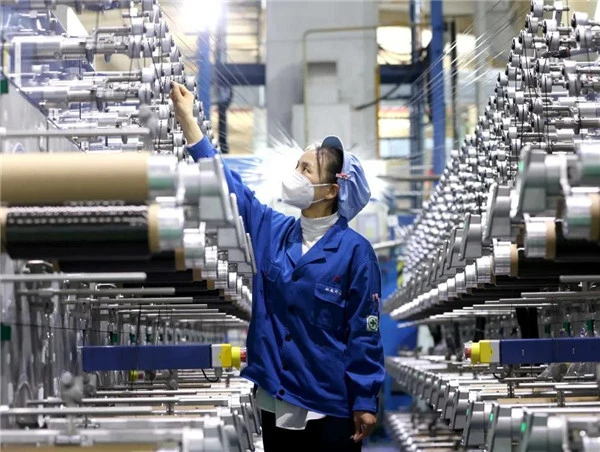
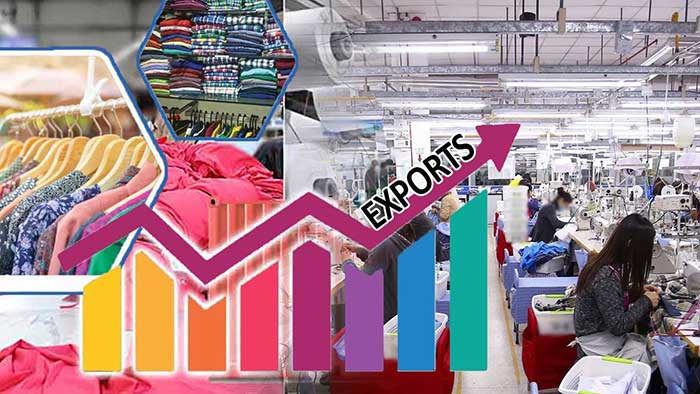
China's dominance in the apparel industry changing, while it remains a manufacturing powerhouse, Chinese companies are increasingly looking outward, investing in garment production facilities overseas.
Where is China investing?
Southeast Asia is a prime target for Chinese investments, with Vietnam, Cambodia, Thailand, Laos, and Myanmar attracting a significant chunk of Chinese investment, estimated at over $1.8 billion as per Shenglu Fashion, a textile industry information portal. This focus on neighboring countries makes logistical sense and leverages existing trade ties. Proximity offers logistical advantages and access to a young workforce. Additionally, reports suggest investments in Africa and North America, indicating a broader global strategy.
This outward investment is driven by several strategic motives. Rising labor costs and increasing competition within China are prompting companies to seek more cost-effective production bases. The ongoing trade war with the US has incentivized diversification into other markets. Additionally, the Belt and Road Initiative, a Chinese government project aimed at fostering global trade infrastructure, is facilitating these investments in some regions.
Benefits of investing abroad
By shifting production to countries with lower labor costs, and reducing reliance on a single location Chinese companies remain competitive in the global market. Moreover foreign investments allow Chinese companies to tap into new consumer bases and diversify their export markets. Investments can help secure access to raw materials and ensure a smooth flow of goods. These investments also create jobs in the host countries, fostering positive economic relationships.
Despite the potential benefits, there are challenges to consider. First, varying infrastructure levels and regulations across different countries can pose logistical hurdles. Additionally ensuring fair labor practices in overseas facilities is crucial for maintaining a positive brand image. However, the environmental impact of extended supply chains needs to be addressed by investors.
Chinese outward investment in the apparel sector is likely to continue. As domestic market matures and global competition intensifies, Chinese companies will seek new opportunities and production bases abroad. The success of this strategy will depend on navigating the challenges and ensuring sustainable practices throughout the global garment network.
Levi Strauss partners o9 Solutions for a new ERP system
Levi Strauss & Co is collaborating with the AI-powered supply chain planning tool, o9 Solutions to design a new enterprise planning (ERP) systemfor fabric procurement.
Additionally, the IT team of LS&Co worked with o9 Solutions to create a new data architecture that facilitates real-time data visibility.
An open marketplace, the ERP system enables LS&Co to swiftly and simply determine the fabric required to produce its garments by providing it with a real-time view of its supply chain. The LS&Co team can view all its suppliers and its available stock. This enables the company to form virtual real-time collaborations on the most recent raw material requirements.
The system enables LS&Co to assign orders more quickly and with greater efficiency, cutting lead times. Additionally, it facilitates the matching of real-time supply and demand right down to the component level.
After collaborating with o9 Solutions to produce three system modules already, LS&Co plans to produce five more system modulesin 2024 and early 2025. These include Tops/Bottoms Agility Modelling, Raw Materials Planning, and Material Requirement Planning (MRP)-driven Agility.
According to LS&Co, the company plans to extend the system’s capabilities throughout the supply chain and include additional vendorsas a part of its ambitions to develop the platform until 2024.
Suzano S/A joins Lenzing as core shareholder
The Lenzing Group, a prominent supplier of regenerated cellulose fibers for textiles and nonwovens, announced today a new long-term partnership involving its main shareholder, B&C Group, and the Brazilian pulp giant Suzano S/A. Under this agreement, Suzano S/A will acquire a 15 percent stake in Lenzing AG from B&C Group. Suzano, headquartered in São Paulo, is the world’s largest pulp producer, boasting annual sales exceeding €7 billion.
Lenzing's management is eager about the partnership and looks forward to a fruitful collaboration with their new core shareholder. Stephan Sielaff, CEO of Lenzing, conveyed his optimism, emphasizing the strong mutual respect between Lenzing and Suzano as key players in the international pulp market. He noted that Suzano’s expertise in pulp production and operational excellence will greatly bolster Lenzing’s strategic endeavors. The combined strengths of B&C Group and Suzano S/A form a potent alliance poised to propel their success.
This new alliance is expected to leverage Suzano’s industry-leading capabilities to support Lenzing’s growth and innovation in sustainable fiber production, reinforcing their commitment to environmental stewardship and operational excellence.
Textile Ministry develops new PCM-based clothing range
The textiles ministry is developing a new clothing range based on the indigenous phase-change material (PCM) technology. Allowing consumers to wear the same set of clothes across all seasons, the technology eliminates the periodic hassle of packing away seasonal clothes.
The technology is a result of collaboration between the ministry and leading tech and fashion institutes. It aims to provide a versatile clothing solution to India's varying weather patterns, thus reducing the need for multiple sets of clothing for different weather conditions and environments.
The PCM-based collection is especially beneficial for army personnel working in extreme weather conditions, from the cold climate of Jammu & Kashmir to the scorching heat of Rajasthan, Telangana, Bihar, and other states across the country.
The government has approved three projects focusing on the development and application of PCM under the National Technical Textiles Mission (NTTM). To be developed with an outlay of Rs 25.5 crore, these projects will be executed by the Indian Institutes of Technology, Delhi and Ropar in collaboration with the National Institute of Fashion Technology, Telangana. The PCM technology enables garments to regulate temperature effectively, offering enhanced comfort and efficiency.
Devika S Pathak, Professor and Department Head-North Zone, Fashion Design Department, Pearl Academy, New Delhi, says, by reducing the energy required for heating and cooling, PCM-enhanced clothing can contribute to energy conservation efforts, ultimately lowering the carbon footprint associated with temperature regulation. This is particularly relevant for India, where energy demand is rapidly increasing, and sustainable solutions are crucial for long-term environmental health,
The technology will usher in a new era of smart clothing that not only adapts to the environment but also supports broader sustainability efforts, says Ashok Kumar, Wholesale Trader-RMG Garments, Delhi. The government should collaborate with leading textile manufacturers to bring this technology to market, he opines.
Trent Alexander Arnold named new brand ambassador for Guess Jeans
Liverpool FC and England Player Trent Alexander-Arnold has been named as the new brand ambassador of the California –based denim brand Guess Jeans.
Alexander-Arnold will feature in the brand’s Summer 2024 campaign, ahead of his participation in the upcoming 2024 Euros Championship. Alongside fellow ambassador, British actress and model Iris Law, he will showcase the essence and vision of the brand Guess Jeans.
Set in a simple, uncluttered environment, the brand’s new campaign focuses on its classic denim pieces and Americana style. It highlights the brand’s AirWash technology that proves to be an eco-friendly alternative to traditional stone washing.
Developed in partnership with Jeanologia, the new technology uses air and bubbles to replicate the stone-washed look. It helps reduce the brand’s water and energy consumption and eliminates the need for pumice stones.
Launching with eight airwashes across denim pants, denim shirts and denim jackets, the Summer 2024 collection offers three denim fits for women and four for men, all inspired by archival designs from the '80s and ‘90s. It also showcases wardrobe essentials like graphic tees, hoodies, bombers, and puffers, each made with organic or recycled materials, reinforcing the brand’s commitment to sustainability.
The launch of this collection marks the debut commercial project of Nicolai Marciano, Creative Director, Guess Jeans, since assuming his responsibilities as thenew chief business development officer at Guess. The brand recently also launched its first flagship store in Amsterdam with a new innovative retail design concept rooted in the California Landscape.
SGS Bangladesh organises workshop on sustainable solutions in the textile industry
SGS Bangladesh recently organised a workshop on the theme ‘Reshaping the Future: Sustainable Solutions in the Textile Industry.’
Focusing on the EU market trends, the workshop was attended by leading textile brands, trading houses, and prominent supply chain stakeholders who discussed latest trends, technologies and emerging fashion demands. technologies, and emerging fashion demands.
The workshop opened with Abdur Rashid, Country Managing Director, SGS Bangladesh thankingsupply chain professionals, trading houses, industry experts, and top European companies for their participation. The workshop concluded with participants sharing their opinion on new and concurrent technologies and the benefits they derived from the workshop.
SGS provides a wide range of testing, inspection, and certification services globally to ensure product quality, safety, and sustainability.
EU’s T&A exports continue to decline in Q1, FY24
After surpassing pre-crisis levels in 2022 and stagnating in 2023, EU’s exports of textiles and clothing continued to decline in the first quarter of 2024. Imports also slowed, although not as drastically as the previous year.
Clothing exports from the region fell by 4 per cent, amounting to €9.3 billion, according to customs figures processed by the InstitutFrançais de la Mode. This decline did not impact Asia, as the European Union increased its shipments to the region by 12 per cent, while shipments to the Mediterranean dropped by 9 per cent.
Imports by EU's largest customers, including Switzerland, the United Kingdom, and the United States, declined during the quarter. However, exports to China, Hong Kong, and Macao rose, with Japan remaining stable. Clothing exports to United Arab Emirates, Ukraine, and Vietnam also increased during the quarter.
On the other hand, textile exports from the region declined by 6 per cent to €6.6 billion. Exports to Asia increased by 11 per cent during the Jan-Mar’24 period. The United States reported a 3 per cent decline in exports, the United Kingdom registered a 13 per cent decline while exports to China increased by 22 per cent. India reported a 38 per cent increase in imports from the EU, Vietnam 24 per cent, and the United Arab Emirates 18 per cent.
Clothing imports by the EU declined by 14 per cent during the quarter to €19.2 billion.Imports from China declined by 10 per cent while from Bangladesh by 21 per cent, Turkey 14 per cent and India 22 per cent. EU also noted a significant drop in imports from Myanmar, Indonesia and Switzerland.
Textile imports by EU decreased by 11 per centduring the quarter to €7.4 billion. Imports from Asia dropped 12 per cent, China 6 per cent, Turkey 6 per cent and Pakistan 18 per cent. However, Tunisia and Morrocco reported a minimal decline in exports to the EU with imports from Tunisia declining by just 1 per cent while imports from Morocco rose by 1 per cent.
Under Armor, USA Football partner for official merchandise for Olympics
Under Armor and USA Football have entered into a multi-year partnership set to last through the 2028 Summer Olympics in Los Angeles. The agreement names Under Armor as the official and exclusive uniform, apparel, and footwear partner for USA Football and its US National Teams, which includes both men's and women's squads. The brandhas been mandated to supply innovative products for athletes as they prepare for and compete in the Olympics and other international events.
The International Olympic Committee (IOC) has recently announced the inclusion of flag football in the 2028 Los Angeles Games. As a result, Under Armor will outfit the first Olympic team for the 2028 Summer Games as flag football and USA Football's US National Teams make their Olympic debut.
The collaboration between USA Football and Under Armor was launched in late May as the US Men's and Women's Flag National Teams gathered for a training camp. This camp organisedwas in preparation for the International Federation of American Football's Flag Football World Championships in Lahti, Finland, scheduled for August.
Scott Hallenbeck, CEO, USA Footwear, opines, this partnership with Under Armor will transform the game from the youth level to elite national teams. The brand’s focus on performance, innovation, and sustainable products will help ensure the national teams' success.
106th edition of PittiUomo commences in Florence, Italy
The 106th edition of men’s fashion show, PittiUomo is being held at the Fortezza Da Basso, Florence, Italy. To run until June 14, this edition of the event is being attended by 790 exhibitors, 43 per cent of them from abroad, compared to 832 in January and 825 in June 2023.
The theme of this 106th edition is ‘Pitti Lemon’ as it features an effervescent, ‘lemony’ atmosphere to create a sunny, vitamin-packed environment.
Painted in bright golden yellow, the venue boasts of several eye-catching features such as a florist selling only yellow daffodils, mimosas, hyacinths, narcissi and tulips, display stands filled with ochre postcards, and a straw-colored telephone booth where more than one visitors have stopped to have their photo taken. The exhibitors have decorated their stands with large green plants and original fittings.
The stands outside the venue have been equipped with parasols and deckchairs. The informal clothing brand Sun68 has even installed a swimming pool. However, the seemingly carefree atmosphere belies the underlying challenges.
With a marked slowdown at the start of the year, rising raw material and transport prices, geopolitical tensions, and falling consumer confidence, PittiUomo proves a crucial event to understand the market's direction. Sergio Tamborini, President, SistemaModa Italia (SMI), opines, the market is changing decisively.
Beginning with the awarding of a career prize to Hirofumi Kurino, Co-founder, United Arrows, and the Pitti 2024 Award to Spanish entrepreneur Javier Goyeneche, Head, Ecoalf, PittiUomo proves to be an important tradeshow as the increasing polarisation of the market between extreme luxury and fast fashion has left the middle class with fewer affordable quality options, adds Tamborini.
Emphasising on the need to start again with the product, Antonio De Matteis, President, PittiImmagine, adds, a large number of Asian and American buyers are expected to participate in the show.
Describing the 106th edition of PittiUomo as ‘ an edition of relaunch and challenge, Dario Nardella, Outgoing Mayor, Florence and newly elected MEP on the Democratic Party list, proposed organising an annual meeting in Florence with major European fashion players to set priorities for the sector.
Oscar Garcia Marceiras appointed new co-Chairman, Steering Committee, Fashion Pact
Oscar Garcia Maceiras, CEO, Inditex, has been appointed as the new co-Chairman of Fashion Pact’s Steering Committee.
Set up in 2019 by French President Emmanuel Macron and Francois-Henri Pinault, CEO, Keringat the G7 meeting in Biarritz, France, Fashion Pact aims to address the growing concernsof the fashion industry’s environmental impact. The Pact has set out broad guidelines to improve industry practices by 2050.
Currently comprising 60 names, the consortium includes sportswear brands like Adidas, Nike, Puma, Roosignol and Decathlon. It also includes budget and premium fashion retailers and groups like the Beaumanoir Group, Etam, Celio, MF Brands, Kiabi, PVH Mango, H&M and Inditex. Luxury players such as Ferragamo Armani, ErmenegildoZegna, Chloe, Tapestry, Burberry, Prada and Kering are also a part of this consortium..
Focusing on shared tools and common benchmarks with regards to issues like fighting and climate change, Fashion Pact also aims to preserve biodiversity and safeguard the oceans. However, the regulation’s pledges are considered vague by critics as they lack binding commitments by Fashion Pact’s members with their actions not being transparent enough.