FW
Smart Clothing adds new jeans factory
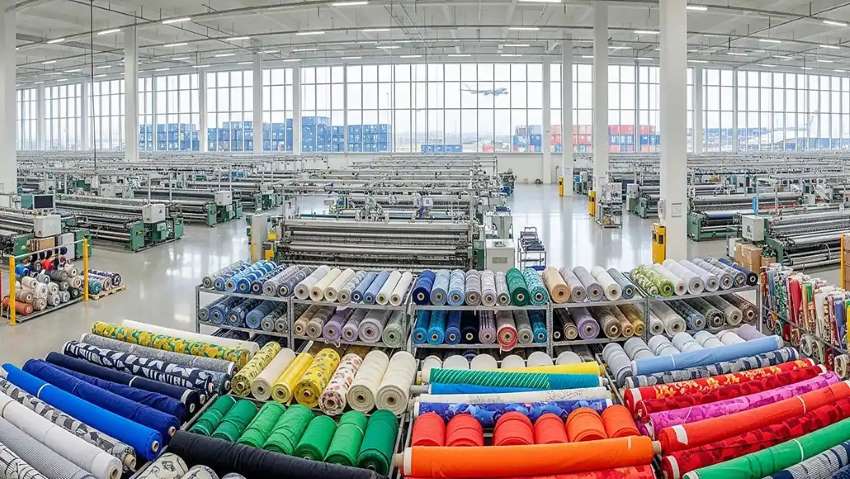
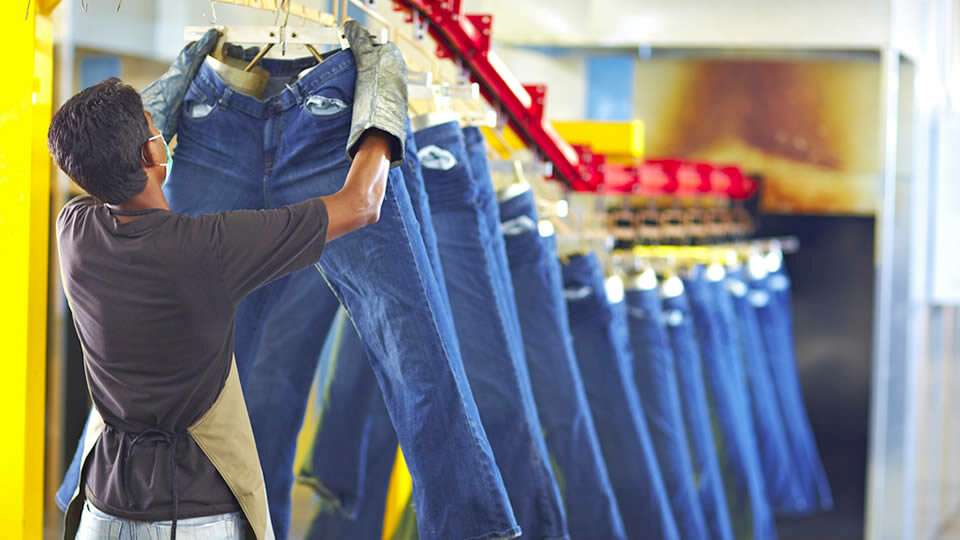
Bengaluru-based leading bottomwear manufacturer Smart Clothing is adding a new jeans factory.
The company manufactures 60,000 pieces of garments per month. It plans to launch a jeans factory with an initial capacity of 5,000 pieces per day.
Vishal Devatha, Director, says, the company will start with the sewing setup and will later go for washing operations also. It is exploring various opportunities, technologies and other aspects of the trade
Smart Clothing has over 4 acre for the new plant, with the overall investment being around Rs. 8 to 10 crore. Sewing operations will start in next three months, while washing operations will take some more time.
Dedhia believes, g new product category will help the company add new clients.
As of now, Smart Clothing works with Indian brands and in future it will also explore export opportunities. The company’s new denim plant will be fully compliant as per the need of export.
Global cashmere clothing market value to reach $4,105.41 million by 2029
As per the latest report by Data Bridge Market Research, valued at $3,015.28 million in 2021, the global cashmere clothing Market is projected to grow at 3.93 per cent CAGR from 2022-2029 to reach $4,105.41 million by 2029.
Over the last few years, the popularity and demand for cashmere apparel products have risen dramatically. Many industrialized countries are importing these products. Globally, factors such as rising demand for high-quality clothes and the adoption of fashionable and luxury garments are expected to fuel market expansion.
The rapid surge in demand for cashmere clothing products is also been attributed to rising disposable income among the working population and a trending predisposition of millennials to spend on luxury and premium products.
Furthermore, with the continuous digitalization of major countries and the resulting internet penetration, social media websites have become a perfect outlet for raising awareness about cashmere garments in some locations where the market was not large enough.
Market players are further investing in innovations in the design and comfort of fashion products, which further extend profitable opportunities over the forecast period of 2022 to 2029. Additionally, the increasing awareness about cashmere clothing in several regions where the market was not sufficiently large will further expand the future growth of the cashmere clothing market.
Copenhagen Fashion Week teams up with Ukrainian Fashion Week
Copenhagen Fashion Week has teamed up with the Ukrainian Fashion Week to uplift the fashion organization in times of war.
Copenhagen Fashion Week will support Ukrainian Fashion Week in its determinism to provide brands with an opportunity to be nurtured and showcased by their global allies and supporters.
The Ukrainian Fashion Week (UFW) celebrates its 25th anniversary in 2022. The fashion week had announced numerous projects during its 50th season that were halted due to the severe war that erupted through Russia’s invasion. The initiatives launched by UFW included “Support Ukrainian Fashion" Initiative to reinforce Ukrainian designers and ensure presenting of their new collections on the international catwalks.
Bypartnering with Ukrainian Fashion Week, Copenhagen Fashion Week will be able to showcase the COAT and TG Botanical as part of the official Event & Presentation Schedule. The COAT will release a digital fashion film and TG Botanicals as a physical presentation. Spalt PR will be the official PR supporters for both brands.
PVH Corp publishes 2021 Corporate Responsibility report
PVH Corp, the growth platform for Calvin Klein and Tommy Hilfiger published its 2021 Corporate Responsibility (CR) report. The company continues to collaborate with peers and partners to make progress on its Forward Fashion strategy, while continuing to navigate an increasingly challenging global environment.
PVH is committed to continue driving meaningful and impactful change within the organization and across the apparel industry as part of the company’s purpose to drive fashion forward for good.
This year’s report chronicles notable progress against PVH’s Forward Fashion commitments and also displays improvements on how and what the company reported.
According to the report, PVH increased the number of Calvin Klein products made using sustainable materials by 50 per cent. It incorporated sustainable materials including recycled and organic materials in two-thirds of Tommy Hilfiger collections. One-third of the consumer packaging for products was manufactured using recycled materials, up from 0% in 2019.
For the first time, the majority of PVH’s energy consumption came from the use and support of renewable sources. The company became a founding member of the International Accord for Health and Safety in the Textile and Garment Industry. It collaborated with fashion industry peers to launch The Resilience Fund for Women in Global Value Chains and the Power of Nutrition; expanded existing career advancement programs to support the women who make up the majority of PVH’s supply chain workforce. It exceeded target to support 135,000 individuals worldwide through education services, resources and trainings.
Huntsman Corporation to sell Textile Effects division
Huntsman Corporation has entered into a definitive agreement to sell its Textile Effects division to Archroma, a portfolio company of SK Capital Partners. The total enterprise value of the transaction is approximately $718 million, which includes the assumption of approximately $125 million in net underfunded pension liabilities as of December 31, 2021. The acquisition is being partially funded with preferred equity, of which Huntsman is taking up to $80 million, an amount SK Capital Partners will seek to syndicate prior to the transaction closing.
Over the last twelve months ending June 30, 2022, the Textile Effects division reported sales of $772 million and adjusted EBITDA of $94 million. Huntsman anticipates cash taxes on the transaction of approximately $50 million. Huntsman intends to report Textile Effects as discontinued operations beginning in the third quarter of 2022. The transaction is subject to regulatory approvals and other customary closing conditions and is expected to close in the first half of 2023.
Karl Mayer Group acquires yarn tensioner technology
Karl Mayer Group has acquired the yarn tensioner technology from Appalachian Electronic Instruments
As per the agreement, the Karl Mayer Group will take over the complete range of products YTC (YTC-2000 AND YTC-2000 MAX) and the complete technology of yarn tensioners for weaving and warp knitting preparation from AEI. The after sales service for the installed base machines will be taken over by Karl Mayer effective from September 01, 2022. AEI will continue to support Karl Mayer and the customers during the transition. As market leader and full range supplier in indigo dyeing, the Karl Mayer Group will complete their yarn tensioner product range with this integration of the YTC technology.
Since patenting the first electronic disk tensioner in 1979 AEI has been a pioneer and leading supplier of yarn tensioners for denim and warp knitting applications. After 43 years, AEI has made the decision to exit the tension control market and focus on its patented broken and tight yarn monitoring technology.
CMAI felicitates Deepak Seth, Chairman, Pearl Group for his inspiring business acumen
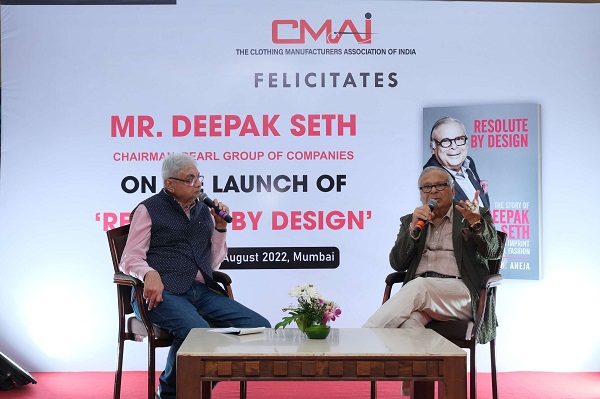
 Celebrating the release of the book, ‘Resolute By Design,’ Rajeev Masand, President, Clothing Manufacturers Association of India (CMAI) felicitated its author Deepak Seth, Chairman, Pearl Group of Companies for his tremendous growth from a small time garments exporter to a global conglomerate spanning over 22 countries and production facilities across the world.
The book has been written by journalist Rajendra K Aneja based on the experiences shared by Deepak Seth.
Expanding group operations
A non-executive chairman of Pearl Global, the listed subsidiary of the company, Seth has over 31 years experience in the apparel industry. He has been responsible for expanding the group’s operations to 12 countries across the world including Hong Kong, Bangladesh and China. Seth also set up Pearl Group’s new manufacturing units in Bangladesh and Indonesia besides acquiring existing businesses in the US. He was a member of the Apparel Export Promotion Council from 1990 -1993 and was inducted as the Executive Committee as a special invitee.
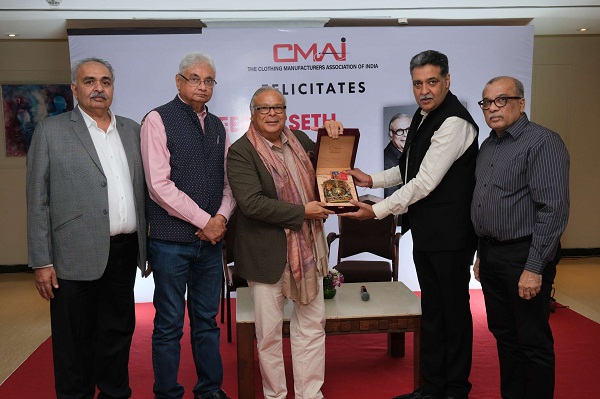
Starting operations with a small order of 6,000 pieces in 1976, the Pearl Group has since grown into a global conglomerate shipping over one million garments every day. The group’s current turnover is $1.5 billion (Rs 12,000 crore) which it aims to increase to $2.00 billion in the next three years. Its achievements remain unparalleled amongst Indian garment companies.
Business acumen an inspiration
Attended by CMAI members, the felicitation program included narration of stories and anecdotes from Seth’s 45-year journey in the industry. It focused on the lessons learnt by Seth over the years. The event was a commemoration of Seth’s single-minded focus on his goals, his untiring efforts, initiatives to improve workers’ productivity and his instillation of trust, transparency, equity and ethics in his company’s operations.
The felicitation program also included an informal interaction between Seth and Rahul Mehta, Chief Mentor, CMAI, both alumni of the Jamnalal Bajaj Institute of Management.
Interesting ‘takeaways’ of the interaction
Few of the interesting points that were discussed during the informal interaction of Deepak Seth with Rahul Mehta like Seth feels that benchmark or cut off point of an entrepreneurship could be perhaps around 500 machine capacity as it is possible to manage personally but above that capacity one should ideally look at engagement of the professionals to have a stable growth.
Seth explained that he has always been very keen on looking out for any opportunities of partnership where they could improve including investing in any startups if useful technology is involved.
Talking about productivity of the workers, Seth observes that culture everywhere is different but workers are the same but it is how we train them and how we take work from them. He feels supervisors and middle management is week in India, in south there’s no hunger for overtime whereas in north the migration workers work slowly during daytime to get overtime. If you set up the right team of supervisors and middle management, Indian work force is also not bad. On the other hand, Bangladesh workers are very committed; they work for 12 hours/day, hungry to do overtime. In our Vietnamese factory for our factory of 1000 machines, we manage with only 1500 work force, whereas we may need 2000 or 2500 people here in India, there’s no alteration or defect there’s no quality issues for the products cut, manufactured and packed in our Vietnam factory. The workers there are quite educated and feel guilty if fault is found. In Indonesia, we make very high quality garments.
The interaction highlighted the management philosophy of Pearl Group’s organizational culture and business philosophy that has inspired the Harvard School of Business to study it as a case study.
RGE to launch sustainable research center with NTU
Singapore-based greentech manufacturing firm Royal Golden Eagle (RGE) plans to launch a sustainable textile research center in partnership with Nanyang Technological University (NTU).
Called RGE-NTU SusTex, the centreaims to boost innovation in textile recycling and apply research outcomes to solve real-world problems. It will focus on four main areas: sustainable textile recycling, automated textile waste sorting systems, eco-friendly dye removal, and new textile development.
Researchers at the S$6 million ($4.3 million) joint center will study the chemical makeup of various textile materials to develop processes and solutions needed for a circular textile economy.
Established in 1973, RGE is a producer of sustainable natural fibers, edible oils, green packaging, and clean natural gas. The company has total assets of over US$25 billion and employs 60,000 staff across Asia, Europe, and the Americas.
Vietnam’s textile exports rise by 17.7 % in H1FY’22: VITAS
According to the Vietnam Textile and Apparel Association (VITAS), the country’s textile exports grew by 17.7 per cent to $22.3 billion in the first six months of the year.
The after-tax profit of Vietnam National Textile and Garment Group (Vinatex) grew by 49 per cent to VNĐ573 billion Q2.
The firm attributed the rise in profit to its high volume of cotton in storage, which resulted in low production costs amid mounting cotton prices.
The revenues and after-tax profits of TNG Investment and Trading JSC grew by 35.7 per cent and 42.3 per cent to VNĐ2 trillion and VNĐ87 billion, respectively.
The PhongPhú Corporation raked in over VNĐ160 billion in profit, surpassing the figure in Q2/2021 by 11 per cent.
Although many firms were riding high in the second quarter, some others saw their profits eroded by rising costs.
The ThànhCông Textile Garment Investment Trading JSC earned just VNĐ55 billion in Q2, down 6 per cent against Q2/2021. The company said higher overheads and exchange rate fluctuations cost it over VNĐ75 billion, eating into its profits.
Century Synthetic Fiber Corporation’s profits fell by 2 per cent in profit due to soaring financial costs. The costs ballooned from VNĐ320 million to over VNĐ15 billion, driving its profits down to VNĐ69.4 billion.
The Hanoi Textile Garment JSC ran unprofitably as it incurred higher financial costs and elevated costs of sales. It made a loss of VNĐ5.4 billion in Q2, a stark contrast to the profit of VNĐ6.2 billion in the same period last year.
According to VITAS, the outlook of Vietnamese textiles is not very optimistic in the second half of the year as the risk of COVID-19 resurgence is still high.
On top of that, many of Việt Nam's commercial partners have been tightening up their preventive measures against COVID-19, fuelling the situation, it adds.
Levi Strauss & Co collaborates with TGW Logistic Group for distribution center project
Levi Strauss & Co has collaborated with TGW Logistic Group to design, engineer and implement its 1.6 million square-foot highly automated omnichannel distribution center that would be capable of serving all distribution channels from a single location.
The project is split into two phases. In the first phase, scheduled to go live by April, 2024, Levi Strauss aims to achieve a throughput of up to 33 million units per year. In the second phase of the project, additional storage capacity and picking work stations will grow that number to 55 million annually.
At point of receipt, Levi Strauss receives cartons from its international production sites, as well as returned items. After inspection and repackaging, returned goods are placed into an empty mixed container that is then stored in an eight-aisle shuttle system with more than 170,000 storage locations. Up to 70% of the incoming cartons will be reused later as order cartons, saving money and reducing waste. An innovative robotic system by TGW automatically repacks the cartons into totes.
New items move from receiving to storage in either an automatic mini-load warehouse or in a shuttle warehouse with a total of 1.3 million storage locations. The mini-load facility has two functions: it’s both the supply storage for the shuttle system and the buffer storage for ready-to-ship cartons, which are directly forwarded to the shipping area via a cross-docking process.