FW
India: Review duty on cotton imports, urges SIMA
 The government recently took some bold steps to address tax and raw material issues in the textile industry. First, it brought the entire textile value chain under GST net and also removed the anti-dumping duties on polyester raw materials, polyester fiber and acrylic fiber. Further, it introduced the RoDTEP scheme to refund the applicable and embedded taxes apart from extending duty drawback benefits to refund all the taxes and levies and thereby enhance global competitiveness.
Another important decision is the introduction of 5 per cent BCD, 5 per cent AIDC and 10 per cent social welfare cess on both totaling 11 per cent on cotton imports in the Union Budget 2021-22. However, the industry immediately protested against this and urged the government to roll back its decision as it imports only 5 per cent of the total cotton consumed by the industry.
International volatility leads to spike in domestic prices
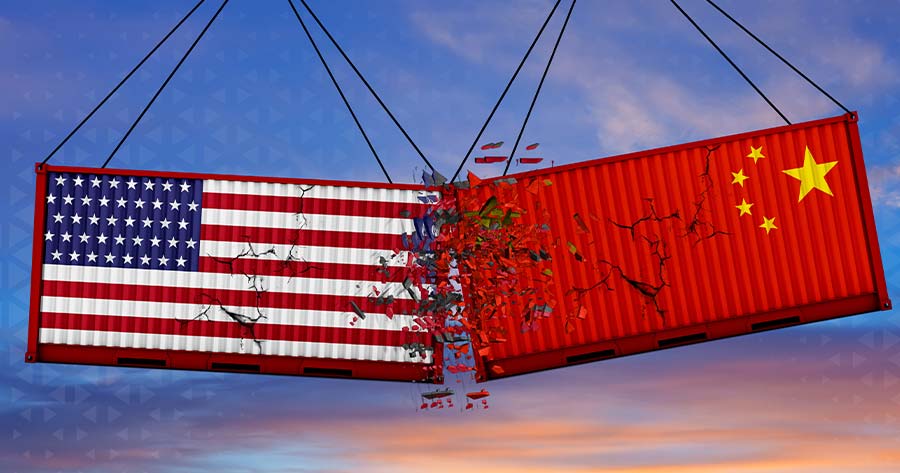
In cotton season 2021-22, India’s opening stock stood at 75 lakh bales while estimated crop reached 360 lakhs bales. Unprecedented volatility in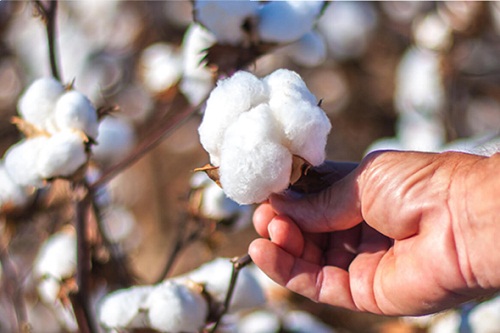 international cotton prices led to the skyrocketing of domestic prices while pent up demand in the post-COVID period led to skyrocketing prices. The situation was further stimulated by the US sanctions on Xinjian cotton that accounts 10 per cent of the world cotton production. Dominated by large traders, the Indian Commodity Markets MCX and NCDEX also fuelled the market.
Ravi Sam, Chairman, The Southern India Mills’ Association states, the Indian cotton textile industry was at an advantage as cotton prices reduced by around 10 per cent during the cotton season -- from December to March. Prices of cotton seed surged from the beginning of the season. Price of Gujarat Shankar-6 cotton increased to Rs 8,930 from Rs 6,788 per quintal on October 1, 2021 while prices of good quality kapas increased from Rs 7,575 to Rs 10,760.
Import duty erodes market competitiveness
For the first time, Indian cotton price zoomed ahead of international prices due to the imposition of import duty on cotton which eroded market competitiveness of the exporters. Price of Indian cotton price increased by Rs 10 to Rs 15 per kg for the last two months and the situation is likely to aggravate. Due to this, exporters have been unable to confirm export orders usually finalized during the December-January period, leading to the diversification of orders to competing nations.
The premium of good quality cotton is 5 to 7 per cent higher than low quality cotton. Due to this, mills have been unable to procure this cotton even for the daily use, posing a huge threat to the entire textile value chain. Therefore, SIMA urges the government to remove the 11 per cent import duty on cotton and cotton waste and also remove cotton from MCX and NCDEX features.
Bemberg to showcase collaboration with Luca Litrico at PittiUomo
On January 11, Bemberg™ will feature an exclusive collaboration with Luca Litrico, Head, SartoriaLitricoat PittiUomo 101.
Bemberg became famous for crafting the highest-quality suits for all the most important men of Dolce Vita era, from Richard Burton to Marcello Mastroianni. Its historic relevance has even been recognized by the Ministry of Cultural Heritage, thanks to its archive composed of hundreds of photos and sketches signed by Angelo Litrico himself
For this occasion, Bemberg™ will showcase four historic suits wore by true style arbiters a such as: former US president John F. Kennedy, dolce vita poster-boy RossanoBrazzi, American astronaut James B. Irwin and iconic fashion designer Angelo Litrico. All garments feature stylish linings woven with Bemberg™ fiber disclosing its ductility always in vogue through time. Over the decades, Bemberg™ established heritage in formal lining has expanded into new territories and able to represent also contemporary outerwear styles.
“We are so excited to be back in Florence. PittiUomo and Italy are the perfect starting point of our journey through style.” says Mr. Koji Hamada, CEO of Asahikasei Fibers Italia, “At our booth visitors can glimpse the link between past and present, our values and chromosomes for the fashion to come.”
“I am extremely pleased to be able to show these works of art, fruit of the mastery and expertise of my uncle Angelo Litrico” said Luca Litrico, CEO and owner of SartoriaLitrico. “The partnership with Bemberg™ has been going on for decades now, and I am hopeful that it will continue for a very long time”.
Bemberg™ vision is centredaround contemporary beauty, and uniqueness – the fibre manufacturing is exclusively taking place in Nobeoka, where its closed- loop circular economy production approach together its transparent and traceable processes are able to guarantee the responsible certified values.
Bemberg™ by Asahi Kasei will unveil the second chapter of its journey at Première Vision in Paris with an exhibition where visitors will be able to explore the fashion world, from India to Japan, through fabrics and style of today and tomorrow.
ITMF adds Arise Integrated Industrial Platform (IIP) as corporate member
Based in the UAE, the textile division of ARISE Integrated Industrial Platform (IIP),j joined ITMF as a new Corporate Member. The platform identifies industrial gaps in African countries to unlock value and create new industries. The objective is to industrialize key sectors by creating local transformation, maximizing production, efficiency, and cost, which in turn generates local value addition.
Arise IIP seek to boost exports, enable local transformation of raw materials and promote trade by tailor-made special economic zones in Gabob, Benin and Togo In Benin and Togo Arise IIP will focus at creating value chains for the textile industry – from raw material sourcing to resource transformation through manufacturing, to exporting final products.
The International Textile Manufacturers Federation (ITMF) founded in 1904 is the international forum of the global textile value chain. Its members are from textile and apparel producing countries representing 90% of global production.
AMSilk Partners with Mercedes-Benz to develop sustainable car door pulls
AMSilk GmbH (“AMSilk”), a world leader in supplying innovative high-performance bio-based silk materials, has entered into a partnership with Mercedes-Benz, for the development of novel, sustainable car door pulls, as part of the car manufacturer’s latest technology program the Vision Eqxx.
The new concept car, vision eqxx, features innovative interior materials, revealing a way forward for luxury design that conserves resources and is in balance with nature. Among the organic interior design features are new door pulls made from AMSilk’sBiosteel® fiber. This high-strength, certified-vegan, silk-like fabric is made using AMSilk’s proprietary biotechnology expertise.AMSilk is the world’s first industrial supplier of vegan silk biopolymers which are 100% biodegradable, recyclable, renewable and zero-waste.
Marking a first in the automotive sector, AMSilk’sBiosteel® provides a solution to the car industry whose need to replace petroleum-based content by natural, bio-based materials is increasingly growing.
This new project is the most efficient electric vehicle Mercedes-Benz has ever built and marks a new expression of efficiency and sustainability in interior design.
ITF hosts discussion on the textile industry
Coimbatore-based Indian Texpreneurs Federation (ITF) hosted a discussion on the Indian textile industry on January 04, 2022
At this discussion, DrSeshadriRamkumar, Professor, Nonwovens and Advanced Materials Laboratory, placed his views on mid to long-term understanding of the textile landscape.
It is important to focus on “4S, a ” concept adopted by U.S. Department of Defense while planning ahead for any sector, says Ramkumar. These 4Ss include: Sense, Shape; Shield and Sustain, he adds.
Good planning on stocking raw materials is the key, says Ramkumar. He advises exploring different blend options to balance costs besides finding new applications. Dinakaran, Textile Industrialists and Former Chairman, SIMA, advised the Indian textiles sector to look for product enhancement. He explained how China utilized new fibers such as modal, etc., and offered new blends to the world market.
While sustainability is keenly looked at by the world markets, incremental developments such as the use of recycled materials will be a step in the right direction Countries like India, which once used to enjoy labor cost advantages must go for lean manufacturing and value-addition as the competitive advantage is eroding.
One should look at the sector as a four-legged table and all the four legs should be balanced to put the table to use. These four legs include technology, cost, marketing, and messaging, added Ramkumar.
India’s apparel exports up 35 per cent in 2021
Indian apparel exports grew by 35 per cent during the first nine months of 2021, the AEPC has said. This is despite the fact that local restrictions impacted operations in the first quarter during the second wave of the pandemic. Exporters have done exceedingly well and dealt well with the challenges.
Garment exporters have a fast growing order book from brands and buyers across the world. With the active support of the government and driven by strong demand conditions, Indian apparel exports are expected to see historic highs in the coming months. India’s exports in December 2021 posted a growth of 37 per cent over the same month last year and exports in the first three quarters of the fiscal were a record $300 billion.
The country is on target to meet the $400 billion export target set for 2021-22. This would be the highest exports ever achieved for the country. The country’s highest annual export so far was in 2018-19 while the highest monthly export prior to December’s performance was in March 2021. India’s exports in October 2021 rose 43 per cent compared to October 2020. As compared to October 2019, exports in October 2021 exhibited a positive growth of 35.89 per cent in dollar terms and 43.30 per cent in rupee terms.
Japanese balk at use of Xinjiang cotton
Japanese apparel companies are strengthening their efforts to give due consideration to human rights when manufacturing clothes and other products. Consumers are becoming more sensitive to social issues involving the fashion industry. The industry is facing the challenge of tackling human rights issues in a responsible manner across its complicated supply chains ranging from raw materials to finished products. For instance, the use of cotton made in China’s Xinjiang Uyghur autonomous region has been facing criticism in the wake of allegations of forced labor.
Sanyo Shokai, a long-established apparel maker, had been using Xinjiang cotton in a small number of products but decided to stop its use starting with products for spring this year. TSI Holdings has already discontinued the use of Xinjiang cotton. Mizuno, a comprehensive producer of sporting goods, decided to switch to the use of replacement materials. Fast Retailing, which owns Uniqlo and other clothing brands, aims to establish a system that allows the company to investigate whether there are risks of forced labor throughout the manufacturing process, including the procurement of raw materials.
However there are limitations in apparel companies’ attempts to completely eliminate the use of Xinjiang cotton. It is difficult to rule on the legality of the entire process of manufacturing cotton products, which involves a number of stages, including cotton cultivation, spinning and sewing.
TEA accuses middle men of jacking up cotton price
Tirupur Exporters' Association (TEA) has accused middle-men and traders of creating havoc by jacking up the price of cotton during the cotton arrival season. TEA says, 11 per cent total import duty on cotton has been the reason for the cartelization of players to increase the domestic cotton prices and make an abnormal profit.
As per Raja M Shanmugham, cotton price hike heavily impacts garment- exporting units and leads to losses, including employment. Moreover, it also affects the sustainability of the MSME garment units. He adds, necessary steps have to be taken to break the cartelization and also see the possibility of imposing ban on cotton exports. The industry has always supported the cotton-producing farmers getting better price for their produce as that would encourage them to continue to raise the crop and take the right scientific techniques to increase productivity
Global swimwear market shows healthy growth
The global swimwear market is growing at 6.3 per cent CAGR from 2021 to 2026, reveals a ResarchandMarkets.com report.,
New trends are pointing to growing demand. Key factors such as design, trend and comfort of the fabric are playing a major role in driving the market. In particular, swimwear manufacturers and designers have focused on the comfort level of swimwear and considered the popularity of value added features, such as trendy prints and convenient cuts. This also points to the growing demand for branded swimwear.
While swimming in the United States has experienced a notable bump in participation each year since 2004, the Asia-Pacific region is expected to experience a higher growth rate than the other regions in the next five years. The Chinese swimwear market is driven by the country’s huge population finding a passion for water sports, as they consider swimming as the best form of physical exercise, which will help drive a healthy demand for swimwear products. Likewise, in Australia, swimming is a very common outdoor activity.
The pandemic forced many swimming pools to close to minimize the spread of the virus. The closure of schools and universities across the world in 2020 also negatively affected sales in the global swimwear market.
Chinese cotton linter prices soar
Prices of cotton linter in China surged to a decade high in 2021, says a CCF Group Report. Delinting is the process of removal of short fiber from cotton seeds before oil is extracted from the seeds. Supply was tight in 2021 because inflation kept pushing up cottonseed and cotton linter prices. Coupled with growth of refined cotton-grade and cotton linter pulp grade-cotton linter, the widening supply gap further added to the tightness of cotton linter supply.
However, the commodity market gradually cooled down with bigger pressure on the control of coal since the end of October and prices of cottonseed and cotton linter fell after peaking amid increasing supply. There was large supply gap of cotton linter in 2021 because of the recovery of demand from refined cotton, especially a sharp increase of cotton linter pulp (CLP)-grade cotton linter in the first three quarters. Thus the gap had to be filled in by imported cotton linter. Cotton linter imports by China grew significantly.
In 2022, cotton linter consumed by refined cotton and cotton linter pulp is expected to fall, so cotton linter prices may be under pressure with subdued growth of demand, so the price is expected to be moving down. However, the emergence of unexpected events may cause price volatility or unpredictable changes on the market.