FW
UK scores in clean apparel manufacturing
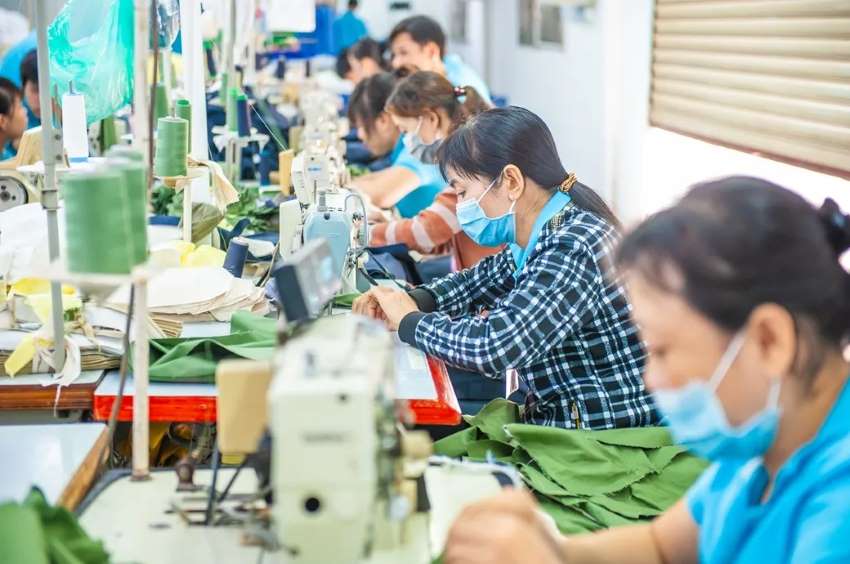
Emissions created by manufacturing clothes in the UK are lower than those created by a similar operation in an overseas textile production base. So, UK companies can make production processes gentler on the environment by manufacturing closer to home. The trend to manufacture overseas has not only decimated jobs in British fashion but is having a disastrous effect on the planet.
The biggest contributing factor to cleaner and more efficient manufacturing in the UK is due to the lower carbon intensity of the electricity supply network. The UK has significantly lower carbon emissions per unit of electricity compared to overseas production hubs such as China, Bangladesh and Turkey. A manufacturer in China would typically release around 90 per cent more greenhouse gas emissions while using the same energy as in the UK. Turkey would release around 70 per cent more emissions while using the same energy as in the UK and Bangladesh uses 24 per cent more. So production in the UK has lower direct carbon emissions – making it a more sustainable manufacturing base.
Renewable energy plays a key part in keeping energy consumption to a minimum. Within the garment production process, the sewing phase typically requires the most energy consumption. With solar panels, energy efficient machinery and LED lighting the average power required to make each garment has been reduced by 37.5 per cent.
Philippines apparel exports down four per cent
Philippines’ apparel exports dropped four per cent from January to July in 2019 compared to the same period a year ago. Last year, apparel exports had dropped 16 per cent after flat growth the year before.
The expected transfer of manufacturing sites to the Philippines as a result of the trade war has not happened. Companies looking for alternative manufacturing sites tend to choose Myanmar over the Philippines. Companies are setting up shop in parts of Southeast Asia instead of China to avoid being a casualty of the growing tensions. A bill is seeking to lower the corporate income tax, which is currently one of the highest in Southeast Asia. But it has drawn a lot of criticism because it will also mean the rationalization of tax incentives, which is expected to lead to job losses after companies fail to cope with the rising cost of doing business. Over 1,10,00 workers — in apparel, textile, travel goods, and footwear industries — will be displaced in 12 to 18 months once the bill is passed. However, these workers are paid more than their counterparts in southeast Asia.
Cushioning the impact of the high cost of doing business in the country are the current tax incentives.
TTF highlights latest textile developments at Intertextile Shanghai
The Taiwan Textile Federation (TTF), an organisation coordinating an industry of multiple markets and end users, highlighted the latest developments and collections by Taiwanese companies at last month’s Intertextile Shanghai Apparel Fabrics, held in Shanghai recently.
TTF’s booth featured 91 companies, exhibiting their innovations in functional and fashion textiles. Under the slogan ‘Think Taiwan for Textiles’, Taiwan Select booth featured a number of outstanding Taiwanese textiles suppliers, which regarded the fair as a good platform to reach potential international partners and showcase their latest products. The booth attracted brands, textiles and garment manufacturers, to come to visit and source.
Founded in 1975, the Taiwan Textile Federation over the years, TTF has adapted to meet the needs of the textiles industry, expanding its functions to market promotion, product design, fashion information analysis, online information, technology training, collection and analysis of market information, certification of functional textiles, publications of textile information, issuance of Certificate of Origin, and other textile-related services.
Noida apparel units struggle
The apparel industry in Noida is struggling. Sales have gone down 25 per cent in the last six months. The ongoing recession has hit sales in international markets. Several apparel manufacturers are hoping to shift from the export to the domestic market in the face of the drop in sales. They feel the domestic market is doing well and is capable of offsetting the losses. Industries are being helped in this through the one district, one product scheme and other policies. However, October onwards is usually a good season, so Noida’s apparel units are hoping the next few months will be better.
Apparel is one of the largest industries in Noida and the district is also recognised as a readymade garment hub. There are over 3,000 garment units in GB Nagar, employing more than ten lakh people. In the past one year, 1,39,255 people were employed and an investment of Rs 2,824.45 crores was made. Apparel exporters are hoping for more subsidies and updated laws relating to labor, industry infrastructure and financing, and consistent schemes and policies and incentives. While electricity rates in Noida come to about Rs 10 per garment on an average, power is free for garment manufacturers in China.
Karnataka textile policy fails to achieve intended target
As per the Comptroller and Auditor General of India, the Karnataka textile policy 2013-18 failed to achieve its intended investment and job generation targets. The policy could not achieve the Rs 10,000-crore investment target and 5 lakh employment generation targets envisaged in it and fell short of its target by 63 per cent and 76 per cent, respectively. Additionally, the imparting of skill development training to unemployed youth was reduced from 2.96 lakh to 1.09 lakh. The CAG conducted a performance audit on the Karnataka Textile Policy 2013-18 to assess the outcomes of the initiatives and factors responsible for under performance.
The government which had planned six textile parks in the state with integrated facilities with private sector participation had not fructified. Though an amount of Rs 6.35 crore was irregularly released to an SPV in Kalaburgi, it did not fulfill the prescribed conditions.
Additionally, there was an inordinate delay in release of incentives and subsidy amount to beneficiary units, which affected their cash flow. Incentives/subsidies to one super-mega project were sanctioned by exceeding the admissible limit under the textile policy on extraneous grounds caused extra financial implications of Rs 315 crore. Rs 84.53 crore released for the implementation of various schemes was retained in the bank for period ranging from two to five years without utilisation.
Burberry wilts under Hong Kong pressure
The Hong Kong protests could hurt Burberry. The impact on the British luxury firm in the short term could be painful and the year to April 2020 might see sales plummet. Burberry’s exposure to the ready-to-wear clothing market has put it under more pressure than some rivals to shift current season stock. For many luxury brands in Hong Kong, accessories make up a bigger percentage of the mix and these can be less seasonal than ready to wear is. So Burberry might need to introduce markdowns pretty soon and divert stock that would have been destined for Hong Kong. That could mean more product being diverted to mainland China. On the plus side, around half of the losses could be recovered via higher sales elsewhere in the Asia-Pacific region and by ongoing sales rises in Europe. Burberry generates around eight per cent of its total sales in Hong Kong, where it has ten stores.
Luxury sales overall in Hong Kong have been down by as much as 60 per cent in the quarter to September. The problems in Hong Kong have led some companies to start negotiating with landlords in order to try to get reductions on the territory’s traditionally sky-high rents.
Interfiliere driven by business
Interfilière Shanghai was held September 26 to 27, 2019.
This highly anticipated edition celebrated great success. The show was immersed in a very dynamic and business-driven ambience. Booths were fully occupied across two days. The two-day trade fair welcomed 150 exhibitors, representing 15 countries and regions, with a wide range of offerings from fibers, fabrics, laces, accessories, embroidery, OEM and ODM, machinery, textile designers, trend agencies to testing and certification institutions. Among these 53 per cent of exhibitors were committed to sustainable solutions. Sustainability continued to be the focal point of the show. A new area showcased eco-products and eco -manufacturing processes.
Visitors from Mainland China and Hong Kong continued to top the ranking as the major visiting regions, followed by Japan, South Korea, Taiwan, Thailand, United States, Russia, Vietnam, Sri Lanka and India. In terms of visitor profiles, close to 50 per cent of the visitors were from brands and the rest comprised OEM, distributors (buying offices, chain stores, imports and exports etc.), design offices, agents and media. Visitors increased by 15 per cent. Attendees expressed a high level of satisfaction owing to the smooth entrance registration service, diversified offerings by selective exhibiting suppliers, the exclusive trend preview, inspiration from the Trend Forum as well as a comprehensive event agenda such as keynote conferences and fashion shows.
Bangladesh to seek GSP plus facility from EU
Bangladesh is planning to seek the GSP-plus facility from the EU as it is set to graduate into a developing nation that would shore the country of its existing GSP facility. The country also plans to seek higher prices for its local ready-made garment (RMG) products in the EU markets, as it has made its factories labour-compliant as per the EU guideline. It has also introduced labor laws into the country and oversees the progress of labor rights scenario in line with the International Labour Organisation (ILO) conventions.
A co-chair of the sub-groups of the EU-Bangladesh JCM will reportedly try to formulise next course of actions, and clear up the barriers on the way to augmenting bilateral trade, economic cooperation and development. At JCM, Bangladesh would reportedly seek continuation of some existing benefits along with some fresh facilities for exporting its goods to the European market, after Bangladesh’s graduation from LDC status.
Bangladesh loses competitive edge
Bangladesh’s competitiveness is eroding owing to weakening macroeconomic stability, deteriorating labor market conditions and inadequate progress in infrastructure, says the Global Competitiveness Index. Complex administrative requirements and weak entrepreneurial culture have weakened business dynamism. Inadequate skills of the work force and lack of preparedness of the work force to face future challenges of technologies are the other weaknesses.
And then there are emerging market risks: rise in energy prices, failure in urban planning, underemployment, failure in climate change adaptation and industrial pollution. Entrepreneurs complain of expectations of bribes in connection with tax payments and low ethical standards of politicians. The extent of corruption has further increased and has squeezed the scope for doing business particularly for the new entrants and micro, small and medium enterprises.
Corruption has become a major burden for businesses, which reduces competitiveness both in local and global markets. Though infrastructure has improved the level of improvement is still inadequate to ensure the accepted level of quality. There is some doubt about how sound banks are. A few business groups dominate major corporate activities. Complex administrative requirements and a weak entrepreneurial culture have weakened business dynamism.
The country is ahead of Nepal and Pakistan but lags behind India and Sri Lanka.
HKTDC to organise nine fairs from Sep-Nov 2019
Te Hong Kong Trade Development Council (HKTDC) organises over 30 exhibitions in Hong Kong every year. Of these, 11 are considered as the largest marketplaces of their kind in Asia, of which electronics, jewellery, gifts, watches & clocks and lighting are the world’s largest.
Rampat Gupta, HKTDC Delhi Consultant, recently announced that nine of these international fairs covering watches and clocks, fashion, electronic products, lighting products, green products, optical products as well as wine and spirits, will be held in Hong Kong from September to November. These fairs will serve as ideal platforms for traders and suppliers from India to expand their businesses into new markets. The fairs are as below:
• HKTDC Hong Kong Watch & Clock Fair (Sept 03-07, 2019)
• Centerstage (Sept 04-07, 2019)
• HKTDC Hong Kong Electronics Fair (Autumn Edition) (Oct 13-16, 2019)
• electronicAsia (Oct 13-16, 2019)
• HKTDC Hong Kong International Lighting Fair (Autumn Edition) (Oct 27-30, 2019)
• HKTDC Hong Kong International Outdoor and Tech Light Expo (Oct 29 – Nov 1, 2019)
• Eco Expo Asia – International Trade Fair on Environmental Protection ( Oct 30- Nov 2, 2019)
• HKTDC Hong Kong International Optical Fair (Nov 06-08, 2019)
• HKTDC Hong Kong International Wine & Spirits Fair (Nov 07-09, 2019)
HKTDC’s fairs attracted over 39,000 exhibitors and over 770,000 visitors from across the world in 2018/2019. Gupta looks forward to welcoming more corporations in Delhi to explore business opportunities and tap into global markets through HKTDC exhibitions.