FW
Vietnam exports up nine per cent
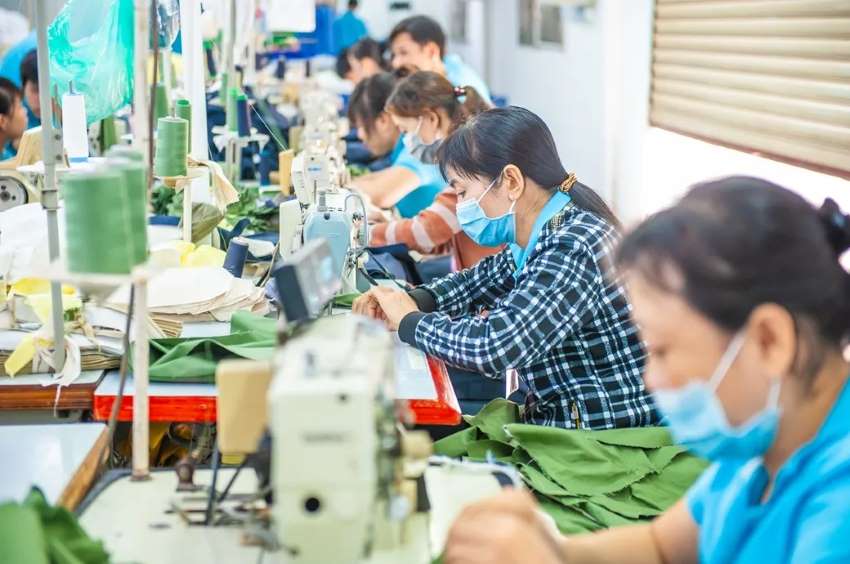
Vietnam’s exports of garment-textile products in the first nine months of 2019 were up 9.2 per cent. The sector’s trade surplus was up 16.8 per cent. The income surge has been attributed to a shift of manufacturing units from China to Vietnam.
Once the free trade agreement with the EU comes into force, investments in Vietnam’s textile and garment industry are expected to increase further. There are over 2,000 textile and garment projects in the country. Vietnam’s supply chain diversification has been happening for a few years already, mainly driven by rising labor costs in China. Even before the trade war, Vietnam was getting attention because of the proximity to China and because of the existing infrastructure in the country. The full supply chain has been set up in the country for the past decade already.
But customers are avoiding long-term orders and trying to reduce prices, eating into firms’ profits. The yarn market witnessed a sharp decline in both demand and prices between the end of 2018 and the first quarter of 2019. Vietnam’s yarn producers, particularly those exporting products to China, have been hit the hardest by continuous price decreases. The situation is getting worse as these companies are facing fierce competition for orders from FDI-funded firms and those from Thailand, Indonesia, and Pakistan.
Taiwan hosts textile show
Taipei Innovative Textile Application Show (TITAS) took place in Taiwan from October 7 to 9, 2019. The event hosted 423 exhibitors from 12 countries, plus 20 trade organisations representing Taiwan’s range of suppliers and manufacturers. Key themes at the event were functional applications, sustainability, smart textiles and intelligent manufacturing.
The highlight of the event was the one-to-one business meetings, arranged between vendors and brand representatives. In addition, there was a program of seminars and product presentations. One section showed visitors how the use of digital transformation can help create value for the textile industry. Another area demonstrated the concept of automated manufacturing in four stages: design, pre-sew, sewing and finishing.
Songbeam, based in Taiwan launched a range of bedding made from Tencel Lyocell and Modal cellulosic fibers and using nanotechnology to apply fish oil collagen into the fiber. The bedding is soft to the touch and has moisture management and temperature regulation properties which keep the skin cool, smooth and comfortable. Another Taiwan-based company Niching has developed a range of abrasion-resistant fabrics for use in socks and work wear. Niching designs and prepares nanoparticles to create nanomaterials which have high functionality. The nanomaterials are used on a carbon material with a 3D nanostructure.
Nike is top choice among US teens
When it comes to fashion and footwear US teens prefer sports brands. For Generation Z, -- those born between 1997 and 2012 -- Nike is the favorite clothing brand, followed by American Eagle and Adidas, in that order. Nike also leads among US teens in the footwear segment. Nike is followed by Vans and Adidas in the footwear segment.
Gen Z is highly social, online and offline, with greater conversational engagement than adults in most consumer categories. Athletic shoe brands such as Reebok, Converse, Vans and Puma have also lost out among Gen Z over the last five years. Teens are moving away from traditional youth brands such as Abercrombie & Fitch. In the apparel sector, youth brands such as Hollister and Aeropostale have also lost ground with Gen-Z consumers in the last five years. Reduced interest in these heavily mall-reliant retailers could well reflect a wider trend, as young consumers move away from destination retail, increasingly preferring convenience store-style spaces. Discussions about brands are behind on an average 19 per cent of consumer purchases, accounting for somewhere between seven and ten trillion dollars in annual sales.
However, important as trends may be, there are plenty of brands that are succeeding despite them.
Indonesia restricts textile imports
Indonesia will tighten restrictions on textile imports. The restriction is aimed at protecting domestic producers of products such as certain types of yarns, fabrics and other goods. The reasoning is that products that can be produced domestically should no longer be imported. Textile importers have to gain approval before they can ship in textile goods.
The country’s textile industry has weakened in the past three years due to an influx of imported textiles combined with sluggish consumption by Indonesian consumers. Imports of textile fabrics rose by 74 per cent between 2016 and 2018. Imports of textile products, such as some types of synthetic yarns, doubled in the three years to 2018. Indonesia imports products from China, South Korea, Thailand and Vietnam, among others. Companies are facing a cash shortage resulting from tough competition with imported products. Another problem Indonesia faces is smuggled used clothing. The country does not allow imports of secondhand garments.
The industry hopes textile and garment rules are relaxed to help local businesses boost their exports. Companies that have been so far oriented to local markets are being encouraged to become more export oriented. With economic growth, and a shift in demand from basic clothing to functional clothing, such as sportswear, the national textile industry is building production capabilities and increasing economies of scale in order to meet the demand in domestic and export markets.
Heimtextil to present extended range of printing and processing machines
At its upcoming edition – from January 7 to 10, 2020 – Heimtextil will present an extended range of printing and processing machines for the textile industry and expand the product segment textile technologies. The exhibition will highlight the opportunities afforded by the current technological upheavals in the industry and present the latest product developments. Its Textile Processing area will be expanded with new additions at the upcoming Heimtextil. New exhibitors at the event include Demsan Tekstil Makine and Tunca Teknik from Turkey, Joos sewing machines from the USA, Monti Antonio from Italy and Neenah Coldenhove and Wybenga from the Netherlands. Wybenga will present the complete program of machines for the manufacture of curtains and blinds in Frankfurt. J. Zimmer Maschinenbau from Austria and ZSK Strickmaschinen from Germany will also present their new products.
According to ZSK, its presence at Heimtextil will focus on the trends towards individualization and personalisation. In line with this, the latest embroidery machines with more needles will be presented. The higher number of needles should make the workflow more effective. Sales channels will be optimized and online ordering systems and shops better stocked.
Italian Textile Machinery (ACIMIT) will also be represented with a joint stand and will present the technical innovations of its members in the processing sector. In the Digital Print Technology area, printer manufacturer HP from Germany, Mtex Solutions from Portugal as well as Aleph, Fotoba International, MS Printing Solutions and Sublitex from Italy will also be represented.
India wants easier access to China
India wants China to provide easier access to its products. China used to be a big buyer of Indian cotton yarn and fabric but due to preferential tariffs, exports from Vietnam, Pakistan and Indonesia to China have been growing and so India has lost almost 50 per cent of its exports this year. Indian exporters want removal of trade barriers for products they ship to China.
Also China is exiting production of several goods due to higher labor costs and pollution concerns. This presents an opportunity for India. Pre-approved facilities for manufacturing can tap the opportunity that arises when Chinese companies shift production bases.
On the other hand at a time when Regional Comprehensive Economic Partnership negotiations are going on there are a lot of reservations about opening up the Indian market for China. India largely exports raw materials like steel and cotton, while China sends finished products to India. India wants to protect its manufacturing sector from cheaper Chinese goods and wants to export more value-added products. Similarly a free trade agreement in textiles presents a threat of increased synthetic textile imports from China. Similarly, agri exports present an opportunity as well as a challenge. India can grow its leather footwear exports to China, but China is a large producer of cheaper non-leather footwear.
H&M acquires majority stake in Sellpy
H&M is now the majority shareholder in Sellpy, a re-commerce platform that sells secondhand clothes. H&M started investing in Sellpy in 2015, and has since then participated in all investment rounds. The most recent investment gives the retail group a 70 per cent stake in Sellpy. Once the full investment is carried through, H&M will have an approximate 74 per cent stake in Sellpy.
Founded in Sweden in 2014, Sellpy is now preparing for international expansion, starting with Germany. H&M’s support will enable the business to innovate and drive awareness and adoption of re-commerce. H&M will keep investing in Sellpy because it strongly believes in the company and the founders. Sellpy happens to have an unique circular business model, which perfectly aligns with H&M’s vision to become fully circular. Sellpy is one of several long-term investments that H&M has made in recent years. In 2018, the retailer took a stake in the men’s fashion e-tailer Thread and the buy now pay later solution Klarna.
Donators can track the items being sold on Sellpy’s app and either have it transferred directly to their bank accounts or choose to donate it to a number of partnering charities. Anything not sold will also be donated to charity.
French textile machinery offers varied services
French textile machinery manufacturers are technology partners for hardware, software and services. NSC Schlumberger has introduced the ERA combing machine in a multi-servomotor drive design. With this new drive, most settings will be possible via the main control screen. The GC chain gill also benefits from additional axes driven by servomotors which allow more settings on the main control screen. All these new servomotor drives will allow more precise settings than using standard gearboxes which will enhance textile quality. Furthermore these new drives and technology allow recipes to be saved on each machine. Data exchange between machines will be possible through a Manufacturing Execution System as is remote access to the machines in case of incidents through an ethernet connection. Fil Control has a new motion reflective sensor for ring spinning machinery that allows monitoring, controlling and optimizing a yarn manufacturer’s productivity for better quality at lower cost.
Superba’s new automatic winder has an individual spindle motorization drive combined with a single tension sensor per position. It enables a constant tension winding process, a very accurate bobbin length measuring as well as an unique quality control for each yarn position. It opens up new opportunities in terms of winding quality.
Amsterdam Denim Days this month
Amsterdam Denim Days will be held on October 25 to 26, 2019. Amsterdam Denim Days is a denim an event offering an inspiring program with expos, music, seminars, denim market, food and drinks, workshops and many more to explore. Professionals from the denim industry and all denim enthusiasts get together to connect, get inspired and enjoy. Amsterdam Denim Days will host a series of denim-related events for fashion forward fanatics of denim. Professionals from the denim industry and all denim enthusiasts get together to celebrate all things indigo. It will feature workshops, rare vintage pieces and see the latest innovations from international denim designers. Admission will be free for the very first time.
Now in its sixth year, the event brings denim heads from around the world to browse the Denim Market, partake in workshops, listen to talks and dance to music. Kings of Indigo, Tenue de Nimes, Nudie Jeans, Diesel, Bossa and Soorty are confirmed to be in attendance. This edition offers a full program for denim lovers of every kind, from brands and makers to wearers and speakers. Trendsetting devotees on the street and influential denim innovators in the industry come together to celebrate all things indigo. Visitors can get a glimpse into the techniques used in creating jeans or get a one-of-a-kind piece customised.
Welspun India to be debt-free in five years
Welspun India, one of the largest suppliers of home textiles globally to retailers like Walmart, Costco, etc, aims to be debt-free over the next five years. As per its latest annual report, Welspun India’s current net debt stands at Rs 3,028 crore. The company has short term loans of Rs 1,408 crore and long term debts of Rs 1,902 crore. Its cash and cash equivalents stand at Rs 282 crore (as on March 31, 2019). Its net worth stands at Rs 2,780 crore.
The company’s net debt to equity stands at 1.09 times for FY19 (as against 1.16 times in FY18). Its net debt to EBITDA stands at 2.64 times. The company reported net sales of about Rs 6,608 crore with a profit before tax and exceptional item of Rs 552 crore in FY19. Its exports to markets like US, Europe and the Middle East account for over 90 per cent of its turnover.