FW
Bangladesh has immense potential in leather
Bangladesh’s main export markets for leather goods are the EU, the US, Australia, Japan, Singapore and South Korea. The country has massive export potential of leather goods and footwear. Last fiscal, the country exported $1.1 billion worth footwear and other leather goods — using only 30 per cent of finished leather. The remaining 70 per cent finished leather was exported, mostly to China.
The country can earn three times more from leather goods exports if all the finished leather produced in the country in a year is utilized. Bangladesh produces 400 million sq ft of finished leather annually. Finished leather exports fetch less than one-third of what footwear exports do. The country has 161 tanneries that process raw hides into finished leather; but 98 per cent tanneries are not compliant with global standards. Many tanneries do not have proper water treatment and affluent plants. Though receipts from leather goods, footwear and finished leather exports have been crossing the billion dollar mark for the past five years, they are not growing further.
Now, Bangladesh needs efficient manpower and technology to earn more from exports. Compliance and quality are the major factors to attracting foreign buyers and not cheap labor.
H&M, biggest user of sustainable cotton, man-made cellulosic materials
Textile Exchange has published its yearly Preferred Fiber Materials Market Report, in which H&M Group ranks the world’s biggest user of sustainable cotton and man-made cellulosic materials (e.g. lyocell, among others). H&M aims to use only recycled or other sustainably sourced materials by 2030. With its yearly and steady increased use of recycled or other sustainably sourced materials, the group not only pushes the demand for widely used materials such as organic cotton, but also influences the scalability of new sustainable materials.
Nike tops the list of recycled polyester users. C&A is the world’s biggest user of organic cotton. IKEA is the biggest user of recycled cotton. Inditex is the second largest user of lyocell and the fourth largest user of preferred manmade cellulosics). Target is the third largest user of recycled polyester and the fifth largest user of preferred down. The North Face is the second largest user of preferred down.
All these companies show a deep commitment to scaling their global value chains of preferred fiber and to benchmarking their progress against the industry. These companies have also made significant investments in developing the supply chain needed to achieve the necessary measures of scale in preferred fiber production. What’s important is the growth of the 100 per cent club, those who have converted completely from conventional fiber.
India: Gujarat’s new textile policy offers huge incentives
Gujarat’s new textile policy has huge incentives in taxes. The policy aims at making Gujarat a textile sector hub and ensuring the textile sector leads in global competitiveness. Gujarat’s last textile policy was unveiled in 2012 and it expired last year.
Benefits will be set off against the SGST levied from the textile sector. Power tariff will be waived. Investment to the tune of Rs on lakh crore is expected as also job creation for 10 to 12 lakh people. There is a special element in this policy that is about women operated textile units that will get additional benefits.
Conventional textiles of Gujarat like patola, bandhani and jharikam will get an extra boost from the policy. Meanwhile, all schemes under the textile policy of 2012 will be continued in the new policy as well. The textile industry will have GST reimbursed. The reimbursement will be given in lieu of sops given to the sector under the earlier value added tax regime.
The new policy envisages a special thrust on garments and technical textiles and creating a direct link between cotton growers and industry. There will also be a focus on establishing textile parks within GIDC estates and in other parts of the state.
Pakistan cabinet approves cotton import from Afghanistan, Central Asia
The Economic Coordination Committee (ECC) of the Pakistani cabinet has approved import of cotton from Afghanistan and Central Asian states via the land route to meet its shortfall in the key textile industry. The ECC took the decision in line with a proposal submitted by the Ministry of Commerce and Textile during a meeting presided over by the Finance Minister Asad Umar. The meeting, however, allowed the import via Torkham border with the condition that imported cotton should meet the sanitary and phytosanitary regulations.
Pakistan is a net cotton importer with the textile industry consuming 12 to 15 million bales per annum. The country imports cotton from various sources. Afghanistan and central Asian states are producers and exporters of cotton and they have reasonable share in Pakistan’s import mix as imports from these countries are cheap due to land route compared to the United States and other destinations.
The ECC, in consideration of the proposal from Ministry of Industries and production, also approved a grant of Rs 1.066 billion payment of outstanding dues, including provident fund, gratuity and payroll dues, to families of deceased employees of Pakistan Steel Mills.
Japan keen on investing in Bangladesh RMG sector
The Japanese are keen on investing in Bangladesh. Around 70 per cent of Japanese companies in Bangladesh want to expand their business as their confidence has improved. They also are pulling back their investments from China due to the high wages and production costs. Wages in the garment sector in China are four times higher than they are in Bangladesh. Wages in the country are the lowest among Asian and Oceania countries as well as one of the lowest in the region.
About 270 Japanese companies are operating in Bangladesh. Out of the export earnings from Japan in the last fiscal year, 74.8 per cent came from the readymade garment sector. And apparel exports to Japan have seen a 13.73 per cent rise.
Bangladesh is seeking FDI from Singapore, India, Japan, China, Thailand and other countries. There has been a huge jump in FDI inflows. This can be attributed to the development of 100 economic zones in Bangladesh.
Since the garment sector is growing fast in Bangladesh, foreign investors choose the country as an investment destination in the textile sector. Duty-free market access to major export destination, preferential location in the heart of the Asia-Pacific region and policy support have acted as a catalyst to attract foreign investment in the textile and apparel industry.
Denim Première Vision to hold first edition in London
Denim Première Vision, the French denim trade show, will hold its first itinerant edition from December 5 to 6, in London. The section dedicated to environmentally friendly jeans – DR Denim PV will host 89 exhibitors in London, as opposed to 80 at the same session a year ago. Among these include, Advance Denim, Albiate 1830, Artistic Denim Mills, Artistic Fabrics & Garment Industries, Artistic Milliners, Arvind, Berto, Bossa Denim, Calik Denim, Kurabo, Kuroki and Raymond UCO Denim.
The first day of the event will feature a series of conferences on fashion-related issues, while the second day will focus on eco-responsible denim. Besides round-table talks on environmentally friendly denim, the Smart Library area will showcase samples and novelties from selected exhibitors, and the Smart Wardrobe section will do the same for finished products created using eco-responsible production processes.
SMQ, the section dedicated to small production runs introduced a year ago, will feature a new SMQ Corner, showcasing a special selection of garment manufacturers and laundries.
No fire detection system at half of Accord factories
According to latest findings by Clean Clothes Campaign (CCC), over half of the Accord-inspected 1,600 garment factories have not installed adequate fire detection and prevention system yet. Another rights group-Industriall Global Union-announced that the Transition Accord signed by nearly 200 global fashion brands and retailers will run its activities from Amsterdam office in case of failure to operate in Bangladesh.
Besides, Accord in its latest progress report, said some 45 per cent of its inspected factories have so far installed fire detection and prevention system. Upon starting work in 2013, Accord engineers found that 97 per cent of the over 1,600 factories under its purview had no safe emergency exits and 91 per cent had no adequate fire detection or alarm system.
Five years later, 97 per cent of lockable or collapsible gates have been removed and in total 74 per cent of all found fire safety defects have been corrected, with another 12 per cent still pending verification, CCC noted.
EU leaders approve Brexit deal
European Union leaders have approved the landmark Brexit deal, the basis of Britain's divorce from the 28-member economic bloc. The leaders of the remaining 27 countries of the European Union (EU) signed off on the controversial Brexit withdrawal agreement. The agreement, which UK PM Teresa May, has described as the best possible outcome for the UK and repeatedly taken to the airwaves to urge public support in the last few weeks, follows more than 18 months of negotiations between the two sides, which began when the UK triggered Article 50 in the wake of the June, 2016 referendum in favor of Brexit.
In a letter to the nation issued by 10 Downing Street this weekend, May once again pleaded with the public to get behind her deal which will mark "a new chapter in our national life. The UK Parliament is expected to vote on the deal in early December, where its approval remains shaky, with Opposition parties Labour, Lib Dems and the Scottish National Party (SNP) as well as government-backing Northern Ireland's Democratic Unionist Party (DUP) and many MPs from the ruling Conservative Party set to vote against it.
India’s Cuddalore textile park in Tamil Nadu to have 10 units
Ten units will come up at the Cuddalore processing park in Tamil Nadu at an investment of Rs 1000 crores. Once the park is commissioned, it will encourage stitching units to set up shop nearby, triggering more investments in future. The textile sector in Tamil Nadu has production facilities across the textile value chain. Every year Tirupur knitwear units invest approximately Rs 1000 crores toward minor expansion work.
But the garment sector has faced a downward trend over the last couple of years. The subsidy coming from the Technology Upgradation Fund Scheme for power loom units has dwindled. Further, Tamil Nadu has yet to announce a textile policy.
Production of Tamil Nadu textile manufacturers is expected to reach Rs 75,000 crores by 2020. Right now it’s Rs 50,000 crores. Currently India is looking to add around three to 3.5 million spindles a year against an average number of 2.5 million spindles over the past five years. The southern region is expected to contribute to about one million and more spindles every year.
Spinning, handloom, power looms and garments are the four pillars of the textile sector in Tamil Nadu. Among the 1,399 operational Indian textile mills, 752 are in Tamil Nadu.
China sees RCEP as trump card
China is now the standard-bearer of global free trade, with the Regional Comprehensive Economic Partnership (RCEP) at the heart of its strategy. The RCEP is a free-trade deal among the ten-member states of Asean and six Asia-Pacific states – Australia, China, India, Japan, South Korea and New Zealand. It is now the world’s biggest trade deal and covers half the world’s population.
The Shanghai Cooperation Organisation, BRICS, and the China-led Asian Infrastructure Investment Bank are countering US-led trade in the Asia Pacific, given that the six non-Asean member states in the RCEP are also bidding to join the revised TTP by the end of December. Should they do so, it would be a game-changer, tilting Asia’s trade framework away from Chinese control under the RCEP.
Now, the battle is on to secure those six – Australia, China, India, Japan, South Korea and New Zealand – as trade partners. The propaganda war has already begun, with China claiming that it is trying to sway Asia-Pacific partners to stand by free trade via the RCEP amid rising US protectionism.
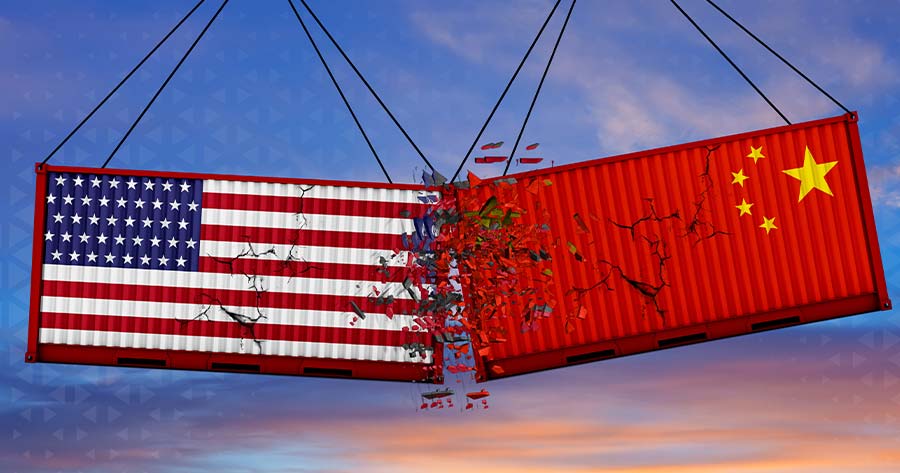
The RCEP is billed as an antidote to the American agenda, which has seen tariffs imposed on almost half of all Chinese imports to the US and retaliatory levies by China.