FW
Outerwear capsule from Zara to strengthen segment
Zara has expanded its outerwear selection. Although the brand had already launched some outdoor clothing pieces in previous seasons, including anoraks, jackets and children’s clothing, the chain is strengthening its presence in the segment with the launch of a dedicated outerwear capsule collection.
Called TRF Recycled, the collection continues the brand’s commitment to sustainability with pieces made from recycled polyester derived from plastic bottles. Meanwhile, the words ‘Please Recycle; are printed on belts and hoods to remind consumers of the line’s sustainability message.The collection includes silver puffer jackets, puffer coats, joggers, technical backpacks and chunky trainers, and waterproof, two-in-one parkas.
Zara is the signature brand of the Spanish group Inditex. Earlier this month, Zara launched its online store in 106 new markets, bringing the total number of countries where it operates an e-commerce channel to 155. Currently, the chain has a physical presence in 96 markets and is progressing towards the group goal of selling all of its brands online worldwide by 2020.
Zara also has the best conversion rate in the Spanish online fashion sector. Its conversion rate is 12 per cent, which is more than its competitors Asos (nine per cent) or Massimo Dutti (nine per cent).
London to host Spring Knitting and Stitching show
Spring Knitting and Stitching Show will be held in London from February 28 to March 3, 2019. The event will feature an extensive workshop and demonstration program covering an array of crafts, from traditional to contemporary knitting and stitching, wet and needle felting, embroidery, leather work and free motion machine embroidery, with a bigger emphasis on upcycling and remodeling.
There will also be gallery exhibitions by textile artists, drop-in knitting and crochet lessons and advice clinics for a range of textile crafts, a station showcasing the latest knit and stitch equipment; a design competition to reduce plastic bag use, an elaborate scene of knitted and crocheted magical creatures created by knitters and stitchers.
For those looking to add to their fabric stash, update their sewing machine or start a new knit or stitch project in the new year, over 150 specialist retailers will be on hand to help satisfy those shopping cravings.
Top tutors will host an exciting program of full and half-day dressmaking technique and upcycling workshops, including mastering the basics for beginners, making a garment in a day and intermediate skills for more experienced dressmakers. The show will put the spotlight on dressmaking this year as well as offering all the fantastic textile art, craft and design features that spring show visitors know and love.
India rebuts US charge on cotton subsidies
India has rejected the US charge of subsidising cotton beyond the limits prescribed by the World Trade Organisation (WTO) and says the support provided is intended to ensure that poor farmers do not resort to sales under distress.India says the method is consistent with WTO rules and that the country has been using a consistent reporting approach since 1995 and it uses a robust methodology as compared to the US in its calculation of the support.
Procurement by government agencies in India accounts for less than two per cent of total production. The US says India has been substantially under-reporting the value of its minimum price support (MPS) for cotton.
In its 2015-16 notification to the WTO, India reported Rs 1.2 billion in MPS for cotton whereas the US estimated India's support at over Rs 504 billion. The US says these actual support levels mean India is well in excess of its WTO spending limits on cotton support, which is fixed at ten per cent of the total value of overall production.
Other countries that raised red flags over India's support to the sugarcane sector include Guatemala, Thailand, Paraguay, Brazil and the European Union. Questions have also been raised regarding India’s decision to increase import duties on milk powder from 30 per cent to 40 per cent.
Guess expects positive results upto Feb 2019
According to Herrero, Guess expects positive results in all regions, and profitability across all business segments for the remainder of the fiscal year, which ends Feb. 2, 2019. During the third quarter ended Nov. 3, the company recorded a net loss of $13.4 million compared to $2.9 million for the third quarter. GAAP per-share earnings were 17 cents, compared to 4 cents for the prior year. Analysts expected 16 cents per share. The company estimates that currency had a negative impact on diluted earnings per share of 2 cents for the quarter.
Revenue was $605 million, beating analyst estimates of $603 million. Same-store sales in the Americas rose 3%, beating analyst estimates of 2.1 per cent. Guess is inching closer to resolving a dispute with the European Commission, however fines have taken a toll on the retailer’s third quarter earnings. The fashion retailer has been cooperating with a European Commission investigation into whether the company violated European competition rules. It is likely to reach an agreement that is expected to result in a fine ranging from $42.4 million to $46.6 million (U.S. dollars).
Saurer launches intelligent embroidery solution at ITMA 2019
"Saurer launched its intelligent embroidery solution at ITMA 2019. The Epoca 7 shuttle embroidery machine features enhanced automation technology and a new application device. It also incorporates modernised CAD/CAM design software and a new mill management system."
 Saurer launched its intelligent embroidery solution at ITMA 2019. The Epoca 7 shuttle embroidery machine features enhanced automation technology and a new application device. It also incorporates modernised CAD/CAM design software and a new mill management system.
The embroidery machine
Epoca 7 sets new standards in terms of productivity, with an increase of up to 25% compared to its predecessor. It also boasts a speed of up to 700 rpm. The machine requires 5% less energy than its forerunner, even when machine speed is increased by 18%. In terms of savings, this gives the customer the edge to total cost of ownership. We are committed to sustainability and strive to ensure that our products are energy efficient, minimising the impact on the environment.
Automation solutions
The new automatic rear carriage adjustment helps in reducing the machine setting time. The rear carriage width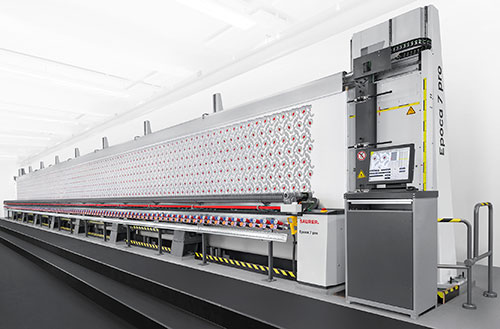 can be set automatically according to the yarn properties, resulting in a substantial reduction in yarn breaks. The intelligent thread watcher SmartMon drives the precise and fast detection of yarn breaks, on both shuttle and needle side, which drastically lowers mending costs by up to 70%. In an environment where cotton is used, cotton dust pollutes the machine, resulting in early wear of the moving parts. With the new overheadcleaner – CleanGuard, this phenomenon is significantly reduced.
Enhanced application device
The HeadLine system with sequin, cord and the new LaserHead redefines and pushes the boundaries of embroidery applications and designs. The laser technology drives the precise cutting of virtually all synthetic and natural fabrics.
Modernised CAD/CAM platform
EmStudio incorporates all design workflow from sketch to production on a single platform. This modern tool provides the full solution from embroidery drawing, punching, visualisation of the design, product optimisation and productivity analysis to archiving design with information and machine settings. The intelligent stitch editor iSed optimises the quality of embroidery stiches.
New mill management system Senses
Senses is a new innovative control and analysis tool. It allows to collect and analyse the production, quality and machine data. The advantage is total transparency and the optimisation of production processes. The result is enhanced efficiency and increased profitability.
Espirit to overhaul company’s operations
Esprit’s new CEO Anders Kristiansen plans to overhaul the clothing company from red over three years with job cuts and store closures. He is embarking on yet another restructuring in an attempt to restore the global retailer to its former glory.
Kristiansen wants to close stores, streamline the administration and simplify the product ranges. The restructuring will take two to three years and cost around 1.5 to 1.7 billion Hongkong dollars, or €168 million to €190 million.
Kristiansen plans to boost sales of basic garments like sweatshirts, jeans and T-shirts to make Esprit less dependent on fashion trends. In addition, the product range will be reduced by 20 to 30 percent by next June to cut design and production costs.
Esprit, like its peers Gerry Weber, Tom Tailor and Hugo Boss, has been expanding its retail network in recent years. Kristiansen wants to shut unprofitable stores but that can’t be done overnight because the company is locked into rental contracts.
Economic corridor enthuses Tirupur
Tirupur is looking to the Indo-Pacific economic corridor in the hope it would open up traditional apparel markets. This treaty is likely to have 12 countries including India, the US, Australia, Indonesia, Japan and New Zealand, on board. Under the treaty, each country is expected to provide a conducive climate for trade exchanges for different members and investment to develop infrastructure.
Recently, the US had announced investment worth $113 million in new infrastructure initiatives in the corridor. The corridor will provide a platform for grouping of selected nations and it will help others to develop their economies. If the partners are provided preferred status by other nations, it will be a win-win situation for both the sides.
Especially in the apparel market, India could utilise the advantage, if the US, which has a traditional apparel market, provides a lower import tariff and a softer approach. Apparel exporters in India could get a huge help from the corridor.
Though the economic corridor is mainly mooted to counter the advantages of China, it will not affect the neighboring country much, at least in the apparel market. Since Chinese firms have already made big investments in countries such as Bangladesh, Vietnam and Cambodia, which are top competitors of India in the apparel industry, the former may not feel the heat of the corridor.
Chinese units see their profits rise
From January to September, profits in China’s industrial enterprises above a designated size saw a year-on-year rise of 14.7 per cent. Textile industry profits were up 2.7 per cent year-on-year. Profit of the garment and accessories sector saw year-on-year growth of eight per cent.
From January to September, the main business income of China’s industrial enterprises above a designated size increased by 9.4 per cent compared with the same period of the previous year. Their main business cost saw a year-on-year rise of 9.1 per cent. Their profit margin was 6.44 per cent.
While China remains the world’s largest apparel exporter, its market shares measured by value fell from 38.6 per cent in 2015 to 33.7 per cent in 2017. Its market shares in the world’s top three largest apparel import markets, the United States, EU, and Japan, also indicate a clear downward trend in the past five years.
However, China is playing an increasingly important role as a textile supplier for apparel-exporting countries in Asia. For example, measured by value, 47 per cent of Bangladesh’s textile imports came from China in 2017, up from 39 per cent in 2005. Similar trends can be seen in Cambodia, Vietnam, Pakistan, Malaysia, Indonesia, Philippines and Sri Lanka over the same time frame.
Chinese firm plans green textile park in Philippines
China Zhejiang Guannan Group, based in Shaoxing in China’s eastern Zhejiang province, plans to set up a green textile park at the Cagayan Special Economic Zone and Freeport in Cagayan, Philippines. The park would be developed on 10,000 hectares of land in Sta. Ana and other neighboring towns. It will have its own power plant, water plant, sewage disposal plant, waste processing plants and other facilities and infrastructure.
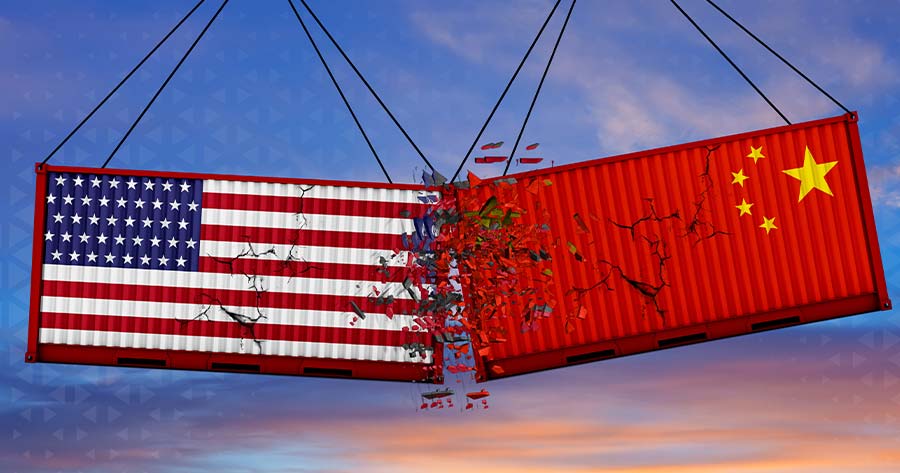
The Chinese firm will also invest heavily in the development of townships and real estate following its major projects in Hong Kong, Shanghai and Shaoxing. The Philippines was once a major garment and textile exporter, with exports hitting $3bn in the country’s heyday. While these figures have dwindled in recent years, the country could be set to be a beneficiary of the ongoing trade war between China and the US, as the former shifts textile production to other locations to avoid US tariffs.
Lower labor costs and attractive inward investor sweeteners will also likely help attract more Chinese textile mills to the Philippines, especially if, as expected, trade tensions between China and the US do not thaw.
Accord to move to Amsterdam if forced to shut down Bangladesh operations
Accord-a group set up by European fashion brands to improve factory safety in Bangladesh plans to move its work to its Amsterdam office if it is forced to shut down in Bangladesh, as the legally-binding contract signed between its brand members extends up to 2021. The group has sought a stay on a court order that calls for its local operations to end this week.
The group’s five-year pact was set to expire in May 2018 but its brand signatories agreed last year to extend it to 2021 to complete remaining safety fixes, while the Bangladesh government set up a national regulatory body to take over its work. A High Court in Bangladesh in May, however, ordered the Accord to shut down by Nov. 30, following a petition filed by a local readymade garments supplier against the pact.
The group comprises more than 200 firms - including global clothing giants such as H&M (HMb.ST) and Zara-owner Inditex (ITX.MC) – who are signatories to the Accord on Fire and Building Safety in Bangladesh, formed after the Rana Plaza factory collapse in 2013, which killed more than 1,100 people.