FW
LLF awarded the 4th CarbonNeutral status
Leading high-end leather garment manufacturer, Lanka Leather Fashion (LLF), was awarded CarbonNeutral® status for a fourth consecutive year by the independent sustainability verification, validation, and assurance body – The Sustainable Future Group (SFG).
With the assistance of The Carbon Consulting Company (CCC) — Sri Lanka’s leader in Integrated Sustainability Solutions – LLF underwent a comprehensive assessment of their organisational greenhouse gases (GHGs) to determine its environmental impact. The impact was then compensated for through the reinvestment in a renewable energy project in the Ratnapura and Kandy districts of Sri Lanka, in return for registered Carbon Credits to match their Carbon Footprint.
LLF introduces diverse initiatives to tackle social and environmental issues within the workplace and communities in Sri Lanka. Through the introduction of new technologies and adaptation of newer, greener and more efficient business practices, LLF has been able to continuously lower its operational expenses and enhance employee engagement. From using discarded leather waste to create new products for clients to joining forces with a local fashion designer to create upcycled leather jewellery, LLF is helping create a sustainable culture within its communities.
Kors targets $2bn in revenue in five years
Michael Kors is looking to increase its revenue from the current$850 m to$2 billion in the next five years. The company will build on Versace's luxury runway momentum, starting with the recently announced New York Show on December 2.
It will also enhance the brand's powerful and iconic marketing, adding significantly to the company's spend next year; increase its global retail footprint with around 30 new stores next year; accelerate e-commerce and omnichannel development; and expand the accessories and footwear business with new products that will be introduced for fall of next year.
The company also has big plans for both Jimmy Choo and Michael Kors brands. It believes that Choo can achieve its $1bn revenue target having grown its store base to over 200 from 150 when it acquired the business a year ago.
Vietnam textile exports to rise 14.8 per cent in 2018
Vietnam's textile exports are expected to rise by 14.8 per cent to $35 billion in 2018. The country’s textile exports to the United States rose by 12 per cent over the January-October period to $10.5 billion, while exports to China increased 40 per cednt, to $ 1.1 billion. During the first eight months of the year, foreign investment in textile and clothing sector was $2 billion. Most of these investors come from Japan, South Korea, Taiwan and China.
While they are two thirds smaller than those destined for the United States, textile exports to Europe remain important for Vietnam. According to the French Institute of Mode (IFM), the country was last year the sixth supplier of the European Union in clothing with €3.1 billion of goods, as well as its 13th textile supplier with €370 million. For France, Vietnam is the seventh supplier of clothing with €819 million, behind Tunisia and Morocco, but ahead of Cambodia and Portugal.
Kitex Q2 profit up eight per cent
For the second quarter Kitex Garments’ profits rose eight per cent. Revenue witnessed a 20 per cent jump. Total revenue for the half year ended September 30, 2018, stood at Rs 313 crores as compared to Rs 282 crores a year ago while net profit was at Rs 45 crores for the first six months as compared to Rs 42 crores a year ago.
Kitex, based in Kerala, is one of the largest apparel manufacturers of infant wear in the country and exports about 95 per cent of its infant wear. These are mainly to the United States and Europe. The company also engages in contract manufacturing for private labels such as Jockey, Carter, Babies R Us, Gerber, and Mothercare.
The company has been allotting regular capex for improvement of technology and infrastructure and is in the process of upgrading its current facilities so as to expand its capacity. The facility in Kerala covers an area of 1,80,768 sq ft, one of the largest in the world under one roof. The growth strategy includes revenue enhancement, horizontal product diversification, capacity augmentation and vertical integration. Kitex hopes to grow between 20 to 23 per cent a year over the next seven years.
Getting creative with denim
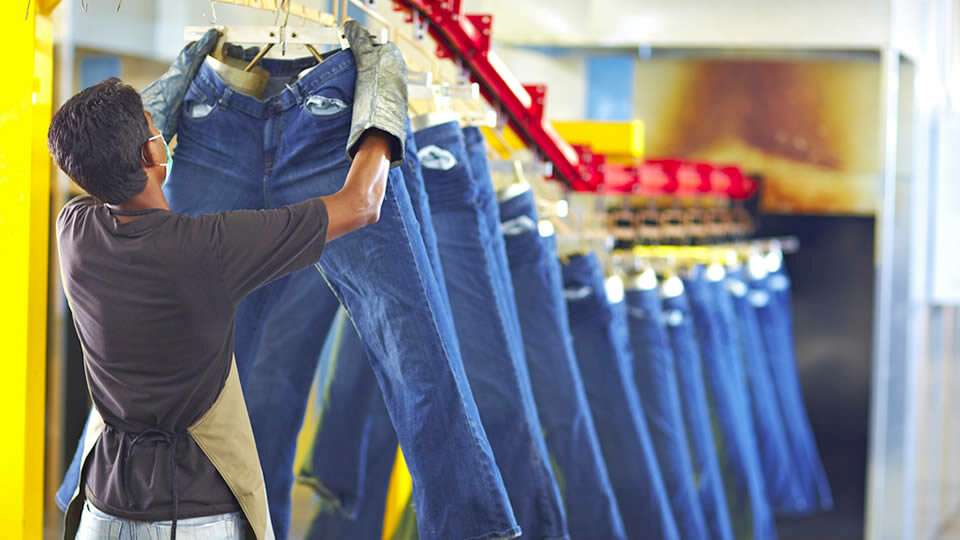
The denim supply chain is pushing boundaries. Ambivalence toward going green doesn’t hold up anymore. While all companies are focused on getting product to market, they are being urged to add a sustainable lens to their focus. And employees across all levels of a company are responsible to spark that change.
Business leaders are being encouraged to think creatively. One idea is to put a wetland next to a factory. A living ecosystem next to a factory environment means the two things—manufacturing and biology—intersect. A natural system acts as a filtration device for wastewater treatment. This may seem like a farfetched vision but the technology and knowhow exist.
There’s a lot of technical elements but there is the opportunity to overcome the technical challenge and create the traceability that consumers are demanding. Draping, off-the-shoulder and conceptual cutouts elevate denim. Workwear details and A-line silhouettes add structure. Oversized twills, linen, summer blanket materials with a handloom look, feminine quilting and patchwork jacquard add texture and visual interest.
Camouflage and ikat prints offer an outdoorsy feel. Brands can recreate these dye effects through laser printing for a more sustainable solution. The story’s color palette—soft indigos, natural indigos and natural vegetable shades—are well-suited for brands’ eco stories as well.
Chinese textile machinery exports on the rise
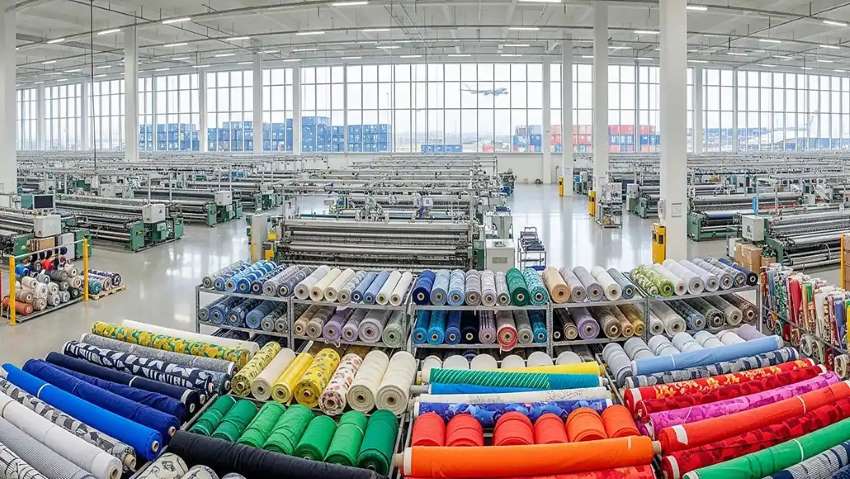
With growing Chinese textile industry, Chinese textile machinery import figures were larger than exports, but since 2012, machinery exports have overtaken imports. In China, there are more than 100 knitting machine producers. These companies are now selling hi-tech technologies in knitting. About 15 to 20 per cent of the textile machinery produced in China is exported. There are some companies which export around 50 per cent of their production.
The Chinese textile industry offers textile machinery at most competitive prices. Indian companies have expressed interest in Chinese textile machinery, because the price is very competitive. For example, a knitting machine offered by European companies is double the price supplied by Chinese companies of nearly the same technology. European companies have been in business for several decades and Chinese companies are trying to catch up.
A lot of innovations are happening in the Chinese nonwoven machinery sector. The Chinese knitting sector uses hi-tech technologies. The China Textile Machinery Association has 600 members who are manufacturers of textile machinery and spare parts. CTMA also has foreign companies as members who have set up offices and factories in China. To enhance the country’s position in the global value chain, China has drawn up a roadmap to upgrade industries through innovation.
India to introduce alternative schemes to promote exports
The Central government is in the process of introducing alternative schemes to promote exports which would improve competitiveness. It recently introduced a package for the MSME sector which increased the interest subvention on pre-shipment and post-shipment finance for exports to 5 per cent from the earlier 3 per cent.
Under this package, GST- registered MSMEs would get 2 per cent interest rebate on incremental loan up to Rs 1 crore. Improvement in India's ranking in the World Bank's Ease of Doing Business will help boost exports. The results of this for textiles exporters, remarkable improvements are visible at the ports, customs and regional offices of DGFT EDI systems.
According to Texprocil, India's cotton textile exports grew by 26 per cent to $6,235 million in the first six months ended September 2018. The country exported cotton textiles (raw cotton, yarn, fabrics and made-ups) worth $4,917 million in April-September 2017-18. However, exports of textiles and clothing declined by 3 per cent with exports of readymade garments registering a steep decline of 16 per cent during H1FY19.
China grants Pakistan duty free market access
Duty free market access to China will boost exports of Pakistan’s made-ups. Pakistan’s annual trade deficit with China ranges around $12 to $14 billion. The country’s yearly exports to China are $1.2 billion and imports in the range of $14 to $16 billion. Apart from Pakistan, China offers duty free status to Asean and Bangladesh.
Pakistan and China will decide how much textile, leather, and other goods can be exported to fully utilise the duty free facility. At this stage, the list of products that would be eligible for duty-free has not been prepared. There will be further discussions on finalising details of market access and the balance of payment support.
The countries are working to have a free trade agreement in place before June 2019. They have signed 15 MoUs for further cooperation in the areas of socio-economic development, poverty alleviation, agriculture, economic and technical cooperation, forestry, earth sciences, higher education and technology. Industrial cooperation will be accelerated and both sides have decided to move with the next phase with a focus on industrial expansion, agricultural revitalisation and integration of trade ties.
Pakistan will request China to remove other non tariff barriers so that Pakistan can boost exports.
Canopy develops viscose mapping with help from top brands
More than 150 million trees are cleared every year, shipped around the world, then pulped and processed into viscose. The viscose industry relies on wood from around the world including from some areas that have been designated as ecologically sensitive.
For the growing number of apparel companies promising an ecologically sounder manufacturing process, this presents a problem. So several brands, like H&M and Marks & Spencer spent the last year helping Canadian nonprofit Canopy build a web site that uses satellite imagery and conservation research to identify the forests that need to be left alone.
The images cover threatened species habitats and carbon locked away in trees and soil. Almost 50 fashion, paper, and publishing companies have endorsed the tool as a way to improve their analysis of where supply chains wind through ecosystems that are rare, nearly destroyed by people, or important for maintaining biodiversity.
The viscose supply chain was largely opaque until the last few years, when companies started asking questions and Canopy began auditing pulp facilities and mills. On-the-ground research, complemented by the mapping tool, is just now giving consumer companies and non-governmental organizations enough information to either prune undesirable supplies from the business or challenge suppliers to reform their practices.
Burberry undergoes makeover
Burberry is undergoing a major transformation, with a new designer, a new focus on ultra-luxury, a new logo and a change to the way it drops its product. The company has seen a successful launch of its new go-to-market model with social selling innovation contributing to building brand heat.
Most discussions to evolve its wholesale distribution are now complete and the required changes to its third-party distribution network are expected to accelerate in the second half of the year. The brand closed a net 19 stores in the last 12 months.
But while early signs are encouraging, transitioning the product offer, evolving its distribution, changing wider consumer perception and seeing this translate into positive business performance will take time. The company’s switch to regular monthly drops via its B Series has got off to a good start too. It sold out rapidly in China, prompted much higher levels of engagement online and attracted double the mix of new and younger customers to the brand than the February capsule.
All regions performed in the first half. The UK and Italy grew, with an improvement in the second quarter, while the Middle East remained weak due to macro factors. But Asia Pacific grew by a mid-single-digit percentage.