FW
Jean-Paul Gaultier to abolish the use of animal fur in his collections
Jean-Paul Gaultier has decided to abolish the use of animal fur in its collections terming the way in which animals are killed for their fur as absolutely deplorable The news was welcomed by the animal rights organisation PETA whose members had been lobbying Gaultier to give up the use of fur for years.
Fur has become the major point of focus for the fashion industry over the year 2018, with multiple luxury labels denouncing the use of the material. The US heritage label Coach announced its decision to stop using fur last month, preceded by designers including Diane Von Furstenberg, Burberry, John Galliano, DKNY and Donna Karen. Several other labels have also been fur-free for some time now, including Stella McCartney, Armani and Hugo Boss.
Innovation drives British manufacturing
Growth in British manufacturing will be driven by innovation and authenticity after the UK leaves the European Union. Every manufacturer in the UK has the opportunity to be the most innovative and leading manufacturer in the UK. Opportunities for growth in materials and manufacturing lie in digitisation. Microprocessors woven into fabrics can connect garments to the internet in a new and innovative way.
Demand for British-made goods has increased by 36 per cent in the past five years. The UK is one of the biggest clothing exporters in Europe. One of the major reasons for the rise in shopping from the UK is pricing. The pound’s falling value is helping make retailers’ goods even more attractive to foreign wallets. The other top motivations for cross-border buying are the chance to get hold of products not available in their own country and the opportunity to discover new things to buy.
Mobile shopping is also helping power the UK’s international popularity. Also working in British retailers’ favor is the fact the nation’s top two export markets, the US and China, are at the forefront of this mobile revolution. Here, smart phone shopping accounted for 61 per cent and 84 per cent of international online purchases respectively in the last year.
How fashion wrecks the planet
The fashion industry is one of the most destructive industries on earth. Clothes manufacturing alone creates countless environmental hazards, ranging from water pollution to air pollution to deforestation. A single cotton T-shirt needs at least 257 gallons of water to grow enough cotton to assemble the shirt.
Creating synthetic fibers (polyester, acrylic, nylon, etc.) commonly found in most apparel is more energy intensive since they are made from fossil fuels and they emit more carbon. Pollution doesn’t stop during the manufacturing process, either. Half a million tons of plastic microfibers shed during washing end up in the ocean. Then there is the dyeing process, which gives the clothes color and pollutes waters, which affects the fertility of nearby lands.
The next phase after production is the delivery of apparel and accessories all over the world. About 1.26 billion tons of greenhouse emissions are generated every year, which is more than the amount created by international flights and shipping combined.
Fast fashion companies go through the environmentally damaging production and delivery process more than 50 times per year and in the end the surplus ends up in landfills.
A change must be made in the entire fashion industry by implementing stricter policies on manufacturing and delivery. Finding alternatives to harmful materials and slowing down the fashion cycle is a small price to pay for a healthier environment.
Honduras to host apparel summit this November
Apparel Summit of the Americas will be held in Honduras from November 27 to 29, 2018. The who’s who of US activewear brands will assemble at the event. Honduras is attracting millions of foreign investments, creating thousands of new jobs, improving infrastructure and ports, enhancing education, building safe, affordable housing, generating stable renewable energy and above all else increasing the capacity for apparel production in the Americas.
Honduras is aiming at becoming a textile export leader in the Americas. The country is aiming to be the new destination for textile and apparel investment. It is providing a solid platform of facilities and benefits articulated with the purpose of promoting foreign investment and ventures with outstanding conditions that are strengthened every day.
The existing textile and apparel industry infrastructure in Honduras has outstanding conditions for investment and expansion opportunities. There are 18 industrial parks that together have a construction area of more than 1.8 million square meters, and advantages like availability of airports, ports, highways, telephones, water and electrical supply, customs paperwork, low working costs, machinery and logistics.
The textile and apparel industry has the capacity of biomass production as well as wastewater management technologies allowing high productivity in a sustainable manner. The current investment in the country’s fabric and clothing manufacturing is estimated to be around 7.8 billion dollars.
Digital printing grows at 16 per cent
The global digital textile printing market is projected to expand at a compound annual growth rate of 16.3 per cent during 2018-2027. Taking the lead will be the Asia Pacific region (excluding Japan), whose growth will be mainly attributed to contributions from emerging economies, such as India and China. This region is characterized by a robust political, demographic, and economic ecosystem of the leading emerging economies; and a rapidly growing digital textile printing industry in the region will lead to optimum growth levels in the coming decade.
China is expected to be at the forefront, spearheading the growth. The Chinese digital textile printing market has witnessed rapid growth in the past couple of decades. End user sectors of digital textile printing, such as food and beverage, personal care, pharmaceuticals and automotive, are increasingly adopting digital textile printing on their sales promotion devices. Growing promotional activity has increased the growth of the digital textile printing market.
Revenue from digital textile printing in North America is estimated to account for over 43 per cent of the global digital textile printing market revenue in 2018. Key players in this market include Durst, Seiko Epson, Roq, Konica Minolta, Kornit Digital, Mimaki, Sawgrass Technologies and the M&R companies.
Export orders up at Canton fair
Canton was held in China, October 31 to November 4, 2018. This is an import and export fair. The fair hosted a total of 189,812 buyers from 215 countries and regions, while seven of the top 10 buyers were Belt and Road Initiative (BRI) countries and regions such as India and Russia. Export orders from these countries and regions increased 2.7 per cent, accounting for 32.3 per cent of the total value of orders placed, representing a 2.7 per cent year-on-year increase.
The total export turnover marked a jump of 2.34 per cent, with buyers from countries and regions along the BRI growing by 0.16 per cent. The increasing number of buyers from developing countries and emerging markets at the fair reflects the optimised structure and steadily-improved quality of buyers.
Buyers from the electronic and home appliances sectors accounted for 40.2 per cent of total attendance. Buyers looking for consumer goods accounted for 31.3 per cent of the total. Home decorations, gifts and machinery buyers accounted for 28.28 per cent, 26.82 per cent, and 26.37 per cent respectively.
The fair continued to promote global trade by maintaining optimizing exhibition sections to improve precision in attracting investment. The fair hosted 50 events that covered trending topics in the international market.
Eurasia grants Bangladesh duty free
Bangladesh can obtain duty-free export privilege to Eurasian Economic Union (EEU) countries, which include Russia, Belarus, Kazakhstan, Armenia and Kyrgyzstan. At a time when the industry is actively looking at market diversification, duty-free export privilege to the Eurasian Economic Union is expected to go a long way towards facilitating the same. A protocol has been signed between Bangladesh and Russia.
After the disintegration of the Soviet Union, 11 ex-Soviet states constituted a political block named the Commonwealth of Independent States (CIS). Five member countries of EEU are also members of the CIS. The Eurasian Economic Union was created in 2015 and meant to be the first successful post-Soviet initiative to overcome trade barriers and promote integration in a fragmented, under-developed region. It covers a single economic market of 170 million people and a gross domestic product of 2.7 trillion dollars.
On paper, the EEU is an economic, technocratic project that offers some benefits to members, particularly in easing cross-border trade and facilitating labor migration. Access to Russia’s labor market has been an important motivator and, on balance, a positive outcome for struggling post-Soviet economies. There are also expected to be long-term gains from harmonising customs and trade rules.
Challenges for Bangladesh garment industry
Bangladesh is battling to keep its position as the world's second-largest exporter of clothing. It is facing tough competition from Cambodia, Vietnam, Myanmar and now African countries like Ethiopia.
Competitive pressure has sparked consolidation. The number of factories has fallen by 22 per cent in the last five years. Those who have survived are expanding overseas and aiming to go public. In the year ending June, Bangladesh’s garment exports were up 8.8 per cent and account for 83.5 per cent of the country's total exports. The country has also increased its share of global clothing exports to 6.3 per cent in 2016 from four per cent in 2010.
But labor costs are rising across Asia and Bangladesh is no exception. Factories in Bangladesh have grown in a haphazard fashion, some even operating on the upper floors of office or residential buildings. Western apparel makers feel more secure buying from countries like China and Vietnam, where manufacturing is better planned and organized.
Price pressure is intense. Western customers are demanding that prices be kept under control. Since the Rana Plaza disaster, western brands will not buy from Bangladesh’s suppliers unless they are certified to be in compliance with stringent fire and building safety regulations.
Ruyi Holding Group to focus on integrating existing brands
Ruyi Holding Group, the Chinese apparel firm that’s taking over Bally International AG, will henceforth ease its M&A pace in the short to medium term. The company will focus on integrating existing brands instead. It will buy only those labels that are profitable and have high growth potential. The group will inject new, trendy elements into underperforming brands and boost their e-commerce offerings. It will invest more to revitalise labels owned by Hong Kong-listed unit Trinity, which controls British bespoke tailor Gieves & Hawkes. The company acquired Trinity in April 2018, surpassing billionaire brothers Victor and William Fung as the company’s biggest shareholder.
Ruyi also aims to complete its acquisition of Invista’s Apparel & Advanced Textiles unit, which owns the rights to materials including Lycra and Coolmax fibers, by year-end. It’s paying more than $2 billion to buy the business from Invista, which is an arm of Koch Industries Inc.
India’s textiles and clothing market, including exports grows in 2018
"As per key findings of the annual ‘Market for Textiles and Clothing (MTC)’: National Household Survey 2017, the overall market size of textiles and clothing including exports increased to $146.63 billion in 2016 and further to $164 billion in 2018. Aggregate demand for textiles & clothing was 41.06 billion meter in 2016 which further reached to 45.32 billion meter in 2018, growing at a Compound Annual Growth Rate (CAGR) of 5.34 per cent from 2011 to 2018. In value terms, he demand touched Rs 6, 204.02 billion in 2018, with CAGR of 9.54 per cent between 2011- 2018."
 As per key findings of the annual ‘Market for Textiles and Clothing (MTC)’: National Household Survey 2017, the overall market size of textiles and clothing including exports increased to $146.63 billion in 2016 and further to $164 billion in 2018. Aggregate demand for textiles & clothing was 41.06 billion meter in 2016 which further reached to 45.32 billion meter in 2018, growing at a Compound Annual Growth Rate (CAGR) of 5.34 per cent from 2011 to 2018. In value terms, he demand touched Rs 6, 204.02 billion in 2018, with CAGR of 9.54 per cent between 2011- 2018.
The per capita demand for textiles in 2016 was Rs 4,081.60 as compared to Rs 3836.13 in 2015. It touched Rs 4,762.90 in 2018. On the other hand, per capita demand for textile in quantity terms increased to 31.85 meter in 2016 and further to 34.58 m in 2018.
Demand for cotton fibers sees highest increase
The aggregate demand for cotton fiber based product, was 17.22 billion meter in 2016 and increased to 19.29 billion meter in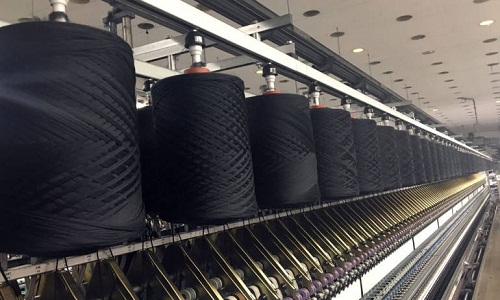 2018. The demand for manmade fiber based product, on the other hand was 23.34 billion meters in 2016 and increased to 25.46 billion meters by 2018. Similarly, the aggregate demand for pure silk and woolen fiber based product was 0.34 billion and 0.16 billion meter respectively in 2016. It is expected to have touched 0.37 and 0.20 billion meter respectively in 2018.
Power loom contributes highest to textile demand
The mill/power loom sector contributed 33.97 billion meters (82.72 per cent) to the overall demand of textiles in 2016 compared to 31.85 billion meters in 2015. Similarly, the knitted sector contributed 4.94 billion meters to the total basket in 2016 as against 4.77 billion meters (12.39 per cent) in 2015.
At the same time, the handloom sector contributed 5.24 per cent to the total demand for textiles in the household sector. Aggregate demand for handloom textiles is 2.15 billion meters in 2016 as compared to 1.91 billion meters in 2015. The aggregate demand for textiles by sector of manufacturing for 2018 for mill made/power loom, knitted/hosiery and handloom sector was 37.24 billion meter, 5.56 billion meter and 2.53 billion meter respectively.
Household sector growth highest
The demand for household sector is the major contributor to overall growth of the sector with 53.39 percentage of share in the total market size. While the export of textile and clothing decreased 4.66 per cent, demand in household and non-household sector grew 2.82 and 1.51 percentage respectively during 2016.
The growth in household demand of textiles has created an additional demand for 2,525 million meter of fabrics, which is an indication of the required capacity expansion in fabrics manufacturing in the country. Similarly, the growing demand for newly emerged products like legging etc, provides an indication of the change in preference pattern of consumers in the country during the period.