FW
Bangladesh: Moving away from LDC may mean loss of benefits
If Bangladesh were to graduate to the league of a developing nation, it could lose the trade benefits that it had been enjoying so far as a least developed country. This could have a direct bearing on the country’s biggest foreign currency earner, the readymade garment industry.
As such, the country is going full throttle in pushing for free trade agreements with export destinations like the EU, Canada, Japan and China. It already seems to have made headway in garnering GSP status from Japan, which has reportedly assured that it will ensure duty-free facility for imports from Bangladesh, a move being viewed as a big commitment from a country where Bangladesh is eyeing to expand its apparel exports.
Bangladesh’s apparel exports to Japan rose 13.73 per cent compared to the previous year’s earnings. Overall export earnings from Japan have risen 11.73 per cent. Japan is a high-potential market for Bangladesh products and very soon it is expected to be a large export destination for Bangladesh’s goods, especially apparel and leather. The country’s earnings from exports to Japan are expected to reach two billion dollars over the next two to three years.
The European Union too has reiterated its commitment to ensure tariff-free trade benefits for Bangladesh.
India: Floods wreck havoc with Kerala’s weaving industry
Floods have damaged the looms in Kerala. Weavers will need at least Rs 40,000 will be required to repair each loom. It will take at least five to six months to repair the looms. Weavers won’t have any work till the looms are repaired. Unlike other sectors, weavers have been affected the most as all raw material and looms are lost.
There are more than 200 weavers who work on looms at their homes in the Paravoor and Chendamangalam regions. The yarn, thread and dye solutions are provided by various handloom weavers’ cooperative societies. Weavers work at home and provide the finished product to these societies.
There are five such societies functioning in Paravoor. Each society has its own handloom manufacturing units. Of the five, the worst-affected was the Chendamangalam Handloom Weavers’ Cooperative Society. The entire manufacturing unit was submerged during the floods, damaging 45 looms. Aid is required urgently to save the Chendamangalam handloom industry from extinction.
The loss for five societies would amount to approximately Rs 15 crores. The amount is not big, but if the sector is not revived, it would mean the death of this traditional craft, which recently got the GI (Geographical Indication) tag.
Falling lira could boost Turkey’s textiles exports
The dip in the value of Turkish lira, by 45 per cent this year represents a significant opportunity for Turkish textile manufacturers. This will prompt many manufacturers to focus more on exports, and increase the level of quality and production standards.
This is especially true for labor-intensive sectors such as the textile industry. This happened in the 1980s and 1990s, when the Turkish lira was constantly devaluating and Textile exports boomed.
Turkey is well-positioned due to the evolution in its range of textile products over the past few years. For example, it has introduced more eco-friendly and organic textiles as well as a wider range of high-performance fabrics for sports and outdoor wear, with properties such as chemical-resistant, stain-proof, water-resistant, sturdy, stretchable and dry-touch.
These factors are helping Turkey compete with sourcing destinations in other parts of the world, such as Asia. Another advantage that continues to help Turkey’s textile industry is its geographic location. It is close to key markets such as the EU and Russia. Its young population helps maintain competitive labor costs. It has a predominance of SME manufacturers, who tend to be flexible and quick. And Turkey produces its own raw materials – it is the seventh-largest cotton producer in the world.
Jute to be India’s fabric of the future
For India, jute could be the fabric of the future. Amid a global push to reduce the use of plastic for environmental reasons, India is promoting jute as a material for reusable shopping bags, home furnishings, clothing, even diapers and women’s sanitary pads.
Extracted from the bark of a tall, reedy plant, jute requires less water than cotton and almost no pesticides, absorbs more carbon dioxide for its size than most trees, and is totally biodegradable. The Indian jute industry sees a potentially huge market in countries like the US which have introduced regulations against plastic bags and foam products.
Nearly all of the world’s jute is grown and milled in Kolkata and neighboring Bangladesh, where the climate is right and labor is cheap. The Indian jute industry employs 4,00,000 mill workers and supports an estimated four million families.
Companies are already supplying jute for use as geotextiles — a net-like material used by civil engineers to stabilize loose soil for road construction. The hope is that the growing interest in jute as a consumer product in India and abroad will help stimulate innovation. Scientists have been experimenting with bacteria to quicken the extraction of jute and improve the quality of fibers to yield softer fabrics. A special digital printing technique could allow jute to replace plastic in banners and advertisements.
Australian wool may fall five per cent
Australian shorn wool production is expected to fall 5.7 per cent this year. The fall reflects an expected reduction in both the number of sheep shorn and average wool cuts per head as a result of the dry seasonal conditions across most of the country.
Adverse seasonal conditions in many sheep producing areas across Australia have resulted in a high turn-off of sheep and lambs. It will also mean lower average fleece weights in several states. How the season progresses over the next couple of months will be very important for overall production levels this season.
There have been 11.3 per cent reductions in weight of wool tested between 19.6 and 24.5 micron while there was an 11.7 per cent increase in weight of wool tested between 16.6 and 19.5 micron as well as over 26.6 micron. Production of 16.5 micron wool fell 10 per cent last season.
The impact of the season can be seen through a ten per cent increase in sheep and lamb turn-off last season compared to 2016-17. Dry seasonal conditions over much of the second half of the season resulted in lower than expected fleece weights in 2017-18. Conditions have worsened in many wool producing regions across Australia.
NAFTA 2.0 to change US apparel sourcing norms
"The US demand raises one big question of whether trade-preference levels (TPL) could be altered, allowing for some non-regional yarns and fabric to be used even though garments were produced within the free-trade area; thus enabling them to receive duty-free status. US representatives, in their previous trade negotiations, had proposed eliminating TPLs. The fact sheet of the US Trade Representative also stated the Trump administration wants to limit the use of non-NAFTA inputs in the textile and apparel trade.
 Though, the full details of the renegotiated free-trade deal between the United States and Mexico haven’t been revealed yet, and not likely to be known for another month at least, what is known is that the US government wants to source accessories such as sewing thread, pocketing fabric, narrow elastic bands and coated fabric from the free-trade region to qualify for duty-free benefits. Under previous NAFTA deal, those raw materials could be sourced from any region in the world.
The importance of TPL
The US demand raises one big question of whether trade-preference levels (TPL) could be altered, allowing for some non-regional yarns and fabric to be used even though garments were produced within the free-trade area; thus enabling them to receive duty-free status. US representatives, in their previous trade negotiations, had proposed eliminating TPLs. The fact sheet of the US Trade Representative also stated the Trump administration wants to limit the use of non-NAFTA inputs in the textile and apparel trade.
Tom Gould, Senior Director, Customs and International Trade, Sandler, Travis & Rosenberg, has revealed his customers who produce in Mexico plan to use the TPLs as long as possible until the specifics of a new trade deal are implemented. And if they can’t use those TPLs, they would not hesitate to use regionally produced fabrics or move their production to other countries to keep their costs low.
Changing scenario under NAFTA 2.0
Apparel companies in Los Angeles that produce 100 percent in Mexico should be concerned about changes under NAFTA 2.0. For years, sewing thread and pocket linings under the Dominican Republic–Central America Free Trade Agreement would be sourced from regional sources, but that would no longer be the case under NAFTA.
Les Miller, the Chief Executive Officer at American & Efird, feels most Mexican apparel factories currently use regional sewing thread as it streamlines the production process. It also makes the import-export process easier and more efficient as they don’t have to explain where their non-regional sewing thread came from. In the past, apparel factories would often use fabric scraps leftover from production to make pocket linings. With the new arrangement, apparel manufacturers will have to verify those scraps come from regionally made fabric instead of Asian or Central American fabrics.
The Canadian involvement
Although President Trump has threatened to exclude Canada from the pact if it doesn’t agree to some of the United States’ demands, trade groups across the US want Canada to be a part of it to make it a trilateral agreement. The US-Mexico Trade Agreement submitted to the US Congress would give them 90 days of time to examine the agreement. Once these reviews are conducted, businesses and the public will have a better perspective on the contents of the free-trade agreement.
India’s cotton production to grow 7.25 per cent this year
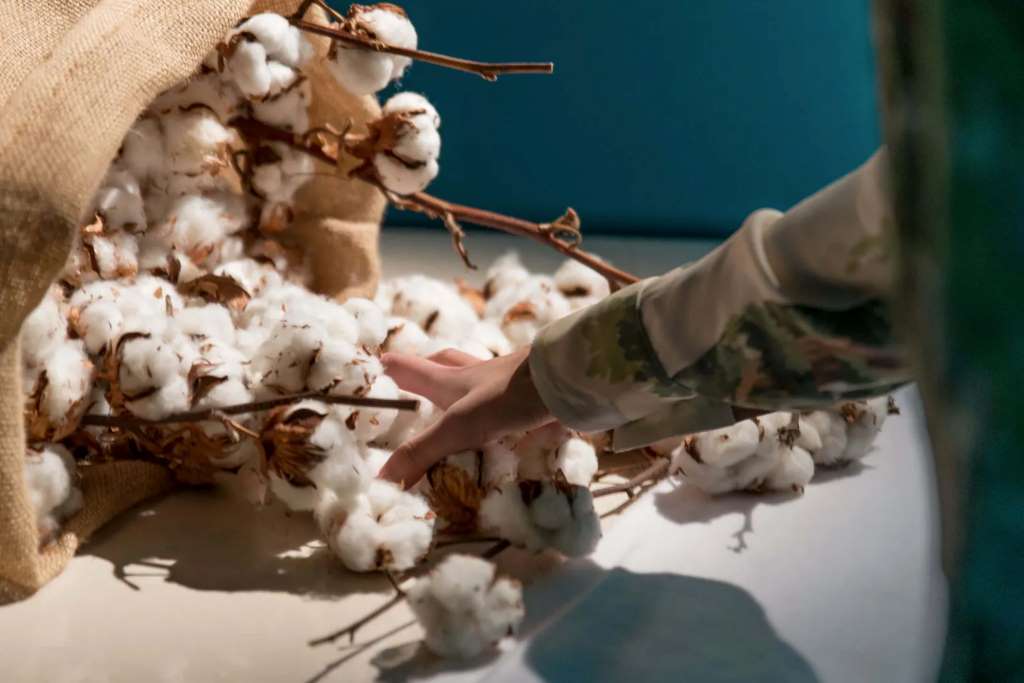
"As per the Cotton Advisory Board (CAB), cotton production in India in the current season (2017-18) is expected to touch 37 million bales growing at 7.25 per cent. The northern zone produced 4.6 million bales of cotton during 2016-17, registering a growth of 28.67 per cent. And Haryana emerged the topmost cotton producing state with a production of 2.05 million bales of cotton. As per CAB, the central zone is expected to produce 20.95 million bales of cotton with Gujarat being the topmost cotton producing state. It is expected to produce 10.4 million bales of cotton with a growth of 9.47 per cent. The southern part of India is likely to produce 9.9 million bales, a growth of over 10 per cent over last season. Out of the four states, Telangana produces the most cotton with 53 per cent share in the zone and 14 per cent in the country's total production."
 As per the Cotton Advisory Board (CAB), cotton production in India in the current season (2017-18) is expected to touch 37 million bales growing at 7.25 per cent. The northern zone produced 4.6 million bales of cotton during 2016-17, registering a growth of 28.67 per cent. And Haryana emerged the topmost cotton producing state with a production of 2.05 million bales of cotton.
As per CAB, the central zone is expected to produce 20.95 million bales of cotton with Gujarat being the topmost cotton producing state. It is expected to produce 10.4 million bales of cotton with a growth of 9.47 per cent. The southern part of India is likely to produce 9.9 million bales, a growth of over 10 per cent over last season. Out of the four states, Telangana produces the most cotton with 53 per cent share in the zone and 14 per cent in the country's total production.
Rise in cultivated land
In the current season (2017-18) the area under cotton cultivation is expected to rise 14.95 per cent to touch 12.45 million hectares. In the northern zone, it is estimated to rise 16.44 per cent to reach 1.54 million hectares with a yield of 616.58 kg/hectare. Haryana, with .57 million hectares of cotton cultivation, remains the top state in the zone.
The central zone is expected to witness a growth of 9.62 percent, cultivating an area of 7.43 million hectares and yield of 479.15 kg/hectare. Maharashtra is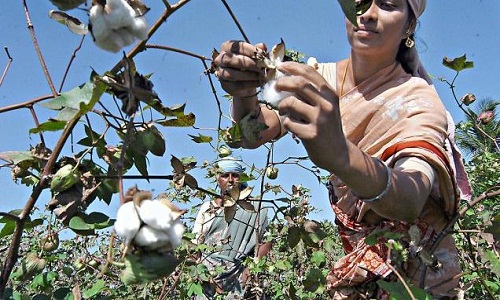 expected to increase cultivation area by 10.71 per cent to 4.20 million hectares and a cotton yield of 343.48 kg/hectare.
In the southern zone, cotton cultivation witnessed a drop of -21.41 per cent to 2.53 million hectares in the last season. The southern zone has 23 per cent share of the total area under cultivation cotton in India. In the current season (2017-18) the area for cotton will witness a rise of 29.17 per cent in the zone with 3.27 million hectares and yield of 514.36 kg/hectare of cotton.
Telangana leads with 56 per cent area under cotton cultivation in the zone. The state is expected to witness a major rise of 34.63 per cent with 1.89 million hectares and a yield of 492.88 kg/hectare.
Growth in trade
After three years of continuous decline, India finally witnessed a 6.4 per cent growth in cotton exports in 2017-18. The commodity gained 19 per cent in total textile and clothing exports. Bangladesh remains the largest importer of Indian cotton as demand from China continued to drop over the last fiscal year. Cotton export to Bangladesh in 2017-18, was valued at $1816.21 million with growth of 13.8 per cent over previous fiscal year.
Luxury brand Chanel buys Japan’s Colomer leather tannery
French luxury company Chanel has bought Spanish leather tannery Colomer. Colomer is joining Chanel’s portfolio to ensure the supply of leather, particularly for manufacturing of leather goods.
Colomer had undergone a restructuring process in recent times, leading to job losses and factory closures, after struggling to compete with low-cost rivals from other countries. Currently, Colomer has one tannery in Spain and five subsidiaries in its home market and one in Japan.
Last year, the company reported consolidated sales of €38.5 million, down five per cent on the previous year. The numbers are in stark contrast to Colomer’s performance in the past, with revenues reaching €113 million in 1997. It currently employs 218 people and exports 60 per cent of its leather.
Chanel’s revenue touché €8.3 billion in June while net profit was €1.5 billion. Chanel acquired its first tannery, a French company called Bodin-Joyeaux, in 2013, and in 2016 it acquired a majority stake in Megisserie Richard. The investment offered the opportunity to strengthen Chanel’s leather chain excellence, an ambition that has been confirmed again with the acquisition of the historic Spanish supplier. Known for haute couture, Chanel does clothes, fragrances, eyewear, jewelry, handbags and watches.
Vietnam is biggest buyer of US cotton
The biggest buyer of US cotton was Vietnam followed by China. Bangladesh’s cotton imports from the US grew by 486 per cent. The largest consumer of US pima cotton is China.
US cotton is mainly exported to developing countries in Asia. Even as the US is likely to lose China and Turkey, the international market looks positive for US cotton prices. On the one hand, import demand from China is bound to rise with decreasing reserved cotton stocks. Despite high tariffs and exchange rate issues, consumption cannot disappear and Chinese buyers will look for alternative sources. On the other hand, large quantity of hedging and unfixed on-call contracts may lead to a market squeeze.
Trade dispute between US and Turkey may have an influence more on Turkey’s cotton textile market, with its high import dependency on US cotton. US cotton consuming countries are adjusting their cotton structure in the face of possible higher US cotton prices. The import dependency of Vietnam, Indonesia and Turkey is the highest, and for them to adjust their cotton structure is difficult. For China, the import dependency is actually low. If China cannot import US cotton, the influence on high-end market is large, but is low for the whole industry.
Sustainable materials, certifications driving apparel industry
"More and more companies are acquiring industry materials and manufacturing certifications as a part of their sustainability goals and brand building. The latest include the Oeko-Tex’s Eco Passport certification, recognised as a Level 3 ZDHC MRSL Conformance Indicator for the ZDHC Roadmap to Zero Program. This shift indicates that Eco Passport certified chemical substances meet the ZDHC’s (Zero Discharge of Hazardous Chemicals) guidelines for safer textile chemistries that are also verified as being responsibly manufactured. ZDHC MRSL Conformance Level 3 covers chemical substances that are limited or banned from use in apparel and footwear materials production and trimmed to protect workers, consumers and the environment."
 More and more companies are acquiring industry materials and manufacturing certifications as a part of their sustainability goals and brand building. The latest include the Oeko-Tex’s Eco Passport certification, recognised as a Level 3 ZDHC MRSL Conformance Indicator for the ZDHC Roadmap to Zero Program. This shift indicates that Eco Passport certified chemical substances meet the ZDHC’s (Zero Discharge of Hazardous Chemicals) guidelines for safer textile chemistries that are also verified as being responsibly manufactured. ZDHC MRSL Conformance Level 3 covers chemical substances that are limited or banned from use in apparel and footwear materials production and trimmed to protect workers, consumers and the environment.
Delivering sustainable products
Oeko-Tex program’s Eco Passport analyses a broad set of chemicals, including colorants, scouring agents, adhesives, inks, pigments and auxiliaries in a confidential, three-step process that confirms the formulations and individual ingredients that meet specific criteria for sustainability, safety and regulatory compliance. Its chemical formulations are checked against the comprehensive Oeko-Tex list of substances of concern and then verified through laboratory evaluation to ensure that they don’t contain unsafe contaminants.
Sustainable production is verified with on-site observance of the manufacturer’s occupational safety methods, water and air protection mechanisms, and quality control practices in line with STeP by Oeko-Tex guidelines for sustainable production facilities. Certified formulations are eligible to be listed on the ZDHC Gateway–Chemical Module and the Oeko-Tex Buying Guide.
This helps apparel and footwear manufacturers desiring to incorporate sustainable chemistries to recognise them. It also aligns with Oeko-Tex’s mission to provide standardised solutions that optimise customers’ manufacturing processes and help deliver more sustainable products.
Ensuring consumer safety
Along the same lines, DuPont Industrial Biosciences has joined with Bluesign for its bio-based, high-performance polymer Sorona. The Bluesign system unites the textile supply chain to jointly reduce its impact on people and the environment, ensure responsible use of resources and guarantee a high level of consumer safety.
DuPont Sorona, a versatile polymer comprises 37 percent renewable plant-based ingredients, using 30 percent less energy and releasing 63 percent fewer greenhouse gas emissions as compared to nylon 6 fibers. In addition to reducing a reliance on fossil fuels, Sorona polymer combines eco-efficiency with function, making it applicable for a variety of performance-oriented products. Its attributes include softness, inherent stain resistance and durability.
To qualify for the Bluesign system partnership, DuPont Sorona completed a comprehensive assessment and roadmap meeting to demonstrate its merit for the certification of its products. As a Bluesign system partner, DuPont Sorona joins a growing collection of chemical suppliers, manufacturers and brands that are responsible acting parties in the textile value chain.
For risk-free environment
Its input stream management approach ensures approved chemicals and raw materials, such as DuPont Sorona polymer. These are used in all steps of the manufacturing processes to reduce risks to both people and the environment at the very beginning of the supply chain.
Bolger & O’Hearn Specialty Chemicals has collaborated with Bluesign and ZDHC to place several of its chemistries on the official ZDHC list of sustainable, approved textile industry chemistries. Chemistries developed by Bolger & O’Hearn that are now approved by Bluesign and ZDHC include: Stormproof/Breathable OmniBloq, an advanced durable water repellent technology engineered to keep apparel dry and consumers comfortable in extreme conditions, and Altopel F3, an advanced fluorine-free water repellent.