FW
China: CCCT to promote high-quality development of textile industry
China Chamber of Commerce for Import and Export of Textiles (CCCT) plans to promote high-quality development of the industry and has signed a strategic cooperation agreement with the Swiss Textile Testing Institute (Testex) for this purpose.
The agreement enables CCCT to deal with green trade barriers in European and American markets effectively and promote green and sustainable development in the regions. It also helps Chinese textile and garment products and brands to establish a fashion, green and sustainable image in the international market and enhance the competitiveness of Chinese textile and garment products.
Henceforth, CCCT and Testex will provide Oeko-Tex testing and certification services to all member enterprises. The service highlights efficiency, convenience and accuracy enabling members to obtain Oeko-Tex certifications. The service includes Oeko-Tex certifications like green textile passport to European: Standard 100 by Oeko-Tex; traceable product label for transparent supply chain: Made In Green by Oeko-Tex; eco natural leather certification: Leather Standard by Oeko-Tex; eco dyes and chemicals certification: Eco Passport by Oeko-Tex and sustainable textile production certification: STeP by Oeko-Tex.
Rapid shift from informal to formal makes apparel demand unpredictable
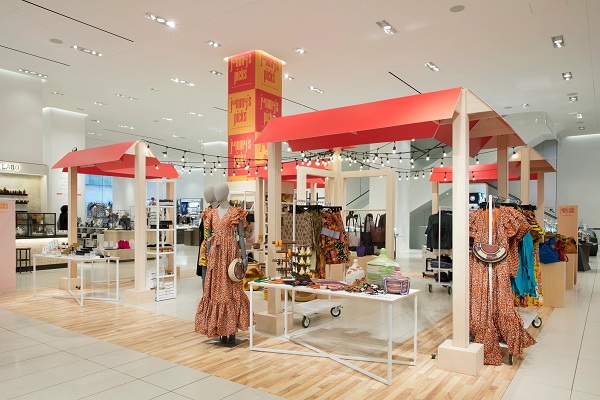
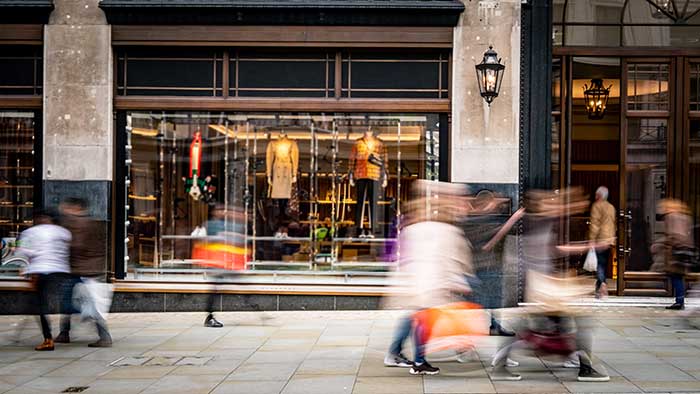
With brands compelled to deal with issues like rising inventory costs and changing customer preferences, the first quarter of the year was a mixed bag for apparel retailers. A report by Modern Retail shows, revenues of retailers including Poshmark, Revolve and TJX Companies increased between 13 and 43 per cent while those of department store conglomerate Kohl’s decreased from $3.8 billion to 3.7 billion Y-o-Y. Big retailers like Target and Walmart had to sell apparels at discounted rates due to their failure in predicting demand.
Currently, the bottom lines of apparel retailers are under tremendous pressure due to rising inflation and supply chain headwinds. Constantly evolving garment choices of consumers, from stay-at-home basics to workwear and party wear, are further adding to their woes.
Demand for formal wear surges
Most shoppers opted to buy formal garments for offices or events during the quarter. They mostly chose dresses, leading to a 150 per cent Y-o-Y growth in the category at Revolve, says Jesse Timmermans, Chief Financial Officer. At Poshmark, the category of prom dresses and wedding apparels grew 75 per cent and 39 per cent respectively.
Along with growing demand for apparels, accessories too saw a rise in sales during the quarter. High heels from ThredUp registered a 50 per cent growth in demand during the quarter while Etsy recorded increased demand for jewelry and accessories.
Activewear demand slows
Athletic, athleisure and lounge apparel remained the most-demand categories during the pandemic. However, their growth slowed for a few retailers like Kohl’s and Target. Kohl’s registered a marginal rise in demand for activewear while Target witnessed a decline in demand for basic garments. Demand for trendier apparels accelerated during the quarter with more people returning to offices or resuming active social lives, observes Christina Hennnington, EVP and Chief Growth Officer, Target.
On the other hand, athletic-focused retailers like Under Armor struggled during the quarter. The gross margins and sales of Under Armor declined while that of Foot Locker underperformed. To sustain growth, these athletic brands and retailers need to evolve their product offerings, opines Jessica Ramirez, Senior Research Analyst, Jane Hali and Associates. They need to redesign sports jackets with a smart athletic fabric or add useful features for the consumers, she adds.
Navigating through changing preferences
Changing consumer preferences, supply chain issues and a colder-than-normal spring compelled retailers like Walmart, Target and JD to offer discounted apparel during this quarter. Retailers also suffered from the quicker than expected change from informal to formalwear as consumers shifted away from spending on vacation dresses and accessories, affirms Brain Cornell, CEO, Target. Supply chain issues including rising freight and fuel costs also made it difficult for them to get their desired products at affordable prices.
This year is likely to be quite unpredictable for retailers, says Joshua Silverman, CEO, Etysy. They would have to devise new innovative strategies to engage consumers, he adds.
Class launches Smart Shop at 10th Future Fabrics Expo
The international eco hub Class launched its Smart Shop’at the 10th edition of the Future Fabrics Expo, showing once more the unique power of this education tool.
Since 2018, Class has been offering the access to its material hub,innovations to small and new generation of designers and brands through its Smart Shop, the online store of smart materials – with no minimums - which are going to change the fashion industry for the better. In fact, Class at FFE is to share the unique values of its design driven, conscious, high-tech materials, in order to start synergies with an audience characterized by the interest in responsible innovations, the main expertise of CEO and founder GiusyBettoni and her team.
Thanks to its most valuable asset in terms of education, C.L.A.S.S. offers smart solutions – from 1 meter to max 50 meters - for the contemporary wardrobe which include all the different expressions of textile ingredients: natural, transformed, innovative and back in the loop materials, giving everyone the possibility to create design, innovative and yet responsible products in line with their new generation of contemporary values.
Luxury goods market to grow to 15% next year: Bain & Co
As per a study by Bain & Company, the global luxury goods market is set to grow to 15 per cent next year, pushing the market to €330 billion, The analyst forecasts, sales of luxury goods will grow by 5 per cent to €305 billion.
The global luxury goods market grew to €288 billion ($198 billion) last year, rebounding from its worst recorded dip due to the 2020 pandemic lockdowns, according to the study commissioned by Italy's Altagamma association of high-end producers.
Sales of personal luxury goods including apparel, accessories and footwear posted high double-digit growth in the first quarter of this year, despite the first signs of economic uncertainty tied to the Russian invasion of Ukraine, the report said.
The United States and Europe have boosted growth so far this year, while sales are expected to hit a hard stop in China due to COVID-19 restrictions in key cities.
67th IIGF inaugurated in Greater Noida
Piyush Goyal, Minister of Commerce & Industry, Consumer Affairs, Food & Public Distribution and Textiles, inaugurated the 67th India International Garment Fair (IIGF) at at IEML, Greater Noida. In his address Goyal named apparel fashion, jewelry and MICE as industries that need to grow. He set the apparel exports target at 15 per cent. Goyal informed, India is moving ahead on FTAs with Canada, EU, UK and Australia. It also plans to forge new FTAs with the GCC, Israel, Eurasia and Brazil, he added.
Narendra Goenka, Chairman AEPC said, the global apparel market which was just under $1.5 trillion in 2013 is expected to generate revenues to the tune of $1.8 trillion in 2022 and $1.9trillion in 2025 before it closes to $2 trillion in 2026. India offers complete value chain solution from farm to fashion giving it a competitive edge by shortened lead times to reach buyers.
Huntsman Textile Effects to showcase extensive solutions at Techtextil
A global leader in innovative solutions and environmentally sustainable products, Huntsman Textile Effects is presenting its extensive and complete end-to-end suite of solutions for various applications, including technical and functional apparel and home and hospitality textiles, at Techtextil from June 21-24, 2022, in Frankfurt, Germany.
As per a Textile Focus report, the company is showcasing its revolutionary technology for delivering the lowest environmental impact for dyeing polyester-cellulose blends, Avitera® se Fast process. The technology combines alkali-clearable Terasil® W/WW disperse dyes and Avitera® se reactive dyes to cut processing time from around nine hours to just six. This helps mills reduce the water and energy required for production by up to 50 per cent and increase output by over 25 per cent.
The technology also delivers outstanding wet-fastness to ensure that sportswear will not bleed or stain during home laundering, or while in storage or transit. Huntsman presents eco-friendly finishes that repel water and stains to help garments look new for longer. Known as the Teflon™ EcoElite with Zelan™ R3, it is the industry’s first renewably sourced water-repellent finish containing 63 per cent plant-based materials and exceeds the performance levels.
Another product showcased by Huntsman is the Phobotex® non-fluorinated water-repellent finish. An advanced and comprehensive range of water repellent, Phobotex® can be quickly, easily and safely applied to any substrate to ensure premium softness and comfort.
Lenzing presents new Lenzing FR fiber offering at Techtextil
Leading global producer of wood-based specialty fibers Lenzing presented its new carbon- neutral Lenzing™ FR fiber offering for the protective wear segment at Techtextil Frankfurt. Lenzing collaborated with long-term partner Textil Santanderina, a Spanish textile company for the venture. The textile company also collaborated with European fabric manufacturer Klopman to showcase the applications of its carbon-zero Tencel ™ branded fibers launched in 2020.
These two partnerships mark an important milestone in Lenzing’s tenure as the company engages itself in providing eco-friendly alternatives for manufacturers in various segments through collaborating with leading industry partners. The carbon-neutral Lenzing™ FR fibers are made using a sustainable cellulosic solution for the protective wear segments. In addition to the benefit of reduced carbon footprint, these fibers also offer supply chain transparency as part of Lenzing’s fiber identification technology. This technology enables full traceability of the fiber and protects products from counterfeiting.
Weavers in China holding higher inventory than last year
Unlikely to get any new orders in the next three months, weavers in China are holding higher inventory compared to the same period last year. High price fluctuation of feedstock and rising inventories of fabric mills are major causes of concern. Orders for cotton grey fabric in China remained bleak in May as weavers had to liquidate previous orders to clear inventory backlog. As per a CCF Group report, weavers did not have any new orders due to low consumer enthusiasm.
Home textile orders remained flat in June, as weavers mainly purchased stocks amid right demand. On June 2, weavers had orders lasting only 5.5 days production, down about half from the same period last year. Fabric plants reported negligible sales while the frequency of orders by regular customers also declined. A few fabric mills extended holidays despite the end of the Dragon Boat Festival. Those mills that resumed production did it on a limited basis.
Bluesign to develop sustainable chemistry index with SCTI
Swiss creator of the Bluesign System Solution for sustainable textile production, Bluesign will develop a sustainable chemistry index in collaboration with Sustainable Chemistry for the Textile Industry (SCTI) to develop a sustainable chemistry index. As per The Spin Off report the index will provide a standard guide for communication between chemical suppliers, manufacturers, brands and NGOs. It will enable stakeholders to assess the sustainability of textile chemical products while safeguarding the intellectual property of participating chemical companies.
The index will be implemented and managed by Bluesign as an independent authority having a holistic approach to helping companies throughout the textile supply chain improve their sustainability performance. The index will be reserved for substances that are transparent about the chemical’s circularity viability, greenhouse gas emissions during production, and the source of the raw materials. It will also require that the downstream use of the chemical is optimized, meaning, for example, that it promotes resource saving in textile finishing. Additionally, excellent corporate governance paired with well-defined environmental and social (ESG) goals will be a pre-condition.
Bangladesh RMG sector yet to recover from pandemic onslaught: Report
Bangladesh readymade garment and textile sectors have not yet fully recovered from the onslaughts of pandemic, says a report by The Business Standard. The situation has worsened due to rising global freight costs and weakening of the local currency against the US dollar and a looming recession and customers’ changing habits.
The report states, the Ukraine crisis has led to many issues in the country including a looming recession likely to affects its markets in the US and Europe. Inflation caused by soaring energy and food prices along with a sharp rise in housing costs and mortgages have begun to affect consumer spending patterns as they are left with dwindling disposable income.
With dollar strengthening against the Taka it has also taken a toll on brand’s profits in their home countries. For example, H&M in Sweden and Inditex in Spain have faced such fate. Also, major brands are stuck with excess inventory which will slowdown future orders. The report warns RMG and textiles sectors to be careful in coming days as they are likely to get fewer orders at lower prices. A proposed hike in source tax would also have a long-term impact on the industry, the report says.
Buyers might also delay payments due to the impending slowdown. This will add to the strain on the EDF facilities. Additionally, the hike in energy prices alongwith a rise in cost of doing business will make business more challenging for manufacturers, the report adds.