FW
Operating conditions of cellulose fiber enterprises in China improves in 2021
Compared to 2020, the operating conditions of most cellulose fiber enterprises in China improved significantly, according to the annual reports disclosed by Chinese listed companies.
Operating in the chemical fiber sector, FuningAoyang Technology Co registered a revenue of 1.048 billion yuan and a net profit of -1.068 billion yuan (-420 million in 2020). The huge losses are mainly caused by asset impairment losses, asset disposal losses and disposal costs of related employees. As per a CCF Group report, the company’s annual production declined by 36.26 per cent to 85,386 tons. The sales volume of the company declined by 36.84 per cent to 89,965 tons. The inventory declined by 90.67 per cent to 500 tons. On Apr 9, 2021, the company announced that it planned to sell viscose business, and the counterparty is Sateri China Investment Co., Ltd.
Jilin Chemical Fiber, a manufacturer of viscose filament yarn and viscose staple fiber reported a 29.7 per cent year-on-year increase in revenue of viscose filament yarn to 2.206 billion yuan, and the revenue of viscose staple fiber is 1.197 billion yuan, an increase of 72.52 per cent year-on-year. The production and sales of viscose filament yarn is 67,259 tons and 70,723 tons respectively, and the production and sales of viscose staple fiber is 106,052 tons and 103,797 tons respectively.
Nanjing Chemical Fiber improved its sales volume of viscose filament yarn to 897.37 tons during the eporting period. The inventory of viscose filament yarn has been sold, with revenues of 18.11 million yuan, a year-on-year increase of 92.84 per cent. The output and sales volume of viscose staple fiber is respectively 33.6kt and 30.8kt, with a revenue of 328 million yuan, a year-on-year increase of 24.56 per cent
Sanyou Chemical’s output and sales of viscose staple fiber declined to 681.7kt and 668.4kt respectively, compared with 749.6kt and 761kt in 2020. The revenue of viscose staple fiber increased by 21,03 per cent Y-o-Y to 8.284 billion yuanwhile the net profit declined by 124 million yuan to 270 million yuan
Xinxiang Chemical Fiber currently focuses on the production and sales of viscose filament yarn and spandex, and has suspended the production of viscose staple fiber. During the reporting period, the company produced 64,374 tons of viscose filament yarn, a year-on-year increase of 3,587 tons. The revenue totaled 2.045 billion yuan, a year-on-year decrease of 6.49 per cent. Zhongtai Chemical: the output and sales of viscose fiber is 569.9kt and 267.4kt respectively, and the output and sales of rayon yarn is 297.5kt and 300.3kt respectively. The revenue of the two is 2.881 billion yuan and 4.199 billion yuan respectively, a year-on-year increase of 80.7 per cent and 34.34 per cent respectively.
Fashion e-commerce contributes 37% to Nigeria’s economy: NEPC
The fashion e-commerce sector presently contributes to 37 per cent revenues to Nigeria’s economy, says DrEzaYakusak, CEO, Nigeria Export Promotion Council (NEPC),
Yakusakadds, fashion including textile and footwear sub-sector remains the second largest contributor to Nigeria’s Gross Domestic Products (GDP) after food, beverages and tobacco according to latest Statista 2020 figures.
Given the present circumstances, Nigeria has no option but to support the growth of its non-oil revenue sector for her economy to recover fast, Yakusak adds
There is no longer any doubt that sectors such as the apparel, garment, arts and craft, cosmetics and the beauty industry have continued to make tremendous contributions to the growth of the nation’s GDP.
’Available statistics from ecommercedb.com indicates that e-commerce transactions in 2020 was over $5 billion, presently, it is ranked 35th largest market for e-commerce globally with yearly record growth of 42 per cent.
Yakusak emphasized that NEPC is willing to render support to individuals and organizations that present viable and services of various sectors all of which forms the basis of its partnership with Agogo Africa to launch a credible platform to onboard fashion and related sectors for trading.
Digital Denim Week showcases Fall/Winter 23-24 collections of 83 brands
Around 83 exhibitors and more than 1,600 visitors, along with 1,800 professionals participated in the Digital Denim Week on May 17 and 18, 2022 at Berlin in Germany. These brands showcased Fall/Winter (F/W) 23-24 collections and their up-to-date sustainable R&D denim developments.
The elite show created an opportunity for denim manufacturers to meet with the creative minds behind brands.
Family-owned Italian laundry Blue Jeans Lavanderie showcased their chlorine- and potassium-free permanganate solution to attain the in-demand 3D effects seen on the Fall/Winter 22-23 catwalk.
Pacific Jeans proudly promoted ‘Made in Bangladesh’ at Denim PV in Berlin. The buyers visited Pacific Jeans stall at Denim PV and explored and experienced the premium jeans manufactured by Pacific Jeans. Bangladesh-based Square Denim presented its ‘ballerina’ impression with 85% stretch and no growth. Along with ballerina fabric – Square Denim also showcased vintage-inspired fabrics, ‘always raw’ finishes and ‘cactus’ denim manufactured with waterless dyeing in the F/W 23-24.
Turkey-based Isko presented its iconic fabric franchises like the Isko Reform, Isko Pop. Over 95% of Isko’s collection comprises a least 50 per cent recycled material – underlining the company’s emphasis on reducing virgin components.
Blue Jeans Lavanderie highlighted that the high-end denim market is beginning to transform from the worn-in vintage Levi’s look to bolder distinctions, needle piercing and color.
Pakistan-based Chottani presented a slow fashion notion that customs carved woodblock prints. Sustainability was the main attraction as recycled cotton and BCI cotton was the center stage of RealteksTekstil’s collection of tried-and-true indigo fabrics.Serbia-based Eurotay showcased A nostalgic collection that offers the 80s- and ’90s-inspired fabrics. A heritage range centers on selvedge denim with a worn look.
Another Pakistan-based denim manufacturer SM Denim’s booth attracted visitors with its eye-catching digital prints.Indigo Textile showed its zero-waste notion developed in collaboration with US designer Danielle Elsner.
Some of the other happenings at the Denim PV show included in-person and online fashion seminars, innovations at the show in the Trends Agora, Digital Denim Smart Talks to review the sector’s ecological progress and innovations in terms of sustainable materials, a Season Smart Talk donating new eco-friendly denim developments, and a Traceability Smart Talk to determine traceable-production solutions presented by the show’s exhibitors.
Copenhagen Fashion Week SS23 to focus on menswear
The SS23 edition of Copenhagen Fashion Week will focus on menswear and feature brands like Jade Cropper, (di)vision, The Garment and A Roege Hove, PLN, Latimmierand OperaSPORT.
New brands BernerKühl and Sunflower will participate alongside schedule stalwarts Soulland, Martin Asbjørn, Schnayderman's and Wood Wood, as well as last season's Zalando Sustainability Award winner, Iso.Poetism by Tobias Birk Nielsen. This is matched by Holzweiler, HenrikVibskov and Mark Kenly Domino Tan who shall be presenting menswear within their collections for the season ahead.
With an aim to present the best of the Nordics, Ganni will be back physically for August, alongside the highly anticipated continued presence of Saks Potts, Helmstedt, Rotate, Skall Studio, Stine Goya, Hope, Baum und Pferdgarten, Lovechild 1979, Gestuz, Munthe, RabensSaloner, SamsøeSamsøe, Remain and Rotate.The Royal Danish Academy will present the MA collections of their graduating class.
This season, CPHFW will also include Hungarian brand Aeron to the schedule, bringing their international perspective and Nordic synergies to SS23.
Welspun India receives Strong rating in CRISIL’s Sustainability Year book
Global leader in home textiles, Welspun India has received ‘Strong’ rating in the Sustainability Yearbook 2022, released by CRISIL, an S&P Global company and leading rating agency in India. As per a Business Wire India report, the ratings were based on analysis of ESG efforts of over 575 companies across 53 sectors by CRISIL Welspun India topped among the textile companies with the highest scores in all three dimensions of Environment, Social, and Governance.
Dipali Goenka, Joint Managing Director & CEO, Welspun India says, the company has always embedded ESG and circularity in every facet of its operations, setting benchmarks for the industry as a whole. Earlier this year, Welspun India was awarded with the 1st rank by the Union Ministry of Jal Shakti at the National Water Awards for its water stewardship and state-of-the-art 30 million litres per day sewage treatment plant at Anjar in Kutch. The company also baged the Jury Special Mention Award for its STP to recycle and reuse domestic sewage at the Frost & Sullivan and TERI’s Sustainability 4.0 Awards 2021, which honored companies embedding Sustainability with Economic Value Creation.
Trident’s Q4FY22 net profit jumps 137.1%
The consolidated net profit of textile brand Trident grew 137.1 per cent to Rs 181.25 crore in Q4 FY’22. Operations revenue from grew 39 per cent to Rs 1,869.85 crore during the quarter. Trident reported a 150.8 per cent Y-o-Y rise in consolidated profit before tax at Rs 244.26 crore in Q4 FY22. The company's operating margin grew to 21.67 per cent in quarter ended March 2022 as compared to 20.7 per cent as of March 2021.
On full year basis, the company’s consolidated net profit jumped 173.9 per cent to Rs 833.74 crore as net sales rose 54.5 per cent to Rs 6,997.66 crore durng the financial year ended March 31, 2022 over the financial year ended March 31, 2021.
The board of directors passed a resolution to raise funds and further recommended enabling resolution for approval of shareholders for an amount not exceeding Rs 500 crore by issue of non-convertible debentures (NCDs) by way of public or private offering, in one or more tranches. A vertically integrated textile (yarn, bath & bed linen) and paper (wheat straw-based) manufacturer, Trident is one of the largest players in home textile space in India.
Indonesia’s TPT industry grows 12.45% in Q1FY22
Contrary to the forecasts of Ministry of Industry of the 10.44 per cent growth of the apparel industry and 0.95 per cent of the textile industry, the Indonesian Filament Yarn and Fiber Producers Association (APSyFI) has predicted the textile and textile product (TPT) industry will grow 12.45 per cent on an annual basis in the first quarter of 2022. According to Redma Gita Wirawasta, Chairman, APSyFI, growth in the first quarter of 2022 was driven by domestic sales due to Ramadan 2022. However, Wirawasta believes growth will not continue in the second quarter of 2022.
Wirawasta attributes this to the opening of the textile import faucet for general importers or API-U.This step is strange because national textile manufacturers have proven they can supply the needs of the downstream textile industry since mid 2021. In addition, textile industry players have made investments to increase their production capacity. However, the restrictions on imports leads to lobbying by textile importers to the government to open the textile import faucet, he adds.
Reduce custom duty on polyester filament yarn urges Pakistan’s FPCCI
Suleman Chawla, Acting President, Federation of Pakistan Chambers and Industry (FPCCI) has urged the government to reduce customs duty on polyester filament yarn imports to 7 per cent from the current 11 per cent to enable textile manufacturers to use synthetic fibre during production. As per a report by the Tribune, Chawla urged the government to levy the same withholding tax at import stage for both manufacturers and commercial importers of polyester filament yarn.
Reduction in customs duty will encourage the industry to move away from cotton towards synthetic fibers, Saad Ziker, Analyst, Topline Securities explains. Chawla also emphasized on the abolition of 3 per cent value added tax at import stage on commercial importers of polyester filament yarn to make the raw material affordable for the textile industry. Ali Asif, Textile Analyst, Insight Securities termed duty reduction as an untimely decision as the government is trying to cut current account deficit. However, reduction in levies on synthetic fibre may boost textile exports in the long run, he added.
Relaxation in Shanghai lockdown relieves Ludhiana hosiery manufacturers
The relaxation in two-month long lockdown in Shanghai has relieved hosiery manufacturers in Ludhiana as they source over 80 per cent of their raw materials for winterwear production from Shanghai. Winter wear production in Ludhiana had halted to zero due to the lockdowns in Shanghai, says Sudarshan Jain, CEO, Apparel Manufacturers Association.
The lockdown also led to 25 per cent rise in winter wear costs in Ludhiana as manufacturers in the city are heavily dependent on Shanghai for raw material. The lockdown delayed raw material orders till July, hitting supply of the final product and increasing its prices. Shanghai imposed a city-wide lockdown on 25 million residents on April 1 to curb the COVID-19 spread. Authorities imposed harsh measures that caused widespread public anger over issues such as crowded quarantine centres, difficulties in accessing food and loss of income.
However, the two-month-long lockdown will be lifted from June 1, with private cars including taxis being allowed to ply back on to the roads and people being able to move freely in and out of low-risk housing compounds.
China to focus on new markets to boost textile and apparel competitiveness
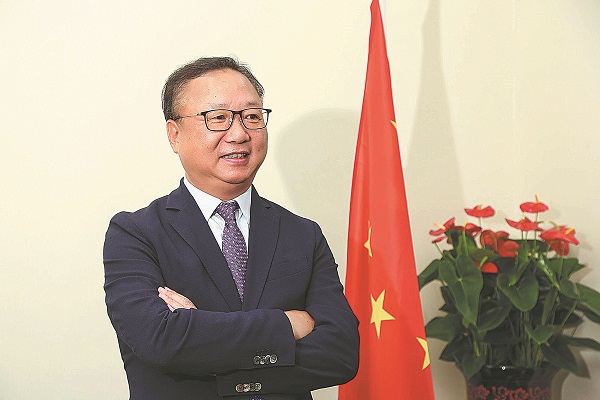
To maintain its competitiveness, China's textile and apparel sector plans to develop innovative fibers and focus on sustainable production while expanding its reach to markets covering the regions included in the Regional Comprehensive Economic Partnership agreement.
China’s textile and garment exports are currently under tremendous pressure owing to the ongoing Russia-Ukraine conflict. Uncertain global economic recovery and geopolitical issues have impacted growth, points out Sun Ruizhe, President, China National Textile and Apparel Council (CNTAC).
Recurrent COVID surges weakens consumer sentiment
Rising prices of commodities such as crude oil and cotton are impacting profits of MMF and cotton producers in the country. Recurrent COVID-19 waves and global divergence in prevention and control measures have weakened industrial production and logistics, affecting market confidence and consumer spending.
Covering 15 countries across Asia-Pacific, the RCEP agreement will facilitate a more comprehensive and deeper cooperation amongst industry leaders. It will protect the industry against the current economic and trade risks besides creating strategic value for the diversification of industrial and supply chains. Over 94 per cent textile and garment products from China will enjoy zero tariffs under the RCEP framework after a certain period. The number increases to over 95 per cent for textile and garment exports from other members to China.
Textile industry growth to slowdown in H1FY’22
China’s commitment to reduce tariffs, accumulative rule of origin and trade liberation and facilitation measures will enable it to strengthen ties with other countries such as Japan. The country reported 11.1 per cent rise in textile and garment exports to $72.25 billion in the first quarter, reveals CNTAC. Weak demand and supply chain issues will slowdown the industry’s growth in the first half of the year.
And as Sun Ruizhe, President, CNTAC says, the US Congress passed the H.R.6256 bill in December 2021 to prevent goods produced in China's Xinjiang Uygur autonomous region to be imported into the country, this move hit China’s cotton textile and garment exports.
New categories and brands emerge
CNTAC and its member companies have achieved significant breakthroughs in the development of new fibers, sustainable production and upgrading textile machineries. The rise in platform and content economy is leading to the development of traditional and new brands. Emergence of new categories is also facilitating the launch of new brands.
Besides integrating digitization in industrial development, China’s textile and garment companies will focus on developing new markets via new technologies and the country's dual-circulation development pattern.
Accounting for 54 per cent of China’s total exports, US, Association of Southeast Asian Nations (ASEAN), European Union and Japan were its four biggest export markets, reveal General Administration of Customs, China stats. Many domestic manufacturers benefitted from design, equipment and integration of the upstream and downstream industry chain despite facing fierce competition from rivals in Southeast Asia since the second half of 2021, affirms Deng Lijun, Chief Analyst, Northeast Securities.