FW
TEA accuses middle men of jacking up cotton price
Tirupur Exporters' Association (TEA) has accused middle-men and traders of creating havoc by jacking up the price of cotton during the cotton arrival season. TEA says, 11 per cent total import duty on cotton has been the reason for the cartelization of players to increase the domestic cotton prices and make an abnormal profit.
As per Raja M Shanmugham, cotton price hike heavily impacts garment- exporting units and leads to losses, including employment. Moreover, it also affects the sustainability of the MSME garment units. He adds, necessary steps have to be taken to break the cartelization and also see the possibility of imposing ban on cotton exports. The industry has always supported the cotton-producing farmers getting better price for their produce as that would encourage them to continue to raise the crop and take the right scientific techniques to increase productivity
Global swimwear market shows healthy growth
The global swimwear market is growing at 6.3 per cent CAGR from 2021 to 2026, reveals a ResarchandMarkets.com report.,
New trends are pointing to growing demand. Key factors such as design, trend and comfort of the fabric are playing a major role in driving the market. In particular, swimwear manufacturers and designers have focused on the comfort level of swimwear and considered the popularity of value added features, such as trendy prints and convenient cuts. This also points to the growing demand for branded swimwear.
While swimming in the United States has experienced a notable bump in participation each year since 2004, the Asia-Pacific region is expected to experience a higher growth rate than the other regions in the next five years. The Chinese swimwear market is driven by the country’s huge population finding a passion for water sports, as they consider swimming as the best form of physical exercise, which will help drive a healthy demand for swimwear products. Likewise, in Australia, swimming is a very common outdoor activity.
The pandemic forced many swimming pools to close to minimize the spread of the virus. The closure of schools and universities across the world in 2020 also negatively affected sales in the global swimwear market.
Chinese cotton linter prices soar
Prices of cotton linter in China surged to a decade high in 2021, says a CCF Group Report. Delinting is the process of removal of short fiber from cotton seeds before oil is extracted from the seeds. Supply was tight in 2021 because inflation kept pushing up cottonseed and cotton linter prices. Coupled with growth of refined cotton-grade and cotton linter pulp grade-cotton linter, the widening supply gap further added to the tightness of cotton linter supply.
However, the commodity market gradually cooled down with bigger pressure on the control of coal since the end of October and prices of cottonseed and cotton linter fell after peaking amid increasing supply. There was large supply gap of cotton linter in 2021 because of the recovery of demand from refined cotton, especially a sharp increase of cotton linter pulp (CLP)-grade cotton linter in the first three quarters. Thus the gap had to be filled in by imported cotton linter. Cotton linter imports by China grew significantly.
In 2022, cotton linter consumed by refined cotton and cotton linter pulp is expected to fall, so cotton linter prices may be under pressure with subdued growth of demand, so the price is expected to be moving down. However, the emergence of unexpected events may cause price volatility or unpredictable changes on the market.
New Delhi hosts a successful Gartex Texprocess event
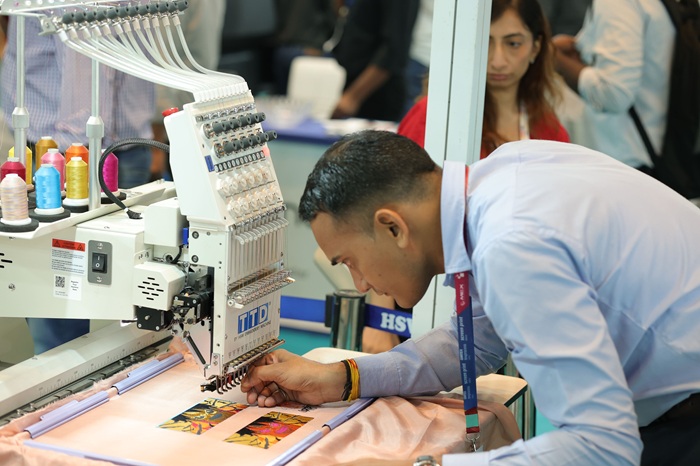
Gartex Texprocess India made a comeback post Covid-19 in Delhi and had a successful event. Through five focused segments and the co-located Screen Print India and Denim Show, the platform brought together 145 exhibitors with over 300 brands and more than 800 products on display.
The combined showcase of textiles and garment machinery, digital and screen printing technologies, and denim innovations and trends, attracted more than 10,000 business visitors. Targeting the future of fashion through advances in garment machinery, innovative fabrics, embroideries and trims, denim collections, as well as screen-printing technologies and its rising applications, the platform brought the textile value chain together through its dedicated product zones of embroidery, fabrics and trims. The specialty areas made product sourcing easy for business visitors.
Insight Print Communications showcased the new high-speed sublimation printer Mimaki TS55-1800 and an entry-level sublimation printer TS100-1600 by Mimaki, a renowned Japanese brand in the textile printing industry. Mehala Machines displayed its latest products in technical textile fabrics for protective wear, performance wear, work wear, and bags. Zydex showcased advances in screen printing by launching an entirely new line of ultrasoft binders that allow expanding the pigment printing space to replace 30 to 40 per cent of reactive type designs resulting in significant savings in energy as well as water.
H&M enters metaverse with new virtual store
Sweden-based fast fashion brand H&M has entered the metaverse space by launching a new virtual store. The metaverse connects artists, athletes and other digital content creators with their fans in a virtual universe. Located in Ceek city, the new virtual H&M store allows customers to roam around and buy clothes. However, these garments can only be bought with the Ceek currency and are available for trial in the digital world only, as per a Lifestyle Asia report. In this world, all the payments will be made through CEEK coin -- a metaverse coin project built on the Ethereum blockchain.
Additionally, one can also buy these clothes from the physical store using Ceek currency. The apparel bought in the metaverse will be worn by digital avatars in the synthetic universe. Customers would soon also have an option to purchase these clothes from physical stores across the globe soon. With this store, H&M became the first metaverse clothing retail store in the metaverse
American Eagle Outfitters acquires Quiet Logistics
US lifestyle and clothing retailer American Eagle Outfitters has acquired Quiet Logistics for $360 million. The move will help the company to strengthen its control over its supply chain. As per an Apparel Resources report, the deal will make Quiet Logistics a wholly owned subsidiary of American Eagle Outfitters. However, the logistics firm will continue to run its business independently.
The acquisition will support American Eagle Outfitters’s continued growth, while also driving economies of scale as it expands its customer base to other brands and retailers seeking advanced logistics capabilities.”
American Eagle Outfitters Inc. operates 901 American Eagle stores, 175 Aerie stores and 2 Todd Snyder stores in the US, Canada, Mexico and Hong Kong. In 2020, the company’s revenues totaled $3.759 billion.
M&S sportswear brand Goodmove launches sports bra
Goodmove’s new collection includes a front-adjusting sports bra. This comes with innovative cup technology and front adjusting velcro straps for maximum support and a custom fit. The brand also stocks women’s padded reflective running jackets and orange anoraks for men. Highlights of the range include squat-proof leggings introduced in new prints.
Goodmove is a sportswear brand of Marks & Spencer that sells 1.6 million items annually and is the market leader for full price women’s activewear. Launched in January 2020, Goodmove expanded into men’s and children’s wear in January 2022.
Goodmove available at all M&S stores, has grown to become its biggest in-house brand. The growth of the brand has come as the wider M&S offer has pivoted towards casual wear and the Goodmove line-up now includes 275 products across women’s wear, men’s wear and children’s wear run by a strong team of experienced designers, buyers, merchandisers, and technologists.
Activewear is a key strategic focus for M&S, with the market now seeing 35 per cent growth over the last two years. M&S is continuing to maximise the strength of its own brand product: consistently focusing on everyday style and value, zeroing in on product categories that matter most to customers and developing unique in-house brands.
Accurate labeling helps brands make garments become more user-friendly

An essential component of clothing, garment labels were first introduced in 1963. Earlier labels were not standardized and contained no information about the garment’s source and fiber content. However, New Age organizations and brands are launching labels incorporating the required data.
Such organizations are offering consumers the required information on garments, says a report by Avery Dennison, a multinational label manufacturer, and the Global Web Index, an audience targeting company. The labels created by them are boosting garments repairs, recycling, resale and rental exchange, adds Jason Mander, Chief Research Officer. These brands are also using ID-level tools to fuel resale especially in the luxury resale market.
New technologies for transparent labeling
Brands can also use new technologies to make garment labels more transparent and traceable. Avery Dennison uses QR technology in its Digital Care Label hangtags. It partnered lifestyle brand UpWest and an apparel and footwear recycling-focused organization, ReCircled, to educate consumers about the end of life of their product. The brand’s products are structured with a view of their end-use to consumers, says Debbie Shakespeare, Senior Director-Sustainability, Compliance and Core Product Management, Avery Dennison.
In May 2021, Avery Dennison had partnered digital care label of science R&D company Ambercycle to educate consumers on new ways to convert end-of-life textile waste into new yarns for apparel brands and manufacturers. The collaboration is expected to not just improve visibility to the supply chain but also provide data relevant for reselling and recycling garments. This will benefit not just the product’s direct consumers but also secondhand buyers and recyclers.
Information on recycling and reuse
Aiming for garment labels standardization since 2013, the European Union launched the most influential consumer-facing reporting system. Known as Product Environmental Footprinting (PEF), the project will help brands determine future purchase choices of EU consumers.
However, provided information will be based on faulty Higg Index, which does not take into account the recycling and reuse benefits of natural fibers, says Harriet Vocking, Chief Brand Officer, Eco Age, which leads ‘Make the Label Count,’ campaign that aims to reform the issuance of PEF certificates by the EU. Hence, brands need to incorporate labels providing complete and accurate information on the garments instead of misleading consumers.
RCEP, CCFTA to boost Cambodia’s growth post pandemic
 Implemented on January 1, 2020, the two trade agreements; Regional Comprehensive Economic Partnership (RCEP) and the Cambodia-China Free Trade Agreement (CCFTA) are expected to boost the country’s economic growth in the post-COVID-19 pandemic era. As a Xinhua net report says, RCEP is a mega trade pact between 10 ASEAN member states and its FTA partners, namely China, Japan, South Korea, Australia and New Zealand. The agreement aims to eliminate around 90 per cent tariffs on goods traded between signatories over the next 20 years. On the other hand, CCFTA will increase the proportion of zero-tariff products in the goods traded between Cambodia and China to more than 90 per cent for both countries.
Together, the two trade deals will boost Cambodia’s exports and attract more foreign investment in the country, says Penn Sovicheat, Undersecretary of State, Ministry of Commerce, Cambodia. They will also offer great access to the Chinese market and encourage Cambodia to explore other RCEP markets.
Accommodating interests of all parties
Covering a region with about 30 per cent of global GDP, RCEP is a high quality, comprehensive and reciprocal mega-regional trading agreement. It accommodates the interests, conditions and priorities of all the involved countries. Cambodia will benefit from the agreements as they will bring in more investments to the country, says Anthony Gill. Country Director, Asian Development Bank (ADB)
Traditionally, known for its garments, travel goods and footwear exports, Cambodia has recently witnessed high growth in agriculture and other high-value products. Both agreements will help Cambodia expand agriculture production, agro-processing for exports, and non-GTF manufacturing. It will also offer opportunities to further promote the tourism sector to FTA partners, i.e. China, Japan, South Korea, Australia and New Zealand, adds Gill
Textile production to become cheaper
As per Enjoy Ho, Deputy Chairman, Garment Manufacturers Association in Cambodia, the two deals would enhance development in Cambodia's textile and garment industry and make production cheaper. They would also attract more Chinese investment in the country, enriching its product structure, adds Ho Kin Phea, Director-General, International Relations Institute at the Royal Academy of Cambodia opines, both RCEP and Cambodia-China FTA will accelerate Cambodia’s trade volume, boost forex reserves and will help rebuild its economy during the post-COVID-19 era.
Robust outlook for the future
Aun Pornmoniroth, Economy and Finance Minister projects, Cambodia's economy will grow 4.8 percent in 2022, while its GDP will increase to $30.5 billion. The kingdom's per capita GDP is forecast to increase to $1,842 in 2022 while the inflation rate is estimated to drop to 2.8 percent in 2022 from 3.4 percent in 2021.
The ADB projects Cambodia’s economy to grow by 5.5 per cent in 2022 thanks to the noticeable progress of the COVID-19 vaccination rollout. Government must continue to strengthen social protection systems and improve healthcare in the country to increase people’s well-being and sustain growth, adds Gill.
Increasing costs and competitors may hamper Vietnam’s textile growth in 2022
 With thousands of employees quitting their jobs, 2021 proved to be an ‘unprecedented’ year for the textile and garment industry in Vietnam, says Cao Huu Hieu, General Director, Vietnam National Textile and Garment Group. Around 94 per cent of the Viet Tein Garment Corporation’s employees quit their jobs during the year. Many other firms had to stop production due worsening COVID-19 situation in the South.
The industry was particularly hit hard during the third quarter, says a VN Express International report. During the quarter, Ho Chi Minh City and Southern provinces witnessed massive disruption due to COVID-19. This compelled businesses to adopt ‘stay at work’ model for employees. The garment and textile industry faced enormous pressures in Q2 and Q3, 2021 as logistics and other costs increased, there were raw material shortages.
The pandemic forced many businesses in the Southern region to either close temporarily or operate at half capacity. This led to a fall in textile exports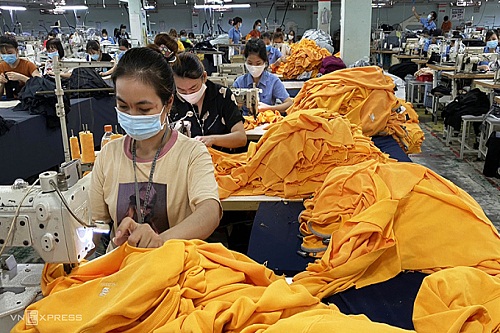 turnover by nearly 16 per cent in September compared to July, and the downward trend continued till the end of year.
Market reopening helps achieve targets
Relaxation of prevention and control measures in October provided some relief as the US, the European Union and Japan markets reopened, allowing Vietnam’s industry an opportunity to grow once more. Around 90 per cent employees returned to work after reopening, says Hieu. Production in the country returned to normal in Q4. This helped the industry meet its target of $39 billion exports during the year.
The US continued to be the largest market for Vietnam’s textile and garment sector with exports worth $16 billion in 2021. Other markets included, the EU with $3.7 billion, up 14 per cent; South Korea $3.6 billion, and China $4.4 billion in exports.
Growth in the midst of pandemic
Despite pressures, few companies in Vietnam experienced impressive growth amidst the pandemic. For example, Vietnam National Textile and Garment Group’s consolidated profits more than doubled in 202. The company succeeded on account of its business restructuring which boosted revenues and profit growth to 50-55 per cent.
Another company that experienced growth during the period was the TNG Investment and Trading Joint Stock Company (Thai Nguyen) Nguyen Van Thoi, Chairman, TNG Joint Stock Company (Thai Nguyen) points out the company remained operational during the pandemic as all factories are concentrated in Thai Nguyen Province. The company also benefited from shifting textile and garment orders to Northern plants.
Experts advise caution
Despite these successes, industry leaders have advised caution as a spike in Omicron cases may again affect business goals. The industry also needs to reduce logistic costs, make empty containers available, resolve congestion issues in sea transportation and other shipping difficulties, changes in major markets. The pandemic is expected to remain complicated and unpredictable in 2022. However, the industry may also experience few growth opportunities, says La Tien Troung, Chairman, Vinatex. In 2022, Vietnam’s garment and textile exports may rise to 43.5 billion, adds VITAS. However, new COVID cases, increased logistic costs and increasing competition from India, China and Bangladesh, could dampen growth.