FW
Levi Strauss to cut 700 jobs
Levi Strauss & Co, which expects its business to be hit in the second half of the year, plans to cut about 700 jobs in non-retail, non-manufacturing segments that would help it save $100 million annually.
Met with temporary closure of its own stores as well as partner outlets, Levi introduced curbside pickup and started fulfilling online orders at its stores as customers turned to online shopping to avoid contact with people. The company reported a 25 per cent increase in its online business in the second quarter ended May 24, with a month-over-month rise of nearly 80 per cent in May.
The company also expects its margins for the rest of the year to be under pressure as it tries to offload excess inventory that remained unsold during the lockdowns.
China to be the largest importer of Cotton Lint in 2019-20: ICAC
Despite a 12 per cent decrease from the previous season attributed to trade tensions with the US and a slowdown in manufacturing during the COVID-19 containment, China is expected to remain the world’s largest importer of cotton lint and import 1.8 million tonne of cotton in 2019-20, according to the International Cotton Advisory Committee (ICAC).
As tariffs on cotton lint increased in 2018-19, making US cotton 25 per cent more costly to Chinese importers compared to other growths, China had also increased the total volume of imports of cotton lint. As China increased its total imports of cotton lint from 1.3 million tonne in 2017-18 to 2.1 million tonne in 2018-19, US cotton exports to China decreased from 528,000 tonne in 2018 to 360,000 tonne in 2019.
Comparing the August through April period for the 2018-19 and 2019-20 seasons, global imports for the nine-month period are estimated at 1.245 million tonne, a 22 per cent decrease from the previous period, the ICAC period said.
For the 2019-20 season, Brazil is expected to export over 1.8 million tonne globally and through April 2020 (where the latest data is available), has exported an estimated 527,000 tonne to China, a 30 per cent increase from the previous period. The United States is expected to export 3 million tonne globally and through April has exported an estimated 277,000 tonne to China, a 29 per cent increase from the previous period. Other countries and regions exporting to China that had seen increases during the 2018-19 season are showing declines in exports to China in the August through April period.
Work from Home fuels demand for essential clothing in India
The Work from Home trend has boosted the sales of PJ’s in India with knitwear exporters receiving advance payments from European buyers to replenish their stocks for the basic clothing
Demand for daily essential clothing is more from Europe, which has opened up for a long time. There is very good export demand for kids wear, night wear and inner wear. The retail stores are running low on stock demand for fast fashion clothing is still sluggish, said Ashok Arul, CMO, SCM garments, an exporter to leading retail stores of Europe and US.
Tirupur in Tamil Nadu, which exported knitted garments worth about Rs 30,000 core the previous fiscal, has started getting good export business. Raja Shanmugam, president, Tirupur Exporters Association (TEA) noted a growing demand for night wear, children wear and inner wear.
Burberry names Adrian Ward-Rees as new ready-to-wear head
Burberry, which is reorganising its creative team, has reappointed Adrian Ward-Rees to lead its ready-to-wear business.
Ward-Rees held the role of senior VP and MD of Dior Homme with Christian Dior for the last four years and previously worked at Hong Kong-headquartered Lane Crawford, along with a merchandising role with Burberry. He takes up the new role as senior VP ready-to-wear on July 20, based in London and reporting to Gobbetti.
Burberry will also set up three new business units – ready-to-wear, accessories and shoes and says it plans to pool expertise within them” to improve its focus on products and improve quality.
Chinese imports threaten local nylon spinning industry
The local nylon spinning industry is facing a severe threat from China. Along with the sharp fall in demand and with powerloom units still to restart, the existence of Surat’s nylon yarn spinning industry is being threatened by yarn imported from China.
The annual imports of nylon yarn in India stand at 25,000 metric tonne, of which 60 per cent of that comes from China alone. If this year too, Chinese nylon yarn of the same quantity comes to India, then the local industry will be severely affected. These imports are severely damaging the existence of nylon yarn spinners in India, said senior vice-president of Century Enka, Sanjay Mehrotra, who is also the secretary of Surat Nylon Yarn Spinners Association (SNYSA).
In the domestic man-made fibre (MMF) basket, nylon yarn has less than 4 per cent manufacturing share, with 90 per cent consisting of the polyester consumed by domestic powerloom weavers. Around 10 per cent of the powerloom weaving units use nylon yarn for manufacturing dupatta, high-value jacquard saris and square net fabric.
According to the industry payers, Chinese exporters are dumping nylon yarn with heavy under-invoicing. The imported nylon yarn is about 10 per cent cheaper compared to the yarn from Surat.
Yarn Expo Autumn to focus on recycled products
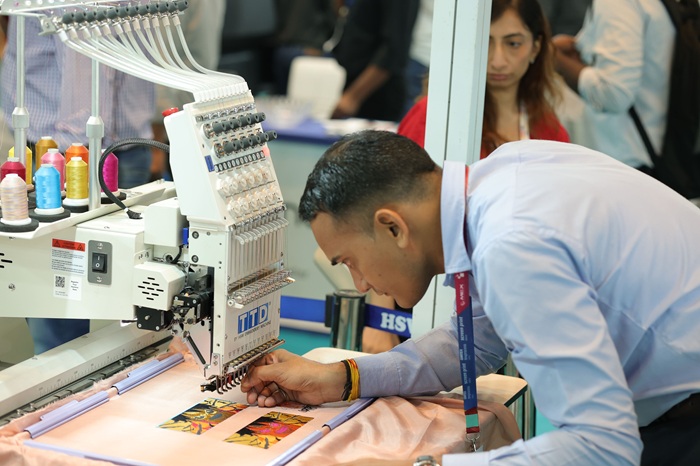
Yarn Expo Autumn, to be held from September 23-25 at National Exhibition and Convention Centre (Shanghai), will offer visitors a chance to view diverse range of raw and recycled products to satisfy consumer demand for a more sustainable industry. International exhibitors to the event will showcase a wide variety of yarns and fibers made from raw, sustainable materials along with recycled and regenerated products.
Cotton Council International (CCI) will offer buyers quality and traceable fibers from the very beginning of the supply chain. The council has just established the US Cotton Trust Protocol, which will be its signature sustainability program from now on. In terms of environmental impact, this system makes sure that every bale of US cotton is traceable, transparent and measurable
International suppliers such as Hengbang Textile (Vietnam) will showcase their regenerated yarn and cotton yarn; Everest Textile (Taiwan), which - specializes in yarn spinning, twisting, weaving, dyeing, finishing, printing, and coating / laminating processes, will display its recycled polyester, bamboo carbon and cooling yarns, among others.
China women’s underwear market to be worth over 197 billion yuan by 2022
According to EU data, retail compound growth rate of China's women's underwear market is expected to be worth 197 billion 300 million yuan by 2022. Meanwhile, data by China Apparel Association estimates the size of China's men's underwear market in 2019 to be around 171 billion 300 million yuan, thanks to the steady growth of downstream consumer demand. The main categories of men's underwear include men's underwear, thermal clothing and household clothing.
There are many participants in China’s apparel industry, whose modes are mainly divided into brand enterprise competition and non brand enterprise competition. Women's underwear market, men's underwear market and children's underwear market, the concentration of brand enterprises is low, and market competition pattern is dispersed. For sports bra market, as the market share of Chinese sportswear brand is highly concentrated, market position of the top five sports brands are relatively stable, which poses a great challenge to the expansion of personal clothing brand to sports bra.
According to EU data, in 2018, concentration of top five brands in China's underwear market was only 6.6 per cent, while market concentration of top five markets in Japan, the US and the UK was 56 per cent, 47 per cent and 22 per cent respectively. By contrast, the market concentration of the top five brands in China's underwear market is much lower than that in Japan, the United States and the United Kingdom, so the Chinese underwear market still has the potential to concentrate its market share on leading brands.
Levi’s agrees to pay for all orders
Giving in to mounting pressure by nonprofit Workers Rights Consortium (WRC), denim brand Levi Strauss & Co has agreed to pay in full for all finished, ready-to-ship orders and in-progress garment production. The company has also agreed to use raw materials already received by suppliers for product orders in later seasons.
Levi’s was previously named by WRC in a list of brands that have not made sufficient commitment to pay for orders, on time and in full. The consortium said that the brand’s decision to delay payments relative to agreed terms placed suppliers’ cash flow and their ability to pay garment worker wages at risk.
Levi’s has also launched a new program in collaboration with the International Finance Corporation (IFC) that allows its suppliers to get early payments at favorable market rates. The brand also supports suppliers in locations not served by the IFC program. In April, the Levi Strauss Foundation granted $1 million funds to address health, food and safety-net needs facing apparel workers in sourcing communities.
Bangladesh leather exporters unhappy with falling exports
Leather goods and footwear exporters in Bangladesh are depressed with a 22 per cent decline in shipments in the just-concluded fiscal year due to the ongoing pandemic. As per Export Promotion Bureau (EPB) stats, leather exporters exported products worth $998 million in fiscal 2019-20, Of the country's total exports, leather footwear earned $779 million while other leather goods accounted for $221 million and rawhide sales $98.31 million. This is owing to the fact that many of the country’s export destinations like US, Italy, Spain, UK and Germany are currently under lockdown.
As the Bangladeshi government has set a revenue target of $5 billion in 2021 through the export of leather goods, the Leather Goods and Footwear Manufacturer & Exporter's Association of Bangladesh (LFMEAB) has urged the EPB to withdraw source tax on export subsidy to help the industry recover amid the coronavirus fallout.
On October 30, 2019, Prime Minister Sheikh Hasina assured that financial incentives for the leather goods industry would continue for at least the next five years to enable the country to achieve its export targets from the sector. However, the sector only enjoys a 15 per cent cash incentive on shipments. Hence, it fails to make it big internationally even though the country has an abundance of rawhide and a skilled workforce.
US consumers unlikely to shop in physical stores for next 3 months: Survey
According to a survey from Nationwide YouGov and SafetyCulture, around 71 per cent of American consumers would not feel comfortable shopping in a physical retail store over the next three months. Around 57 per cent of the nearly 1,200 shoppers surveyed in the US said businesses making a real-time list of cleaning and disinfecting activities completed hourly throughout the day public would increase their trust and confidence in that business.
Additionally, 53 per cent said businesses that publicly display a list of daily safety procedures being undertaken in its public areas, with the completion status publicly shown, would also increase trust and confidence. The US-based research was released as part of the SafetyCulture Safely Back to Business initiative, a program designed to support companies globally at a time when safety has become the world’s top business priority. The company has digitized guidance from governments and other industries into fully customizable checklists. The more than 100,000 checklist templates are currently available online to support businesses in their efforts to protect customers and staff from exposure to COVID-19.