FW

The global textile industry is growing at a CAGR of five per cent. The textile industry encompasses the production and sale of materials such as cotton, yarn, fiber and finished products or apparels. China, Japan, India and United States dominate the global textile industry.
China is the leading textile manufacturing country and is worth about a fourth of the global textile industry with an export value of more than a 100 billion dollars. China’s textile exports went up by three per cent in 2018. The textile industry of the European Union has Germany, Spain, France, Italy and Portugal in the forefront with a value of more than one-fifths of the global textile industry. India is the third largest textile manufacturing industry and holds an export value of more than $30 billion. India is responsible for more than six per cent of the total textile production globally and is valued at approximately $150 billion. India is followed by the United States in the exports of textiles. The United States has now become one of the largest consumers of textiles, being responsible for almost 75 per cent of total textile imports.
The Brexit deal might bring about a lot of uncertainty in the global textile industry.
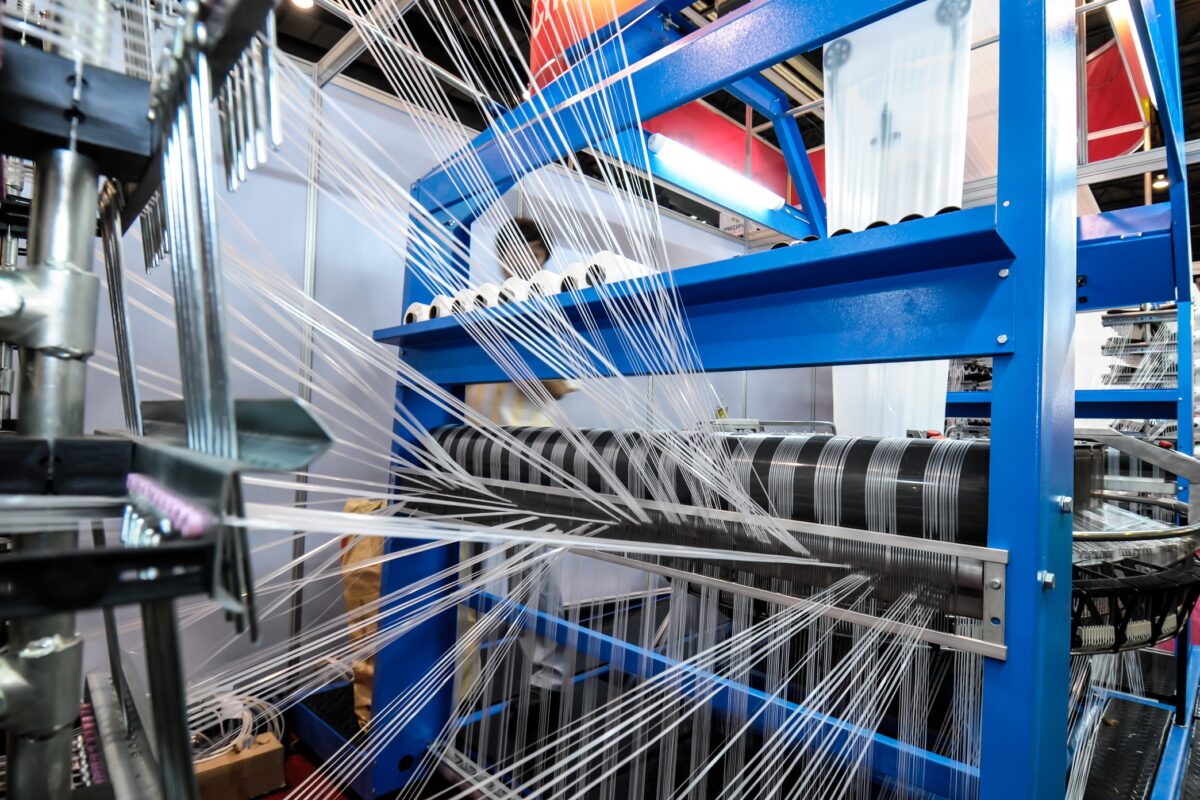
Karl Mayer multibar raschel machines are used with and without a jacquard facility to incorporate conductive yarns directly into the textile during manufacture. Electrically conductive structures with a virtually unlimited range of designs can be produced on multibar raschel machines. This is possible thanks to multibar patterning using Karl Mayer’s innovative string bar system, with which the yarns can be positioned individually and as required onto a ground – following the principles of tailored fiber placement. The ground can be produced with a wide variety of different designs, and jacquard patterns can also be worked, depending on the type of machine.
Besides offering extensive design freedom, warp knitting also delivers maximum efficiency when producing electrically conductive textiles. Moreover, typical performance features of textiles, such as softness, flexibility, elasticity and breathability, are fully retained. Textiles can be used for heating, cooling and lighting. They can measure the heart rate, as well as monitor soil erosion on slopes, and can even be launched into space for use as space reflectors – as long as they are electrically conductive.
At the functional heart of these innovative e-warp-knitted textiles are filaments containing metal. Silver-plated polyamide can be processed very easily on multibar raschel machines.
India’s cotton yarn exports fell 25 per cent from 2013 to 2018. Spinning mills performed well in exports during 2013-14 when cotton yarn was covered under schemes such as the two per cent incremental export incentive, the two per cent interest subvention and the three per cent focus market incentive. The sector could penetrate into markets other than China. However suddenly all incentives were withdrawn leaving spinning mills high and dry.
China which is the largest importer of cotton yarn has shifted from India to Vietnam and Indonesia as they have duty free access while Indian yarn carries a 3.5 per cent import duty. From 2013 to 2017, there has been a decline in India’s cotton yarn exports to China by 48 per cent while exports from Vietnam and Indonesia have increased at a remarkable rate of 129 per cent and 55 per cent respectively in the same period.
Fabric exports from India are at serious disadvantage vis-à-vis exports from competing countries due to duty differentials in leading export markets. Markets like EU, China, Turkey and Vietnam impose an import duty in the range of eight per cent to 12 per cent on Indian fabric while duty free access is given to countries such as Pakistan, Cambodia and Bangladesh.
The European Commission has activated the process of withdrawal of tariff benefits for Cambodia, the country that made the most progress in the implementation of collective bargaining in textiles. The garment industry would be one of the most affected by this measure, since exterior sales in the sector account for 75 per cent of the total. Cambodia is one of the main countries that benefit from the Everything but Arms (EBA) program, which allows least developed countries in the world to export to the European Union with zero tariff.
However, commercial preferences may be temporarily removed if violations of human and labour rights are determined. The European Executive considered the general elections last summer in the country were not fair. Even before the elections, the European Commission had already warned the Asian country about the worsening situation.
The European government activated the process after current political party in Cambodia illegalised the one in the opposition just before the voting. Finally, in October, the European Commission implemented the process. Since then, Cambodia’s Prime Minister, Hun Sen, has kept standing firm in his politics.
Japanese sportswear company Asics, is collaborating with the Charity I:Collect on a sports apparel recycling and reuse initiative in Europe. The initiative will be launched at the Barcelona Marathon on March 10 where the two companies will work together in order to collect used sports apparels and footwear for reuse or recycling.
The program will enable the recycling and reuse of Asics products at eight marathons happening across Europe, the Middle East and Asia. A product-driven company, Asics is shifting to more sustainable materials and engaging its customers and consumers on the journey to a circular business model is at the heart of its sustainability strategy. While working on its global program to reduce greenhouse gas emissions, Asics has identified that more than 80 per cent of CO2 emissions originate from the processes and materials that are being used to create footwear and apparel and end of life treatment of sold products.
Asics aims at collecting more than 30,000 pieces of sports apparels from consumers in Japan. The collected pieces will be further recycled by the year 2020. The aim is to cut greenhouse gas emissions by 55 per cent across the globe by the year 2030.
"With environmental consciousness penetrating societies around the world along with an acute cultural shift towards athleticism and wellness, manufacturers are increasingly focusing on producing knitted shoes. Footwear brands Nike and Adidas launched a line of virtually seamless, knitted shoe uppers in 2012. The seamless designs of these shoes provide an almost “second-skin” feel besides eliminating waste by almost 60 per cent as in the case of the Nike FlyKnit – while simultaneously reducing labor hours and environmental impact, improving inventory management, accelerating to market time, and allowing for ultimate customisation."
 With environmental consciousness penetrating societies around the world along with an acute cultural shift towards athleticism and wellness, manufacturers are increasingly focusing on producing knitted shoes. Footwear brands Nike and Adidas launched a line of virtually seamless, knitted shoe uppers in 2012. The seamless designs of these shoes provide an almost “second-skin” feel besides eliminating waste by almost 60 per cent as in the case of the Nike FlyKnit – while simultaneously reducing labor hours and environmental impact, improving inventory management, accelerating to market time, and allowing for ultimate customisation.
However, there are distinct limitations to the current seamless knitting technology. The process is markedly less labor intensive than the traditional cut-and-sew methods. Also, it is not yet fully automated. Shoe upper manufacturers are therefore opting for 3D knitting, which eliminates human labor from the production process and breaks through the seamless knitted shoe bottleneck.
Automating shoe manufacturing
3D seamless knitting technology enables flat knitting machines to produce a complete shoe upper, ready to be directly connected to the sole, with a single machine. This leap in knitting technology presents an exciting possibility of completely eliminating labor-dependent cutting, sewing and heat-setting from the shoe production process – and fully automating shoe upper manufacturing.
Raw materials also represent a considerable expense in the shoe manufacturing process, which is only aggravated by extreme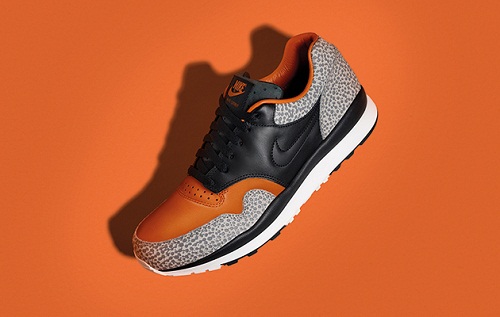 fabric waste. By using 3D knitting solutions, each upper can be completed individually and requires no cutting or sewing post-production, resulting in a completely seamless shoe upper — and reducing waste by as much as 60 per cent, in the case of the Nike FlyKnit.
Replacing leather with textiles also has a positive impact on the environment. Leather shoes are responsible for an estimated 30-80 per cent of global impacts on all metrics, including climate change, resource use and freshwater withdrawal. This is in stark contrast to textile shoes, which only represent 6-21 per cent of total impact in the same categories.
Reduced delivery times
If the lifecycle of modern trends has been compressed to just 3.5 years, the concept-to-market process will need to be adjusted accordingly. The Adidas Speed factory is one attempt to close this gap. By bringing production closer to consumers, Adidas has managed to accelerate to market time by a factor of 3. In the future, Adidas hopes their Speedfactory will be able to complement their original production lines by quickly producing limited runs of customized products, or replenishing certain products that are selling more quickly than expected. 3D knitting opens the possibility of streamlining concept-to-market time by implementing a realistic local production solution.
3D knitting offers a solution to inventory problems. Rather than estimate consumer demand months ahead of time – and risk losses due to unsold inventory – 3D knitting opens the possibility to manufacture locally according to real-time demand. While this particular solution is still in its infancy, there is plenty of potential for 3D knitting to begin developing in this direction. With 3D knitting solution, customers can order customised shoes and have them delivered within a few days, cutting down manufacturing and distribution time from several months to just a few days.
A long way to go to be fully adopted
For a 3D knitting solution to truly become practical, it needs to be able to knit a double-sided upper while maintaining the versatility and flexibility of shoe uppers. The seamless shoe uppers are manufactured using a slightly improved sock machine, producing an end product that is much too thin, ‘tongue-less’, and rather limited in terms of design possibilities. As such, current technologies still require a certain amount of processing post-production. There is still a lot of room for improvement, but it’s certainly an exciting industry to watch.
The global women’s wear market is expected to register robust growth by 2020 as fashion is one of the important aspects of women’s wear. There are various channels available where women’s wear can be purchased. These channels include department stores, boutiques, retailers, specialty stores and online. Global women’s wear market can be bifurcated into five categories: clothing, footwear, sportswear, accessories and others.
Europe represents the largest market, closely followed by North America. Asia Pacific is expected to be the fastest growing market for women’s wear. Increasing promotional activity, rising disposable income, increasing consumer confidence and increasing shoppers eagerness to keep up with the latest fashion trends are some of the major driving force for women’s wear market. With the lower effect of economic recession, employment rate and disposable income levels are rising, which allows the consumer to spend more on apparels.
Some major companies operating in the women’s wear market include GAP Inc., H&M, The TJX Companies, Inc, Marks & Spencer Group plc, Benetton Group, Pacific Brands, Etam Development, Fast Retailing Co, Esprit Holdings, Aoyama Trading Co, Mexx Group, Arcadia Group, Next plc and Nordstrom, Inc.
US retail sales fell in December. This is the worst drop in nine years. The value of overall sales fell 1.2 per cent from the prior month. Excluding automobiles and gasoline, retail sales slumped 1.4 per cent. The steep drop however is at odds with figures showing a healthy job market and steady wage gains. The slump also may prove temporary as stocks have regained ground following December’s plunge.
All but two of 13 major retail categories showed a decline, with non-store retailers — which includes online stores — falling 3.9 per cent, the most since November 2008. The broad-based weakening reflected lower sales from clothing stores and gasoline stations. Auto dealers and building materials stores were the only sectors to record increases.
Receipts at health and personal care stores fell two per cent, the most since October 2016. Sales at sporting goods, hobby, musical instrument and book stores tumbled 4.9 per cent, the biggest drop since September 2008.
The prolonged trade dispute between the United States and China is affecting the US cotton market. With the cost of inputs rising, excess supply compared to demand, US cotton farmers are starting to think about alternate strategies. A solution to the dispute is in the interest of agribusiness, particularly cotton, as China is a major importer of US cotton.
With the expectation that there will be increased cotton acreage in the United States in 2019, the supply-demand situation is going to play a pivotal role in the cotton sector this year. The trade issue with China primarily centers around intellectual property rights that has been going on for over two decades, and therefore finding a resolution is complicated.
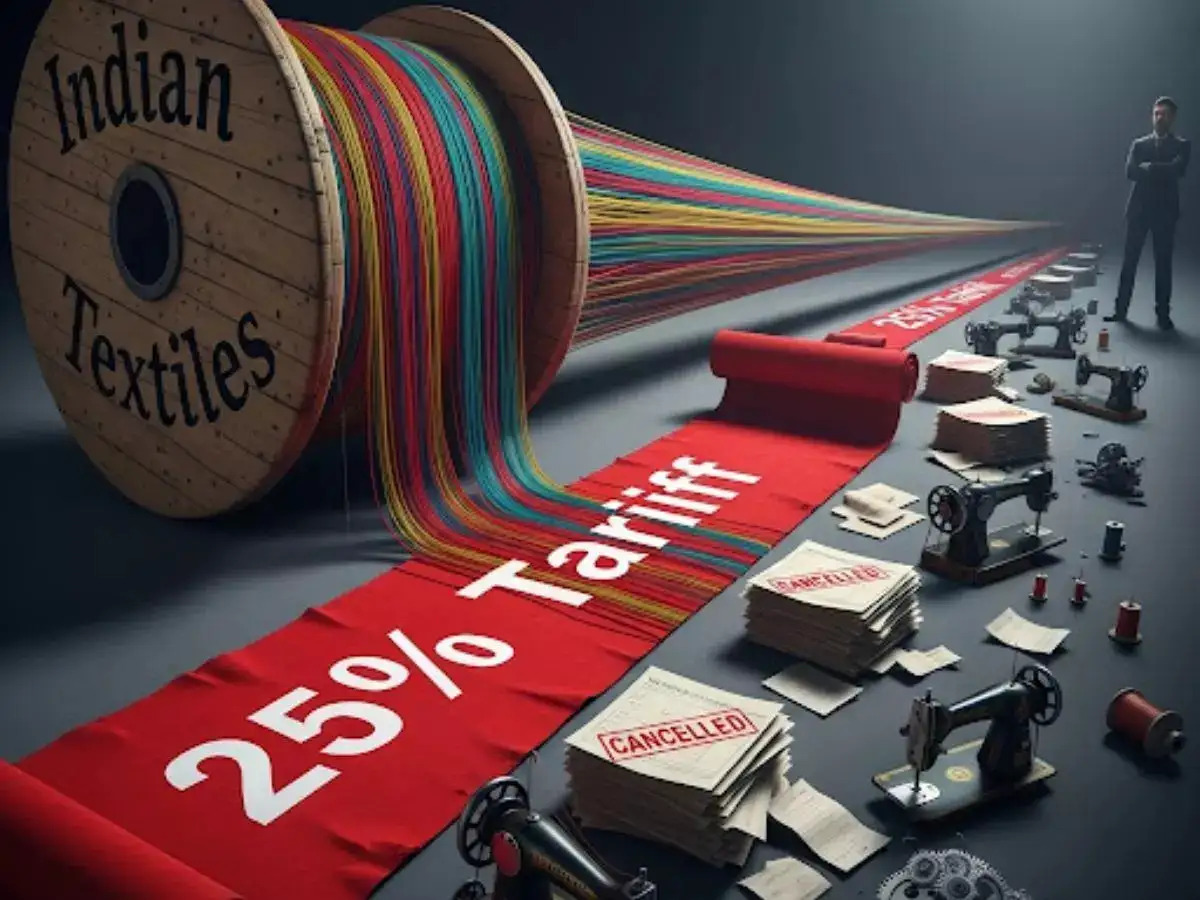
If the ongoing trade war is not resolved soon, mills in China could move away from US cotton permanently and toward Brazilian or West African cotton. The US cotton industry enjoyed a 46 per cent share of all imports going into China. But that changed when China issued a 25 per cent tariff on US cotton in retaliation for tariffs placed on Chinese goods by the US.
However, China is still seen as a key market for US cotton and the US will promote the benefits of its cotton. Chinese mills like US cotton for its quality, its consistency and its low contamination.
The minister for textiles, Smriti Irani, announced a new project with the National Institute of Fashion Technology (NIFT) in Chennai to create India-specific fashion trend forecasting. The project will use Artificial Intelligence and Machine Learning techniques to forecast fashion trends specifically for the Indian fashion market. While before international agencies would dominate the market and merely adapt their Western trend forecasts for the Indian market, this project aims to start with India to forecast more accurately.
The project also aims to account for the diversity in trends within India itself. NIFT students will work with local artisans to understand trends as well as with technology. The project is an attempt to consolidate indigenous data.