FW

Lenzing introduced Tencel branded lyocell and modal fibres with microtechnology for enhanced comfort at the Première Vision show in Paris. Lenzing is an expert in producing and marketing of microfibers for the textiles industry and gives this specialty fibre category a new boost. Lenzing’s fibre portfolio boasts of a wide range of fine fibres for the textiles and fashion industry. Light and smooth fabrics can be designed with these fibres which are a major contributor towards the comfort of the clothing and the wearer’s well-being.
Tencel Lyocell and Modal fibres are produced in titers of 1.00 – 0.80 dtex using Micro technology and processed to lightweight fabrics. A clothing of Tencel Lyocell or Modal fibres, produced with Micro technology, is light on the skin and has a flowing drape. It is defined by feel-good properties like silkiness, softness and long-lasting suppleness, the company reports. Furthermore, Tencel Lyocell and Modal fibres with Micro technology are naturally smooth and supple as tests confirm, according to the manufacturer.
Trident, the flagship company of the Trident Group, one of the largest vertically integrated home textile manufacturer, has been granted a patent for 'Air Rich Yarn and Fabric and its method of manufacturing' by United States Patent & Trademark Office.
The present invention describes the novel ‘Air Rich Fabric’ and ‘Air Rich Yarns’ with pores throughout the cross section of the yarn. The invention is directed at producing air rich fabrics and yarns which have high breathability, quick absorbency, easy dryability, and increased bulk. Unlike regular terry fabrics which become harsh after multiple washes, air rich fabrics (Terry) retains softness and become more bulky even after multiple washes. That is why we call such fabrics- ‘Start Soft, Stays Soft.’
Silver Crest will set up a readymade garment manufacturing unit in Andhra Pradesh. The factory will have a capacity of 20.4 million units a year and employ some 2500 people. Established in 1995, Silver Crest is a major manufacturer of fine tailored clothing in South Asia and a manufacturer of high quality suits for an array of leading brands across the US, with a growing presence in France and the UK.
The firm has a capacity to make over four million garments a year across four facilities in Bangalore and currently employs 7700 people. The firm has captured a significant share of tailored clothing and caters to many international clients.
Textiles are a priority sector for Andhra Pradesh and the state envisages increasing productivity and efficiency in the cotton-to-garment value chain. The new textile policy is industry-friendly and aims at attracting investments worth Rs 15,000 crores and creating 2.5 lakh jobs. The state aims at increasing productivity and efficiency by attracting integrated textile units.
The new policy aims to make the state a seed capital by setting up of seed industries. A seed park will be set up. The hope is to attract Rs 3000 crores in investments and create 40,000 jobs by 2023 through this park.
Bangladesh has begun preferential trade talks with Indonesia to increase export of apparel, leather and other items to the South Asian country. There is huge potential of Bangladesh’s apparel items, leather and leather goods, and medicine in Indonesian market. The country plans to sign a preferential trade agreement (PTA) with Indonesia.
Compared to other export destinations, Bangladesh’s prized export product apparel, that occupies 83 per cent of its export basket, performs poorly in Indonesia. However, the rise seen so far during July-December is very encouraging.
According to Export Promotion Bureau, during fiscal 2017-18, Bangladesh exported goods worth $4.25 million to Indonesia. Apparel exports accounted for nearly half of the total export receipt fetching $1.8 million. During the first half of the fiscal, total exports to Indonesia has crossed $28.7 million. Half of the total exports to Indonesia –$14.2 million – was from the apparel sector with $8 million in knitwear and $6.2 million in woven. Among other major export items to Indonesia are vegetable textile fibres, paper yarn and woven fabrics of paper yarn, home textiles and jute-related products.
Puma's sales increased by 20.1 per cent currency adjusted to € 1,226.4 million, compared to € 1,040.2 million in the previous year. Sales growth was particularly strong in the Asia/Pacific region followed by the Americas, both increasing at double-digit rates. Both apparel and footwear showed strong growth in the fourth quarter of 2018, improving 28.6 per cent and 17.4 per cent respectively. For footwear, it was the 18th consecutive quarter of sales growth.
The gross profit margin in Q4 remained stable at a high 47.1 per cent, despite negative currency impacts in the quarter. Operating expenses (OPEX) increased by 17.1 per cent to € 544.9 million in the fourth quarter, caused by higher sales-related, variable costs and a step-up in retail investments, including e-commerce. Football sponsorships, marketing initiatives for new footwear franchises and the launch of the basketball category led to higher marketing costs. The operating result (EBIT) improved by 26.1 per cent from € 29.8 million to € 37.6 million in the fourth quarter 2018. The improvement in profitability was due to the strong sales growth combined with an OPEX increase at a slightly lower rate than sales.
Net earnings in the fourth quarter 2018 improved significantly from € 2.2 million last year to € 15.7 million and earnings per share increased correspondingly from € 0.14 last year to € 1.05.
Link will be an integral part of MarediModa, Cannes, November 5 to 7, 2019. Link is a competition that runs during MarediModa. It is a search for creatives from all over Europe. It involves over 100 European schools of creativity, in order to intercept the most talented students of style and design and put them in direct contact with fashion brands.
Nine finalists (three for each of the categories of beachwear, underwear and athleisure) will exhibit their mini collections, an exceptional visibility and a fashion show after the vote of the public and the technical jury. Thanks to Link many young people have been given the possibility to design their own collection or work in style departments of leading international fashion brands. Starting from last year, Link has opened up to the world of athleisure in addition to the beachwear and underwear categories, resulting in an extraordinary crossover of these three segments.
MarediModa, which takes place every year in Cannes since 2002, is an important event for the premiere presentation of the collections of fabrics and accessories for the sea, underwear and athleisure sectors. It boasts an international presence of exhibitors and visitors that continues to grow year after year.
London Fashion Week, to be held from February 15-19, 2019 will showcase over 100 businesses leading in creativity and innovation with visitors from 49 countries. This season the British Fashion Council is focusing on sustainable practices and their Positive Fashion initiative through a partnership with BBC Earth and designer Amy Powney of Mother of Pearl. The collaboration will explore the impact fashion industry has on the planet while highlighting the positive tangible opportunity for sustainable fashion choices by businesses and mindful consumer behavior.
On February 19, the Queen Elizabeth II Award for British Design will be presented to Bethany Williams by the Duchess of Cornwall. The award recognises creativity in design while embedding sustainability and community practices within the business.
This is the second London Fashion Week with catwalks and designer showrooms that are fur free. The BFC survey around use of fur continues to reflect what is seen as a cultural change with more designer businesses and international brands choosing not to show fur as part of their collections and increasingly more moving to being completely fur free businesses.
The Indonesian textile and textile products industry is targeted to enter the ranks of the world's top five by 2030, where the industry is being prioritised for implementing the fourth industrial revolution. This sector continues to rise, especially through its export achievements. The government has given full support to domestic producers especially in the sarong industry.
The Ministry of Industry will develop the potential of sarongs as a new lifestyle for the people of Indonesia. In March 2019 a sarong festival will be held. The Minister of Industry believes the domestic textile industry is capable of being competitive globally because it has high competitiveness. This is encouraged because the industrial structure has been integrated from upstream to downstream and its products are also known to have good quality in the international market.
Several strategic steps have been prepared so that the textile industry can enter the digital era. For example, for the next 3-5 years, the Ministry of Industry will focus on boosting the ability in upstream sector to increase synthetic fiber production. Efforts are being made, among others, to collaborate or attract investment in fiber-producing companies. It will also encourage the use of digital technologies such as 3D printing, automation, and internet of things. This transformation is believed to optimize efficiency and productivity.
As per Lingerie Market: Global Industry Analysis, size, sales and forecast by 2024, the global lingerie market is experiencing moderate growth in the apparel segment as nowadays individuals are more inclined towards branded items, most of which are usually priced on the higher end. People from all backgrounds and income group want to avail a comfortable and lasting inner wear that can be fashionable as well as skin-friendly.
There are many local brands or companies that manufacture cheap quality products to cater to the wide population in the under developed or developing countries. Mergers and acquisitions are a strategic way of entering the market and understanding the current needs and preferences of the population. Through this, the large companies will benefit in capturing the market and at the same time, will enable the small companies to fight for a better position in the market.
The Indian textile sector will start trend forecasting soon.
This will help determine what will be in vogue in the near future, as India gears up to influence global fashion trends.
Schemes will be firmed up for the apparel and made-ups sectors which are WTO-compliant. This will be an added incentive for exporters and allow them to compete with the EU and other countries.
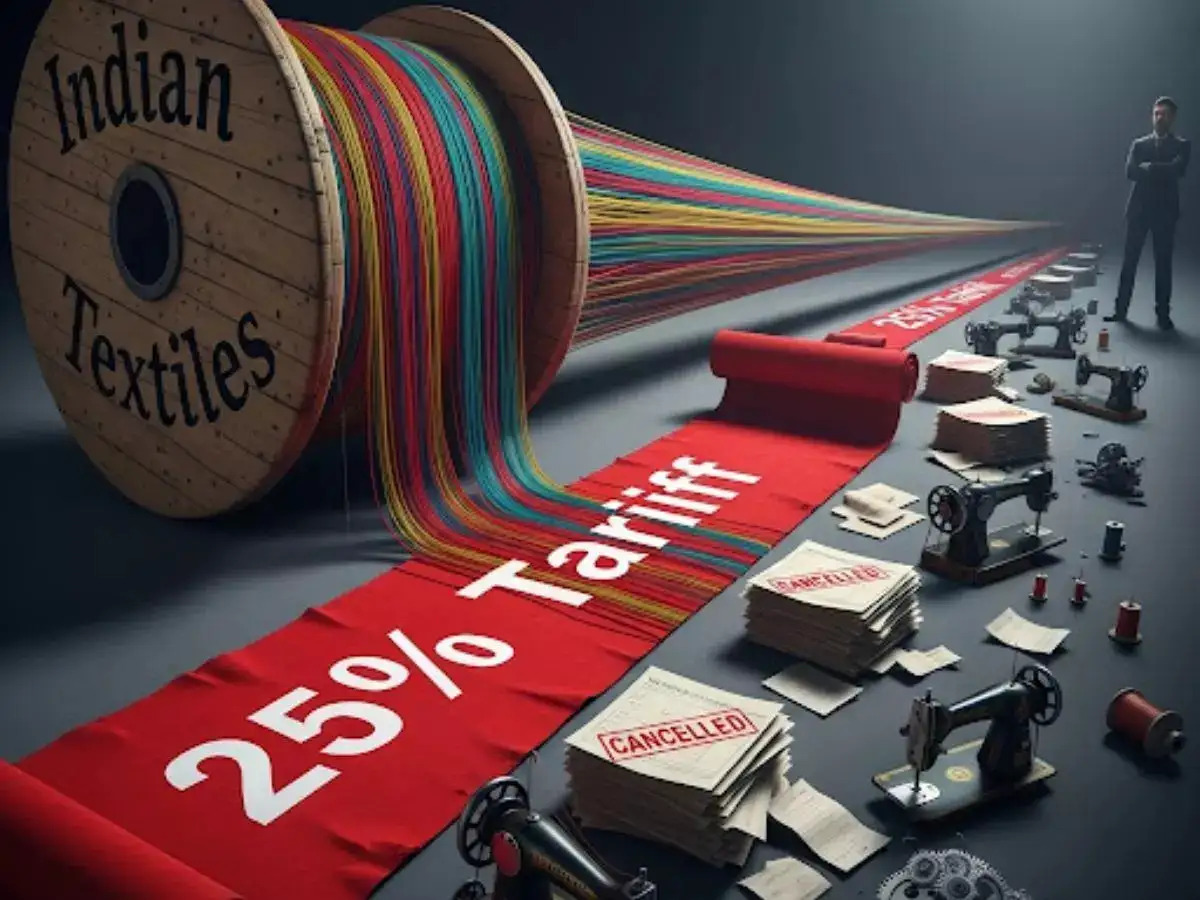
India is unable to compete in apparel exports with countries like Bangladesh and Vietnam, which enjoy zero duty access. More incentives are in the pipeline for the apparel sector under the Merchandise Exports from India Scheme.
An innovation and incubation center is also being set up which will incubate startups in the sector and handhold them to move forward. A repository of various indigenous crafts will be prepared. Joint ventures with other countries are being planned on technical textiles and specialty fibers. An India-specific apparel sizing is being undertaken.
The Remission of State Levies Scheme is being reexamined. A hike in rebates is likely. Embedded duties will be refunded fully.
India’s share in world trade in textile and clothing is estimated to be 4.95 per cent. With these exports, India is ranked second among suppliers in the world.