FW

The European Union’s move to revoke Cambodia’s duty-free access could force major clothing brands out of the manufacturing hub and worsen conditions for workers. Cambodia has six months to convince its biggest export market that it has arrested a backslide on human rights and democracy. If it fails, the EU will strike it from the Everything But Arms (EBA) trade scheme, which could trigger a chain of events that advocates fear will rob them of their strongest leverage point in the fight for improved working conditions.
About 700,000 people - mostly women - work in Cambodia’s garment industry, which accounts for the lion’s share of the country’s $5.8 billion worth of exports to the EU each year. The industry is beset by forced overtime, unsafe working conditions and the obstruction of unionisation. But in recent years, worker’s plight has been pushed into the spotlight, with advocacy groups running campaigns that have forced brands to clean up supply chains in a race to retain their share of an increasingly aware consumer market.
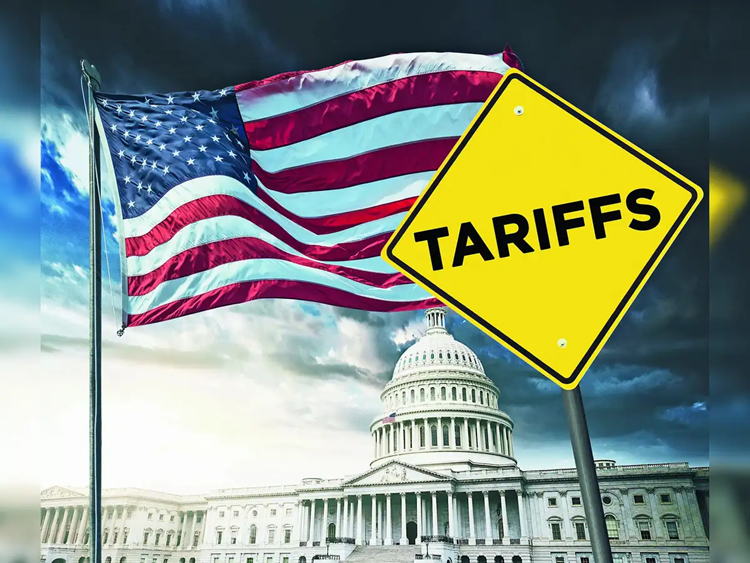
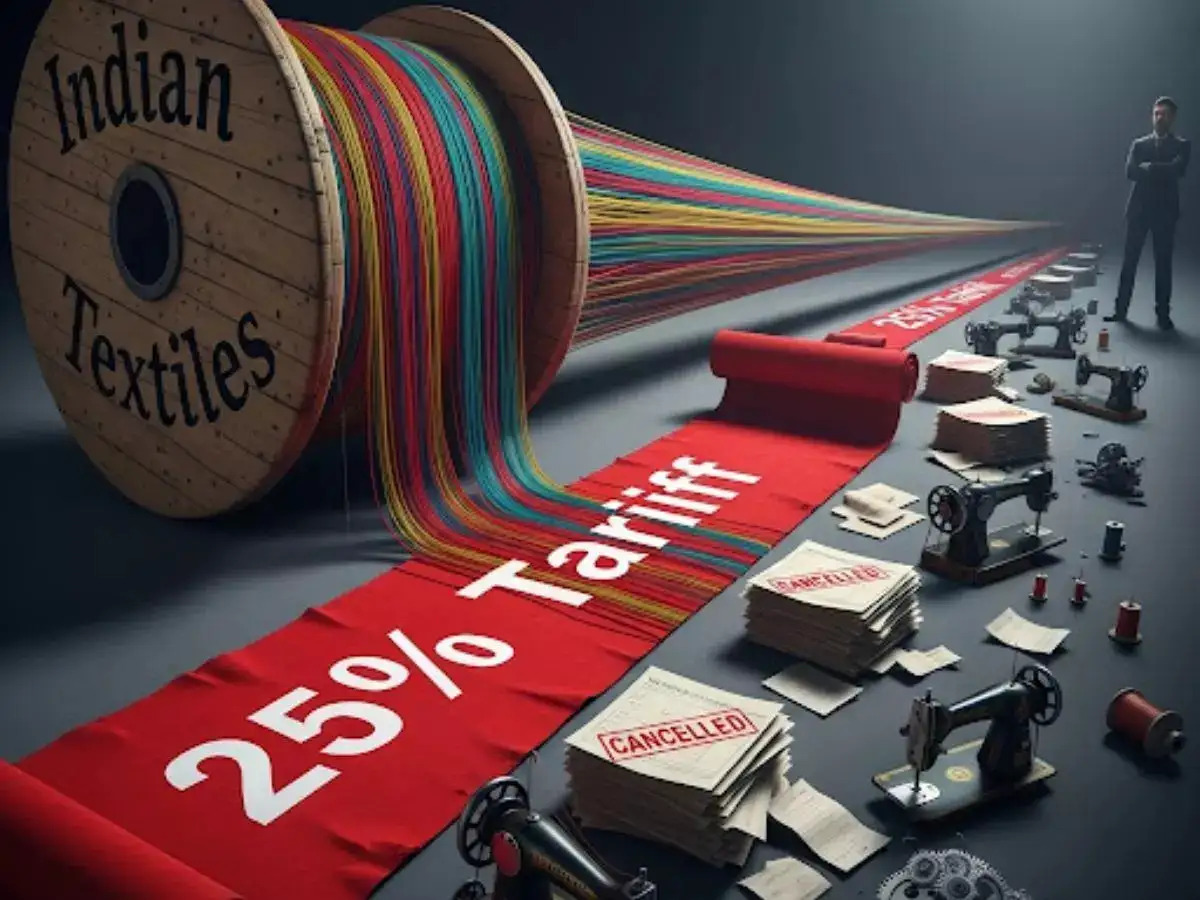
Indian exports will benefit tremendously if the tariffs proposed by the US on Chinese imports come into effect. US-China bilateral trade will decline and be replaced by trade originating in other countries.
Chemicals and plastics from India will be the top sector benefiting from Chinese tariffs on the US, while on the US side it will be communications and office equipment. India’s exports of machinery are expected to go up by $2.4 billion because of US tariffs, and only $714 million because of China's tariffs.
Motor vehicles and transport equipment may benefit $442 billion from US tariffs and only $22 million from China's. In various other areas, India’s exports are likely to go up $1.9 billion from US tariffs and $222 million because of China's. However, while some countries will see a surge in exports, negative global effects are likely to dominate because of the unavoidable impact that trade disputes will have on the still fragile global economy. The economic downturn will have an important effect on developing countries.
Last year, as the US announced a series of tariffs on imports totaling $250 billion from China, the latter retaliated with tariffs on imports worth $110 billion from the US.
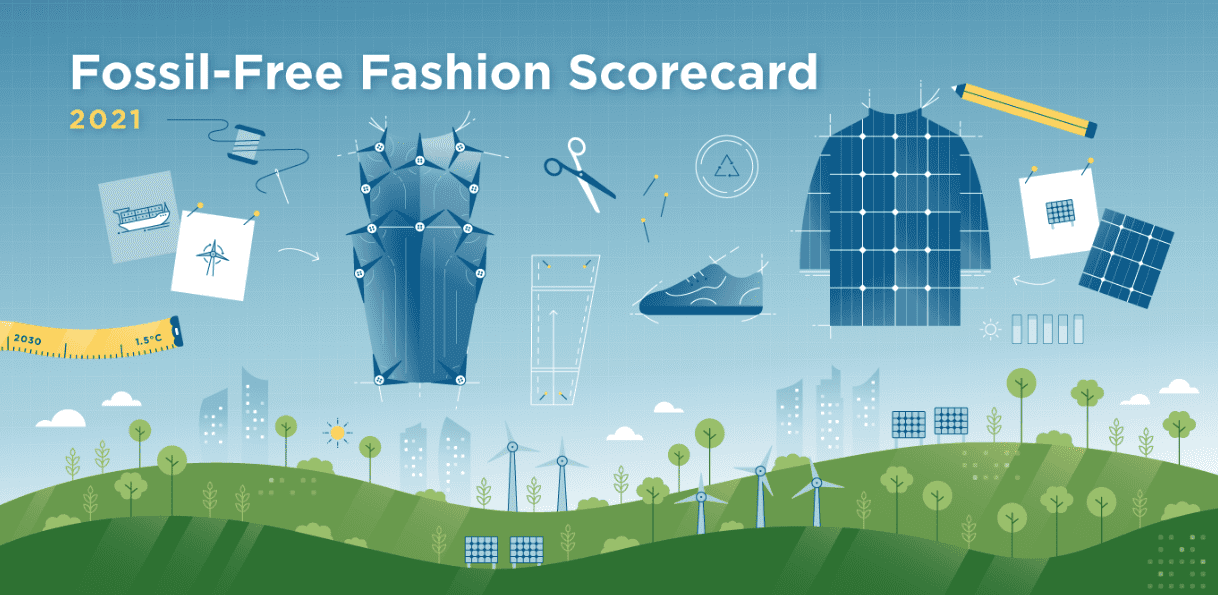
The COP 24 Climate Conference in Katowice marked a major step forward in the fashion segment as over 40 top fashion brands, including Burberry, Gap and H&M committed to the Fashion Industry Charter, setting the commitments to reduce the industry’s negative impact on the environment. The signatories pledged to cut greenhouse gas emissions by 30 per cent by 2030 and achieve net zero emissions by 2050. The measures include phasing out coal-fired boilers or other sources of coal-fired heat.
The signatories of the Fashion Industry Charter will develop more detailed principles and action plans in early 2019. Greener alternatives include natural (e.g. indigo), low-impact dyes and unbleached fabrics. The certificates issued by the charter give a clue as to how the cloth was produced: for example, “Fair Trade” means that garment workers get a living wage. “Ecolabel” shows that there was minimum environmental impact during production. Some companies communicate their sustainability efforts on clothing tags.
Following a proposal by the BGMEA, the Bangladesh government is planning to form a sectoral confederation to resolve the issues of the ready-made garment (RMG) workers. The government has formed 29 committees in the labor-intensive areas to look into the complaints lodged by workers. However, trade unions claimed that more than 11,000 workers of 99 units were terminated from their jobs soon after the recent unrest in the RMG sector on the issue of salary discrimination in the new wage structure. The government will gradually solve the RMG sector workers' problems after discussions with the owners.
Bangladesh wants Accord to leave by a fixed date regardless of whether there is a competent safety authority to replace it. Accord was a response to the Rana Plaza building collapse in 2013 that claimed more than 1000 lives.
With no transparency and no verifiable assurance that the unprecedented level factory safety achieved by Accord will be maintained, global brands sourcing from Bangladesh cannot take the risk of a return to conditions that led to the collapse of Rana Plaza in 2013.
Accord had appealed against a court order to leave Bangladesh by a specified date. An appellate court granted Accord a number of extensions, during which time Accord developed a handover plan. The plan is based on transferring responsibility for inspection and remediation of Accord factories in stages, based on a demonstrated capacity of the responsible body, RCC, to take over these functions.
However, both the ILO and the European Commission have repeatedly stated that the RCC is far from being ready to take over the Accord functions. Accord, a platform of more than 200 global apparel brands, retailers and rights groups based mostly in Europe, was formed immediately after the Rana Plaza building collapse to improve workplace safety in the country’s apparel industry.
Milano Unica was held in Italy from February 5 to 7, 2019. This is a textile and accessories trade show. Although the overall number of companies was essentially equal to that of February 2018, there was a significant increase in participation by companies from Japan, Korea, Great Britain, Poland, Rumania and Spain, with the USA and Germany holding steady.
The essentially steady number of exhibitors compared to the February 2018 edition was matched by a corresponding presence of visitors from sector companies, both Italian and foreign, numbering about 6,000. There were fewer Chinese companies, as the dates coincided with their New Year celebrations, but that was mostly made up by Korean and Japanese companies in attendance and a good showing on the part of European operators.
The richness of the textile and accessories collections was matched by the encouraging presence of Italian and foreign buyers. Milano Unica launched an online marketplace, which will be fully operative for the July 2019 edition. The initiative is intended to promote the textile-apparel fashion sector by extending traditional trade show activities to the digital world, including marketing, contents and promotions, making it possible for companies and their clients to stay up to date year round.
Despite a move to downtown Las Vegas, Liberty Fairs did not see a decline in the number of vendors exhibiting at its recent show, held from February 5 to 7, 2019 at the World Market Center. But, there was a slight decline in buyer attendance from a year ago. Retailers including Neiman Marcus, Nordstrom, Urban Outfittersand Ron Robinson shopped at Liberty. Los Angeles denim brand AG Jeans made its Liberty debut in a temporary space.
Despite being located off the Las Vegas Strip, this Liberty felt like other trade shows. Some vendors raved about their show’s business. Others said that there was room for improvement. But a move did create some confusion as retailers were seen looking for Liberty at the Sands Expo and Convention Center, where it is normally held and will return to for future Las Vegas shows. Retailers like Johnny Alper and Gila Leibovitch of The Vault Group of stores in Laguna Beach, Calif., wasted a lot of time in transit going from show to show.
Access to the trade show was easier because buyers didn’t have to walk through a crowded casino to reach the event. It was easier to set up booths at the temporary venue because vendors set up their own booths instead of workers employed by the Strip’s convention halls.
Project Womens held on February 5 and 7 at the Mandalay Bay Convention Center, Las Vegas saw registration increase by 2 percent over last year.
Yoga Jeans, which makes sustainable premium-denim jeans that wholesale from $50 to $72, received a lot of attention at the event. The brand is now expanding into the United States. California–based dress brand Sheer also registered positive results at the show with buyers from South Africa, Canada, Australia, the United Kingdom and boutiques in the United States stopping by the booth.
First-time Project Womens exhibitor Candice Cuoco showcased her Fall/Winter 2019 collection in the show’s Oasis section. Preparing to enter the wholesale market with pieces ranging from $38 to $500, the Los Angeles designer had appointments with Nordstrom, Neiman Marcus and Saks Fifth Avenue.
"As per Export Promotion Bureau (EPB) data, in the July-December period of the current FY2018-19, Bangladesh’s apparel shipments to new export destinations like Australia, Brazil, Chile, China, India, Japan, Korea, Mexico, Russia, South Africa and Turkey posted a robust growth of 36.21 per cent in the first half of the current fiscal year, riding mainly on enhanced cash incentive and initiatives of exporters to diversify their markets."
 As per Export Promotion Bureau (EPB) data, in the July-December period of the current FY2018-19, Bangladesh’s apparel shipments to new export destinations like Australia, Brazil, Chile, China, India, Japan, Korea, Mexico, Russia, South Africa and Turkey posted a robust growth of 36.21 per cent in the first half of the current fiscal year, riding mainly on enhanced cash incentive and initiatives of exporters to diversify their markets.
For the first half of FY2018-19, apparel exports to Japan stood at $547 million, the highest in non-traditional export destination category, up by 50.62 per cent from $363.31 million in the same period of FY2017-18. Apparel exports to Australia were the second-highest with a growth of 18.46% to $360 million in FY2018-19 from $304.24 million in FY2017-18.India was the third largest market for apparel products from Bangladesh during the period, fetching $270 million, up by 143.30% compared to $111.33 million in the same period of FY2017-18.
Trade experts and industry stakeholders cited policy support measures from the government and increased cash incentives against export to non-traditional markets as the main drivers for the sharp rise in export earnings from new export destinations.
As Mohammad Hatem, Managing Director, MB Knit Fashion revealed apparel exporters now enjoy 4 per cent cash incentives against export to non-traditional markets, which encourages them to explore new destinations for their products. Additionally, these incentives allow apparel makers to practice competitive pricing in the global market. Bangladesh’s government raised cash incentives against export to non-traditional markets to 4 per cent this fiscal year from 3 per cent in FY2017-18, with an aim to boost exports to new markets.
Exhibitions help brands establish contacts
Shahidullah Azim, Former Vice President of the Bangladesh Garment Manufacturers and Exporters Association (BGMEA) points out manufacturers are now participating in several expos to establish contacts with buyers from non-traditional markets. This is impacting the growth export earnings from new export destinations. In the next few months, export earnings from non-traditional markets are likely to rise as China and India are importing clothing products for local consumption and global retailers are opening new outlets in India.
Forming associations for bilateral agreements
The improvement in safety standards in Bangladesh’s ready-made garment (RMG) factories, and buyers’ relocating their sourcing destinations has also caused export earnings to increase. To retain this growth momentum, Bangladesh has to identify buyers’ priorities and design a strategy to develop its product basket to cater to buyers requirements.
Exporters Association of Bangladesh (EAB) believes exports to new destinations to be a reflection of buyers’ confidence, which has been boosted by improved safety standards in the industry. The association urged the government to work for more bilateral negotiations and trade agreements to avail duty-free access to markets with high tariffs.
Knitwear leads, policy measures and cash incentives drive growth of EU
Likewise, the European Union also indicates that earnings from apparel products from non-traditional countries reached $2.90 billion, up from $2.12 billion in the previous fiscal year (FY2017-18). Of the total amount, knitwear products earned $1.44 billion, which was 29.52 per cent higher than $1.11 billion in the corresponding period of FY2017-18. Woven goods fetched $1.45 billion, up by 43.58% from $1.01 billion in the first half of the previous fiscal year. Total apparel exports of the country saw a 15.65 per cent growth to $17.08 billion in the same period of the current fiscal year.
Under Armour’s gross margin for the fourth quarter rose 160 basis points to 45 per cent. Net revenues rose 1.5 per cent. The 2018 results demonstrate significant progress against the company’s multi-year transformation toward becoming an even stronger brand and more operationally excellent company.
By region, North American sales fell 5.8 per cent while those in Latin America dropped 15.1 per cent. Sales in the Asia-Pacific rose 35.2 per cent and sales in Europe, Middle East and Africa gained 31.7 per cent. By segment, apparel sales rose two per cent. Footwear slipped 4.5 per cent while accessories inched down 2.2 per cent.
Under Armour has been working on improving operations, including supply chain initiatives that are expected to help boost 2019’s gross margins. The company’s accelerated innovation agenda, disciplined go-to-market process and powerful consumer-centric approach gives it increasingly greater confidence in its ability to deliver for Under Armour athletes, customers and shareholders.