FW

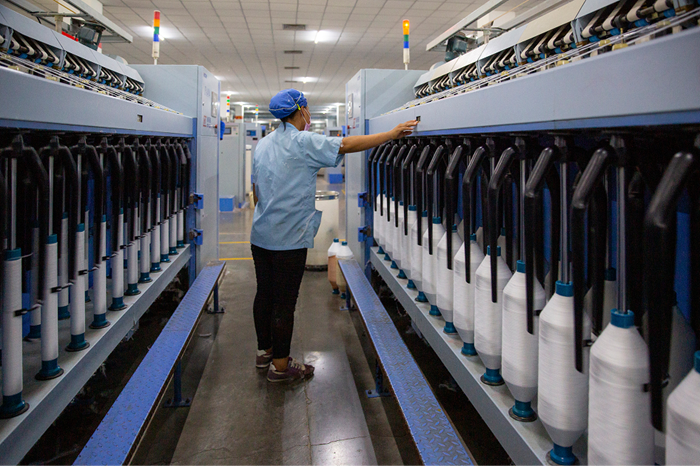
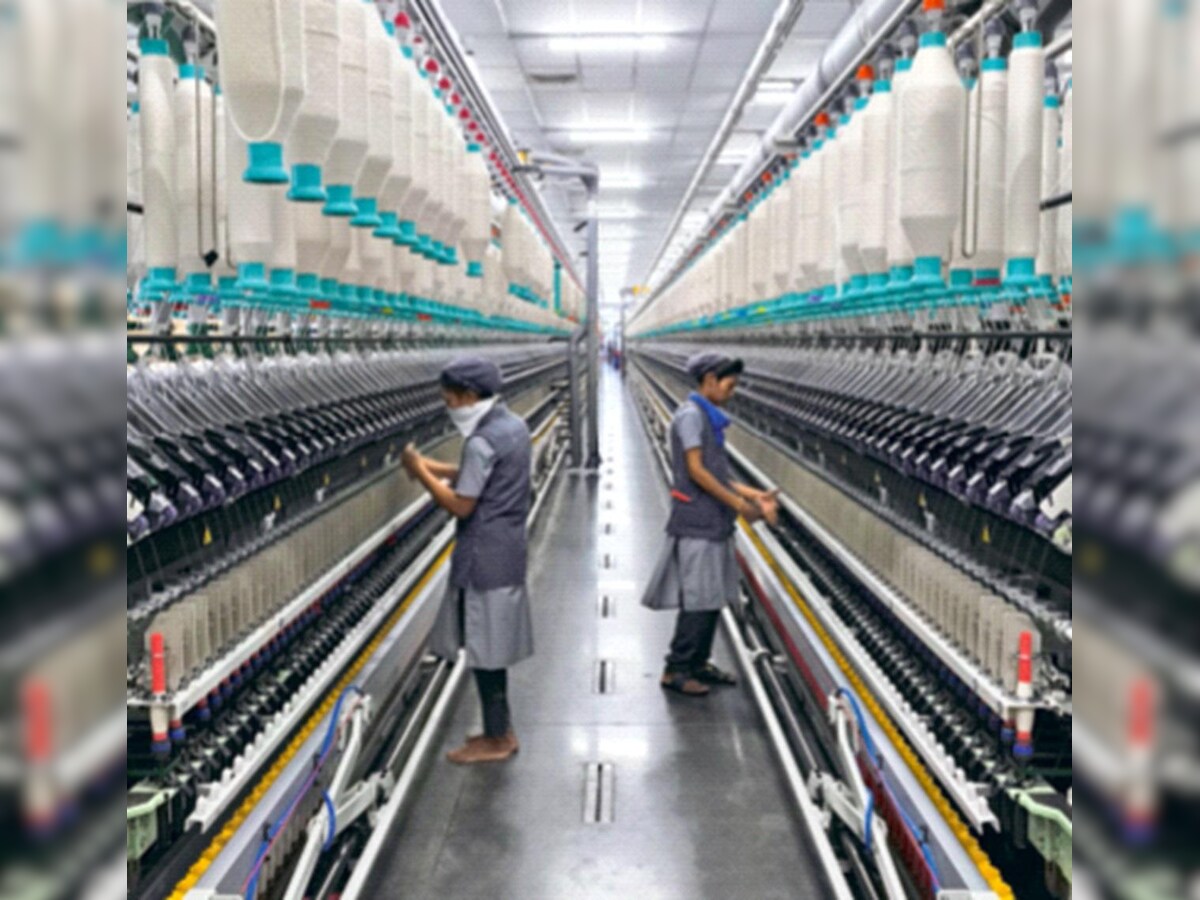
The textile industry in Indonesian has just started implementing the 4.0 industrial revolution. However, most implementations have only been carried out within the scope of company management or have not yet arrived at the production process.
It is only export-oriented companies that have taken to the system in a significant way. And that is because the average overseas buyer wants the implementation of SAP as a technical standard that must be met. Without the implementation of SAP, the textile industry in the country will find it difficult to compete with the textile industry in other developing countries.
Currently the Indonesian textile industry faces a number of heavy competitors such as China and Vietnam for the Southeast Asian region. Indonesia’s position on the global textile market is only two per cent, far smaller than China’s, which is ranked first at 30 per cent. The textile industry in Indonesia is the third largest contributor to the country’s foreign exchange earnings.
But the industry is getting help in implementing the 4.0 industrial revolution. Assistance provided by the government includes a number of operator-level training in the form of three in one system training (training, competency certification and work placement). Implementation of industrial revolution 4.0 can increase production capacity of a company and can also boost employment if demand increases after the implementation of the revolution.
"The ‘State of Fashion Report’, co-published by McKinsey & Company and Business of Fashion, dubs 2019 as a year of awakening as companies will pioneer new innovations in automation and AI, disrupting themselves before others do it for them. The report 10 key trends that will define the fashion agenda in 2019 includes: Worsening economic conditions: According to McKinsey, the uncertainty that."
 The ‘State of Fashion Report’, co-published by McKinsey & Company and Business of Fashion, dubs 2019 as a year of awakening as companies will pioneer new innovations in automation and AI, disrupting themselves before others do it for them. The report 10 key trends that will define the fashion agenda in 2019 includes:
Worsening economic conditions: According to McKinsey, the uncertainty that plagued 2018 is likely to further dampen global economic growth in the year ahead. Already, global growth is showing signs of plateau after averaging above 2.5 percent since the financial crisis, US interest rates are rising, increasing the cost of borrowing money for both companies and consumers, and Europe could see a tightening of the monetary policy, which might lead to slower economic growth.
India to be a growth centre: The report suggests, “India will be global growth centre in 2019. Economic growth in India is expected at 8 per cent a year between 2018 and 2022, while the country’s middle class is forecast to expand 19.4 per cent, outpacing China, Mexico, and Brazil.
Global growth axis to change: Apparel trade could be reshaped by new barriers, trade tensions, and uncertainty. However, there may be new opportunities from growing South-South trade and the renegotiation of trade agreements. Trade within the region is expected to increase from roughly 25 per cent of global trade at present to closer to 30 per cent by 2030, McKinsey noted.
Emerging methods of products’ access: Today’s consumers seek innovative, sustainable and affordable products. To achieve many brands are resorting to resale and rental Consumers are shifting away from traditional ownership to newer ways in which to access product.
Brands becoming increasingly eco-aware: Nine in ten Generation Z consumers believe companies have a responsibility to address environmental and social issues. They increasingly back their beliefs by favoring brands that are aligned with their values and avoiding those that don’t.
New technologies for acquiring new styles: According to McKinsey, majority of fashion players in 2019 will integrate commerce functionality into social media besides integrating visual recognition tools into day-to-day shopping for the average consumer.
Increasing transparency in brand operations: Ongoing data breaches at apparel companies have fueled a rising distrust that brands and retailers will need to counter. They’ll need to ramp up transparency, in many cases, as McKinsey explained, by specifying costs of materials, labor, transport, duties, and mark-up—a level of ‘radical’ transparency that has helped fuel success for companies like Everlane.
Self disruption emerges as a major norm: The McKinsey report states that technology and social media are enabling a new breed of ‘challenger’ brands that disrupt a sector or category where incumbent players have rested on their laurels. To compete and stay relevant among demanding young consumers, traditional brands are disrupting their own brands, offerings, and business models.
Brands to provide value added services: E-commerce players will continue to innovate by adding profitable value-added services either through acquisitions, investments or internal R&D. They will strengthen their lead over those remaining pure players who rely solely on retail margins and existing offerings.
Delivering on-demand: In 2019 more companies will step out to deliver on on-demand as many a startup in the space has already done. This will result in increase in just-in-time production, reduce levels of overstock and increase importance of small-batch production cycle.
The first edition of WEAVES 2018, organised recently at Texvalley, Erode, was attended by 204 exhibitors who displayed their products covering large variety of yarns, fabric as well as garments. Over 7,000 delegates from all over India and abroad visited the show.
The four-day trade event also held over 654 B2B meetings, connecting the local manufacturers to the domestic and international buyers, face to face. This successful event had a business transaction worth over Rs 450 crore. Moreover, 29 MOU’s with educational Institutions were signed in the presence of State Ministers to promote the collaboration among the rising talents from the colleges and connecting them with the regional manufactures for their design and product development requirements.
To honor the titans of textile industry in Tamil Nadu, ‘Titans of Tamil Nadu Textiles’ Coffee Table Book was released during the show. Next edition of the event will be organised from November 27-30, 2019.
The government has now included merchant exporters under the interest equalisation scheme for pre and post-shipment rupee export credit. The Cabinet Committee on Economic Affairs approved the proposal by Department of Commerce for extending the facility, which was available only to textile manufacturers and exporters.
Under the Interest Equalisation Scheme, exporters in the Micro, Small and Medium Enterprise (MSME) category can avail credit at 5 per cent on all pre and post-shipment on export of all products. While non-MSME get credit at 3 per cent on 416 specified tariff lines.
The coverage of merchant exporters under the Interest Equalisation scheme will encourage them to export more products from the MSME sector which contributes significantly towards employment generation especially for women, he added.
The move will also significantly reduce the cost of finance for the merchant exporters who contribute substantially towards textile exports and make them more competitive. Inclusion of cotton yarn under the scheme will encourage exports and benefit the cotton farmers.
Mimaki has entered a partnership with Dutch retail fashion designer Tessa Koops. Koops has clothing specifically designed for Mimaki. This demonstrates the power of art in fashion and the huge impact digital print can have on creativity and personalization within the fashion design and manufacturing process.
Ordinarily, Koops works a lot with purchased prints for her clothing. However, collaboration with Mimaki has enabled her to go beyond the typical design limitations of fashion and better understand how digital print can increase creativity, personalisation and diversification across a range of pieces. One of her own paintings is used in a variety of ways including as a print for dresses.
The collaboration celebrates digital print within all elements of art, interior design and fashion. Tessa Koops is a fashion designer of women’s clothing, specialising in dresses with floral or patterned prints. In addition to dressing different celebrities, her clothing is sold in more than 50 retail outlets across the Netherlands.
Advanced print technology can be used to drive design innovation and profitability. Additional Mimaki designers include Anousjka Röben who displays shoes and creative studio Deux d’Amsterdam which shows a unique kimono designed specifically for Mimaki. Mimaki offers printers for almost every type of textile application.
Producer of outdoor apparel, footwear, accessories and equipment business Columbia Sportswear, has bought out its partner in a joint venture in China. The Portland-based outdoor apparel company had launched the joint venture with Swire Resources, a subsidiary of Swire Pacific in January 2014. Columbia, earlier owned 60 per cent of the entity and Swire, the other 40 per cent. But recently the brand acquired the entire entity. Swire will also remain the exclusive distributor of Columbia Sportswear in Hong Kong and Macau.
China is a key marketplace for Columbia and other outdoor apparel companies due to its fast-growing economy. Columbia Sportswear Company also owns the Mountain Hardwear, Sorel and prAna brands. The brand’s sales increased 6 per cent to $795.8 million in the third quarter.
Columbia Brands, was founded in 1938 in Portland, 90 with a customer base spread in 90 countries. The company has built up a portfolio of brands of active lives, making it a leader in the active wear market as well as footwear, accessories and equipment industry.
London Fashion Week Men’s (LFWM) is being held January 5 to 7, 2019. This is the bi-annual showcase of the most creative and innovative names in the fashion industry and features over 40 designer businesses showcasing their latest collections. The event is a celebration of discovery and creative diversity that has made London an international hub for menswear.
From music and art to creative communities and fashion, LFWM is a unique mix of catwalk shows, presentations, designer showrooms and events which will shine a light on the depth and breadth of UK’s creative industry. Designer Adam Jones will showcase his up-cycled fabrications reminiscent of punk, using beer mats, vintage tea towels, blankets and ribbons pieced together.
From British heritage to emerging labels and vibrant street wear brands, this season pays homage to the ever-expanding creativity of the capital through a packed schedule of shows, presentations, installations and events. During a time of uncertainty surrounding Brexit, the creative sector is growing faster than any other sector in the UK economy and provides one in six jobs in London. In 2019, London continues to stay as one of the most culturally rich cities in the world, with world-class institutions and globally renowned talent.
The global denim jeans market is anticipated to grow at a healthy 8.5 per cent from 2018 to 2025. The major driving factors are: rising disposable individual incomes, surging e-commerce industry and increasing preference for denim jeans. Manufacturers are adopting fiber technologies that have enabled them to offer denim jeans products for athleisure and active wear besides work wear and casual wear. Manufacturers are trying to adopt product differentiation to gain a competitive edge.
Denim jeans are a specific type of trousers made of denim or dungaree cloth. Denim jeans, a significant part of the clothing and apparel industry, are mostly popular among the young. Denim jeans provide one a street style fashion to their lifestyle. Adding leather boots makes one junky and gives a rough look. Denims jeans are a very tough and durable material, cost effective clothing to wear and stylish at the same time.
The growth of the global denim jeans market is mainly bound to various macro-economic and micro-economic factors. The major restraining factors of the global denim jeans market are changes in consumer lifestyles and the introduction of yoga pants and other active wear.
The Department of Applied Chemistry and Chemical Engineering (DACCE) of Rajshahi University has developed a low-cost eco-friendly technology for textile industries of Bangladesh. The technology will play a positive role in significantly reducing environmental pollution by the textile industry. It has been developed under an industry-university collaborative sub-project of Higher Education Quality Enhancement Project (HEQEP) and is being implemented by DACCE
RU Prof Mohammad Taufiq Alam, the developer, filed a provisional patent application for the invention with the Department of Patents, Designs, and Trademarks under the Ministry of Industries on December 9. He claimed to have synthesised a pre-treatment agent at low cost that shows a synergistic effect when used with the above eco-friendly enzymatic process. In conjunction with an enzyme, it will perform pre-treatment and polishing together in a single bath, so that 45 per cent water, 35 per cent energy and 45 per cent time can be saved compared to currently using conventional chemical pre-treatment process. It will also significantly improve the whiteness and dye absorbency compared to above eco-friendly enzymatic process so that light shade dyeing is achievable.
"The fast-pace of our modern life makes it increasingly difficult to sustain the life of our garments even after producing them in the most environmentally friendly manner as possible. They end up in the garbage dumps quickly. For a long time, the industry has been greatly impacted by this use and disposal of clothing. A paper by WRAP suggests if consumers use their clothes for even nine months longer, they can reduce their footprint by around 20 to 30 percent."
 The fast-pace of our modern life makes it increasingly difficult to sustain the life of our garments even after producing them in the most environmentally friendly manner as possible. They end up in the garbage dumps quickly. For a long time, the industry has been greatly impacted by this use and disposal of clothing. A paper by WRAP suggests if consumers use their clothes for even nine months longer, they can reduce their footprint by around 20 to 30 percent.
Applying this principle, outdoor manufacturers like Vaude, Patagonia, and Peak Performance are extending the life cycle of their products through their second-life initiatives.
Garments with life-prolonging measures
Peak Performance in collaboration with the Sustainable Apparel Coalition (SAC) has developed the popular Higgs Index, which offers standardised measures for a more sustainable value chain. Companies are also incorporating life-prolonging measures into the planning of their garments. Accessories like zippers, cords, and push buttons are being offered as spare parts. Many also offer and promote a repair service. Vaude recently joined the online platform ifixit to develop repair instructions, while Patagonia repairs damaged clothes on site free of charge. It also explains the sustainable use of functional clothing in its workshops.
Product sharing becomes popular
Lately, ownership of clothes has lost value. Clothes today are shared, exchanged and rented depending on the function and occasion. The industry’s second life initiatives are building on this attitude. Companies now take back used clothing from their customers. They are recycled, resold, or donated to charitable associations.
Since October 2018, sporting goods retailer Decathlon has been offering an online platform for the resale of sporting goods by customers. At so-called Trocathlons, it is also possible to buy and sell used goods in the chain's stores similar to a flea market.
Vaude, in cooperation with eBay, has set up an online shop that consumers can use to sell their used Vaude products. The company is neither the operator of the platform, nor does it earn anything from it. The second-use website is one of many life-extending measures for products.
Burton’s sustainability program focuses on returns. The snowboard brand, which earlier focused on replacing damaged clothes, now aims to repair. The company has targeted a repair quota of 40 per cent by 2020.
The North Face offers returned goods and items with production defects in their own US online store – at reduced prices and with a one-year guarantee on wear and tear. James Rogers, Head of Sustainability at The North Face, sees resale as an important measure “to reduce the ecological footprint and open up new markets.
Recycling gains ground
When used clothing no longer meets the requirements for resale, all that remains is environmentally friendly disposal, upcycling, and recycling. Houdini sets up recycling boxes in its outlets and collects sorted-out polyester clothing. Customers can use the containers with a clear conscience. Houdini guarantees professional recycling.
Recently, recycling was limited to the outer fabric. Jack Wolfskin presented its Texapore Ecosphere jackets at ISPO Munich 2018. The outer fabric of these jackets, as well as the membrane and inner lining, are made of completely recycled material. In the winter of 18/19, shells, fleece, and hybrid models will also appear in fully recycled materials.