FW

Water shortage in Gujarat, Maharashtra and Telangana is likely to bring down India’s cotton crop to the lowest in eight years. Cotton crop estimate for Gujarat, Maharashtra and Telangana has been reduced by 1.50 lakh bales, two lakh bales and two lakh bales respectively.
Due to water shortages following deficient rainfall in growing regions, farmers in about 80 per cent of the cotton crop area have uprooted plants. As a result, there has been no scope for a third and fourth pickings.
For a normal cotton crop, the picking continues for four rounds. However, after the first two pickings in water-scarce regions, the cotton plants have started drying up, leaving no possibility of further flowering and boll development. Total cotton supply till the end of the season in September 2019 will be around 385 lakh bales, consisting of the opening stock of 23 lakh bales at the beginning of the season, the crop of 335 lakh bales and imports at around 27 lakh bales.
Domestic consumption of the fiber is estimated at 320 lakh bales and estimated exports for the season 2018-19 at 51 lakh bales, about 18 lakh bales lower than the export of 69 lakh bales estimated during the last year.
In November 2018 Indian textiles and apparel exports grew 14 per cent compared to November 2017. Over the same period apparel exports jumped 21 per cent. In October 2018, textile production rose 6.2 per cent as compared to October 2017. Apparel production rose 28 per cent.
The stressed advance ratio of the textile sub-sector has been improving continuously. From 23.70 per cent in September 2017, the stressed advance ratio of the textile sector has come down to 18.70 per cent in September 2018. For the period between April and November, textile and apparel exports grew seven per cent.
The old duty drawback rate which was very attractive came to an end in September 2017. Because of this attractive scheme, Indian exporters advanced their delivery schedules to avail of the duty drawback scheme. Consequently, textile and apparel exports skyrocketed in September 2017. Exports one year later in September 2018, declined sharply. From that level, however, exports are normalizing which is believed to continue in future as well to end the current financial year flat.
India’s share in world trade in textile and clothing is estimated to be 4.95 per cent. With these exports, India is ranked second among suppliers in the world.
Vetements has created a phone case with tech accessory brand Casetify, which has also collaborated with luxury brands including Moncler and Saint Laurent for relatively affordable accessories with a luxury brand name attached. The case is being sold through Casetify and retail partners like Ssense.
This is part of a growing trend in the luxury business of leaning into the accessibility of accessories. While luxury brands rely on the exclusivity of their more expensive apparel offerings that exclusivity is always in conflict with the need to maximise revenue by getting as much product into people’s hands as possible. Accessories offer a good way to do that. Customers who are not affluent enough to be regular Gucci customers and drop more than $1,000 on a jacket can instead save up and get a Gucci belt or a pair of socks. At the same time, the brands are able to sell more product and create relationships with customers who may make further purchases in the future without having to lower any of the prices for their more expensive items — something that luxury brands are loath to do normally.The phone case costs around $250.
Accessories are also often produced by expert third parties, which can manufacture them more affordably. These products are then sold at the same markup as in-house produced items, justified by the brand’s name on it, making accessories incredibly profitable for brands.
Brands presented spring immediates, summer lines and sneak peaks of their fall denim collections at Project Womens and Fame in New York this week. New sustainable denim brand Ética held the first show. The Los Angeles-based brand, owned by premium denim maker Hera Apparel, showcased its first collection of “trendy yet wearable” denim made with processes that reduce the brand’s water, chemical and energy consumption.
McGuire Denim turned down the waist bands of jeans and lightweight non-denim wovens like a pair of button-fly cargo pants in blush. The brand also turned up the hem of jean jackets, revealing a pop of soft vintage-looking lining.
Tonal blue stripes updated Bella Dahl’s signature drapey denim made with Tencel. The collection offered matching leisure separates like a pajama-style button-down shirt and drawstring shorts. Metallic silver polka dots, beachy florals and pastel denim added a summery feel to 7 For All Mankind’s collection.
Brands like Signature 8 baited retailers catering to a millennial and Gen Z audience with colorful denim sets. The brand, which is sold by retailers like Asos and Dolls Kill, offered a deep range of cropped jean jackets and button front minis in snake and leopard print denim. The brand tapped into the psychedelic aesthetic of ’80s and ’90s staple Lisa Frank with a multi-color zebra print set.
Aroud 15 Italian textile companies will participate in the upcoming edition of Colombiatex 2019 to be held in Medellin from the January 22-24, 2019. The exhibition will be jointly set up by the Italian Trade Agency and ACIMIT, the Association of Italian Textile Machinery Manufacturers. The 15 Italian textile companies exhibiting in this common space will all be ACIMIT associated members including Arioli, Beschi, Biancalani, Btsr, Caipo, Corino, Crosta, Fadis, Ferraro, Itema, Mcs, Ratti, Sicam, Tecnorama and Ugolini.
Colombia’s textile and garments industry has seen a strong period of growth over the past few years, thanks to the signing of a number of international trade agreements and its developing fashion sector. Colombian textile manufacturers have thus been long time partners of Italian textile technology suppliers. The development of the local textile and garments industry needs a technological upgrading, entailing an increase in demand for foreign machinery. Italy has benefitted from this growing demand, in its dominant position as one of the world’s major producers of textile machinery. Indeed, Italian exports to Colombia in 2017 amounted to €10 million, and over the first seven months of 2018, sales of Italian textile machinery to Colombia exceeded €4 million.
Bangladesh’s readymade garment supply chain continues to suffer from lack of shared responsibility on the part of global buyers. The fundamental business model in the garment supply chain has not changed. Production remains an industry with high levels of opportunity for countries to connect to global value chains, but that comes at a price for workers.
Factories in shared or non-purpose built premises need to relocate. Firms in such premises which were not able to meet the new standards had to move and often ended up in more remote regions. Such factories have to bear the relocation costs and do not receive financial support from buyers, the government or their industry associations.
Bangladesh’s exporters do not get fair and reasonable prices for their products. Reasons include lack of negotiation skills. Exporters get lower prices for readymade garment products compared to Cambodian and Vietnamese exporters. Buyers do not want to pay higher prices, although the cost of production will go up further with wage hike, port congestion and higher transportation cost. Another issue is that of lead time. This would be a matter in readymade garment exports in future as the country might lose its cost advantage in coming years.
Multinational apparel and luxury brands are buffeted by what appears to a significant slowdown in China. There is a contraction in China’s manufacturing sector amid a broader growth slowdown in many of the world’s biggest economies.
The crackdown on the practice of surrogate Chinese shoppers purchasing abroad for people back home is a significant factor in what jewelry leader Tiffany described as a meaningful decline in revenue from its Chinese customers. Though just eight per cent of Tiffany’s business stems from Chinese mainland, Chinese customers contribute 30 per cent of its turnover.
Share prices for multinationals have meaningfully underperformed their domestic peers in recent months though athletic companies like Nike and Lululemon Athletica seem to be bucking the trend. At one time China was seen as a big opportunity as major players like PVH and VF started to go after China in a big way by bringing their licenses in house and investing in full-throttle strategies.
Now it’s not just a sales slowdown that the industry is concerned about. Profits are tough there to begin with. China’s central bank took the serious measure of slashing the reserves that banks are required to keep on hand, making 116 billion dollars available for additional lending in an effort to ameliorate a sputtering economy.
The resumption of trade talks with China in an attempt to end the trade war has boosted US retail and apparel stocks. Retail industry employment in December increased 15,200 jobs seasonally adjusted from November and 37,600 jobs unadjusted year-over-year. The retail gains came as the US added 3,12,000 jobs overall.
Among major retailers, Target’s stock jumped 4.89 per cent, Walmart’s shares were up 1.18 per cent, Macy’s stock rose 1.8 per cent and Amazon shares climbed 3.44 per cent. Other notable retail gainers were Ascena Retail, up 13.5 per cent; Stein Mart, gaining 4.8 per cent; Abercrombie & Fitch, ahead 4.76 per cent; Gap, climbing 4.61 per cent.
Apparel stocks, which had also gone through a downward tilt, also enjoyed the upswing. VF Corp shares were up 1.88 per cent. PVH Corp. stock jumped five per cent and Ralph Lauren saw shares gain 1.82 per cent. In addition, Michael Kors Holdings stock was up 1.99 per cent, G-III Apparel Group shares climbed 4.7 per cent and Hanesbrands stock rose 3.18 per cent.
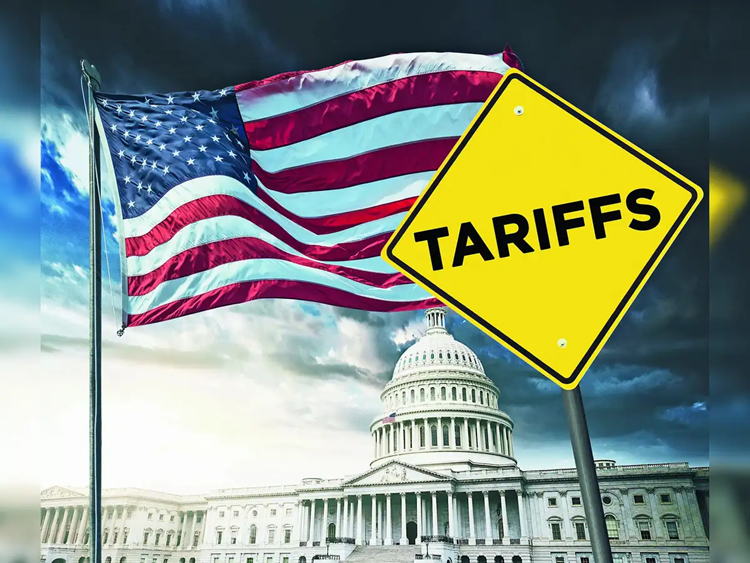
The US and China have embarked on a trade war that has seen them impose tariffs on a combined 360 billion dollars worth of tariffs on imports, causing turmoil for financial markets and concern in sourcing circles.
Bangladesh is investing heavily in the primary textile sector. The primary textile sector of Bangladesh has turned into a strong backward linkage industry for the readymade garment sector. Currently, local manufactures are capable of supplying 85 per cent of yarn and fabric, along with 40 per cent of the woven fabric required by the knitwear sector. This means the primary textile sector has been unable to fulfill 60 per cent of the demand for woven fabrics.
Additionally, banks are enthusiastic in financing the primary textile sector, which has resulted in more investment. These new investments are expected to strengthen Bangladesh’s position in the global value chain and help reduce import dependency and raise Bangladesh’s competitiveness in the global market. Bangladesh can also attain a better position in the global readymade garment value chain.
However, investments have not been coming into the sector as expected due to a lack of infrastructural support and unavailability of utility services. A good number of investors have not been able to invest in the sector due to a lack of infrastructure and limited supply of gas and electricity.
There are 430 yarn manufacturing mills, 802 fabric manufacturing mills, and 244 dyeing-printing finishing mills in Bangladesh along with 32 denim fabric manufacturing mills and 22 home textile manufacturing mills.
Bangladesh’s apparel exports to India grew 300 per cent during July to November 2018. Woven items were more in demand from India. Bangladesh’s apparel exports to China during the same period showed a growth of 230 per cent on a year-on-year basis.
India has been growing into a big potential market for Bangladesh’s apparel exporters. Last fiscal, Bangladesh’s apparel exports witnessed a 100 per cent gain in India – a trend which is continuing through to this year and expected to rise.
As China is slowly moving away from the apparel business, it is the opportunity for Bangladesh to enter their space. Many factories in China are switching operations due to a rise in production cost. Buyers may opt for sourcing away from China due to this reason–a void which can benefit emerging apparel exporters like Bangladesh.
Also recent escalations in the trade war between China and the United States are fueling the shift in manufacturing away from China. These two factors can help Bangladesh draw business. And the impact is already visible. During November 2018, Bangladesh’s apparel exports grew 18 per cent. India and China are showing signs of blossoming into major destinations of Bangladesh’s apparel industry.