FW
India’s garment exports in Jan 2023 was positive as retail outlook in US remained high: Wazir Report

The February 2023 edition of Wazir Report has just been published and the findings indicate the outlook for Indian garment exports, global imports that affect developing and under-developed countries in Asia and global retail scenarios are all positive with no major shift since November 2022.
India’s readymade garments exports stable
In January 2023, India exported garment worth $1.5 billion. This figure is the same as the figure 12 months ago in January 2022. In January 2021 exports were 12 per cent higher than 2021. In terms of share of apparel exports, US’ share has increased by 8 per cent while UAE and UK have recorded a dip in share by 3 per cent and 1 per cent, respectively since 2019. The UAE’s share is 8 per cent and the UK’s 9 per cent in the total volume of readymade garments exports from India in January 2023.
Whilst January 2023 may not have registered a year-on-year growth, in these uncertain times in the West, it may be looked upon as a blessing that Indian readymade garments did not lose grounds in terms of exports value.
Imports down in UK and US, up in EU and Japan
Out of the three Western markets, only the UK showed a drop in imports of readymade garments in November 2022 by 4 per cent compared to November 2021. However, on YTD basis, imports in 2022 are 18 per cent higher than in 2021. Among the countries that whose exports increased to the UK, China once gain topped the list with 6 per cent; Bangladesh and Turkey gained 4 per cent and 2 per cent respectively since 2019. India lost 1 per cent in the same period.
In December 2022, US’ apparel imports were $6.5 billion, which is 11 per cent lower than in December 2021. On YTD basis, imports are 22 per cent higher than in 2021. China’s share in the US market has reduced by 8 per cent since 2019, whereas Vietnam and Bangladesh’s shares have risen by 2 per cent and 3 per cent, respectively.
In December 2022, Japan’s apparel imports stood at $1.8 billion, which is equal to that of December 2021. On YTD basis, imports in 2022 are 5 per cent higher than last year. Bangladesh’s and Cambodia’s share increased in Japan’s apparel imports, by 1 per cent each while China’s share dropped by 2 per cent compared to 2019.
EU’s apparel imports in October 2022 were 14 per cent higher compared to October 2021, although the higher percentage is attributed to price inflation and low base value. In the EU apparel market, China’s share increased 1 per cent whereas Bangladesh’s share increased by 4 per cent since 2019. Clearly Bangladesh is gaining ground at China’s cost in the EU market.
US, UK reflect high retail growth in January 2023
In January 2023, US’ monthly apparel store sales were estimated at $18.2 billion, 47 per cent more than in January 2022. In 2022, sales were 7 per cent higher than in 2021. In January 2023, US’ monthly home furnishing store sales were estimated at $5.2 billion, 6 per cent more than in January 2022. In 2022, sales were 1 per cent higher than in 2021. In Q4 of 2022, online sales of clothing and accessories registered a growth of 5 per cent over the same quarter in 2021. The fourth quarter of 2022 was 42 per cent higher than the sales in the third quarter of 22. This was attributed mainly to the festive season. Overall, in 2022 sales were 7 per cent higher than 2021.
In January 2023, UK’s monthly apparel store sales were £3.1 billion, 19 per cent higher than in January 2022. In 2022, sales were 21 per cent higher than in 2021, mainly on account of low base value. In Q4 of 2022, online sales of clothing registered a growth of 1 per cent over the same quarter in 2021. Overall online sales in 2022 saw negative growth of 18 per cent over 2021. This may be due to the extremely high inflation in UK since second quarter of 2022.
US luxury discount brand Saks Off 5th expands India operations
Saks Off 5th plans to expand its team in Bangalore, India. The Bangalore team has played a vital role in driving the company’s business and operational growth and the team itself has doubled in size over the past 12 months.
The US discount luxury fashion retailer is committed to continued growth in India and looks to India as an incredible source of talent to support its growing business as it works to fulfil the mission of providing access to modern luxury to everyone.
The retailer is focusing on a digital-first operating model in India and is working to ameliorate its customer experience. Saks Off 5th currently counts 220 employees at its Bangalore office working in sectors including data analytics, business intelligence, supply chain operations, finance, HR, IT, and merchant operations, among others. The engineering, transportation, customer service, digital operations and merchant operations capabilities are being expanded.
Saks Off 5th has stores in the US, Canada and online and set up its office in India in 2017. The business aims to provide premium fashion brands at value prices.Saks Off 5th is the premier destination for luxury off-price fashion and has more than 100 stores across the United States and Canada.
Philippines expects garment exports to rise
The Philippines expects garment exports in 2023 to be higher than 2022 garment exports.
One reason for the optimism is that Vietnam and China no longer take on small orders but are geared for bigger quantities due to their robotics and automation systems. This gives a chance for smaller volume producers like the Philippines to step in.
Another factor driving the country’s garment exports is the ongoing US campaign of anything but China. The campaign is gaining momentum and production is spreading among Asean countries including Philippines. The third factor is the political issues in Myanmar that are causing apparel orders being shifted, some of which are now in the Philippines. Also the Philippines hopes to take advantage of the anticipated flight of foreign orders of garments and other apparel from Vietnam due to counterfeiting issues.
Buyers from the United States have approached garment producers in the Philippines asking them if they can meet the demand that is normally filled by Vietnamese producers. Foreign buyers are turned off by the rampant counterfeiting of apparel and other wearables in Vietnam. In contrast counterfeiting is not a major problem in the Philippines, where piracy and counterfeiting complaints and reports have declined year on year by 40 per cent from January 2022 to November 2022.
Prominent e-commerce platforms in the Philippines have signed a memorandum of understanding with several big brand names to combat the sale of fake products online.
Home textile players focus on growing domestic market
Indian home textile and furnishing industry continues to grow despite several challenges.
Though exports to Europe and the EU are stagnant at this point the domestic market continues to grow at 15 per cent per annum. Consumers are shifting towards ready-to-use products like readymade sofas, cushion covers, curtains, blinds, bed sheets and towels instead of customising them. About 40 per cent of domestic consumption in home textiles is for the bed and bath category alone. Still, over 95 per cent of domestic demand is met by the unorganised and micro, small and medium sectors.
Wider definition of furnishing will also include furniture and home décor accessories and these numbers would get bigger.With demand for home products increasing at 20 per cent per annum, business growth opportunities in the Indian market will continue to grow for domestic and global players. People are learning to spend more on their homes and living environment and opt for better quality.
The current year looks very promising in the domestic market across all home product categories, including home textiles., apparel fabrics and home textiles.
MAS fabric mill partners with Bluesign
MAS Fabrics – Intimo has become Asia’s first seamless textile mill to become a Bluesign system partner.
This will enable MAS Fabrics – Intimo to meeting the highest sustainability criteria, in particular with regard to resource efficiency, environmental impact, health and safety at work, and consumer protection. Bluesign is the most rigorous standard for the textile industry. With its holistic approach, Bluesign is the most rigorous standard for the textile industry, and adopting it means meeting these criteria without compromising the functionality, quality, or design of the products.
Environmentally sustainable manufacturing is at the heart of what MAS does and the aim is to reduce harmful chemicals in its manufacturing process. This partnership brings the company closer to its 2025 chemical management ambition and progresses towards the company’s vision to onboard all its dyeing facilities to the Bluesign system.
MAS Fabrics – Intimo, based in Sri Lanka, is a 147,000 sqft fabric mill with in-house knitting and dyeing facilities. The facility currently uses Bluesign approved chemical substances and aims to increase its utilisation of Bluesign approved textiles to 100 per cent by 2025.
Since its inception over 35 years ago, MAS Holdings has operated on the foundation of doing things differently by focusing on social sustainability and employee well-being. The company is committed to doing its part to reduce its own impact as a business, through its unified group-wide sustainability strategy.
Home textile players focus on growing domestic market
Indian home textile and furnishing industry continues to grow despite several challenges.
Though exports to Europe and the EU are stagnant at this point the domestic market continues to grow at 15 per cent per annum. Consumers are shifting towards ready-to-use products like readymade sofas, cushion covers, curtains, blinds, bed sheets and towels instead of customising them. About 40 per cent of domestic consumption in home textiles is for the bed and bath category alone. Still, over 95 per cent of domestic demand is met by the unorganised and micro, small and medium sectors.
Wider definition of furnishing will also include furniture and home décor accessories and these numbers would get bigger.With demand for home products increasing at 20 per cent per annum, business growth opportunities in the Indian market will continue to grow for domestic and global players. People are learning to spend more on their homes and living environment and opt for better quality.
The current year looks very promising in the domestic market across all home product categories, including home textiles., apparel fabrics and home textiles.
Lenzing partners with NFW
Lenzing and NFW (Natural Fiber Welding) have partnered to add fabrics made of Tencel to Mirum.
Tencel is the flagship brand of Lenzing. Mirum is NFW’s patented plant-based technology. The aim is to enhance material transparency and traceability while guaranteeing comfort and great hand feel on the skin.
Mirum is a unique class of material, perfect for luxury accessories, fashion, footwear, automotive, and home goods. Completely free from plastic, Mirum is made from natural rubber, plant and mineral pigments, plant-based oils and waxes, and an all-natural fabric backing.
The collaboration creates a uniquely sustainable alternative for leather applications as both Tencel fibers and Mirum are versatile enough to be used in multiple applications.At the end of its life cycle, products made with Mirum can be recycled into new Mirumor ground up and returned to the earth, while Tencel fibers are compostable and biodegradable, enabling complete circularity of finished products.
One of the best examples of the collaboration is the Allbirds Plant Pacer. The shoe’s upper is made with Mirum lined with Tencel. Mirum is an ideal option for designers and brands looking to reduce their environmental footprint and expand their creative palettes. Tencel fibers are soft and pleasant on the skin, with outstanding moisture management.
JD Sports aims at strong US base
JD Sports has a focus on cracking the American market. The UK brand wants to grow its US store network from 137 to about 800 over the next five years.
About half will come from store conversions of Finish Line (the sportswear retailer acquired in 2018) into JD-branded stores. The other half will be new stores, focused on the western US. JD Sports wants to achieve double-digit sales growth and profit margins over the next five years and the North American market will be crucial to achieving that goal.
The challenge will be raising brand awareness in the US, where JD Sports has only 2,95,000 Instagram followers, compared with 2.1 million in the UK. The retailer is using payment data to track consumers who are spending at rivals and then targeting them with ads when they watch YouTube.
The key to its US-dominated expansion will be JD Sports’ growing relationship with Nike.The US giant’s Air Force 1 footwear range accounts for between ten per cent and 20 per cent of JD’s annual footwear sales.The American focus, added to expansion plans in Europe and Asia, would result in about 1,400 JD stores opening over the next five years, taking the total to more than 2,400.
Forever 21 returns to Japan
Forever 21 is relaunching in Japan.
Forever 21 typically targets teenagers and young adults, but is aiming for a wider, upmarket clientele in Japan, hoping to attract women up to their 30s. The aim is to localize the brand by size, color and design. The objective is to create a long-lasting brand. Forever 21 stores in Japan typically sold between 800 and 1,000 items before the chain withdrew from the market in 2019. Now the number of pieces has been brought down to between 120 and 150, and physical stores will be smaller. The quality of materials used has been improved.
The intent is to open about a dozen physical stores in Japan. Some 60 per cent of sales would be online. The assumption is that expanding a brand that’s already widely recognized is quicker than starting from scratch. The relaunch is being overseen by local partner Adastria, Japan’s third-largest apparel maker.
Adastria is also interested in expanding Forever 21 to other Asian markets. American brand Forever 21 was established in the 1980s and grew rapidly in the 2000s with the global rise of fast fashion. Forever 21 is known for trendy, of-the-moment clothing for teens like T-shirts with decals, neon sweatshirts and denim short-shorts.
Global fashion sales optimistic about 2023 despite impediments

Despite swimming against the rising tide of high costs of raw materials, complicated shipping and transportation logistics, increased inflation and higher cost of living in post-pandemic years, a reasonably good growth in global fashion sales is expected in 2023 by most fashion retailers.
Global fashion companies are now focussing on strong sourcing diversification, supply chain agility, and sustainable operations to circumvent the current crunch and effectively sail through 2023 with their head above waters.
Despite the growth slowdown in the second half of 2022, which is likely to continue through 2023, the appeal industry has earmarked some clear area-wise global winners and high-performance sectors such as the luxury segment within the fashion apparel sector. According to a recent McKinsey report titled ‘The State of Fashion 2023’, the expectation is global fashion sales growth will be 5 to per cent for luxury and a negative 2 per cent to a positive 3 per cent for the rest of the industry in 2023, as sluggish sales growth slowly tries to return to pre-pandemic times.
Global region-wise alterations in performance
Clear area-wise alterations in performance are expected within the sector with Europe witnessing lean growth in 2023 although China and the US markets are likely to fare better, increasing between 2 and 7 per cent and 1 and 6 per cent, respectively. The McKinsey report also points out that the Middle East fashion market along with parts of Asia Pacific will be quickly developing this year with many fashion brands and apparel companies planning to re-direct their operations to these areas soon as their higher precedence territories.
Brands now need to carefully plan trademark protection in new areas such as the Middle East to make the most of their 2023 expansion. The rising geopolitical uncertainty and uneven economic recoveries post pandemic will make re-direction of markets even more challenging. Fashion brands need to update their operating models, fine-tune their strategies for their supply chain, sales channels, and digital marketing as well as create an all-new portfolio for the coming few seasons.
In dealing with inflation and geopolitical concerns, the McKinsey report points out fashion companies that can adjust to the growing complexity by updating their operating models and fine-tune their strategies for supply chain, sales channels, and digital marketing will be best positioned to weather the upcoming storm.
Rapid change in modern fashion trends
Gender-fluid fashion is now on-trend as consumer attitudes toward gender identity and expression are rapidly changing with lines blurring between menswear and womenswear which will require brands to rethink their product design, marketing, and in-store and digital shopping experiences. The formal wear dress code is now also changing as office events become more casual and special occasions like weddings requiring statement-making outfits that are rented or bought to stand out.
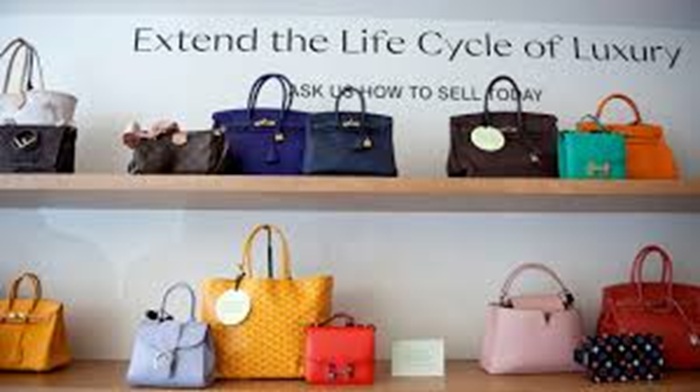
Anything that is considered fashionable will stand out this season, be it trendy Polo T-shirts or casual fashionable shirts, with the top-wear segment sales figures far higher than bottom-wear. Two-track spending is expected as different income level consumers will be affected differently by the economic turbulence in 2023, which will increase demand for resale, rental, and off-price products.
Rental products will be trending with dedicated platforms, brands, retailers and even media groups offering rental over buying in a post-pandemic party surge that will make this sector worth over $2 billion globally by 2025. Throughout 2022, new rental offerings were introduced across the price spectrum by brands such as H&M, Marks & Spencer in the middle range and Matches Fashion Rental at the luxury end along with the launch of US-based ModLuxRent by Modern Luxury Media among others. With a finger on the pulse of changed consumer demands with tighter purse strings, fashion brands can still keep their profits soaring, if they play the cards right.