FW
ICAC partners with CottonConnect
CottonConnect and the International Cotton Advisory Committee will jointly undertake a series of projects.
The partnership, covering an initial period of a year, represents the primary common interest between the two organisations. Since ICAC is the only intergovernmental association representing 25 cotton producing, consuming, and trading countries worldwide, it can serve as a valuable learning platform for CottonConnect to learn through discussions on cotton issues of international significance.
CottonConnect can learn from ICAC and build on the sustainability component of cotton production, thus improving the progress and development of cotton sectors across its regions. ICAC can also learn from CottonConnect’s extensive experience and share it with other members across the globe.
ICAC's privileged relationships with major players afford it access to leading cotton researchers and scientists across the globe, who understand cotton from the field to the consumer. The CottonConnect network stands to benefit greatly from these innovations and can take advantage of those that are practical and feasible to implement. ICAC member countries may also benefit from CottonConnect's innovations in cotton.
Formed in 1939, the ICAC is an association of cotton producing, consuming and trading countries. CottonConnect helps improve the sustainability of global textile supply chains, thereby enabling producers and raw material farmers to work more responsibly and enjoy better livelihoods.
Indian exporters get RoSCTL relief
India has amended the Rebate of State and Central Taxes and Levies (RoSCTL) scheme.
So Indian garment exporters have got relief from favorable appreciation in transferable duty credit scrips. The amendment will provide relief to the garment sector and ensure maximum refund of the RoSCTL amount will help exporters meet their working capital requirements.Further, it will give an impetus to the garment sector to perform better at a much faster pace. For ensuring continuity, the scheme will continue till March, 2024.
However, exporters are still facing various issues. They want deletion of the provision making the transferee liable to RoSCTL conditions. Exporters can generate scrips immediately after the shipment of export consignments but the realisation of payment use takes months.After a certain time, customs officials had the authority to take action for recovery of the scrip amount. Now the original beneficiary of the scrip will be liable in case of non-realisation of export payments.
Under the RoSCTLscheme, the maximum rate of rebate for apparel is 6.05 per cent while for made-ups it is 8.2 per cent. However, with the deep discount, exporters were getting between 4.8 per cent to 6.4 per cent and were losing 1.2 per cent to 1.6 per cent in the shape of discount.
71% Consumers get earth-friendly, say Boston Consulting
Seventy-one percent of consumers across the world are concerned about sustainability in the apparel category.
So says a survey by global management consulting firm Boston Consulting Group. The survey involved around 19,000 consumers as participants in eight countries—Brazil, China, France, Germany, India, Italy, Japan, and the US.
But a mere 20 per cent believes their purchasing decisions can personally impact the environment and around 70 per cent are unsure about corporate claims regarding sustainability.
Sustainability is now an integral part of everyday life with consumers’ growing awareness and their stance to opt for eco-friendly products. And to sustain existing customers and lure new ones, textile and apparel companies are creating ethical robes and offering innovative products. They are also making sure that the impact is percolated till the end of the value chain and their suppliers so that no unethical practices are imbibed and followed.
Among the materials used by some shoe makers are recycled bottles for laces, castor bean oil for the insoles, recycled cardboard for packaging as well as merino wool and tree fibers for the shoe uppers. Although millennials vouch for sustainable fashion and social change, the eco-friendly factor of a fashion product are often dominated by factors such as price and value.
India’s Alok Ind launches new fiber replacing cotton
Alok Ind will launch a sheet collection named Suta. Suta fiber is a naturally wrinkle-resistant, anti-bacterial, zero shrink and quick dry yarn that boasts test standards superior to 100 per cent cotton. Alok developed the innovative yarn using its expertise in polymer-based yarns. The manmade fiber can compete directly with the hand feel of a natural cotton fiber.
The collection is made from yarns that weave into a fabric the feeling of cotton. The product has been designed to help manufacturers and retailers decrease risk and volatility driven by single source cotton. Suta can be used as 100 per cent fiber construction and can also be used in blends and with recycled yarns.
Alok is an Indian textile manufacturer with operations in both the cotton and polyester value chain. The company is primarily engaged in the business of textile manufacturing including mending and packing activities. It has four manufacturing locations. The range of products includes fabrics, garments, embroidered fabric saris and terry towels.
Alok was incorporated in 1986 and began activities with the manufacture of texturised yarn by setting up manufacturing facilities at Silvassa. In the company expanded the texturising capacity to 30 machines, knitting capacity to 40 machines and weaving capacity to 170 air jet/ rapier looms.
Eyeing Chinese share Bangladesh can step up exports to EU,UK
Bangladesh is yet to tap the full potential of the European Union and the UK markets.
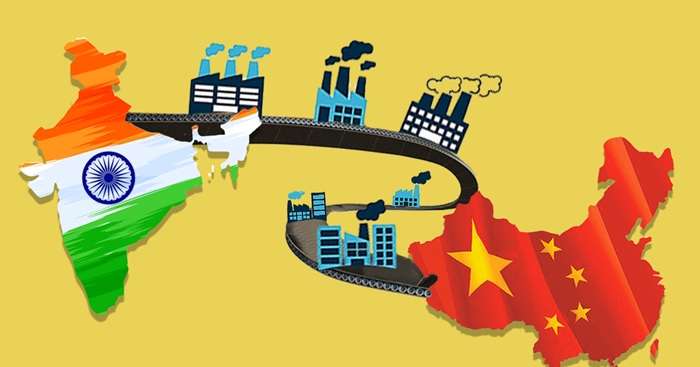
It has scope for additional earnings by exporting products to these regions. One reason is that China is losing its share in the global market due to rising tensions with the west, the emerging geopolitical scenario, and the extended Covid restrictions in the former, and therefore Bangladesh can further raise its share.
China is moving away from low value-added apparels to more sophisticated ones and that also works to Bangladesh’s advantage. China’s share in the EU market in 2010 was nearly 44 per cent which declined to around 31 per cent in 2021.
In fiscal 2021-22,Bangladesh’s export earnings from the EU and the UK grew by 32 per cent. However the country faces challenges, including inefficiency in ports, complex customs procedures and lack of technological upgradation. Attracting more foreign direct investment in backward linkage, investment in non-cotton fabrics and diversification of readymade garment products can allow Bangladesh to grab a bigger share of Chinese exports.
The South Asian nation’s producers of readymade garments contribute around a fifth of its gross domestic product and more than 80 per cent of its export earnings
US T&A imports up 29 per cent
In the first seven months of 2022, imports of textiles and apparel by the US rose by 29 per cent.
US textile and apparel imports consist of cotton products, manmade fiber products, wool and silk products, and products from silk and vegetable fibers.
Apparel constituted the bulk of textiles and garments imported by the US in January 2022 to July 2022. With a 26 per cent share, China continues to be the largest supplier of textiles and clothing to the US, followed by Vietnam with 14 per cent. Among the top ten apparel suppliers to the US, imports from Indonesia and India shot up by 59 per cent and 59 per cent year-on-year respectively. Imports from Cambodia and Bangladesh too grew 55 per cent and 54 per cent respectively. Additionally, imports from Pakistan, which is among the top 10 suppliers, registered a growth of 46 per cent compared to the same period of the previous year.
In the non-apparel category, among the top ten suppliers, imports from Cambodia soared by 70 per cent year-on-year. Imports from Vietnam and Italy too climbed 27 per cent and 23 per cent respectively. On the other hand, imports from Turkey dipped by 11 per cent.
Spanish brands Inditex, H&M and Primark grow, get profitable
Spanish fashion designer brands have increased their business by eight per cent.
Inditex, H&M and Primark lead Spanish textile commerce. Traditionally, sales of the three groups have evolved better than the revenue of the sector in Spain. These groups represent 37 per cent of the total fashion sector in Spain.
They have experienced a recovery in indicators such as employment, which has already reached pre-pandemic figures. In 2021, the number of direct jobs in the sector was seven per cent higher than in 2020 and three per cent more than in 2019. Production also returned to growth with an eight per cent increase to around 13 million garments and accessories. The figure is 25 per cent lower than in 2019, when it reached an all-time high.
In terms of distribution, the number of points-of-sale of designer brands increased by one per cent. E-commerce, critical during the pandemic year, continued to gain momentum, with a growth of 55 per cent. This is the highest growth this figure has experienced since records began in 2015. In comparison to 2019, the increase was 137 per cent.
In addition, designer labels have continued to achieve success internationally: in 2021, their sales abroad soared by 30 per cent and already contributed 40 per cent of the sector's total business.
Rise in Bangladesh denim exports to the US
Bangladesh’s denim exports to the US in the first seven months of 2022 rose by 46 per cent.
In 2021, Bangladesh became the top denim exporter to the US for the second consecutive year. Currently, Bangladesh holds a 22 per cent market share of the US denim market.
Bangladesh’s denim sector has improved a lot with huge investments in denim processing plants. The fabric used to be imported but now about 60 per cent is being sourced from domestic suppliers.
A number of state-of-the-art fabric mills were established in the country due to the positive growth of denim.Bangladesh’s manufacturers now produce high-end products with increased investment in research and development, in-house design studios, and technologically advanced washing plants. However the ease of doing business needs to be further developed by resolving all the complexities related to infrastructure and ports.
Although, there has been a decline in orders as the global economy is going through an unstable situation due to war, inflation and the energy crisis. Retailers now have a surplus of goods and so are ordering less. Plummeting sales in the West amid rising inflation driven by the Russia-Ukraine war is the big cloud on the horizon for the apparel industry of Bangladesh.
Pakistan eases textile functioning, sector awaits new policy
Pakistan is committed to reducing the cost of doing business for export-oriented sectors including textiles and reducing the current account deficit.
Value-added products are being promoted. Other steps taken include the supply of energy at competitive tariffs, monetary disbursements to mitigate prevailing liquidity issues due to severe economic challenges, duty-free import of cotton and reduction of custom duties on import of dyes and chemicals, and duty-free import of textiles and apparel machinery.
Pakistan’s textile industry is faced with countless opportunities to capture a greater market share, but state reforms in energy, technological upgradation, diversification and value addition will be necessary in order to enhance the potential of the sector and facilitate economic growth.
Pakistan’s exporters handled disruptions such as the Covid pandemic very well especially in comparison to regional competitor Bangladesh.To maintain the current momentum, the textile sector has committed to unprecedented value addition by committing to setting up 1000 garment plants.
A new policy on textiles and apparel would address matters including value addition, product diversification, skill development, productivity and ease of doing business. Investment will be invited in the textiles and apparel sector to enhance manufacturing capacities.
In the global textile market Pakistan has less than a two per cent share, which will be enhanced with practical steps.
Uganda needs more zeal to better utilize AGOA’s duty-free access to US market
In spite of the African Growth and Opportunity Act (AGOA) providing duty-free access to the US market for over 6,000 products, Uganda government believes AGOA‘s potential hasn’t been maximized to its fullest potential even two decades later. The legislation’s primary goal was to promote economic growth through good governance and free markets.
An underutilized opportunity
Although through AGOA, the American market had opened up for micro, small and medium enterprises of Uganda and created a win-win scenario for US and Ugandan businesses, it still isn’t doing as well as expected. Uganda’s export earnings have dropped tremendously in the last two years as a result of the pandemic. Over the last three years, Uganda in particular and the globe in general have been reeling under uncertainties. As other regional countries were finding their feet, Uganda was feeding the US market with coffee, crafts, vanilla, chocolate, tea, textile and dried fruits—all under the AGOA initiative.
As Teddy Ruge, exporter of value-added Moringa products rues, AGOA is a fantastic opportunity but Uganda has not taken full advantage of it yet. Only about 50 companies are exporting to the US under the AGOA initiative. However, by now the number of companies directly exporting to the US by virtue of this arrangement should have been 1,000.
AGOA extension and things to do
Experts are now troubled as the AGOA agreement is set to expire in September 2025 at which stage preferences will fade away, unless renewed or replaced by other preferences, or bilateral trade agreements. In Uganda, there is already increased momentum from the government and sector players to have it extended to at least 2035 or leave it open. According to AGOA in charge in Uganda, Ms Susan Muhwezi, extension is a no brainer, considering its recent success. Experts feel to succeed better, solving challenges such as the skilling gap, shortage of working capital and addressing value chain loopholes, including harnessing interactions with farmers, will go a long way in reaping tangible success out of the AGOA initiative.
Francis Kuluo, Ministry of Trade Principal commercial officer points out, Uganda could have done much better. Now, they need to pay more attention to quality because it is an important market requirement. Uganda has been working on it since 2018 and developed standards for many products, including crafts. The country has also reduced standards and certification costs with a view to growing our exports. The way ahead is to embark on massive sensitization, opines Kuluo. MSMES needs to know there are more than 6,000 products that can be supplied under AGOA to the US market.
Ugandans are still battling post-Covid effects and, since the US economy hasn’t yet fully reopened, the market for these products has dropped. However, there is hope for the future as the duty-free act continues for another new term. Along with the government leading the way, local farmers should take advantage of AGOA. Most of them like the cheaper shortcut route and are inconsistent with their produce. After trying once exporting through AGOA and not making instant profits, they become impatient and leave and try other markets. Thus, with the AGOA settlement being extended, the success of this initiative will now be dependent on the participation of private sector with the government being a facilitator.