FW
Global cotton market sees drastic fluctuation in March
As per a report by the CCF Group, the global Cotton linter market saw drastic fluctuation in March. Cottonseed oil plants resumed operation slowly back from the Chinese Lunar New Year holiday, so the supply was hard to increase.In early March, cotton linter supply was tighter and major producers in Shandong, Hebei and Xinjiang generally became reluctant sellers with firm prices, so the market continued to be stronger. In addition, dissolving pulp price also kept rising amid short availability during the same period, so some VSF plants replaced dissolving pulp by cotton linter pulp and some cotton linter pulp mills resumed operation, which sharply boosted the demand for cotton linter. Since the beginning of this year, the cumulative increase of cotton linter price had been around 1,500-1,800yuan/mt as of early-to-mid-Mar.
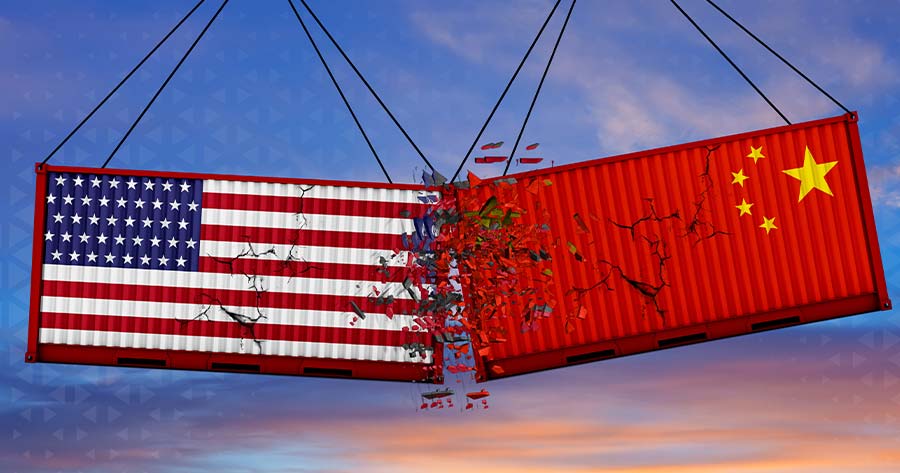
Since then, the price stopped rising and started to decline at a faster speed in particular around mid-to-late Mar, which was affected by great volatility of bulk commodities, worries over tightening global liquidities and troubled China-EU and China-US relations. Moreover, the sanctions on Xinjiang cotton also caused sharp decline of ZCE cotton futures and cottonseed oil places generally stopped procurement to avoid risks, leading to slipping cottonseed prices. Affected by this, cotton linter trades were almost thin with constant price decline. Till now, the price has been tumbling by more than 800yuan/mt from the higher level.
In addition, imported cotton linter also weighed on Chinese cotton linter price. According to customs data, cotton linter import of China totaled 18,788.3 tonne in the first two months of 2021, up 37.4 per cent y-o-y. The import price averages at $275.66/mt (equivalent to around 2,100yuan/mt), down 18.45 per cent on the year.
Pakistan to reduce customs duty to boost synthetic fiber exports
Pakistan Prime Minister’s advisor on trade Razak Dawood said the government plans to reduce the customs duty to boost synthetic fibers’ exports in the coming budget. The advisor indicated that, the customs tariff and fiscal regime are rationalized and the textile and clothing exports will increase at Rs. 925 trillion by $19 billion in 2024-25 growth incentives. At the outset, the advisor said that Pakistan had dependent heavily on 70 per cent cotton exports and 30 per cent human-made (synthetic) fibre.
Dawood claims that since he has entered the International Monetary Fund (IMF) scheme he has failed to report customs duty to lift income collection. He continued that the remaining 2 percent custom duties have been scrapped and the Budget also abolishes three percent duties. He said that the IMF contended that Pakistan’s tax generation was extremely poor and needs to be increased as the government entered through the IMF program. The Government then agreed to introduce additional custom duties of two percent, four percent and seven percent, he said, adding that they were battling to eliminate this now. The advisor also requested help from the commission for the withdrawal of customs duty from imports because it was reported that the Federal Revenue Board (FBR) could avoid the withholding of revenue.
Economic integration helps Vietnam boost apparel exports
International economic integration process is helping Vietnam increase its exports by 22 percent year-on-year and imports by 26 percent in the first quarter of 2021, said Tran Thanh Hai, Deputy Director, Agency of Foreign Trade, Ministry of Industry and Trade.
Hai said the EU-Vietnam Free Trade Agreement (EVFTA), the UK-Vietnam Free Trade Agreement (UKVFTA) and the Comprehensive and Progressive Agreement for Trans-Pacific Partnership (CPTPP) have become effective, and the Regional Comprehensive Economic Partnership (RCEP) is about to come into effect.
For the EU market, several Vietnamese commodities have enjoyed incentives of the EU’s Generalised System of Preferences (GSP) for years.
However, for the long term, taking advantage of opportunities brought about by the EVFTA is a sustainable and equal preference. Specially, for the commodities that Vietnam has advantage, they can enjoy preferences on origins combined in the EVFTA, Hai said.
He advised enterprises to bring into full play advantages of the agreement by understanding the advantages for their commodities and then change their production process and material supply to meet requirements of origin.
Uzbekistan to open garment factory in Kyrgyzstan
Uzbekistan plans to open a garment factory in Kyrgyzstan with an investment of $2 million,
Akrom Ganiev, Director, Nil-Granit, working under brand SAMO, and DaniyalHabibullaev, Deputy Director, Uzbektextileprom signed the roadmap with Bishkek Free Economic Zone Director General KudretTaichabarov.
Uzbekistan will rent 2 ha area in the Free Economci Zone and will create a factory for 200 work places. Kyrgyzstan will provide necessary infrastructure for the factory, will adapt it to local construction standards and will help obtaining all necessary permits.
The factory will produce high-quality clothing meeting world standards. It will exported to the Eurasian Economic Union countries and beyond.
CITI abstains from hiking yarn prices in April 2021
In its recent meeting, Confederation of Textile Industry (CITI) decided not to hike yarn prices in April 2021.Tthe virtual meeting was attended by over 50 nationwide regional associations of spinning mills. Participants said, the reduction in cotton prices in Intercontinental Exchange (ICE), would automatically reflect in India’s cotton and cotton yarn prices.
As cotton prices in India have also reduced, CITI advised spinners against panic buying and staying calm as prices are expected to fall in the coming months.
The traders’ body said, hank yarn prices have been coming down since last 10 days and the yarn price is also expected to come down.
It advised cotton mills, which are in the habit of announcing any ‘List Price’ at the first day of each month, to defer such announcements at least for some months, to have the market sentiments regain good support. It also requested companies to buy yarn only when required rather than stocking it
The Lycra Company launches performance fibers from textile waste
Global leader in fiber solutions, The Lycra Company has launched its first performance fiber range made from 100 per cent textile waste. Branded under its existing Coolmax® and Thermolite® ranges, these fibers are made from textile waste.They have been made in collaboration with the Itochu Corporation, a general trading company with strength in consumer-related sectors, including the textile business.
These fibers are made through a unique depolymerization and refining process that converts textile waste into fibers with properties comparable to virgin polyester. The new fibers are available in filament and staple forms, suitable for common textile processes and insulations batting uses.
Traditionally, the Coolmax® And Thermolite® range of fibers were made from recycled raw materials such as recycled PET bottles. The company will continue to offer these products in parallel with those made from textile waste. These new products can be purchased from The Lycra Company, except in Japan where Itochu will be responsible for sales and marketing.
Pakistan considers lifting ban on Indian cotton imports
Headed by Prime Minister Imran Khan, the Pakistan textile ministry has recommended the lifting of a ban on cotton import from India to bridge the raw material shortfall in the country’s textile sector. The textile ministry has sought permission from the Economic Coordination Committee (ECC) to lift the ban on import of cotton and cotton yarn from India.
In-charge of the Commerce and Textile Ministry, Prime Minister Khan has already approved the summary to be placed before the ECC. Currently, Pakistan allows cotton and yarn imports from all countries except India. It suspended trade ties with India after New Delhi revoked the special status of Jammu and Kashmir in 2019.
It faces a minimum shortfall of six million cotton bales and has so far imported roughly 688,305 metric tonne of cotton and yarn, costing $ 1.1 billion, according to the Pakistan Bureau of Statistics. There is still a gap of about 3.5 million bales that needs to be filled through imports.
Due to shortage of cotton and yarn, the users were compelled to import them from the United States, Brazil and Uzbekistan. However, imports from India would be far cheaper and would reach Pakistan within three to four days.
Nike terminates business with wholesale partners
Nike plans to end its business relations with wholesale partners including DSW, Urban Outfitters, Shoe Show, Dunham’s Sports, Olympia Sports and Big Five and focus on direct-to-consumer (DTC) commerce. As per the Retail Wire, Nike announced its Consumer Direct Offense strategy in 2017 as a five-year plan to focus growth on 40 strategic retail partners and its own DTC.
Last year, Nike ended its relationship with nine accounts: Belk, Bob’s Stores, Boscov’s, City Blue, Dillard’s, EbLens, Fred Meyer, VIM and Zappos. The brand has also cut off numerous smaller independents. Since 2017, digital has become a bigger priority for Nike. The brand aims to increase its online business from 35 per cent in recent quarter to 50 percent. It has developed three digital-first retail concepts — Live, Rise and Unite — and is set to accelerate the store openings.
Nike officials have also urged it to work with select retailers, including Dick’s Sporting Goods, Foot Locker and Nordstrom in North America, that are collaborating with the brand on unique in-store concepts or driving member engagement.
ITC organizes TextilesExchange 2021 in April
The International Trade Centre’s (ITC) Supporting Indian Trade and Investment will organize TextilesExchange 2021, a virtual trade fair from April 23-24, 2021. The event is being organized by ITC under the aegis of SITA, in partnership with the India International Textile Machinery Exhibitions (ITME) Society, and aims to facilitate trade and technology transfer between Indian and East African companies along the textile and apparel value chain.
The event will specifically focus on machinery, fibres, yarns, fabric, trimmings and accessories, and training. Besides B2B meetings, SITA and ITME will organize thematic seminars on areas of particular relevance and practical value to the industry.
The event offers buyers and sellers, engaged in the textile and apparel value chain, an opportunity to present their businesses, showcase their products, connect with relevant sellers/buyers in virtual B2B meetings, build their client base and transact deals.
European Chamber in China advises brands to let the Chinese anger pass
Joerg Wuttke, Head, European Chamber of Commerce in China has advised Hennes & Maurtiz AB and other brands, who refuse to use cotton from Xinjiang, to lay low and let the Chinese anger pass else they face risks from political issues. Chinese social-media users gave a call to boycott H&M products last week after discovering an undated statement from the company saying it would not use cotton from the far western region of Xinjiang over forced-labor concerns.
The retailer was criticized by the Communist Youth League and the People’s Liberation Army, and outlets vanished from Apple Maps and Baidu Maps searches. Some of the H&M’s stores in smaller cities were closed by landlords.
Other Western brands like Nike Inc. and Adidas AG are also being criticized for their pledges not to use Xinjiang cotton. The region supplies around 80 per cent of the material for China. Wuttke said, the backlash could damage Beijing in the long run by jeopardizing Chinese jobs.