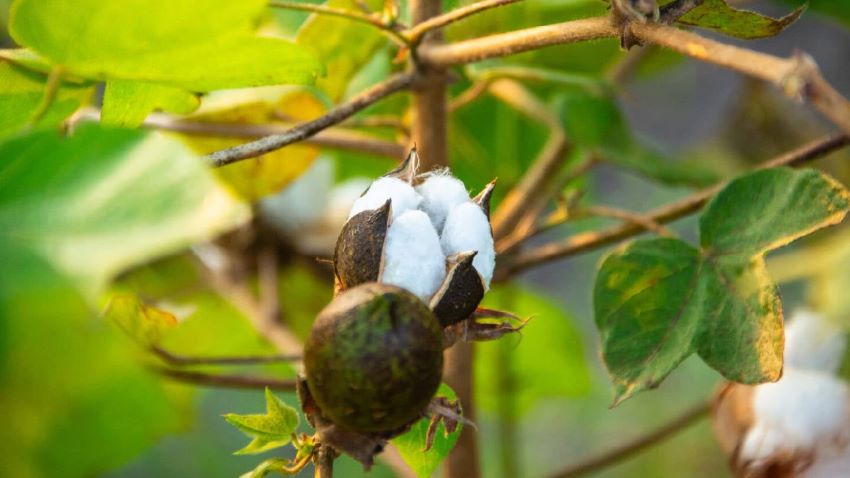
Consumption of cotton may go up in Bangladesh. The price of the fiber has declined and production has increased.
Imports of cotton in Bangladesh have risen over many years due to higher shipments of cotton-made garment items and an increasing number of spinning mills in the country.
Bangladesh is the largest importer of cotton in the world. Demand for the natural fiber is on the rise in Bangladesh as it is the only country that is still mainly dependent on raw cotton to make yarn and fabric. Local growers can meet less than three per cent of the annual demand, leading to imports worth over three billion dollars.
China stopped sourcing the raw material three years ago.
By the end of 2020, cotton consumption in Bangladesh may hit 7.9 million bales. Currently, Bangladesh imports 55 per cent of its demand for cotton from India, thanks to favorable prices, geographical proximity, shorter lead time and the quality of the fiber.
Other countries have shifted to manmade fibers like filament, polyester and viscose. As a result, the global consumption of cotton has been on the decline.
The lower price of cotton may affect garment prices as well. The sourcing costs of garments could decrease by six per cent to seven per cent.

- 1
- 2
- 3
- 4
- 5
- 6
- 7
- 8
- 9
- 10
Global apparel supply chains realign as India navigates trade volatility
The global apparel and textile sector is experiencing a significant structural shift, as major manufacturers and retailers move away from... Read more
India’s textile sector targets global supply chain shift with $100 bn export pus…
As global brands push up efforts to diversify sourcing beyond traditional manufacturing hubs, India is repositioning its textile industry through... Read more
India balances farm interests and export ambitions with temporary cotton import …
" " The textile industry has received a policy reprieve after the Ministry of Finance eliminated the 11 per cent import... Read more
Global supply chain strain deepen as fashion brands tighten sourcing costs
The global apparel industry is dealing with growing sourcing tension as big fashion retailers intensify efforts to reduce procurement costs... Read more
From Voluntary to Mandatory: Asia’s manufacturing hubs lock in green compliance …
The multi-billion-dollar Asian apparel export market is entering a enforced sustainability era, where environmental and labour compliance is no longer... Read more
MediaVision report signals the end of mass-market fashion marketing
" " The latest MediaVision Q1 2026 Fashion Report highlights, the age of broad-spectrum marketing and passive brand awareness is rapidly... Read more
Circularity as Strategy: BRICS countries turn waste into competitive advantage
The global fashion industry’s long-standing take-make-dispose model is being reset as BRICS economies increase their transition toward circular production systems.... Read more
Amazon’s €15 bn bet on France and the future of commerce
As Europe’s luxury sector enters a phase of austerity, a parallel transformation is unfolding in the continent’s retail foundations. What... Read more
Global Sourcing Expo Sydney 2026: Bridging the gap in global apparel procurement
The upcoming Global Sourcing Expo Sydney, scheduled for June 16–18, 2026, at the International Convention Centre (ICC) Sydney, is poised... Read more
Zara’s precision retail model leaves global competitors drowning in inventory
The global apparel sector is currently grappling with a punishing inventory overhang, yet Inditex, the parent company of Zara, has... Read more