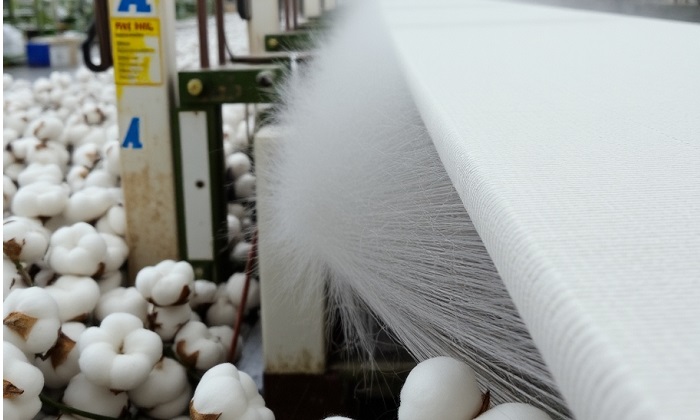
In terms of acreage, India is ranked fourth after the US, Brazil and Argentina in adopting of GM crops. While the top three grow more than one GM crop, India grows only cotton. Bt cotton was introduced in India in 2002 amid a raging controversy. This is a genetically modified seed. Many activists were alarmed at the decision to permit GM crops in India, and there were widespread agitations. Bt cotton continues to be the only genetically modified crop permitted in India and has captured about 95 per cent of the crop area under cotton. However, the increase in productivity has not been commensurate. The average yield was 472 kg per hectare in 2005-06 (when only about 15 per cent of the cotton crop was covered by Bt cotton.) The yield rose marginally to 484 kg per hectare in 2015-16. A dispute arose between several seed companies and Monsanto regarding Bt cotton trait fee payments.
Initially, the dispute between Monsanto and seed companies was the quantum of royalties or trait value to be paid by the latter. In 2010, some state governments fixed the maximum retail prices of cotton seeds, which included the trait values as a component. The governments did this so as to ensure that seeds were available to the farmers at reasonable prices. However, Monsanto put pressure on the seed companies to pay the trait values as determined by them on the ground that they had a patent on Bt cotton seeds. The seed companies had no alternative but to pay under protest.
- 1
- 2
- 3
- 4
- 5
- 6
- 7
- 8
- 9
- 10
The Invisible Bleed: How a single chemical is slowing India’s apparel machine
The global fashion industry has spent the better part of the past two years obsessing over visible disruptions viz. volatile... Read more
The Closet Paradox: How ‘nothing to wear’ is driving global overconsumption
In an era of overflowing wardrobes and instant fashion gratification, a striking paradox has emerged: the more clothes we own,... Read more
US trade rulings and labor slowdown reshape 2026 cotton supply chains
The global cotton industry is entering a period of adjustment, shaped by legal rulings, trade policy recalibrations, and a softening... Read more
Zero-tariff paradigm drives strategic re-sourcing at Global Sourcing Expo 2026
Projected to reach a valuation of $30.3 billion this year, the Australian textile and apparel market is entering a period... Read more
Strategic manufacturing takes center stage at Gartex Texprocess Mumbai 2026
A $179 billion industrial cornerstone contributing 2 per cent to the national GDP, the Indian textile and apparel sector is... Read more
The Hidden Tax on Fashion: 2026’s EPR rules squeeze margins and shake supply cha…
As the 2026 enforcement deadlines for California’s SB 707 and the European Union’s harmonized Waste Framework Directive loom, the global... Read more
Guess? Inc. retreats from China as American cool hits a cultural wall
For more than two decades, Guess? Inc., the emblem of ‘accessible American cool’, maintained an ambitious footprint in China. At... Read more
The Hormuz Effect: Why a distant war is shaking Bangladesh’s garment exports
The immediate impact of the Iran- Isarel-US conflict is being felt in the logistics arteries that connect Bangladesh’s factories with... Read more
The rise of localized luxury, MEA, North America, and India lead growth
The global luxury industry is no longer defined by relentless expansion. The ‘2025 Global Luxury Brandwatch Report’ highlights a sector... Read more
Hormuz blockade sends shockwaves through India’s textile chain as polyester cost…
What began as a geopolitical escalation in the Gulf has rapidly metastasized into a full-scale industrial disruption for India’s textile... Read more