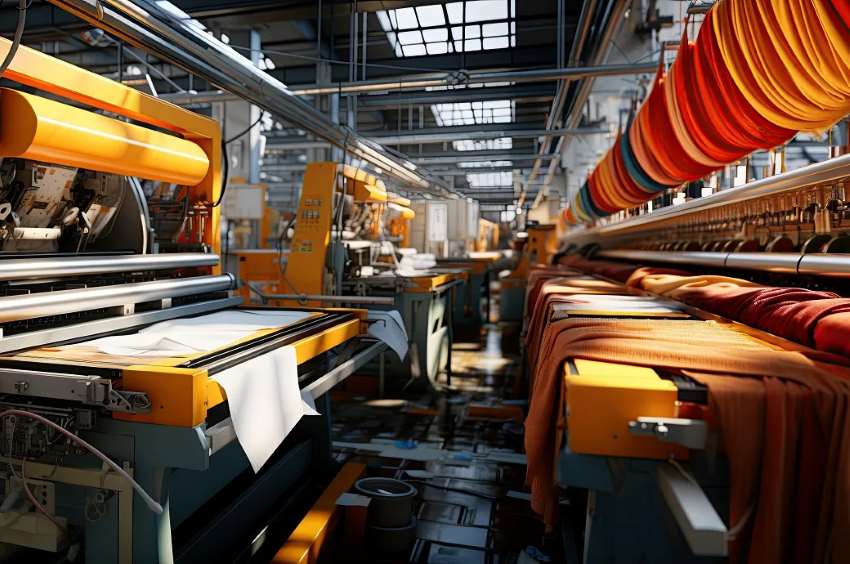
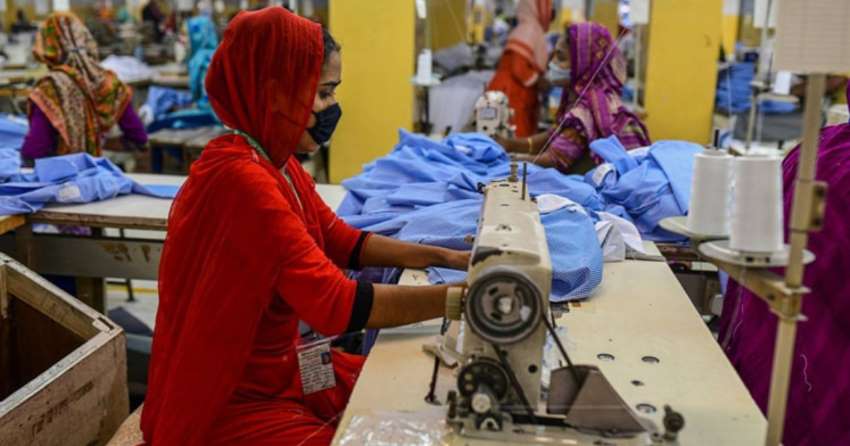
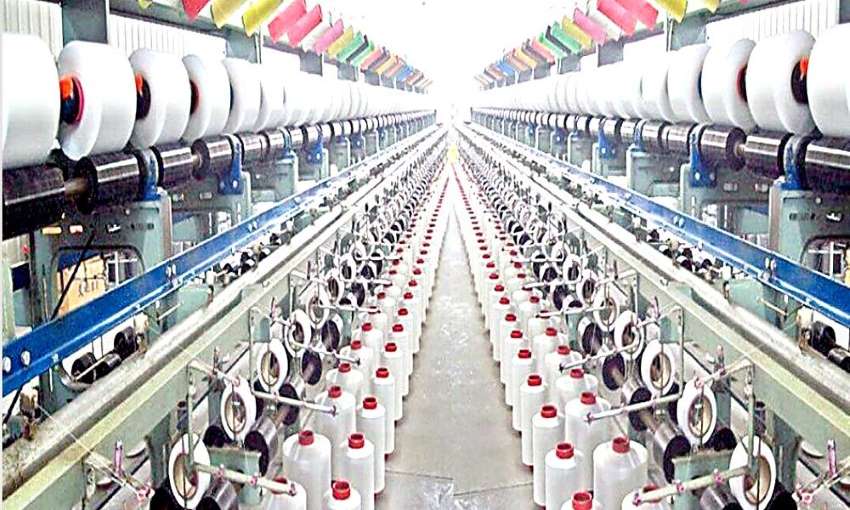
Egyptian textile industry has proven that it is more than up to the task, if only given the chance. According to the country’s central bank statistics, in the decade before Egypt’s 2011 uprising, cotton textile exports increased by about 19 per cent a year on average, having surged from US$108.9 million in 2001-02 to $628.0m by 2010-11.
Exports of ready-made clothes climbed almost as quickly, jumping 17.6 per cent a year, from $187.2m to $771.2m. Since the uprising this growth has come to halt, with exports of cotton textiles increasing by only 3.1 per cent annually in the four years to June 2015, and ready-made clothes by only 1.4 per cent. Textile exports actually contracted in the two years after July 2013, when Mohammed Morsi was removed from power and a degree of political stability was restored. Many smaller companies have shut down entirely.
To be sure, the overvalued pound has not caused all the problems, according to Mohamed Kassem, chairman of the Ready Made Garments Export Council of Egypt. The government raised the prices of electricity and natural gas in July 2014, with those paid by industry rising especially sharply. Labour and water bills also increased, and because of security concerns the government has made it harder to import many chemicals. All this has happened at a time when textile prices were falling around the world.
According to Kassem, the biggest problem remains that the strong pound is pricing Egyptian textiles out of the export market. The exchange rate is at the top of the list. Although the Egyptian pound was devalued against the dollar several times last year, since mid-2013 it has actually strengthened against the euro, the currency of one of Egypt’s main export markets. Meanwhile, the currencies of many of Egypt’s competitors have weakened, making their products more attractive.
- 1
- 2
- 3
- 4
- 5
- 6
- 7
- 8
- 9
- 10
The Hormuz Effect: Why a distant war is shaking Bangladesh’s garment exports
The immediate impact of the Iran- Isarel-US conflict is being felt in the logistics arteries that connect Bangladesh’s factories with... Read more
The rise of localized luxury, MEA, North America, and India lead growth
The global luxury industry is no longer defined by relentless expansion. The ‘2025 Global Luxury Brandwatch Report’ highlights a sector... Read more
Hormuz blockade sends shockwaves through India’s textile chain as polyester cost…
What began as a geopolitical escalation in the Gulf has rapidly metastasized into a full-scale industrial disruption for India’s textile... Read more
India’s National Fibre Scheme decouples textiles from global supply risks
For decades the Indian dominated spinning, weaving, and garment exports while remaining paradoxically dependent on imported man-made fibres and specialty... Read more
From London to Tokyo, premiumization redefines retail and office markets
Global real estate landscape has changed. Gone are the cautious narratives of recovery that defined the post-pandemic years. Today, flight... Read more
Compliance drives India’s $176 bn textile shift
India’s textile economy is no longer selling fabric alone; it is selling proof. As compliance rules harden across export markets,... Read more
The second life economy gets a boost as resale outgrows traditional apparel reta…
For decades, resale existed in the margins of the apparel economy, thrift stores, peer-to-peer marketplaces, and charity bins quietly absorbing... Read more
Rising polyester costs shake India’s textile manufacturing hubs
India’s synthetic textile industry is confronting a sudden and destabilizing price shock that is reverberating across its vast manufacturing ecosystem.... Read more
Cotton markets hold firm as tariffs, higher supply reshape global fiber economic…
In a year marked by tariff escalations, geopolitical brinkmanship and a recalibration of global trade flows, the international cotton market... Read more
Beyond Cotton How Kapok could redefine sustainable insulation in textiles
In the lush, humid heart of Southeast Asian rainforests stands a giant, a silent sentinel of the forest canopy. Growing... Read more