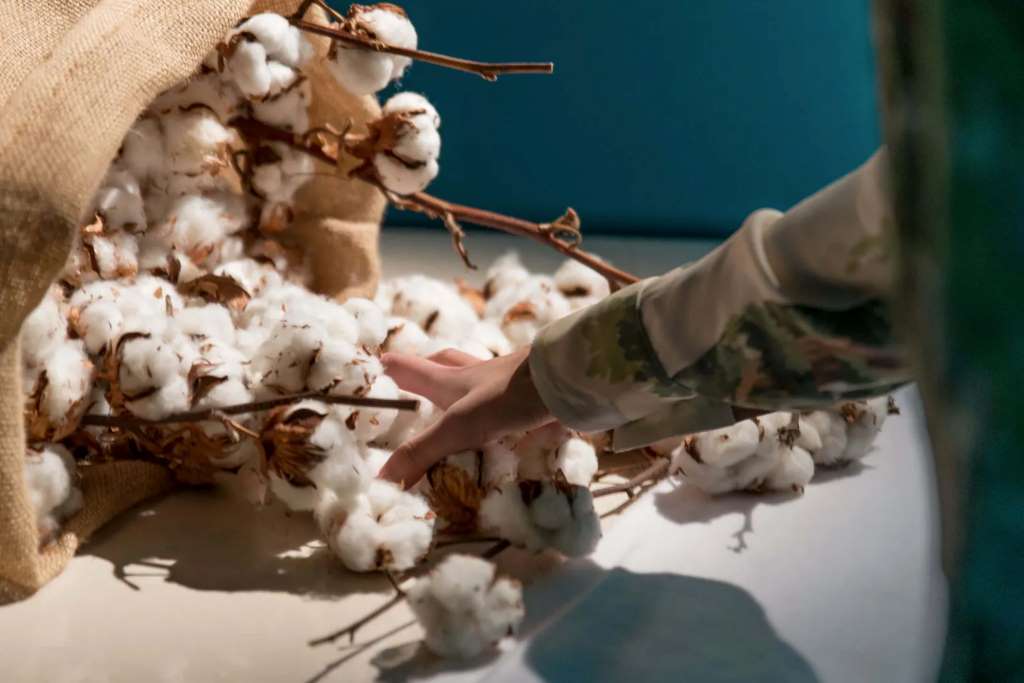
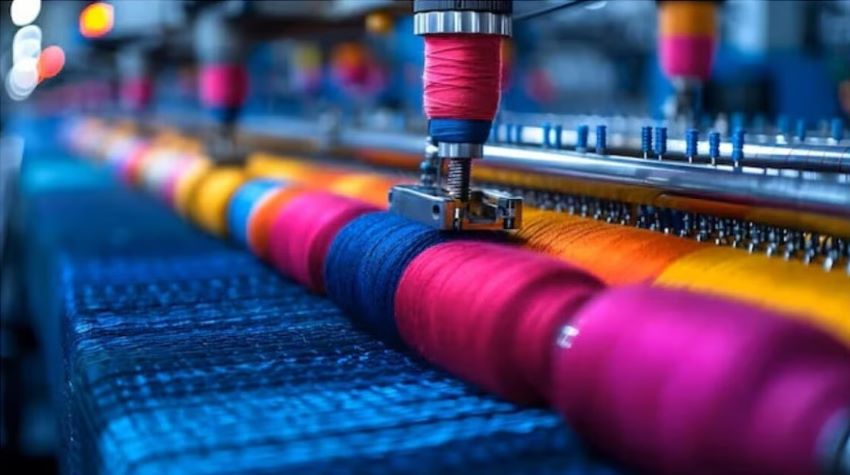
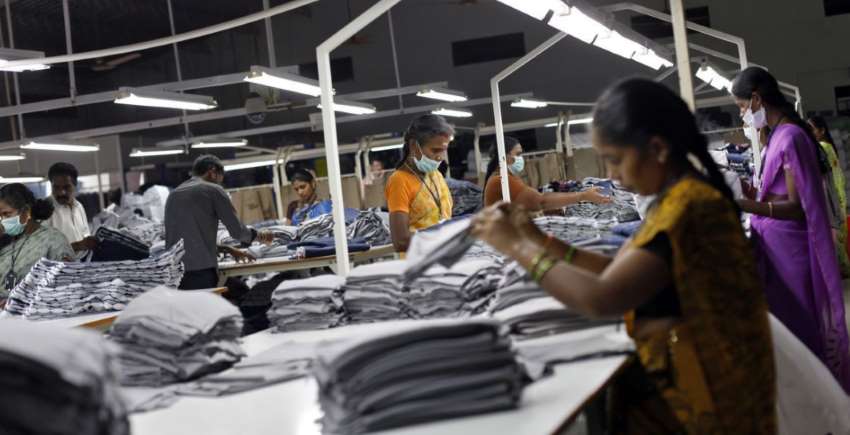
Textile production has a major environmental impact. Conventional cotton growing, where large quantities of insecticides are spread directly on land, stands out as a particularly heavy burden on the environment.
Choosing eco-labeled clothes makes a difference. There are several cotton labels. However, eco-cotton labels only indicate that the cotton was organically grown – they say nothing about the rest of the production process (dyeing and treatment). The major environmental impact is found in post-fiber processing stages: spinning, weaving, knitting and, above all, in the dyeing – the wet processing.
In industrialized countries, only a tiny percentage of garments are worn 100 to 200 times, which is usually the potential lifetime. In Sweden, for example, consumers buy an average of 50 new garments per person and year. Similar figures apply to the rest of Europe and the United States.
Textiles that are made of cellulose from trees and plants are an important track in research and development to close the loop so that the textile industry becomes sustainable. Viscose, modal and Lyocell/Tencel are examples of such textiles that are already available and whose environmental performance is often good. When consumers buy used clothing instead of new, the environmental benefit is substantial.
Online shopping is generally a very good alternative from the environmental perspective.
- 1
- 2
- 3
- 4
- 5
- 6
- 7
- 8
- 9
- 10
The Invisible Bleed: How a single chemical is slowing India’s apparel machine
The global fashion industry has spent the better part of the past two years obsessing over visible disruptions viz. volatile... Read more
The Closet Paradox: How ‘nothing to wear’ is driving global overconsumption
In an era of overflowing wardrobes and instant fashion gratification, a striking paradox has emerged: the more clothes we own,... Read more
US trade rulings and labor slowdown reshape 2026 cotton supply chains
The global cotton industry is entering a period of adjustment, shaped by legal rulings, trade policy recalibrations, and a softening... Read more
Zero-tariff paradigm drives strategic re-sourcing at Global Sourcing Expo 2026
Projected to reach a valuation of $30.3 billion this year, the Australian textile and apparel market is entering a period... Read more
Strategic manufacturing takes center stage at Gartex Texprocess Mumbai 2026
A $179 billion industrial cornerstone contributing 2 per cent to the national GDP, the Indian textile and apparel sector is... Read more
The Hidden Tax on Fashion: 2026’s EPR rules squeeze margins and shake supply cha…
As the 2026 enforcement deadlines for California’s SB 707 and the European Union’s harmonized Waste Framework Directive loom, the global... Read more
Guess? Inc. retreats from China as American cool hits a cultural wall
For more than two decades, Guess? Inc., the emblem of ‘accessible American cool’, maintained an ambitious footprint in China. At... Read more
The Hormuz Effect: Why a distant war is shaking Bangladesh’s garment exports
The immediate impact of the Iran- Isarel-US conflict is being felt in the logistics arteries that connect Bangladesh’s factories with... Read more
The rise of localized luxury, MEA, North America, and India lead growth
The global luxury industry is no longer defined by relentless expansion. The ‘2025 Global Luxury Brandwatch Report’ highlights a sector... Read more
Hormuz blockade sends shockwaves through India’s textile chain as polyester cost…
What began as a geopolitical escalation in the Gulf has rapidly metastasized into a full-scale industrial disruption for India’s textile... Read more