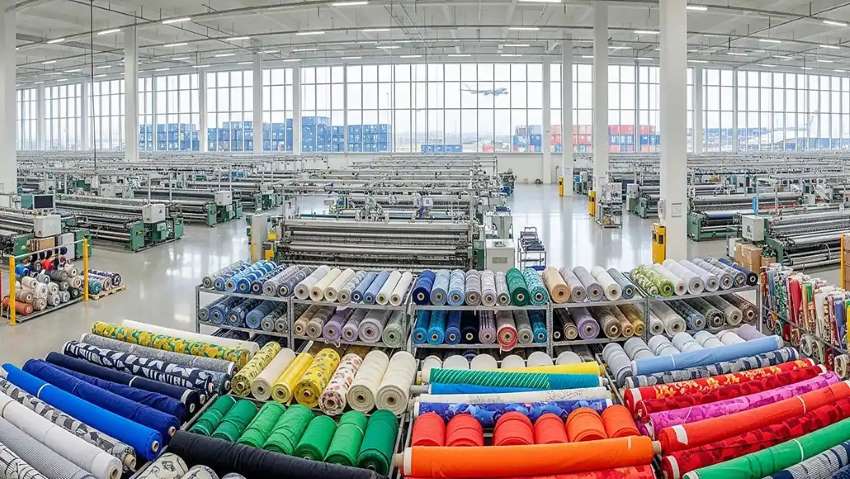
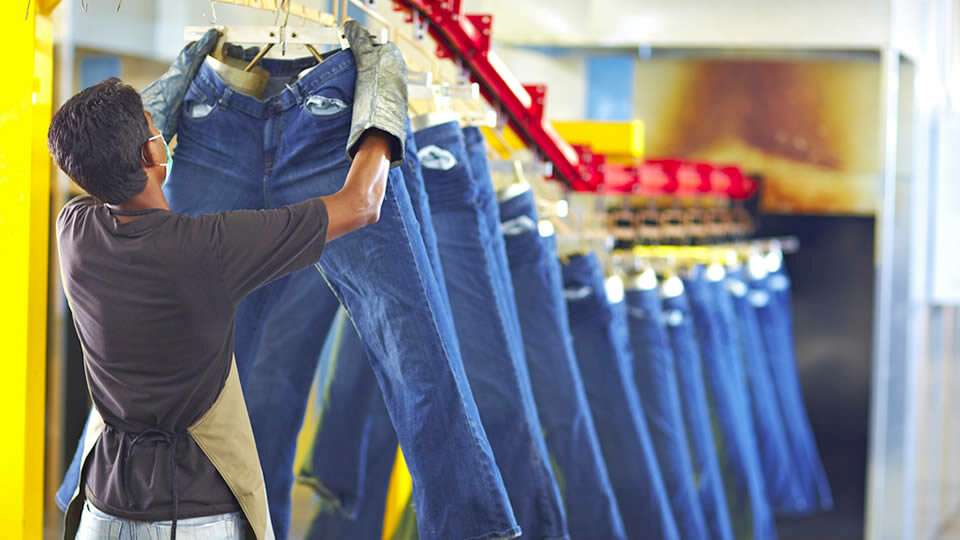
Ghana is providing training for skilled jobs in the textile industry. Participants will take part in various courses including digital pattern making and grading, industrial engineering, quality assurance, and monitoring skills. They will learn on modern training equipment. The courses will not only provide training and qualifications for staff at the companies, they will also improve job prospects for young Ghanaians. Higher productivity and better training for skilled workers give the companies more scope to increase their employees’ wages. The incomes of staff at local firms are thus set to rise by around 20 per cent. The aim is to create 1200 new jobs within three years.
Low wages make African countries attractive business locations compared with their Asian competitors. Although Ghana has experience in textile and clothing production for the regional market, it lacks export expertise. The textile industry in Ghana has been struggling to meet the demands of the market due to the smuggling in of unregistered and cheap textiles from other countries. The high operational cost has also led to the shutdown of some of the textile companies, which has robbed many Ghanaians of their jobs. The textile sector which had a workforce of nearly 30,000 barely has 3,000 now.
- 1
- 2
- 3
- 4
- 5
- 6
- 7
- 8
- 9
- 10
Luxury in Retreat: Why the aspirational consumer is gone for good
The global luxury industry is confronting an unprecedented situation. The active consumer base, which peaked at 400 million in 2022,... Read more
The Invisible Bleed: How a single chemical is slowing India’s apparel machine
The global fashion industry has spent the better part of the past two years obsessing over visible disruptions viz. volatile... Read more
The Closet Paradox: How ‘nothing to wear’ is driving global overconsumption
In an era of overflowing wardrobes and instant fashion gratification, a striking paradox has emerged: the more clothes we own,... Read more
US trade rulings and labor slowdown reshape 2026 cotton supply chains
The global cotton industry is entering a period of adjustment, shaped by legal rulings, trade policy recalibrations, and a softening... Read more
Zero-tariff paradigm drives strategic re-sourcing at Global Sourcing Expo 2026
Projected to reach a valuation of $30.3 billion this year, the Australian textile and apparel market is entering a period... Read more
Strategic manufacturing takes center stage at Gartex Texprocess Mumbai 2026
A $179 billion industrial cornerstone contributing 2 per cent to the national GDP, the Indian textile and apparel sector is... Read more
The Hidden Tax on Fashion: 2026’s EPR rules squeeze margins and shake supply cha…
As the 2026 enforcement deadlines for California’s SB 707 and the European Union’s harmonized Waste Framework Directive loom, the global... Read more
Guess? Inc. retreats from China as American cool hits a cultural wall
For more than two decades, Guess? Inc., the emblem of ‘accessible American cool’, maintained an ambitious footprint in China. At... Read more
The Hormuz Effect: Why a distant war is shaking Bangladesh’s garment exports
The immediate impact of the Iran- Isarel-US conflict is being felt in the logistics arteries that connect Bangladesh’s factories with... Read more
The rise of localized luxury, MEA, North America, and India lead growth
The global luxury industry is no longer defined by relentless expansion. The ‘2025 Global Luxury Brandwatch Report’ highlights a sector... Read more