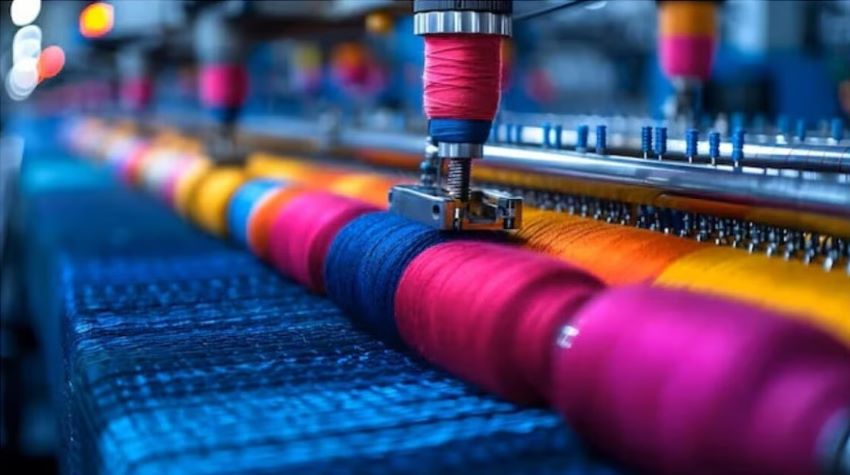
The polyester chain witnessed another bout of price advances in the week ended April 24. Polyester staple fiber and filament yarn prices zoomed past or almost at par with the previous high seen in the last week of November 2014.
This time the price push came from demand side rather than the cost side. Also helping were the rounds of maintenance shutdown in the upstream industry. Added to these factors were a couple of fire breakouts at petrochemical plants in China that feed the polyester industry.
In India, producers held stable offers amid limited enquiries as downstream have stocked up raw material while in Pakistan prices were basically stable and transactions followed up marginally.
Filament yarn producers also raised offers amid bullish sentiment as traders, holding cautious outlook, avoided purchasing in large volumes. In India, partially oriented yarn prices were unchanged amid modest trading as producers were producing for their own use. In Pakistan, draw texture yarn prices were stable amid modest trading. Downstream buying was mainly on rigid demand.
In the upstream, Asian ethylene prices rose for the twelfth consecutive week led by Southeast Asia where spot supply was tighter compared with north east Asia. European ethylene prices too rose on tight supply.
- 1
- 2
- 3
- 4
- 5
- 6
- 7
- 8
- 9
- 10
The new Brussels rulebook, every EU apparel order is now a balance-sheet risk
The humble export order sheet is undergoing a transformation. What was once a straightforward commercial instrument: SKU, volume, FOB price,... Read more
Why 2026-27 could be a defining cotton year for India’s farm-to-fashion economy
The global cotton economy is entering a more constrained phase, and for India, the implications run far beyond the farm... Read more
Luxury resale’s next big battle is no longer digital, it is about who controls s…
For nearly a decade, the luxury resale story was written in the language of platforms. Market leadership was measured by... Read more
Digital Arms Race: Indian apparel giants deploy AI to neutralize tariff crisis
The Indian textile and apparel sector is in a digital survival phase in 2026, shifting from traditional labor-intensive models to... Read more
Europe’s Textile Endgame: Why Project FAE is becoming fashion’s most critical in…
Europe’s apparel majors are no longer treating circularity as a branding layer. With Project FAE or Feedstock Activation Europe, the... Read more
Engineering color at source, dye-free production is cutting cost, water, and tim…
For over a century, coloring has been anchored in wet processing, an energy-intensive, chemically saturated stage that happen post spinning.... Read more
The €11 bn deadlock, can Europe’s textile recycling catch up?
Europe is at a tipping point. Fast fashion consumption, led by rising incomes and a growing global middle class, has... Read more
From field to fiber, Bharat CottonNet is closing India’s cotton value gap
India’s cotton economy is entering a decisive phase of reform with the rollout of Bharat CottonNet 2026 along with the... Read more
US apparel imports drop 13.5% as Vietnam gains and China’s grip breaks
The US apparel sourcing market has entered 2026 with a sharp demand decline but an equally important shift in supplier... Read more
H&M finds growth below revenue line as margin discipline pays off
H&M Group’s latest quarter signals a decisive shift in global fast fashion: scale is no longer the primary reason for... Read more