India’s textile and apparel exports are expected to grow at a compounded annual growth rate (CAGR) of 9 per cent from 2013 to 2023. While men’s wear contributes 42 per cent to the Indian apparel market, women’s wear contributes 38 per cent and kids’ wear 20 per cent. The Rs 21,160 crore domestic home textiles market is expected to grow at a CAGR of 8 per cent to reach Rs 43,970 crores by 2023.
Though garment and textile exports from India have fallen short of the $45 billion target, the government has set a 14 per cent higher export target for the current fiscal. Garment and textile exports grew just five per cent in the last fiscal.
As new garment industries are coming up in Uttar Pradesh, Bihar and the Northeastern states, millions of jobs are expected to be created within there. The government has also simplified guidelines for setting up textile parks. The global textile and apparel trade is expected to grow at a CAGR of five per cent over the next decade. China dominates global textile and apparel exports with a 40 per cent share of made-ups, 37 per cent of apparel, and 39 per cent of fabric.
India, Bangladesh, Vietnam, Turkey, and Pakistan are the other major textile and apparel exporters. The global fabric trade was worth $137 billion in 2013, while the global apparel trade was worth $428 billion. The US, EU, and Japan remain key apparel importers.
- 1
- 2
- 3
- 4
- 5
- 6
- 7
- 8
- 9
- 10
India’s National Fibre Scheme decouples textiles from global supply risks
For decades the Indian dominated spinning, weaving, and garment exports while remaining paradoxically dependent on imported man-made fibres and specialty... Read more
From London to Tokyo, premiumization redefines retail and office markets
Global real estate landscape has changed. Gone are the cautious narratives of recovery that defined the post-pandemic years. Today, flight... Read more
Compliance drives India’s $176 bn textile shift
India’s textile economy is no longer selling fabric alone; it is selling proof. As compliance rules harden across export markets,... Read more
The second life economy gets a boost as resale outgrows traditional apparel reta…
For decades, resale existed in the margins of the apparel economy, thrift stores, peer-to-peer marketplaces, and charity bins quietly absorbing... Read more
Rising polyester costs shake India’s textile manufacturing hubs
India’s synthetic textile industry is confronting a sudden and destabilizing price shock that is reverberating across its vast manufacturing ecosystem.... Read more
Cotton markets hold firm as tariffs, higher supply reshape global fiber economic…
In a year marked by tariff escalations, geopolitical brinkmanship and a recalibration of global trade flows, the international cotton market... Read more
Beyond Cotton How Kapok could redefine sustainable insulation in textiles
In the lush, humid heart of Southeast Asian rainforests stands a giant, a silent sentinel of the forest canopy. Growing... Read more
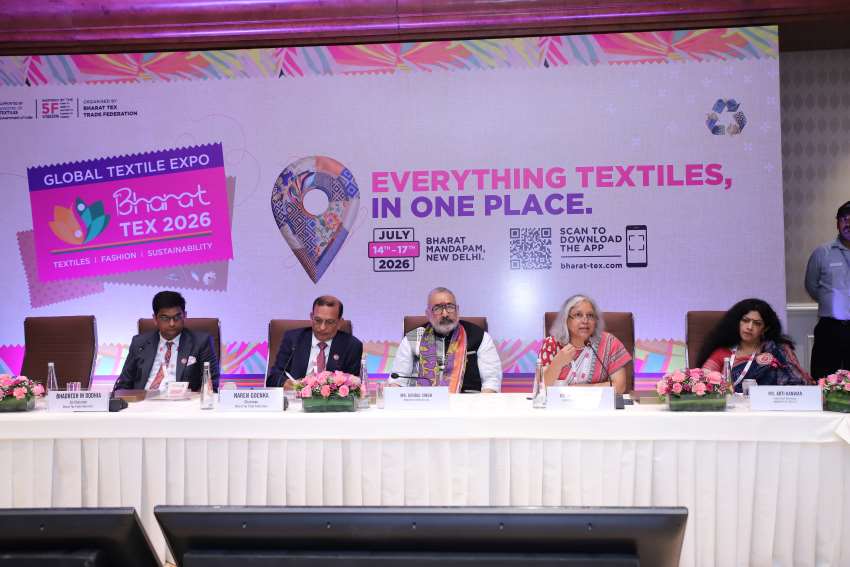
Bharat Tex 2026: Redefining the global textile value chain
Union Minister of Textiles, Giriraj Singh, has officially unveiled Bharat Tex 2026, signaling a significant leap in India’s influence over... Read more
Intertextile Shanghai Spring 2026: A hub for global textile innovation
The textile industry’s pulse is quickening as Intertextile Shanghai Apparel Fabrics – Spring Edition prepares to open its doors from... Read more
Moscow Fashion Week 2026: Blending sustainable innovation with timeless glamour
Scheduled to run from March 14-19, 2026 in Moscow, Russia, the Moscow Fashion Week (MFW) is cementing its status as... Read more