Accelerating Circularity, a new apparel industry collaborative project, announced the launch of its effort to accelerate the textile industry’s move from linear to circular. With figures from the Environmental Protection Agency showing that 15 million tons of textile waste is generated annually in the United States alone, the textile industry must move from a “take, make, waste” system to a circular one, in order to avoid the massive amounts of textile waste put into landfills annually. The Walmart Foundation provided a grant to Textile Exchange’s Accelerating Circularity Project. Gap Inc., Target, and VF Corporation are also funding the project and participating in a working group. The project is initially focused on researching, mapping and identifying opportunities to pilot circular supply chains which will be driven by the mechanical and chemical recycling of cotton, viscose and polyester textile waste. These three fibers cover over 80% of all textile fiber production and are therefore important to focus on in order to reduce textile waste. The Accelerating Circularity founding project partners include Gap Inc., Giotex, Gr3n, Target, VF Corporation, Lenzing, Unifi, Revolve Waste and Fabrikology International, Inc., representing technology providers, fiber manufacturers, and experts in textile waste and supply chains, as well as brands and retailers. “Shifting the apparel industry toward more circular solutions is a complex challenge with significant technical, economic, and business implications. At Gap Inc., we have a responsibility to protect the environment and reduce waste at every stage of our production process – from design, to sourcing, to manufacturing. As we address the full life cycle of our garments, we look forward to working with these partners to collaborate, advance efforts and share learnings with the wider industry for the health of our planet,” said Alice Hartley, Senior Manager of Sustainable Innovation at Gap Inc. and board member of Accelerating Circularity. Accelerating Circularity project partners are ensuring broad stakeholder representation by collaborating with industry organizations on this work including sharing information, amplifying key messages, and the streamlining of efforts.


- 1
- 2
- 3
- 4
- 5
- 6
- 7
- 8
- 9
- 10
Spykar accelerates offline expansion: plans 100 new stores across India
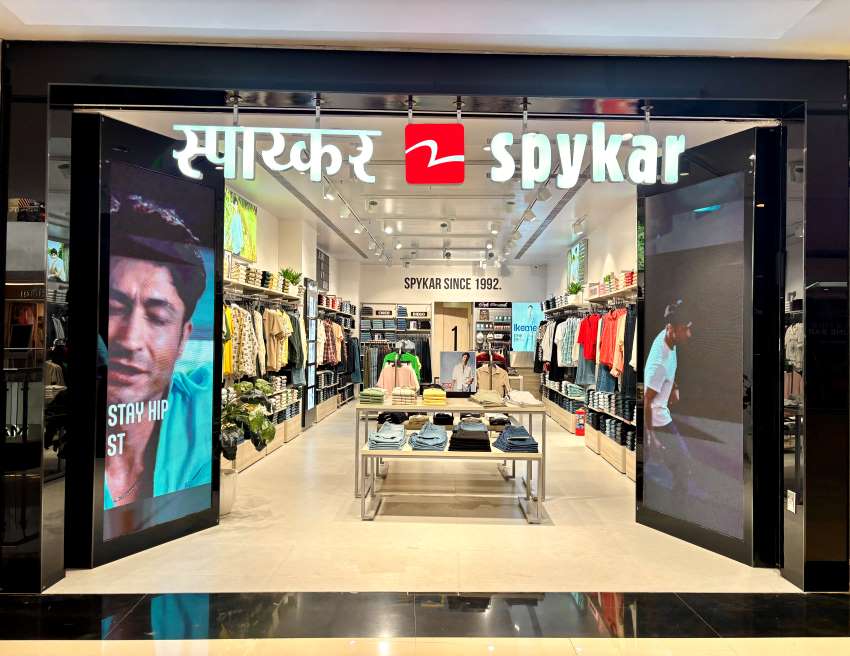
A titan of the Indian denim-first fashion scene, Spykar has officially unveiled an aggressive retail growth strategy. As consumer demand... Read more
The Inventory Illusion: Rethinking the Zara benchmark in a volatile retail era

For over a decade, the global fashion industry has treated the Zara playbook as the gold standard of inventory efficiency.... Read more
Retail Without Retail: How Walmart’s depot network is turning space into logisti…

Walmart is fundamentally rewriting the commercial real estate and retail logistics playbook with the rise of its ‘Walmart Depots’ a... Read more
Global textile regulation tightens, forcing realignment across fashion supply ch…
Global fashion and consumer goods supply chains are entering a decisive regulatory transition as Extended Producer Responsibility (EPR) frameworks for... Read more
Luxury’s new power axis, US dominance, China reset, Gulf surge
As the post-China luxury order takes shape, the US is emerging as the industry’s most dependable growth engine, while Japan,... Read more
India’s $9 Billion Landfill Blind Spot How trashed clothes hold the key to globa…

A massive economic windfall is sitting uncollected in India’s landfills, and the key to unlocking it lies in rethinking how... Read more
Red Sea crisis reshapes textile trade routes, challenges India’s export margins,…
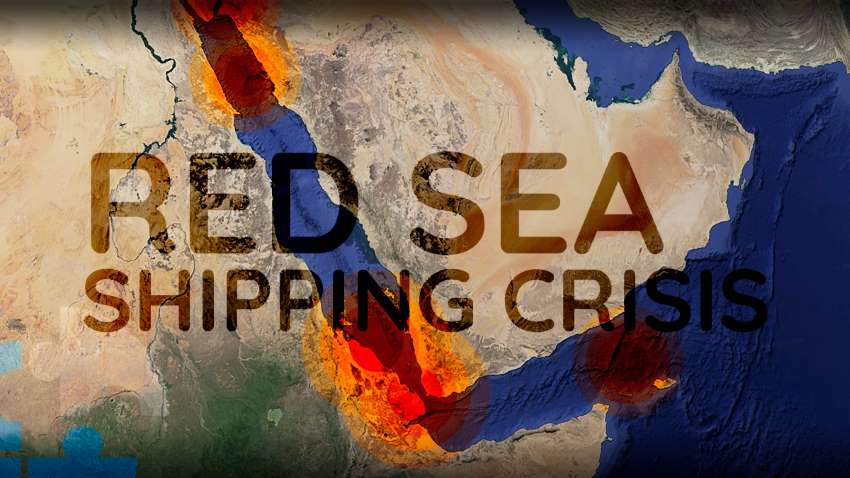
Global apparel trade is now in a new operational phase where geopolitical stability and logistics reliability are as important as... Read more
EU’s textile waste rules enter enforcement phase, raising alarms across fashion …
Europe’s apparel and textile industry is approaching one of its most significant regulatory transitions in decades. As the European Union... Read more
Corporate fashion adopts reverse logistics to unlock the $367 bn resale market

Global fashion retailers are rapidly changing their business models around resale, repair, and textile recovery as the secondhand apparel market... Read more
Tariff Shock 2026: Forced-labor enforcement is repricing global fashion trade
Washington’s latest trade intervention signals a break in the global apparel sourcing patterns. The Office of the United States Trade... Read more

