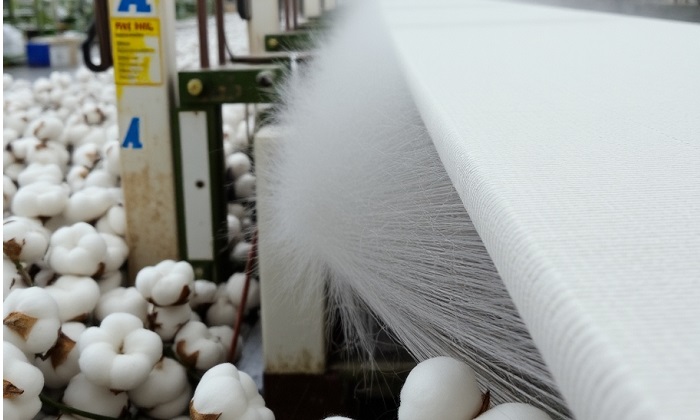
The global textile industry waste management market is projected to grow at a CAGR of around 11 per cent from 2017 to 2021. The market is characterized by many well-diversified players competing intensely with one another. Global players increase their footprint in the market with their huge infrastructure and R&D support, and regional vendors are mainly restricted to developing economies. The competitive environment in the market is likely to intensify further over the forecast period due to an increase in product/service extensions, technological innovations, and mergers and acquisitions.
These are top vendors in the global textile industry waste management market. For example, ChemTreat is an industrial water treatment company with a line of over 1,200 products. The company provides the direction in new product formulations and the development of R&D projects, as well as training materials for the sales force.
Similarly, General Electric develops water, water recycling and reuse, wastewater treatment, and process solutions. The company provides water treatment, wastewater treatment, and process systems solutions. And Lenntech provides water treatment solutions for all applications.
Pall Corporation is involved in the manufacturing and marketing of filter separation, water purification products, and integrated system solutions. It is a global leader in the rapidly growing field of filtration, separation, and purification. Veolia provides drinking water treatment solutions and technologies for municipalities and industries in France.
- 1
- 2
- 3
- 4
- 5
- 6
- 7
- 8
- 9
- 10
Zombie inventory and shrinking margins inside China’s fashion returns meltdown
China’s digital fashion market, long celebrated as the world’s most sophisticated test bed for e-commerce innovation, is facing a destabilising... Read more
Circularity by Design: How EU rules are turning data into fashion’s new currency
The European fashion sector has entered a compressed transition window. Two regulatory confirmations: the revised EU Textile Labelling Regulation (effective... Read more
The Lyst Reset: Chanel and Dior rewrite luxury’s power index
The global luxury hierarchy has been quietly rewritten, and not by sales alone. In Q1 2026, Chanel rose to the... Read more
Inventory, not expansion, defines winners in global apparel
The 2025 fiscal year has crystallised that revenue growth and operational health are no longer moving in tandem. In an... Read more
From growth-at-all-costs to cash discipline, the new economics of DTC fashion
The global direct-to-consumer apparel market is entering a correction phase, as fashion brands across the US, Europe and the UK... Read more
Britain’s Forgotten Growth Engine: Why policy gaps are undermining fashion and t…
Britain’s fashion and textile industry, often framed through the lens of creativity and design, is emerging as a case study... Read more
Beyond price rallies structural reform can strengthen India’s cotton economy
India’s cotton economy is entering a decisive phase, where firmer prices and tighter arrivals in the 2026-27 season have given... Read more
Polyester volatility redraws India’s textile industry competitive map across Asi…
India’s synthetic textile industry has entered a phase of cost instability as polyester staple fibre (PSF) prices rise across domestic... Read more
The £7 Billion Question: Who pays for fashion’s ‘free rental’ habit?
The global fashion industry is facing an uncomfortable paradox: its most valuable customers may also be its most destructive. A... Read more
India, China Bangladesh face fresh headwinds as global apparel markets rebalance
Global apparel trade is entering a more uneven recovery phase, with demand growth persisting but losing uniform momentum across major... Read more