The British high street is reinventing itself where traditional retail models, particularly in apparel, are colliding with evolving consumer priorities. The era of postwar local trade, once defined by butchers, haberdashers, and corner grocers has long faded, and modern high streets face a new test: thriving not just as shopping destinations, but as centers of community and experience. Data for 2026 shows that success now hinges on social currency, as retailers compete to offer meaning and engagement, rather than just products. Amid the threat of a K-shaped economic recovery, where affluent shoppers advance while others tighten their belts the high street is pivoting toward an experiential model that prioritizes interaction over transaction.
From mom-and-pop to mega-store
The decline of specialized local retailers increased when planning permissions for new infrastructure encouraged the growth of out-of-town superstores. Independent apparel and hardware shops found themselves suddenly disadvantaged, as retail parks drew footfall away from traditional town centers. Yet 2026 shows a shift. High street vacancy rates are polarizing: London, Cambridge, and Brighton maintain under 10 per cent vacancies, while smaller northern towns face spiralling operating costs. To counter this, commercial landlords are now offering flexible leases, attracting eclectic independent brands that provide unique products absent from standardized superstore aisles.
Table: Retail market metrics (2025-26 forecast)
|
Retail metric (2025-26 forecast) |
Data value |
Source |
|
Total UK Clothing Market Value |
£67.8 Billion |
Mintel |
|
Online Share of Clothing Spend |
48% |
Retail Economics |
|
High Street Footfall Resilience |
-0.9% (YoY) |
BRC-Sensormatic |
|
Projected Clothing Spend Growth (2025-2030) |
11% |
Mintel |
Turning clicks into community
The transition from traditional retail to experiential models mirrors historical shifts such as the initial surprise at self-service grocery stores. Today, the high street is adapting to e-commerce, which now accounts for nearly half of all clothing spend, by emphasizing what online shopping cannot provide. Leading fashion retailers are turning stores into showrooming hubs, blending online fulfillment with physical interaction. Brands like Next are outperforming the market, with 2026 projections showing a 7.5 per cent sales increase for those that successfully integrate digital and in-store experiences.
ReLondon’s circular economy experiment
ReLondon’s High Street Initiative exemplifies modern regeneration. Beginning in 2025, the program provided small grants starting at £2,500 to independent retailers to implement waste-reducing strategies. Outcomes were immediate:
Business growth: 94 per cent of participating shops reported increased footfall.
Sector innovation: Fashion retailers added repair services via SOJO and take-back schemes.
Community impact: Monthly engagement exceeded 27,000 customers, cementing the high street as a service hub rather than just a product warehouse.
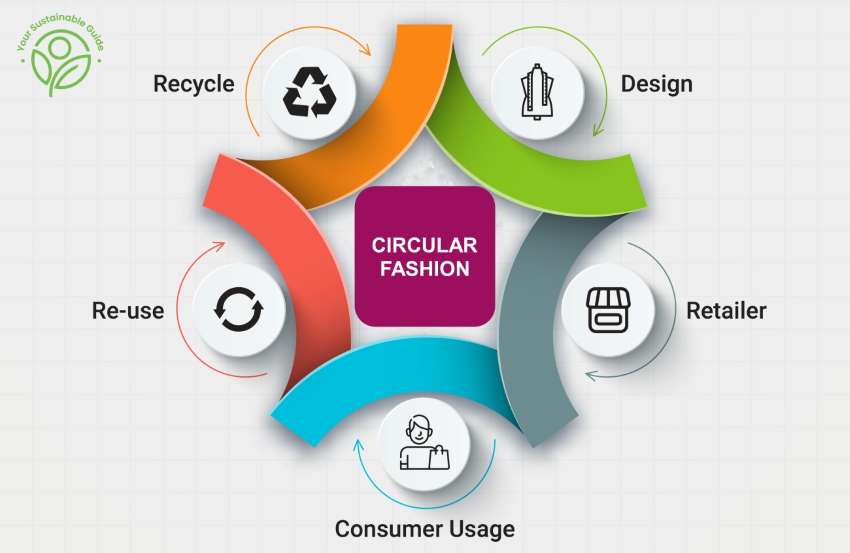
This shows that circular economy services that include resale, repair, and rental are not optional extras but critical drivers of both footfall and loyalty.
The £600 million tax hurdle
High street survival is closely tied to fiscal policy. From April 2026, a new business rates surcharge on properties valued above £500,000 will impose a £600 million burden on major retailers. This large-store tax disproportionately affects anchor stores such as River Island, which plans to close 32 stores by early 2026. While 280,000 smaller properties may benefit from reduced rates, analysts warn that the loss of major brands risks creating footfall gaps. The opportunity now lies in hyper-local retail, where community-oriented, sustainable brands command premium loyalty.
The British high street remains the backbone of local retail, offering apparel and essential services across hubs including London, Manchester, and Edinburgh. After decades of ceding ground to out-of-town malls, high streets are now focusing on experience-led growth and circular economy services. 2026 projections suggest modest overall market growth of 0.9 per cent as retailers optimize physical footprints, proving that when the high street becomes a destination for community and engagement, it can remain relevanteven in an age of online dominance.