Leading apparel retailers like Adidas, Marks and Spencer, Patagonia and Phillips-Van Heusen have taken steps against cotton from Uzbekistan entering their supply chain to protest against forced labour practices in the country. A survey named ‘Cotton Sourcing Snapshot: A Survey of Corporate Practices to End Forced Labor’, of 49 apparel and home goods firms released by the Responsible Sourcing Network (RSN) looked at what the companies are doing to identify risks, establish policies, implement procedures, and disclose practices to eliminate and prevent incidents of forced labour in cotton harvesting. Evaluations covered 11 indicators across policy, public disclosure, engagement, and implementation and auditing.
While only five companies scored over 50 points, 19 scored under 25 points, and two companies scored zero. Among those with the lowest rankings were Costco, Forever 21 and Sears, with All Saints and Urban Outfitters coming last according to the report.
The report found that only 2 per cent of companies surveyed fully disclose progress and/or challenges with their strategies on Uzbek cotton, and only 6 per cent have fully implemented a traceability or spinner verification program.
Of those that do implement best practices, 18.5 per cent are involved in spinner efforts individually or through another initiative; 16 per cent provide training and require their suppliers/spinners to abide by their policies; an additional 8 per cent also include this in their supplier contracts; and 12 per cent have independent third-party audits of their spinners/mills.
www.sourcingnetwork.org
- 1
- 2
- 3
- 4
- 5
- 6
- 7
- 8
- 9
- 10
Cotton markets hold firm as tariffs, higher supply reshape global fiber economic…
In a year marked by tariff escalations, geopolitical brinkmanship and a recalibration of global trade flows, the international cotton market... Read more
Beyond Cotton How Kapok could redefine sustainable insulation in textiles
In the lush, humid heart of Southeast Asian rainforests stands a giant, a silent sentinel of the forest canopy. Growing... Read more
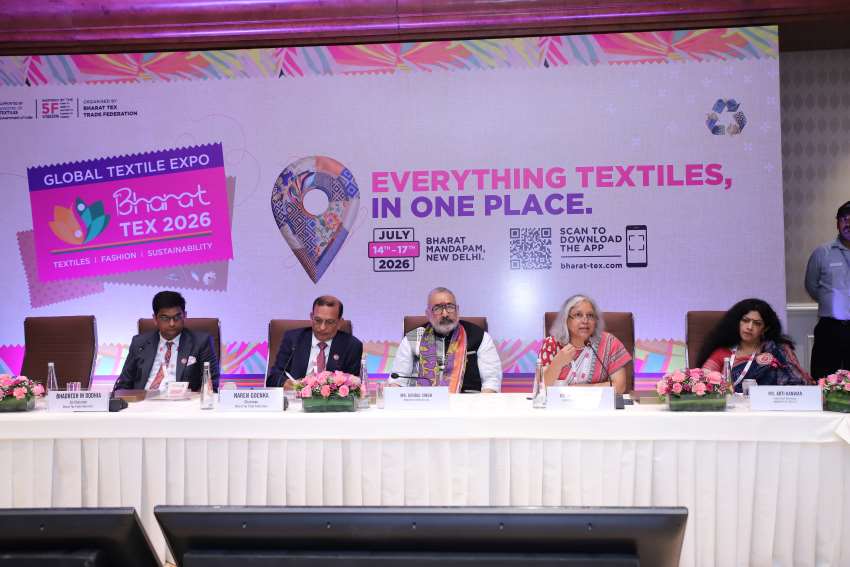
Bharat Tex 2026: Redefining the global textile value chain
Union Minister of Textiles, Giriraj Singh, has officially unveiled Bharat Tex 2026, signaling a significant leap in India’s influence over... Read more
Intertextile Shanghai Spring 2026: A hub for global textile innovation
The textile industry’s pulse is quickening as Intertextile Shanghai Apparel Fabrics – Spring Edition prepares to open its doors from... Read more
Moscow Fashion Week 2026: Blending sustainable innovation with timeless glamour
Scheduled to run from March 14-19, 2026 in Moscow, Russia, the Moscow Fashion Week (MFW) is cementing its status as... Read more
The Store as Stage: How fashion is crafting immersive consumer worlds
The North American fashion retail sector in 2026 is shedding its product-first identity and shifting towards a model that values... Read more
Turning the supply chain upside down, on-demand production reshapes apparel
The global fashion industry, long celebrated for its creativity and scale, is facing a structural reckoning. For decades, retailers and... Read more
Intertex Milano 2026 - A global nexus for textile innovation
Intertex Milano is set to return this summer, confirming its status as a premier international destination for the textile and... Read more
Primark at crossroads as AB Foods weighs spin-off amid digital and Lefties press…
The long-standing supremacy of Europe’s budget fashion champion, Primark, is facing a test. As of February 2026, Associated British Foods... Read more
Vietnam, Bangladesh, Cambodia drive US apparel imports in 2025
The 2025 year-end data for the US apparel sector reveals an industry in structural flux. Despite aggressive tariff measures and... Read more