FW
H&M Foundation institutes designer awards
H&M Foundation’s Global Change Award is spotlighting visionary young talent who have the power to reverse the damage caused by the fashion industry. The award invites designers from across the world to come up with disruptive solutions that will mitigate the after-effects of garment production. After filtering through a large volume of the applicants for the awards, an edited select of talent is then handed over to the expert panel that helps make the decision of picking the winners. H&M is also keen to touch upon the ethical use of artificial intelligence and applied analytics and talk about the preemptive measures that can be taken to reduce waste in production. Aside from winning monetary grants from the H&M Foundation in order to scale up their businesses, winners will also be a part of an accelerated mentorship program.
After the oil industry, fashion is the next big line of business to have severe environmental damage on its hands.
Swedish retail giant H&M set up the H&M Foundation to lead dedicated endeavors towards sustainability. The foundation is working toward reaching the sustainability goals set by the United Nations in 2015, which cover areas of education, clean water, women’s economic empowerment and safeguarding the planet.
Fashion brands blamed for workers’ plight
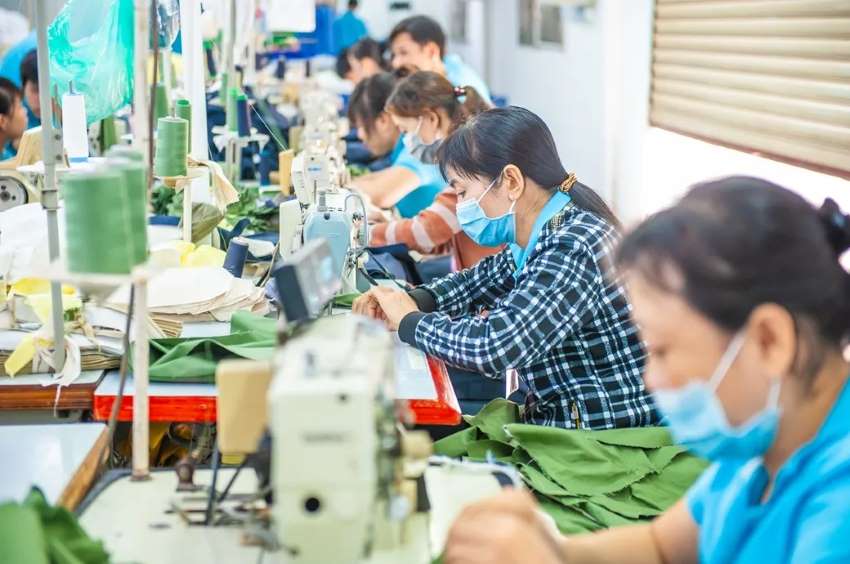
European and US fashion brands sourcing from Vietnam adopt tactics that push down workers’ wages. They use harsh negotiating tactics with suppliers that lead to razor-thin margins, which often can be a driver of involuntary or excessive overtime. Workers in Vietnam’s garment and textile factories work excessive hours, sometimes more than 50 hours of overtime a month. Most workers earn more than double the country’s minimum wage but are still unable to pay for their basic needs. So they have to rely on excessive overtime to provide for themselves and their families.
This is so even though garment workers in Vietnam generally get higher wages than those employed in the other regional garment-making hubs such as Cambodia and Bangladesh. Better production planning and contract pricing could cut workers’ reliance on overtime work, which often leads to labor rights violations. Despite some advances for workers, global businesses have come under pressure in recent years to ensure their supply chains are free of labor exploitation, as a worldwide push to end modern slavery gains momentum.
Vietnam, one of the world’s largest garment manufacturers and supplying fashion chains such as Zara and H&M, is home to over 6000 garment and textile factories that employ about three million people. Fashion brands have been urged to review their costing policies to ensure workers are fairly compensated.
Global demand for driving apparels to increase at 5.3% CAGR by 2025
As per Global Driving Apparel Market: Snapshot, global demand for driving apparels is likely to expand at a CAGR of 5.3 per cent by 2025. In terms of revenue, these opportunities in the global driving apparel market will translate into $18,565.0 million.
The report says, there has been a surge in adoption of protection gear and other safety accessories. Several safety regulations or laws regarding the use of helmets, jackets and other protection clothing are fuelling the growth of this market alongwith the rising popularity of motorsports such as Formula One, IndyCar, and MotoGP.
Geographically, Asia Pacific has been identified as the most profitable region for driving apparels. This region provides for nearly a third of the total demand in the global driving apparel market. The market in this region is estimated to be worth $6,603.6 million by the end of 2025.
Many driving apparel retailers have opened their outlets in countries such as China, Japan, and India. However, vendors are also concentrating on Europe and North America with the demand from the latter region primed to expand at an above-average CAGR of 6.2 per cent during the forecast period.
China remains bright spot for Uniqlo
Uniqlo is doing well in China. Business remains a bright spot for the retailer despite concerns that a slowdown in growth in the world’s second-largest economy would eventually take a toll. For the February quarter, the brand posted a double-digit jump in sales and profit in China. There was a 19 per cent rise in operating profit. Uniqlo’s sales and profit in China rose around 20 per cent year-on-year in the first half. It expanded to 633 locations in the country in the last fiscal year, up 78 stores from a year earlier, while in Japan it went down four stores to 827. Uniqlo is also growing online, with e-commerce sales in Japan growing 30 per cent year-on-year.
However an unseasonably warm weather forced it to slash prices for winter clothes. Amid heavy discounting to offload winter inventory, the retailer now expects an operating profit of 260 billion yen for the financial year through August, versus its previous estimate of 270 billion yen. That would still be a record high and a ten per cent year-on-year rise. Uniqlo is part of the Japanese group Fast Retailing. Uniqlo is known for its simple and affordable clothes such as lightweight down jackets.
Correcting the apparel supply chain
The apparel supply chain has gone wrong. The current chaos, whether companies are willing to embrace it or not, must be acknowledged and accordingly accommodated. The sourcing sector’s current corporate culture hasn’t adequately embraced or acknowledged the chaos that comes with necessary change.
Though the industry—whether at sourcing conferences, trade shows, during executive pitches and the like—has embraced all the right buzzwords that lend the appearance of evolution and advancement, few have quite unlocked the key to retail as they believe they have.
Sourcing executives are afraid to change. What if they invest too heavily in data and technology and don’t see a return? What if they bring in the wrong service provider? Or move production to the wrong country? When business goes awry, sourcing executives are always quick to point fingers at their factory partners. It’s either that the factory can’t accommodate the need for more SKUs or fewer pieces per style or a quicker turnaround. Dramatic change can hardly take shape in the midst of like-minded people still surrounded by outmoded ideals. Change comes from different perspectives and from stepping outside of comfort zones, and the failure to embrace these two efforts is where the apparel supply chain has gone wrong.
Asos six month profit down 87 per cent
Asos’ six-month profits before tax have dropped 87 per cent. One reason for the massive dip could be the major investments the UK-based e-commerce retailer has made in new technology. Another reason for such a steep profit loss was the major price discounting over consecutive quarters, as more competitors gain market share. Because the brand has continually had to discount products to remain competitive, it is tricky to move away from that. An additional factor that will affect Asos’ future success is its new extended return policy. Earlier this year, the brand shifted the policy from 28 days to 45.
Asos is spending on new technologies, like artificial intelligence, new marketing strategies, technology platforms and infrastructure, and focusing on growth in the US. Current areas of focus include reducing prices and refocusing the marketing strategy. However Asos’ total sales grew by 14 per cent and overall retail sales grew 13 per cent from the previous year. And unlike a lot of other fast-fashion companies, Asos has its marketplace, all these third-party brands, its own products, it has beauty. The brand has diversified its offerings, unlike a lot of other fast fashion brands that have just focused on cheap items and breadth of assortment with private-label goods.
Bangladesh looking for FTA with South America
Bangladesh wants to sign a free trade agreement with South America. This is a market of 300 million consumers across an economic and political bloc comprising Argentina, Brazil, Paraguay, Uruguay and Venezuela.
South America and Bangladesh hope to improve people-to-people contacts, enhance economic cooperation and work together on new global development agendas. Bangladesh views Latin America not just as a market for exports, but as a valued partner with whom its people could share its culture. Bangladesh and Latin American countries have shared cultural and emotional ties for long, though Bangladesh has only two missions – in Brazil and Mexico – in the entire region. Brazil is the only Latin American country that has a mission in Dhaka.
Bengali Nobel laureate Rabindranath Tagore was a major literary figure in South America during his time and many of his works have been translated in Spanish. His works have influenced other literary figures of his age, such as José Ortegay Gassett, a leading Spanish intellectual of the time, Gabriela Mistral and Pablo Neruda in Chile and Octavio Paz in Mexico. Footballers Pele, Maradona and Messi are household names in Bangladesh, as the country has very strong support for Argentine and Brazilian football.
Asia Pacific to lead global apparel business
Sales of apparels in emerging Asia-Pacific countries will continue to grow slightly in 2019 while it will decline in other major regions, including Europe, Middle East and Africa and Latin America says a McKinsey & Company study.
Garment shipments from Bangladesh—the second largest exporter worldwide after China, to India, China and Japan are rising by the day thanks to competitive prices offered by the country and spiraling production cost in China. Sportswear would continue to be the major fashion item in 2019 while sales of other items like apparel and handbags will continue at the same level as of last year. Sales of other fashion items like footwear, jewelry, watches and other accessories will decline in 2019.
Polarisation continues to be a stark reality in fashion: 97 per cent of economic profits for the whole industry are earned by just 20 companies, most of them in the luxury segment. New markets, new technologies and shifting consumer needs present opportunities but also risks. This year is expected to be a year shaped by consumer shifts linked to technology, social causes, and trust issues, alongside the potential disruption from geopolitical and macroeconomic events. Only those brands that accurately reflect the zeitgeist or have the courage to self-disrupt will emerge as winners.
Fashion brands move from ownership to rental model
"As the fashion industry warms up to the growing trend of sustainability, concepts of reusing and recycling are gathering momentum. However, it will be a while before these are universally adopted. The trend of fast fashion has increased overall consumption. This needs to change if we wish to make positive environmental change."
 As the fashion industry warms up to the growing trend of sustainability, concepts of reusing and recycling are gathering momentum. However, it will be a while before these are universally adopted. The trend of fast fashion has increased overall consumption. This needs to change if we wish to make positive environmental change.
Brands are setting up return schemes, such as TheRealReal x Stella McCartney, with the trend of swishing’ clothes sweeping through the industry. Some brands are also extending the lifespan of their clothes by offering them on rent. This enables them to be innovative in today’s difficult retail climate.
Renting allows data collection on popular products, consumer trends
As fast fashion relies on brands for introducing runway looks to the high street as soon as possible, companies do not have time to gauge customer demand leading to oversupply and other issues related to the destruction of this excess stock. Renting clothes allows companies to gather data not only on the most popular products but also changing consumer behavior. This allows them to make changes to colors, cuts and prints without overproduction. The rental model also allows brands to ensure consumer awareness and loyalty by getting their pieces worn by real people, which is cheaper and more genuine than using influencers.
The rental model is not limited to only established luxury fashion brands and/or specific occasion wear. Companies ranging from Danish maternity and childrenwear brand Vigga to US label Nudie Jeans have also started renting clothes. Rent the Runway has launched an ‘unlimited’ service, which rents out ‘daily’ outfits for a monthly subscription. Such is the perceived success of renting clothing and accessories that Rent the Runway recently acquired a funding input of $20 million from Alibaba’s investors, putting the company’s value at $800 million, according to Allied Market.
Increase in valuation of global online rental brands
Companies following this model rely on the underlying value of brands that they stock. This new model, alongwith innovative technologies to manage storage and cleaning services is allowing brands to access new consumers. The total valuation of global online clothing rental brands, estimated at $1,013 milion in 2017 is likely to reach $1,856 million by 2023. If this trend continues, the future for fashion looks bright for both established and new brands. Brands now only need to introduce innovative schemes to lure customers.
Walmart, PVH to achieve sustainability by 2025
Global Retailers Walmart and PVH Corp plan to make their manufacturing operations as well as supply chains more sustainable by 2025. Walmart, which aims to use 50 per cent of recycled content by 2025, will source 100 percent more sustainable cotton for its private brands. Its stores in the US will source apparel and home textile products solely from suppliers working with textile mills that use the Sustainable Apparel Coalition’s (SAC) Higg Index Facility Environmental Module to measure and help improve environmental performance by 2022. These stores will house checkout carousels to provide reusable bags to its customers.
On its part, PVH Corp aims to reduce the 41.6 billion liters of water it requires in a year to make 30 million shirts. The company has also pledged to use 100 percent sustainable cotton by 2025.