FW
Lenzing Group ranked first once again for sustainable sourcing
Canopy has once again ranked the Lenzing Group number one producer of wood-based fibers (among 31 globally) for responsible procurement of wood, the key raw material in cellulose fiber production. This is the conclusion of the Hot Button Report published recently by the Canadian environmental organization Canopy. Lenzing is a top rated producer of wood-based fibers. Wood is the key raw material in cellulose fiber production.
Responsible sourcing and sustainability are key elements of Lenzing’s corporate strategy. The company gives priority to sustainable wood and pulp sourcing and has practices in place to prevent the use of wood and pulp from ancient and endangered forests.
There is a low risk for buyers using Lenzing fibers. In 2018, Lenzing adopted additional due diligence measures when sourcing from high-risk countries. Lenzing’s innovative Tencel Lyocell fibers with Refibra technology, in which cotton scraps are partly used as a raw material, take the pressure off the use of wood as a raw material. Refibra technology is the most advanced concept in the wood-based fiber market that incorporates circular economy features on a commercial level. Lenzing has helped advance a conservation legacy in the heart of Canada’s boreal forest.
Lenzing produces high-quality fibers and filaments from wood with environmentally friendly and innovative technologies. These fibers form the basis for a wide range of textile and nonwoven applications and are also used in work and protective wear and in industrial applications. This is the only company in the world which produces significant volumes of all three wood-based cellulose fiber generations.
Première Vision changes format
Trade show Première Vision has extended the scope of its event focusing on apparel sourcing by bringing together Première Vision Manufacturing, The Sourcing Connection, Knitwear Solutions and Leather Manufacturing sections under a single name: PV Manufacturing.
The event dedicated to sourcing opportunities from regions close to the heart of Europe, such as North Africa, central and eastern Europe, Mauritius and Madagascar, previously known as PV Manufacturing, is now labelled PV Manufacturing Proximity, and will showcase 127 exhibitors at next February’s session.
The Sourcing Connection, which focuses on sourcing opportunities from further afield, especially the Asia-Pacific region, will feature 37 exhibitors, under the new name PV Manufacturing Overseas.
The show’s relabeling is not related to geography only but extends to events for specific materials. The section formerly known as Knitwear Solutions is now called PV Manufacturing Knitwear, and will showcase 26 exhibitors at its next session. Finally, Leather Manufacturing becomes PV Manufacturing Leather, featuring for the time being about 27 leather apparel specialists. The shared umbrella name is designed to clarify and emphasise the range of finished products on show. The next edition of Première Vision Paris will be held from February 12 to 14. It is expected to host 1,777 exhibitors, three per cent more than in February 2018.
Cambodia garment exports up 24 per cent
Cambodia's garment and footwear exports increased 24 per cent in 2018. One of the reasons is better performance of the global economy. The EU bought 46 per cent of Cambodia’s total garment and footwear exports last year, the US 24 per cent, Canada nine per cent and Japan eight per cent.
Travel goods exports, which Cambodia obtained with duty-free export status from the US since July 2016, accelerated remarkably and could be a major factor in last year’s sped up growth in garment and footwear exports.
The value of apparel exports last year accounted for 74 per cent of Cambodia’s total exports. The sector employs about 8,00,000 workers. The Cambodian garment sector benefits from ‘EU’s Everything But Arms’ trade preferential treatment, but this may be removed this year. The EU is about to impose trade sanctions against Cambodia as a result of alleged human rights violations in the country. That means Cambodia won’t be allowed to export goods duty-free and quota-free to the EU.
Sanctions will damage Cambodia’s economy, where a $5billion garment industry employs 7,50,000 people and is the biggest exporter. In addition the EU is mulling imposing tariffs on Cambodian rice for three years as a result of a surge in imports deemed to have hurt European rice producers.
Textile Ministry’s teams up with top apparel makers to boost small weavers
The Union textile ministry recently signed agreements with leading clothing/textile players like Raymond, Welspun, Titan, Reliance Retail and the Sachin Tendulkar-promoted True Blue, which will help these companies to procure more from the weavers directly. The initiative aims at exploring the synergy between culture and textiles and the initiative will be extended to rest of the country.
All its schematic assistance including provision of loans, skilling, provision of yarns etc is aimed at lowering the cost of production and enhance the income of weavers. The ministry is also introducing QR coding post registration and pre-registration of all its weavers for geographical indication tags.
Hong Kong to take part at US fashion week
Three leading Hong Kong fashion designer labels will take part in the Fashion Hong Kong runway show, organised by the Hong Kong Trade Development Council (HKTDC), at New York Fashion Week February 2019, showcasing Hong Kong's fashion creativity to industry elites and style influencers from the United States and around the world.
Launching their fall/winter 2019 collections at the runway show on February 8 will be Annette Chan of the brand Anveglosa and the design duo Yi Chan and Lary Cheung of the brand Heaven Please, who return to the show for the second consecutive year, as well as Mountain Yam.
An after-show party will be held for the designers to network with industry players. Since 2015, Fashion Hong Kong has been staging world-class runway shows at major international fashion events, including New York Fashion Week, London Fashion Week, Copenhagen Fashion Week and Tokyo Fashion Week, to showcase Hong Kong's fashion design prowess in overseas markets.
Fashion Hong Kong is a series of international promotions organised by the HKTDC to raise the global profile of Hong Kong fashion designers and labels. To maximise exposure for Hong Kong fashion brands during their time in New York, Fashion Hong Kong will take part in Coterie - the premier global event and trade platform for contemporary fashion brands in New York - for the first time.
Global textile auxiliary market on a growth path
The global textile auxiliaries market is set to get a boost with a surge in consumption and production of textiles. Textile auxiliaries are used at various stages of textile processing like pre-treatment, printing, dying, and finishing. Textile auxiliaries increase the aesthetic appeal as well as the durability of textile products.
Textile auxiliaries are mainly used for architectural and construction purposes like concrete reinforcement, insulation, and faced foundation. The growth in infrastructure and urbanization on a rapid scale in Brazil, Russia, India, China, and South America is providing an advantageous factor for the development of textile auxiliaries in the global market.
Demand for healthcare products like sanitary napkins and baby diapers are also fuelling the growth of the textile auxiliaries market in the world. However, factors like high cost of natural textile auxiliaries may hamper growth in the long run. Natural textiles are more expensive as compared to synthetic and this is because of the high cost of raw materials and limited availability in terms of natural auxiliaries. Manufacturing and extraction of natural textile auxiliaries require trained workers with technical knowledge. Factors like these may affect the development of the textile auxiliaries market in the long run.
Brexit hits Bangladesh apparel exports to the UK
Bangladesh’s apparel exports to the UK from July to December grew only 1.30 per cent. Uncertainty over Britain’s exit from the European Union has made apparel importers in the UK conservative in placing work orders.
However, the UK has committed to providing Bangladesh duty and quota-free market access even after the execution of Brexit. The UK is the third largest market for Bangladesh’s goods. Garments account for more than 80 per cent of Bangladesh’s total exports to the UK. A large number of non-resident Bangladeshis live in the UK.
In a referendum held on June 23, 52 per cent of people in the UK wanted to leave the EU and 48 per cent voted to stay with the union. In the first half of the fiscal year 2017-18, Bangladesh’s apparel exports to Britain saw a 20.70 per cent growth. On the other hand, in fiscal year 2017-18, export growth to the UK was 12.63 per cent. In the July-December period of the current fiscal year, 2018-19, Bangladesh’s earnings were up by 15.65 per cent. Brexit anxiety has also hit the economy of the UK. Economic slowdown in that country, caused by slower job growth and GDP growth, has cut demand for goods.
Shima Seiki to show new textile machinery at ISPO Munich
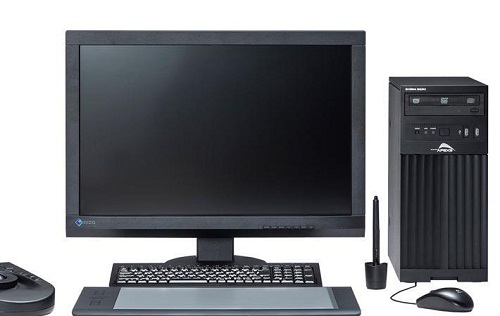
Shima Seiki together with its Italian subsidiary, Shima Seiki Italia, will participate at ISPO Munich 2019, in hall b4, booth BN05. The world’s largest trade fair for sports equipment and fashion will be held from February 3-6, 2019. Shima Seiki, based in Wakayama, Japan, is a leading manufacturer in the computerised flatbed knitting machine industry.
The company will be a corporate partner to the ISPO Brandnew Village, a special platform for promising newcomers to the sports industry.
On display in Brandnew Village will be the stateoftheart SVR123SP computerised knitting machine that features a special loop presser bed, capable of producing hybrid inlay fabrics with both knit and weave characteristics. Demand for such novel fabrics are very high across a wide range of applications including sportswear, innerwear, outerwear, uniforms, and other functional clothing, as well as home furnishing and technical textiles. SVR123SP at ISPO Munich furthermore will feature the new iPlating option, capable of alternating yarn colours in any pattern, producing jacquardlike designs using plain jersey stitch. With iPlating, plating can be performed within the same course and for individual needles for even greater diversity in knit design. The latest sportswear samples produced on SVR123SP will also be on display, as well as revolutionary seamfree Wholegarment knitwear that feature superior fit, comfort, and style that are ideal for sportswear, according to Shima Seiki.
The latest version of Shima Seiki’s 3D design system SDS-ONE APEX3 will also be exhibited. At the core of the company’s “Total Fashion System” concept, APEX3 provides comprehensive support throughout the product supply chain, integrating production into one smooth and efficient workflow from yarn development, product planning and design to production and even sales promotion. Especially effective is the way APEX3 improves on the design evaluation process with its ultrarealistic simulation capability, whereby virtual samples minimise the need for actual samplemaking. This realises significant savings in time, cost and material, contributing to sustainable manufacturing.
A new machine is shaping the standard sector
The new TM WEFT for the standard segment is complementing the WEFTTRONIC® II HKS for the premium segment
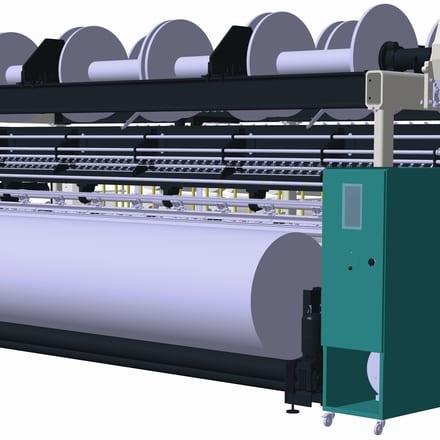
KARL MAYER is transferring its successful two product line strategy to its Technical Textiles Business Unit and is supplementing its premium weft-insertion machine with a standard model. In addition to the WEFTTRONIC® II HKS, there will also be a TM WEFT in future. This new warp knitting machine with weft-insertion facility bears all the hallmarks of the high-end version in terms of its quality and reliability, but its optimised cost:benefit ratio targets a different market.
The right machine for every market segment
This new machine is a machine from Asia for Asia. “Our target market is China and the mid-range segment in particular”, explains Hagen Lotzmann, the Sales Manager of KARL MAYER Technische Textilien GmbH. To score points here, the TM WEFT delivers a 50% higher cost:benefit ratio than the WEFTTRONIC® II HKS. The considerable increase in speed has been achieved by completely redeveloping the machine and modifying the production logistics. The engineering know-how and the core areas of expertise for the TM WEFT are being provided by locations in Germany, and all the other work is being done by KARL MAYER (CHINA). This has led to the exceptional quality and operating reliability typical of all KARL MAYER’s machines, and also delivers an attractive performance package for producers of standard goods for the interlining market. With its fine gauge, the WEFTTRONIC® II HKS is still the number one machine for producing fine interlinings and high-quality automotive textiles, for use in e.g. sun protection.
Customised technical features
The TM WEFT is available in a gauge of E 24 and a working width of 247", which can be reduced by 62". Its features include two stitch-forming ground guide bars, the KAMCOS®2 Single Speed and integrated Laserstop facility for the early detection of yarn breakages. Up to 24 wefts can be inserted at the same time during production. The yarn is delivered from a creel with yarn storage feeders. An electronically controlled, 4-roller system is responsible for fabric take-down, and the fabric is wound by stand-alone batching unit no. 64. It has friction drive, with control in line with the stitches.
An eagerly anticipated sales release
The TM WEFT was announced at ITMA ASIA + CITME 2018 in Shanghai and proved to be a hot topic of conversation. “Our customers are extremely interested in our new weft-insertion warp knitting machine, and are already looking forward to the official market release,” says Hagen Lotzmann. This sales expert is expecting that the first orders for this standard model, with its excellent cost:benefit ratio, will be placed this year. The sales release is scheduled for the second half of January 2019. An in-house show will also be held in January at KARL MAYER (CHINA) in Changzhou, where the TM WEFT will be demonstrating its features.
Digital Printing Is All the Rage at ISS
 LONG BEACH, Calif.—Customization is on the rise.
That was the message at the Imprinted Sportswear Show, where exhibits pointed to the trend where consumers increasingly seek to shape the cuts and styles of their clothes.
The annual Southern California show, which ran Jan. 18–20 at the Long Beach Convention Center, is a sprawling event for T-shirt blanks, hoodies and embroideries, as well as for machinery to screen-print graphics on clothing.
The trade show this year covered 115,000 square feet of the convention-center floor while last year it encompassed 111,000 square feet, said Joshua Carruth, a trade-show director for Emerald Expositions, which owns ISS.
Attendance at this year’s show was basically even with last year’s show, which is frequented by printers, decorators, brand executives and people starting new brands.
For the past couple of years, designers have shopped ISS to find out which tech company could help them produce small runs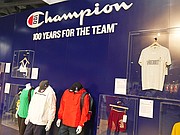 of clothing for a market interested in customization. For this year’s show, the topic of customization gathered more momentum.
“Everything is about customization,” said Michael Sanders of True Value Fabrics, a textile supplier headquartered in Carson, Calif. “This used to be a show about blanks. Now it’s more of a digital show.”
Steve Nanino, president of the Los Angeles–based Kid Dangerous, which makes small runs of clothing as well as third-party brands, said that even though there are more digital printers around, he didn’t expect them to take over the industry.
“People are interested in digital printers. But they are inherently slower and more expensive than screen-printing. Until the digital side is able to get better, there is still a role for screen-printing. The biggest hurdle for digital is speeding up,” Nanino said. Many screen-printers have an advantage of offering quick return, he said.
ISS embraced that both technologies can co-exist. Show management exhibited an installation called the Innovation Zone, which documented the journey of a garment through a production cycle and featured both digital and screen-printing machines.
Israeli-headquartered Kornit Digital unveiled the Atlas print system at the show. The direct-to-garment printer includes a new ink set called Eco-Rapid, which offers more colors and is more durable. The machine introduces an intelligent-user interface to support self-service.
 Also at the show, Irvine, Calif.–headquartered Roland DGA released the VersaSTUDIO BT-12. It’s a direct-to-garment desktop printer made for printing directly onto cotton products.
Technology company Epson displayed products such as its direct-to-garment polyester pretreatment. Tim Check of Epson America Inc. in Long Beach said the pretreatment solution was similar to putting a coat of primer on a wall. It ensures digital prints stick to polyester.
Danvers, Mass.–based company Inkcups exhibited a Brite Tagless printer, which is designed for printing highly opaque, white-colored inks on dark fabrics.
Making small runs of clothing was stressed at some brands displaying tees and blanks. Bayside Apparel showed garment-dyed crew-neck T-shirts, which could be produced at a run of 100 shirts at a time, said Jessica Escobedo, a brand representative.
A myriad of looks and styles of blanks was displayed at the show. At the Los Angeles Apparel booth, brand founder Dov Charney exhibited blanks made from coarser threads, which produce heavier T-shirts. It was a change from the lighter, fitted blank that was popular at American Apparel, Charney’s previous company.
Champion, a division of Hanes Brands, celebrated the 100th anniversary of Champion by reissuing some of its most popular looks from past years but with new fabrics. Looks included ringer tees and three-quarter-sleeve baseball tees.
Gildan released a polo shirt that wicks away sweat. Jeff Cooper, Gildan’s vice president of marketing, described the garment as a polo made with performance fabrics. The company also released new colors for its fleece program, including azalea, mint green, orchid and violet.
Downtown Los Angeles–headquartered Blanks Plus showed its Moco brand. The line of T-shirts, manufactured in Los Angeles, is made with MicroModal fabric and the company’s Eco-Hybrid fabric.
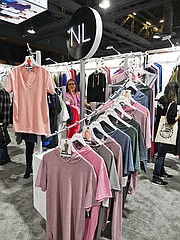
Irwindale, Calif.–headquartered Lane Seven Apparel exhibited its new, heavyweight pullover hoodie. Los Angeles–based Next Level Apparel displayed a new line of relaxed women’s tops.
While all sorts of styles of tees were offered, heavy, box-shaped T-shirts were en vogue, said Justin Bautista, co-owner of Tilted Brim, a San Francisco boutique. “T-shirts with extended hems have come and gone,” he said.
Popular graphic styles included big logos on the back of T-shirts, as well as chest hits and a graphic on the top left-hand side of the chest, he said.
Cotton Heritage, headquartered in Commerce, Calif., offered new categories including a women’s line of pullovers, zip hoodies and jogger pants. Previously, Cotton Heritage only produced unisex hoodies and jogger pants. “They will be better-fitting garments,” said Ken White, Cotton Heritage’s vice president of sales. The brand also introduced new garment colors including artichoke, dusty rose, agave green, shale blue and antique gold.
Business was good at ISS, White said. “It was well attended. There were great meetings with customers and potential customers. We worked with screen-printers who we have worked with for a long time. We saw a lot of brands looking for new blanks. They were looking for new colors and new silhouettes,” he said.