FW
Global denim trade threads its way through a shifting global landscape

Denim, that iconic fabric synonymous with casual cool, continues to be a global fashion staple. But the trade winds that carry jeans around the world are shifting. While the global market for denim jeans is projected to reach a $95.2 billion by 2030 at CAGR of 5 per cent from $64.5 billion in 2022, the trade landscape is changing.
Global trade a balancing act
The global denim market is estimated to have reached $64.5 billion in 2022, and analysts project a healthy growth rate of 5 per cent to reach $95.2 billion by 2030. This growth is due to many factors like rising disposable incomes, particularly in developing economies, and a continued love for denim across demographics. However, the trade landscape is not without its challenges. Fluctuations in cotton prices, a key raw material, and rising concerns about sustainability can create ripples throughout the supply chain.
The past few years haven't been smooth sailing for denim trade. While recovering from the pandemic, the industry faces challenges like fluctuating cotton prices and inflation impacting consumer spending. Despite this, the online segment is expected to see a strong CAGR of 9.2 per cent due to the growing popularity of e-commerce.
Table: Global denim trade
|
Country |
Projected import/export growth (CAGR) |
|
Importers |
|
|
US |
5% |
|
Germany |
3.20% |
|
Japan |
6% |
|
Exporters |
|
|
Bangladesh |
12% |
|
Vietnam |
9% |
|
Egypt |
8% |
The US remains the denim import king, with a steady 5 per cent rise projected for the coming years. This can be attributed to their diverse consumer base and competitive global prices. Europe, particularly Germany (projected CAGR of 3.2 per cent), continues to be a major importer, valuing both functionality and style in their jeans. Their strategic partnerships with countries like Bangladesh and Egypt are expected to keep the German denim scene thriving Interestingly, Japan is projected to see a 6 per cent jump in imports. Their focus on high-quality, innovative jeans, often featuring sustainable features, is driving this growth. This trend is driven by a growing demand for high-performance jeans with unique washes and sustainable features, a niche that both Turkish and Japanese manufacturers are adept at filling.
Export powerhouses, weaving a global web
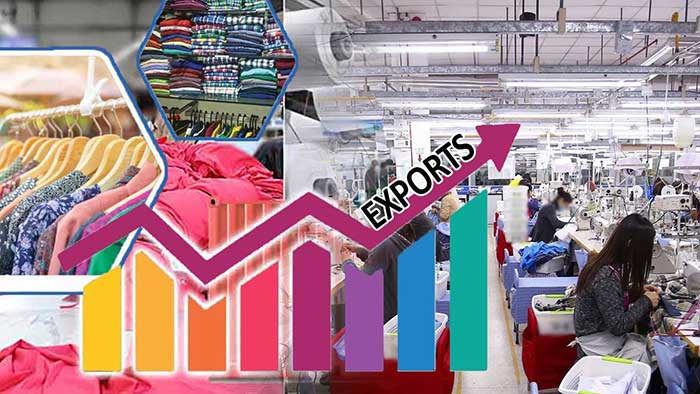
While the US and Europe remain denim consumption giants, Asia dominates the export scene. Bangladesh, the undisputed ‘denim king’ continues to reign supreme with a projected 12 per cent export growth pushed up by skilled labor, robust infrastructure, and favorable trade deals. Vietnam is making a powerful comeback, with a projected 9 per cent rise in exports thanks to government initiatives, automation investments, and a strategic shift towards high-end denim production. Egypt is a surprise contender, with a projected 8 per cent export jump driven by competitive pricing, a focus on sustainable practices, and partnerships with European labels.
A sustainable future for denim
While the traditional denim giants hold strong, there's a growing demand for sustainable practices. Consumers are increasingly looking for eco-friendly jeans, prompting manufacturers to explore recycled materials and water-saving production methods. This focus on sustainability could reshape the future of denim trade, potentially favoring countries that prioritize these practices. Countries like Egypt, with its focus on eco-conscious production, are well-positioned to capitalize on this shift.
The global denim trade is poised for continued growth, with a projected CAGR of 5 per cent. While traditional powerhouses like the US and Europe will remain key import destinations, Asia is expected to maintain its dominance in exports. Emerging players like Vietnam and Egypt are expected to challenge the established guard, driven by factors like automation, innovation, and a focus on sustainability. As consumer preferences evolve, the industry is likely to witness a shift towards eco-friendly production practices, ensuring a future where denim remains not just fashionable but also responsible.
Brazil to be the world’s largest cotton exporter in 2023/24: Anea
Overtaking the United States, Brazil is poised to become the world's largest cotton exporter for the 2023/24 season. This shift follows an over 80 per cent increase in Brazilian cotton shipments this season, according to the local exporters' association Anea.
Brazil’s cotton exports are likely to rise further next season, as farmers harvest a potentially record-breaking crop, with further increases expected in 2025-26, opines Miguel Faus, Head, Anea.
He referred to data from the US Department of Agriculture (USDA), which recently raised its forecast for Brazil's cotton exports this year by 300,000 bales to 12.4 million bales, while reducing the US forecast by 500,000 bales to 11.8 million.
Verified by Reuters, a USDA report highlights, Brazil already surpassed the US in terms of cotton production in 2023/24, ranking third globally behind China and India and is expected to maintain its position in 2024/25.
Some of the largest buyers of Brazilian cotton include China, Vietnam, Bangladesh, Turkey, and Pakistan.
Authenticoby Schneider Group promises a completely traceable wool supply chain
The newly introduced brand, Authentico by the Schneider Group promises a completely transparent, verified, traceable, ethical, and high-quality wool supply chain, from farm to garment.
Aspiring to be globally recognised, the brand allows the fashion industry and end-consumers to choose fully traceable premium quality wool. The brand operates within the Schneider Group's globally certified network and adheres to a meticulously structured approach that verifies, traces, and brands every stage of the sourcing and manufacturing processes throughout the supply chain.
The Schneider Group has also developed the ‘Authentico Verification System,’ to provide criteria and guidelines for all supply chain partners. This system includes the ‘Authentico Integrity Scheme,’ which promotes best practices for wool growers at the farm level. Animal welfare is a core component of this scheme, emphasisingmulesing-free practices and adhering to the five domains of animal welfare. The scheme also covers land and pasture management as well as social responsibility. Wool is sourced from carefully selected and dedicated growers who subscribe to the “Authentico” platform. The selected fibers are processed in Schneider Group’s own certified mills across several continents.
The verification system also includes the ‘Authentico Brand Guidelines’ for other supply chain players, including spinners, weavers, knitters, garment makers, brands, and retailers. These guidelines set precise criteria to ensure alignment with ‘Authentico’ brand values.
Additionally, the Schneider Group has integrated the innovative traceability platform ‘TextileGenesis’ into its ‘Authentico Verification System’ to digitally track all wool transactions.
Laura Ros, CEO, Schneider Group, observes, through these initiatives the group aims to reinforce its customers’ confidence in the company’s sustainability and traceability initiatives not only on farms but also at the industrial level.
MuthurMurugan Mills addsSaurer Z 72XL ring spinning machine to Coimbatore mill
A key player in the textile manufacturing industry for 34 years, MuthurMurugan Mills has integrated Saurer’s advanced Z 72XL ring spinning machine into their Coimbatore mill. Saurer has introduced an intelligent ring spinning solution at the renowned ring spinning mill in Coimbatore, India. This solution is designed to adapt to the specific needs of the mill, ensuring optimal performance.
Aligned with Saurer’s E³ philosophy, the Z 72XL ring spinning machine is tailored to meet individual needs. It features modular equipment with customisable drafting system drives, a flexible fancy yarn system, and other advanced technologies.
The machine boasts powerful, economical drive technology, low energy costs through Twinsuction and Optisuction, and energy monitoring for cost transparency. It delivers high speed, low yarn break rates, and maximum productivity for both commodity and specialist applications. Easyspin ensures simple and intuitive operation, and Spinnfinity eliminates the need for wharve cleaning, enhancing automation.
The Z 72XL offers doffing times of less than two minutes and can save up to 60 per cent energy on suction. It requires minimal handling and maintenance.
S JVijayavelu, Executive Director, MuthurMurugan Mills,remarks, since acquiring the Saurer ring frame, the quality of products offered by MuthurMurugan Mils has significantly improved, attracting more customer bookings. The machine delivers outstanding quality.
Better Cotton honors Members at 2024 Awards Ceremony
Better Cotton, the leading cotton sustainability initiative, announced its 2024 Member Award winners today. The awards, presented by CEO Alan McClay and Senior Director Eva Benavidez Clayton, honored members for their outstanding contributions to the cotton industry.
The awards took place aboard a Bosphorus dinner cruise in Istanbul, Turkiye, during the Better Cotton Conference, attended by over 200 industry leaders.
Alan McClay emphasized the privilege of hosting the awards and highlighted the pivotal role of partner dedication in driving transformative change within the cotton sector. Recognizing progress as Better Cotton expands is essential.
The Top Contributor Award recognized organizations with the highest uptake of Better Cotton relative to their use of the material. Walmart received the award in the large to very large member category, while John Lewis Partnership was honored in the very small to medium category. The Sourcing Award acknowledged those who processed the highest volume of Better Cotton. Cargill Commodities topped the cotton trader category, and VicunhaTêxtil led in the intermediary category.
The Impact Storyteller Award was given to the Cotton Egypt Association for featuring a compelling story about sustainable cotton production in the Nile Delta, which generated significant interest on the Better Cotton website.
CABI received the Innovators Award for its work in Pakistan, including the creation of a national organic agriculture policy that is currently under review by the Ministry of Food Security and Research. This policy aims to strengthen and build bridges between stakeholders promoting sustainability.
Finally, the Outstanding Contribution Award went to İyiPamukUygulamalarıDerneği (IPUD) for its implementation of Better Cotton’s activities in Turkiye since 2013.
The awards ceremony took place during a dinner cruise on the Bosphorus, part of the Better Cotton Conference in Istanbul, Turkiye. The two-day conference gathered over 200 industry representatives to discuss accelerating impact at the field level.
Textile and apparel leaders convene in Samarkand for ITMF and IAF
The upcoming ITMF and IAF annual conferences in Samarkand, Uzbekistan, promise to unveil the latest advancements in the textile-apparel industry. This joint effort by the International Textile Manufacturers Federation (ITMF) and the International Apparel Federation (IAF) will provide a comprehensive view of the entire supply chain, emphasizing the importance of collaboration to address current challenges.
A highlight of the event will be a session featuring Inditex, Epic Group, and the International Finance Corporation (IFC) discussing decarbonization. This panel will illustrate how cooperative strategies can drive substantial environmental progress within the industry.
Additionally, a global regulation session will feature representatives from the American Apparel & Footwear Association (AAFA), the China National Textile & Apparel Council (CNTAC), the European Textile & Apparel Industry Federation (EURATEX), and the Japan Textile Federation (JTF). They will outline forthcoming regulatory changes in their respective regions, reflecting the increasing demand for significant environmental and social improvements.
The conference will also cover topics such as fibers, digitalization, and artificial intelligence, drawing industry leaders worldwide to the rapidly growing textile hub of Samarkand. This event is set to be a pivotal gathering for global textile and apparel supply chain leaders.
FastReactFabric by Coats Digital shortlisted for Nine SaaS Awards
Coats Digital's innovative fabric solution, FastReactFabric, has been shortlisted for nine categories in the prestigious 2024 SaaS Awards. The SaaS Awards, encompassing 56 categories, honorpioneering software-as-a-service solutions across various sectors globally.
KunalKapur, Managing Director of Coats Digital, conveyed deep pride in the recognition, emphasizing that being nominated for nine awards underscores their team's dedication and Coats Digital's innovative spirit. He noted that FastReactFabric embodies their mission to empower fashion manufacturers by reducing fabric waste and enhancing profitability. Kapur found the acknowledgment alongside other leading companies particularly gratifying.
FastReactFabric is competing in the following categories: Bespoke SaaS Solution of the Year, Best Data Innovation in a SaaS Product, Most Agile/Responsive SaaS Solution of the Year, Best SaaS Product for CSR, Sustainability & ESG, Best Data-Driven SaaS Product, Best SaaS Product for ERP/MRP, Best SaaS for Business Management, Best SaaS Product for Business Intelligence/Analytics, and Best SaaS Product for Engineering Management, PLM or CAD.
The solution offers a comprehensive, closed-loop feedback system between buying and cutting operations, ensuring efficient and sustainable fabric use for fashion manufacturers.
James Williams, CEO of The Cloud Awards, praised the impressive caliber of this year's entries, emphasizing that making it to the 2024 shortlist signifies a remarkable achievement. He acknowledged the diversity and quality of innovations submitted, extending congratulations to all shortlisted companies as they advance to the next round of judging.
Finalists will be announced on July 22, 2024, with winners revealed in August 2024.
Karl Mayer showcases innovations at ITM 2024
The Karl Mayer Group made a strong impression at ITM 2024, reinforcing its role as a key industry partner amidst challenging times. This year's event saw a significant turnout from Turkish visitors, though attendance from North Africa and Central Asia was lower than usual.
Despite these challenges, the Karl Mayer team reported numerous successes. Notably, 22 per cent of the registered guests were first-time visitors. The high-quality professional exchanges focused on addressing the economic difficulties faced by customers, who are seeking ways to reduce costs and boost production efficiency.
TorosGreenhalgh, Managing Director of Karl Mayer's Turkish subsidiary, emphasized the importance of machine flexibility to address evolving retail requirements. He noted that their advancements in machine technology, digital services, and textile innovations offered valuable insights for customers. Karl Mayer Turkey aims to enhance its support for after-sales service and spare parts, while Erko remains dedicated to machine sales.
Senior Sales Manager Bastian Fritsch noted the positive trend in the market, driven by targeted anti-dumping measures and recent municipal election outcomes. He highlighted the impressive HKS 3-M ON Plus, which garnered attention for its flexibility and advanced feeding control.
The Care Solutions team also reported high interest in their after-sales packages, particularly for gauge conversions. Meanwhile, Stoll's Lutz Vogel expressed optimism about the market recovery, showcasing efficient economy machines and the ADF Flex, which allows for tighter or looser knitting adjustments.
Overall, ITM 2024 served as a vital platform for Karl Mayer's Warp Preparation, Technical Textiles, and KM.ON divisions to showcase energy-efficient innovations and advanced digital solutions.
Lenzing Group announces leadership changes to drive growth
Lenzing Group has appointed Kit Ping Au-Yeung as the Executive Vice President of Commercial Textiles, succeeding Florian Heubrandner, who will now lead the Filament division. This leadership change is part of Lenzing's strategy to enhance its core textile and filament businesses.
Kit Ping, previously with Coats Group and Amann Group, brings extensive experience in the textile value chain. She will oversee the expansion and development of Lenzing’sTencel and LenzingEcoverofiber offerings, focusing on innovation and sustainable practices. Kit Ping's leadership aims to drive growth and foster partnerships for a more circular textile industry.
Stephan Sielaff, CEO of Lenzing, expressed confidence in Kit Ping's vision and its alignment with Lenzing’s commitment to sustainable fiber production. Kit Ping stated her excitement to contribute to Lenzing’s sustainable future and inspire industry-wide collaboration.
Florian Heubrandner will now focus on expanding Lenzing's filament business, leveraging his expertise to drive innovation and growth. Sielaff acknowledged Florian’s significant contributions to Lenzing’s transformation and anticipated further success under his new role.
These strategic appointments reflect Lenzing's dedication to leadership and innovation in the textile industry.
Sensitive Fabrics by Eurojersey launches Autumn/Winter 25/26 collection
Eurojersey's Sensitive Fabrics for the autumn/winter 25/26 season present a collection seeking a new balance and stability in a contradictory and challenging world.
Exploring the versatility of fashion, the collection experiments with intriguing combinations and trend expressions.It blends hybrid silhouettes with various styles, contrasting sporty and chic elements. This contrast is evident in looks that merge informal, dynamic aesthetics with sophisticated, refined details. The fusion of oversized garments with fitted and defined accents adds interest and dynamism.
Known for their innovation and functionality, Sensitive Fabrics offer unprecedented freedom of movement, solidifying their status as '24wear' fabrics. Ideal for creating versatile and comfortable outfits, they are perfect for everyday life in the city, travel, or holidays, all while maintaining a refined look. These fabrics, typical of Made in Italy craftsmanship, are breathable, crease-resistant, crushproof, anti-wrinkle, and long-lasting. They adapt to the body with three-dimensional elasticity, are easy to care for, machine washable, quick-drying, and require no ironing.
The autumn/winter 25/26 ready-to-wear collection features four distinct trends: High Adventure, Cocoon Harmony, Corpcore, and Dreamland, each offering unique styles and expressions for the upcoming season.