FW
Loyal Textile Mills initiates strategic asset realignment amidst FY26 financial Headwinds
Loyal Textile Mills has reported a consolidated net loss of Rs 64.67 crore for the fiscal year ending March 31, 2026, widening from a Rs 46.85 crore deficit in the previous year. This performance reflects a challenging macroeconomic environment, underscored by a sharp decline in revenue from operations to Rs 421.96 crore, compared to Rs 627.78 crore in FY25. The firm has been significantly impacted by substantial inventory impairment charges totaling Rs 36.46 crore, largely driven by tariff-related complexities and geopolitical instability affecting key markets in the Gulf Cooperation Council (GCC) region. As the company navigates these fiscal pressures, management is aggressively implementing a rationalization program, focusing on the divestment of non-core assets to fortify liquidity and stabilize the balance sheet.
Optimizing operations for long-term recovery
In an effort to improve capacity utilization and enhance operational efficiency, the company has undertaken a comprehensive restructuring of its manufacturing footprint. This initiative includes the disposal of surplus land, idle plant machinery, and wind power assets, which generated a partial offset of Rs 33.81 crore in gains during the fiscal year. Furthermore, the firm is successfully streamlining its portfolio by exiting underperforming segments, as evidenced by the disposal of the SVTM unit and ongoing efforts to divest the CTM unit. While these discontinued operations contributed to a net loss of Rs 15.60 crore this year—a marked improvement from the ₹40.04 crore loss recorded in the prior period—leadership remains focused on sustainable operational profitability. By prioritizing high-value textile segments and reducing debt through targeted asset monetization, the company aims to restore its competitive positioning in the domestic and global textile landscape.
Enhancing efficiency to combat market volatility
Founded as a cornerstone of the Indian textile sector, the company specializes in yarn, fabrics, garments, and technical textiles. Operating primary manufacturing facilities in Tamil Nadu, it maintains a global footprint. The current growth strategy centers on operational rationalization, asset monetization, and enhancing efficiency to combat current market volatility.
Louis Vuitton anchors luxury renaissance at Vancouver’s newly unveiled Oakridge Park
Louis Vuitton has officially inaugurated its latest boutique within the highly anticipated Oakridge Park development in Vancouver, marking a strategic advancement in the brand’s North American retail footprint. Opened on May 28, 2026, the boutique stands as a centerpiece of the 650,000-sq-ft retail district in what is being hailed as Canada’s largest mixed-use redevelopment project. This 11th Canadian location for the French fashion house reflects a broader shift in luxury strategy: moving away from traditional high-street storefronts toward integrated, experiential hubs that combine premium retail with residential, cultural, and lifestyle programming.
Crafting the experiential luxury universe
The boutique departs from the conventional retail format, functioning more as a curated gallery space that integrates local West Coast aesthetics with the House’s global design language. Designed with a striking stone façade and an oversized floral motif, the interior is divided into distinct zones for men’s and women’s ready-to-wear, leather goods, and high jewelry. Beyond the merchandise, the space highlights the brand’s commitment to artistic collaboration, featuring locally sourced furniture by Vancouver designer Jay Miron alongside newly commissioned works by abstract painter Daniel Klewer. This synthesis of global luxury and regional character aligns with Louis Vuitton’s ongoing ‘Committed Journey,’ which emphasizes sustainable operations and circular design as the group navigates a complex global geopolitical and economic climate.
Premier global fashion house
Founded in 1854, Louis Vuitton is a premier global fashion house specializing in leather goods, apparel, and accessories. Key markets include North America, Europe, and Asia. The brand focuses on selective distribution and experiential retail expansion, consistently reporting resilient financial performance driven by innovation, high-end craftsmanship, and sustainable luxury initiatives.
India’s textile sector targets global leadership under new trade frameworks
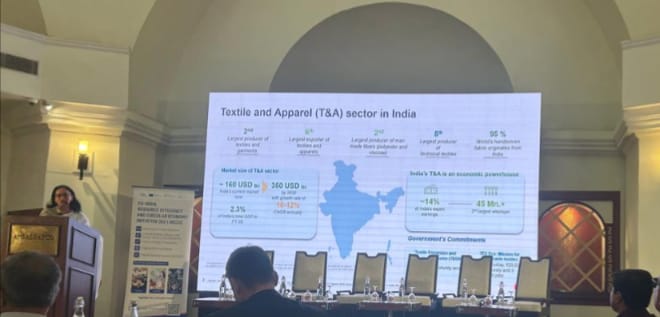
The Indian textile and apparel industry is actively shifting towards a more robust global footprint as new Free Trade Agreements (FTAs) with the European Union, the UK, and Oman come into effect. Following a steady 2.1 per cent growth in exports to Rs 3.16 lakh crore during FY 2025–26, the sector is leveraging zero-duty market access to reclaim competitiveness in segments ranging from high-value ready-made garments (RMG) to technical textiles. With the EU’s USD 263.5 billion import market now more accessible, exporters are aggressively diversifying away from single-market dependencies, responding to global retailers’ proactive strategies to source beyond traditional hubs like Bangladesh and Vietnam.
Operational resilience and value chain upgradation
Despite the promising outlook, the sector faces immediate headwinds, including a domestic cotton shortfall estimated at 45 lakh bales and volatile input costs. Industry leaders are focusing on internal structural improvements, moving beyond volume-centric growth to enhance realization rates through technology and sustainable manufacturing. As Pallab Banerjee, Managing Director, Pearl Global Industries notes, buyers are already initiating trial orders, yet capacity constraints remain a bottleneck. To mitigate these risks, major players are increasingly adopting investment-light expansion models and strengthening their ESG-linked manufacturing profiles to align with stringent international compliance standards. As India targets a US$ 100 billion export milestone by 2030, the emphasis remains on fostering a fully integrated ‘farm-to-fashion’ value chain to ensure long-term sector viability.
Focus on value-added exports
The industry encompasses the entire value chain from fiber production to finished apparel. Key markets include North America, Europe, and emerging GCC corridors. With government support via PM MITRA parks and RoSCTL schemes, firms are focusing on value-added exports. Performance remains resilient, anchored by a deep-rooted historical textile legacy.
American Eagle Outfitters optimizes marketing spend as core brand faces sales headwinds
American Eagle Outfitters, Inc (AEO) is recalibrating the marketing expenditure for its flagship American Eagle brand, shifting toward performance-focused digital and influencer tactics for the H2, FY26. This tactical transition follows a first-quarter performance where the core American Eagle brand recorded a 2 per cent Y-o-Y decline in comparable sales, largely attributed to softness in the women’s apparel segment. While high-profile celebrity collaborations, including recent campaigns with actor Sydney Sweeney, have successfully elevated brand awareness, management is now prioritizing conversion-centric initiatives. According to Michael Mathias, CFO. AEO, the company is rebalancing its investment strategy starting in the third quarter to emphasize day-to-day traffic-driving elements, ensuring the retailer remains well-positioned to meet its revenue expectations for the remainder of the year.
Robust portfolio strength and growth drivers
The marketing adjustment occurs against a backdrop of divergent brand results, with the overall AEO portfolio maintaining strong momentum. While the flagship brand navigates near-term softness, the company’s sister brand, Aerie, delivered record-breaking first-quarter results with a 25 per cent growth in comparable sales. Total company revenue reached $1.2 billion for the quarter ended May 2, 2026, marking a 10 per cent Y-o-Y increase and surpassing internal guidance. To sustain this trajectory, AEO is aggressively expanding its social commerce presence, including the launch of a dedicated TikTok Shop page and the formalization of the ‘AE Creator Community,’ a gamified platform designed to foster long-term, high-volume influencer engagement that extends beyond traditional one-off promotional events.
Leading global multi-brand retailer
American Eagle Outfitters, Inc. is a leading global multi-brand retailer specializing in casual apparel, intimates, and accessories. Core segments include the American Eagle, Aerie, and OFFLINE brands. The company focuses on omnichannel growth and disciplined operational execution, maintaining a strong fiscal outlook with reiterated annual operating income guidance of $390–$410 million.
Sky Industries expands technical textile capacity in Gujarat
Sky Industries is accelerating its diversification into technical textiles by establishing a new manufacturing facility in Gujarat. Formalized through an MoU signed on May 2, 2026, the company has committed an investment of Rs. 49 crore. This project marks a significant transition for the firm, traditionally recognized for its specialized hook-and-loop fastening solutions, as it seeks to capture a larger share of the high-performance apparel and industrial textile markets. By leveraging state-level investment incentives, Sky Industries intends to integrate advanced manufacturing workflows that align with the growing global demand for application-specific fabrics. Industry experts suggest this move is essential to compete with established players like Garware Technical Fibers and Arvind Limited, as the domestic sector increasingly pivots toward value-added, non-commodity textile products.
Strengthening competitive positioning for export markets
The decision to expand production capacity in Gujarat aligns with the company’s broader strategy to enhance its global supply chain reliability. Having previously established a strong export footprint across the US, UK, and Germany, the firm is now focusing on vertical integration to better manage quality control and lead times. Market analysts note, as global retail brands demand higher transparency and stricter compliance - specifically regarding OEKOTEX and GRS certifications - owning more of the production cycle provides a distinct competitive advantage. As one industry observer remarked, success in the specialized textile segment is no longer just about volume; it is about the ability to marry material innovation with consistent, large-scale production standards. This upcoming facility is expected to serve as a critical growth engine, reinforcing the company’s objective to strengthen its foothold in high-margin sectors such as defense, sportswear, and orthopedics.
Driving long-term revenue through with innovation
Founded in 1989, Mumbai-based Sky Industries is a prominent manufacturer of hook-and-loop tape fasteners and engineered fastening solutions. Catering to sectors like footwear, automotive, and apparel, the company exports globally. Recently, it has focused on expanding into broader technical textiles, aiming to drive long-term revenue growth through innovation.
DMRC formalizes entry into circular fashion with specialized collection hubs
"
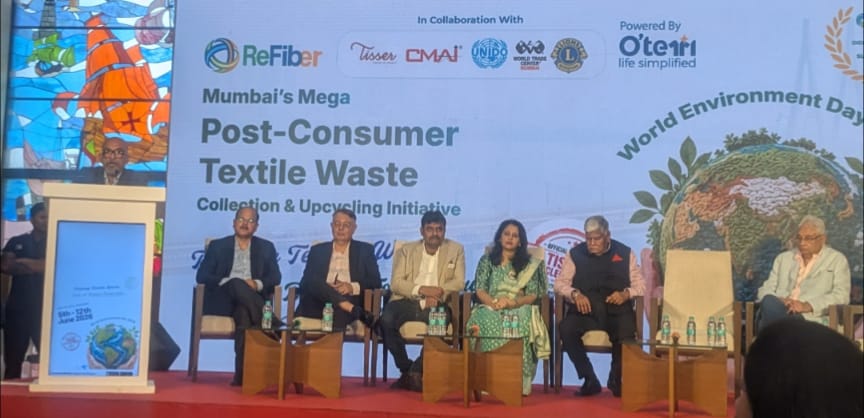
" The Delhi Metro Rail Corporation (DMRC) is formalizing a strategic push into circular fashion by establishing specialized collection hubs for post-consumer textile waste across 10 major transit stations. This initiative, championed by the Delhi government, seeks to divert discarded garments from landfill streams by creating an integrated, transparent recovery network. By installing dedicated collection boxes branded under the Delhi Metro Ladies Welfare Organisation (DMLWO), the program ensures that commuters can easily contribute to a structured waste-to-wealth model. These stations - including high-traffic nodes such as Lajpat Nagar, Hauz Khas, and Dwarka - will serve as the primary touchpoints for a system designed to transform individual garment disposal into a scalable, industrial-grade recycling process.
Driving value-added recovery and upcycling
Unlike fragmented disposal methods, this program emphasizes a tiered processing approach. Collected textiles will be systematically segregated; premium or reusable garments will be routed to non-governmental organizations and self-help groups for upcycling into utility items like bags and rugs, which may then be showcased and sold within station premises. Material unsuitable for direct reuse will be directed to recycling facilities for conversion into fiber, yarn, and non-woven felt. This aligns with national efforts to manage the ~7.07 million tonnes of textile waste generated annually in India. By bridging the gap between urban consumer behavior and industrial recovery, the DMRC initiative establishes a template for how transit-oriented infrastructure can effectively bolster the nation’s circular economy and sustainable fashion value chain.
Focus on post-consumer waste management
India boasts one of the world's largest textile recovery ecosystems, with nearly 97 per cent of pre-consumer manufacturing waste already recycled. Efforts are now intensifying toward post-consumer waste management. The sector remains focused on transitioning toward circularity, integrating advanced fiber-to-fiber recycling technologies to enhance long-term environmental and economic resilience.
Textile MSMEs navigate profitability hurdles as growth forecast moderates
A cornerstone of the nation’s micro, small, and medium enterprise (MSME) landscape, India’s readymade garment (RMG) sector is bracing for a period of fiscal adjustment in FY 2027. According to recent projections from CRISIL Intelligence, revenue growth for the sector is expected to moderate to 4 per cent–6 per cent, down from the 6 per cent – 8 per cent expansion recorded in the previous fiscal year. While the industry’s total turnover remains robust, projected at approximately Rs 5.7 trillion, manufacturers are contending with significant margin compression, with operating profitability anticipated to contract by 100–150 basis points due to elevated input costs and softening domestic demand.
Supply chain volatility and input cost pressures
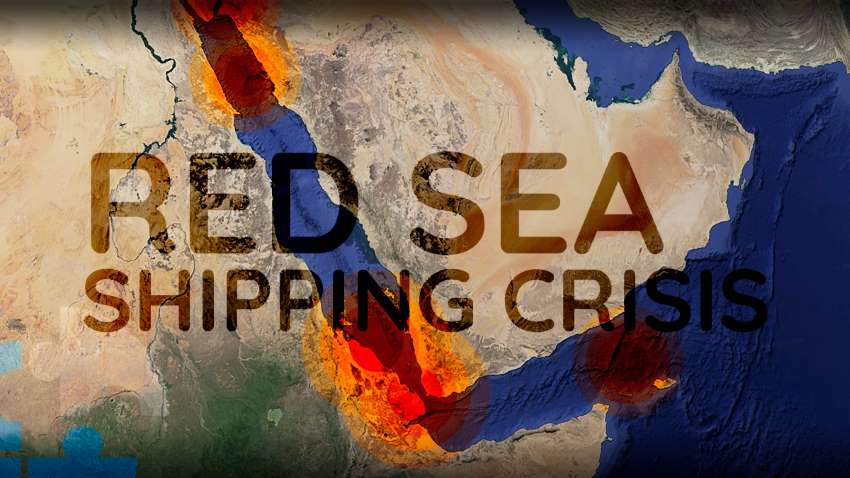
Smaller enterprises, which constitute nearly 80 per cent of India’s textile production capacity, face unique vulnerabilities in the current economic environment. Rising global prices for cotton and polyester—compounded by geopolitical disruptions in West Asia - are driving up production expenses. Unlike larger conglomerates, many MSMEs possess limited financial buffers and face challenges in passing these increased costs directly to price-sensitive domestic consumers. On the input front, manufacturers are struggling with higher international cotton benchmarks and rising domestic costs, including increased fertilizer prices and adjustments in the minimum support price (MSP) for raw cotton, which collectively squeeze the viability of traditional manufacturing clusters.
Export resilience amidst regional divergence
Despite domestic headwinds, the export outlook provides a vital counterbalance. The RMG export segment is anticipated to rebound with a 6 per cent–8 per cent growth rate, reaching Rs 1.49 trillion in FY 2027, aided by the implementation of free trade agreements with the United Kingdom and the European Union. Export-oriented hubs like Tiruppur and Bengaluru are expected to outpace domestic-focused clusters such as Kolkata, as they leverage improved market access and a depreciating rupee to bolster competitiveness. While global inflationary pressures persist, strategic investments in mega textile parks and ongoing government support schemes are seen as essential mechanisms to safeguard the medium-term resilience of these vital manufacturing units.
Backbone of Indian RMG industry
Indian textile MSMEs form the backbone of the domestic readymade garment (RMG) industry, managing nearly 80 per cent of total production. These enterprises primarily focus on spinning, weaving, and garmenting for both local and global markets. They currently face a strategic transition toward modernization and scale through government-led cluster and infrastructure initiatives.
SNQS Internationals scales operational footprint ahead of Bharat Tex 2026
As the global textile industry faces significant input cost volatility, Tirupur-based SNQS Internationals is fortifying its market position by leveraging its vertically integrated manufacturing framework. With the upcoming Bharat Tex 2026, scheduled for July 14–17 at Bharat Mandapam, New Delhi, the company is preparing to showcase its end-to-end apparel solutions. Amidst a broader industry context where raw material price fluctuations - driven by regional geopolitical tensions and shifting cotton trade policies - have pressured profit margins for many exporters, SNQS is prioritizing operational agility. By utilizing scientific cost-engineering techniques and advanced post-budgeting protocols, the firm aims to demonstrate how manufacturers can maintain price competitiveness even as global demand for scalable, sustainable supply chains continues to rise.
Leveraging vertical integration for global competitiveness
The company’s participation at Bharat Tex 2026 serves as a strategic platform to engage with an anticipated influx of over 2,000 international buyers. While many competitors are grappling with the limitations of fragmented supply chains, SNQS emphasizes its comprehensive 360-degree approach, which covers everything from yarn manufacturing to final logistics. Industry analysts note, this model is particularly vital in 2026, as brands prioritize reliable partnerships that offer ‘speed-to-market’ capabilities. As one executive noted, success in today’s environment is predicated on the ability to translate innovation into high-volume, cost-effective production without compromising compliance or quality standards. This focus on streamlining factory proceedings, coupled with digital design integration, allows the firm to meet the rigorous demands of global fashion retailers currently seeking to diversify their sourcing footprints beyond traditional regional hubs.
Premier apparel sourcing organization
Based in Tirupur, the textile capital of India, SNQS Internationals is a premier apparel sourcing and manufacturing organization. The group provides end-to-end solutions, spanning product development, technical testing, and global logistics for major international retail brands. Focused on knitwear and diverse garment categories, the firm maintains a robust, vertically integrated infrastructure. Driven by a commitment to quality and innovation, SNQS focuses on consistent revenue growth through strategic capacity upgrades and adherence to international compliance standards, positioning itself as a key supplier for Western fashion markets.
Italian machinery firms target Turkmenistan’s textile industrialization
"
" As Turkmenistan accelerates its ambition to transform from a raw cotton exporter into a high-value textile manufacturing hub, Italian engineering firms are positioning themselves as primary technology partners. A robust delegation of Italian manufacturers, coordinated by the Italian Trade Agency (ICE) and ACIMIT, is set to headline the Turkmen Textile Expo 2026, scheduled for June 4–6 in Ashgabat. This strategic mission seeks to capture demand for advanced production systems as the nation undertakes a long-term industrial diversification plan.
Technological upgrades for a maturing supply chain
Turkmenistan’s industrial authorities are currently prioritizing the local processing of cotton, the country’s third-largest export commodity. This initiative necessitates a shift toward high-tech specialization, creating significant opportunities for Italian suppliers to replace legacy systems with modern, energy-efficient machinery. Current trade data highlights, Italian exports to the region are heavily concentrated in accessories, which account for 56 per cent of total shipments, alongside specialized spinning and knitting equipment. According to Marco Salvadè, Presidentk ACIMIT, the Turkmen market is currently in a ‘physiological transition phase,’ where the demand is increasingly shifting from basic hardware to integrated, high-tech industrial solutions.
Navigating global headwinds through strategic exports
This mission follows a challenging start to 2026 for the Italian textile machinery sector, which reported a 5 per cent decline in total order intake during Q1, FY26. While the industry faces global economic uncertainty and cautious investment climates, regional partnerships in emerging hubs like Ashgabat offer a vital counter-cyclical growth avenue. By providing flexible, tailored machinery solutions, Italian firms aim to maintain their competitive edge in international markets. With a national delegation that includes industry stalwarts such as Itema, Marzoli, and Savio, Italy is looking to solidify its reputation as the vendor of choice for Turkmenistan’s evolving production infrastructure.
ACIMIT and Italian textile engineering
Founded in 1945, ACIMIT represents approximately 200 Italian companies within the textile machinery sector. The association promotes the ‘Made in Italy’ hallmark of high-quality engineering and sustainable innovation. With nearly 86 per cent of its €1.9 billion annual turnover exported globally, ACIMIT remains a primary driver for industrial technology transfers worldwide.
MediaVision report signals the end of mass-market fashion marketing
"

" The latest MediaVision Q1 2026 Fashion Report highlights, the age of broad-spectrum marketing and passive brand awareness is rapidly fading. In its place emerges a sharper, faster, and far more measurable market where success is determined by search intent, predictive analytics, and the ability to react to consumer demand in real time.
The report describes this as the rise of ‘Precision Retail’, a model where brands no longer compete merely for visibility but for relevance at the exact moment of purchase intent. In this new environment, a retailer’s market strength is no longer defined by legacy scale alone. Instead, dominance is being recalibrated through two new indicators: Share of Category Search (SoCS) and Share of Wallet (SoW).
The findings suggest that fashion consumers are abandoning exploratory browsing in favor of direct, problem-solving searches. Organic search traffic across the sector has remained relatively stable, but the composition of those searches has fundamentally shifted. Consumers are increasingly entering highly specific phrases tied to utility, lifestyle, and functionality rather than generic fashion discovery.
MediaVision notes a 15 per cent increase in ‘need-state’ searches during Q1 2026. Instead of browsing broad apparel categories, shoppers are searching for precise solutions such as commuter-proof tailoring, travel-friendly outerwear, and trans-seasonal investment knits. The implication for retailers is significant: brands now need to align inventory, merchandising, and digital visibility with micro-intent rather than macro-trends.
Search becomes the storefront
The report argues that search engines have effectively become the new front door of fashion retail. Consumers are making decisions earlier in the digital journey, often before reaching a brand’s homepage. As a result, discoverability within high-intent search environments has become more commercially valuable than broad social media exposure alone.
This shift is reshaping competitive dynamics across market segments. Brands that successfully linked search intelligence with merchandising agility emerged as clear outperformers during the quarter.
Table: Strategic positioning of brands
|
Brand category |
Top performer |
Growth (%) |
Driver |
|
High-Street Heritage |
Next |
+8% |
Multichannel integration & "Next Total Platform" |
|
Active/Utility |
New Balance |
+22% |
Sustained "Dad Shoe" trend and lifestyle versatility |
|
Premium/Bridge |
Ganni |
+14% |
Responsible luxury and high social media "Share of Voice" |
|
Fast Fashion |
Shein |
+11% |
Hyper-reactive SKU launches and price dominance |
|
Sustainability |
Patagonia |
+19% |
Circular economy initiatives and repair services |
the table highlights how distinct positioning is now outperforming generic mass-market branding. In the heritage retail category, Next strengthened its position through multichannel integration and the continued expansion of its ‘Next Total Platform’, which has enabled tighter synchronization between digital demand and fulfilment capabilities.
Within the activewear and utility segment, New Balance delivered the strongest overall growth at 22 per cent. The brand benefited from the enduring popularity of ‘Dad Shoe’ aesthetics while successfully balancing comfort, lifestyle versatility, and premium positioning.
Meanwhile, Ganni demonstrated the growing commercial power of “responsible luxury.” Its growth was fuelled not only by sustainability messaging but also by a strong social media presence that translated directly into search visibility and conversion momentum.
Fast-fashion giant Shein continued to leverage its ultra-fast product cycle and aggressive pricing architecture to maintain double-digit growth. However, the report suggests that speed alone is no longer sufficient without precise demand alignment.
At the sustainability end of the spectrum, Patagonia emerged as one of the strongest performers. Its emphasis on circular economy initiatives, repair services, and product longevity resonated strongly with consumers increasingly seeking value-driven purchasing decisions.
Rise of real-time retail
One of the report’s most consequential findings centers on the growing influence of the Metis Market and Brand Demand Tracker, MediaVision’s real-time analytics platform designed to monitor search behavior and category acceleration. Traditionally, fashion retail has operated on relatively slow forecasting cycles, with trend validation often dependent on quarterly reporting and seasonal planning calendars. MediaVision argues that this lag is now commercially dangerous.
The report cites a striking example from February 2026, when Metis detected a 400 per cent spike in searches related to metallic footwear several weeks before conventional fashion forecasting systems identified the trend. Retailers using real-time demand intelligence rapidly adjusted homepage merchandising, paid search spending, and category prioritization toward silver and metallic footwear assortments. Those agile brands subsequently captured a 35 per cent higher Share of Category Search than slower-moving competitors still relying on monthly reporting structures.
This underscores a broader industry shift: fashion retail is increasingly operating on weekly or even daily reaction cycles rather than traditional seasonal timelines.
New factors define market power
MediaVision’s introduction of Share of Category Search and Share of Wallet may prove to be among the report’s most influential contributions. Share of Category Search measures how much search ownership a brand commands within a specific product category. Rather than focusing solely on branded search traffic, it assesses dominance within solution-oriented consumer demand. A denim brand owning 20 per cent of all denim-related search activity, for example, effectively becomes the category authority regardless of overall brand awareness levels.
Share of Wallet, meanwhile, moves beyond visibility into commercial effectiveness. The metric combines search intent, average order value, and conversion probability to estimate which brands are most likely to secure actual consumer spending rather than simple traffic volume. Together, these metrics indicate a decisive move away from vanity measurements toward commercially predictive performance indicators.
Decline of generic branding
While several brands gained momentum, the report also highlights mounting pressure on large legacy retailers struggling with what MediaVision terms “brand fatigue and genericism.” A number of established household names recorded declines of between 4 and 7 per cent in branded search demand during Q1. According to the report, consumers are increasingly gravitating toward retailers with clearer identities, specialized value propositions, and stronger lifestyle alignment.
In practical terms, brands attempting to cater to every demographic simultaneously are losing visibility in increasingly fragmented search ecosystems. Search algorithms and consumer behavior alike now reward specificity over scale. The report’s conclusion is blunt: in 2026, relevance beats recognition.
Agility becomes the core strategy
Looking ahead to Q2 and the summer trading period, MediaVision argues that agility will become the defining capability separating winners from laggards. Retailers now face what the report describes as ‘52 opportunities a year’ to respond to shifting demand patterns rather than relying on the industry’s traditional four-quarter planning structure. This requires tighter coordination between analytics, merchandising, inventory management, and digital marketing functions.
The broader implication is that fashion retail is no longer operating purely as a creative industry. It is becoming an intelligence-driven sector where data responsiveness increasingly determines commercial survival. MediaVision’s final warning captures the urgency of this transformation succinctly: if a brand is not visible within the first three seconds of a high-intent search, it effectively does not exist in the consumer’s wallet.